Colombia Facility Management Market Size & Growth Rate (2026-2032)
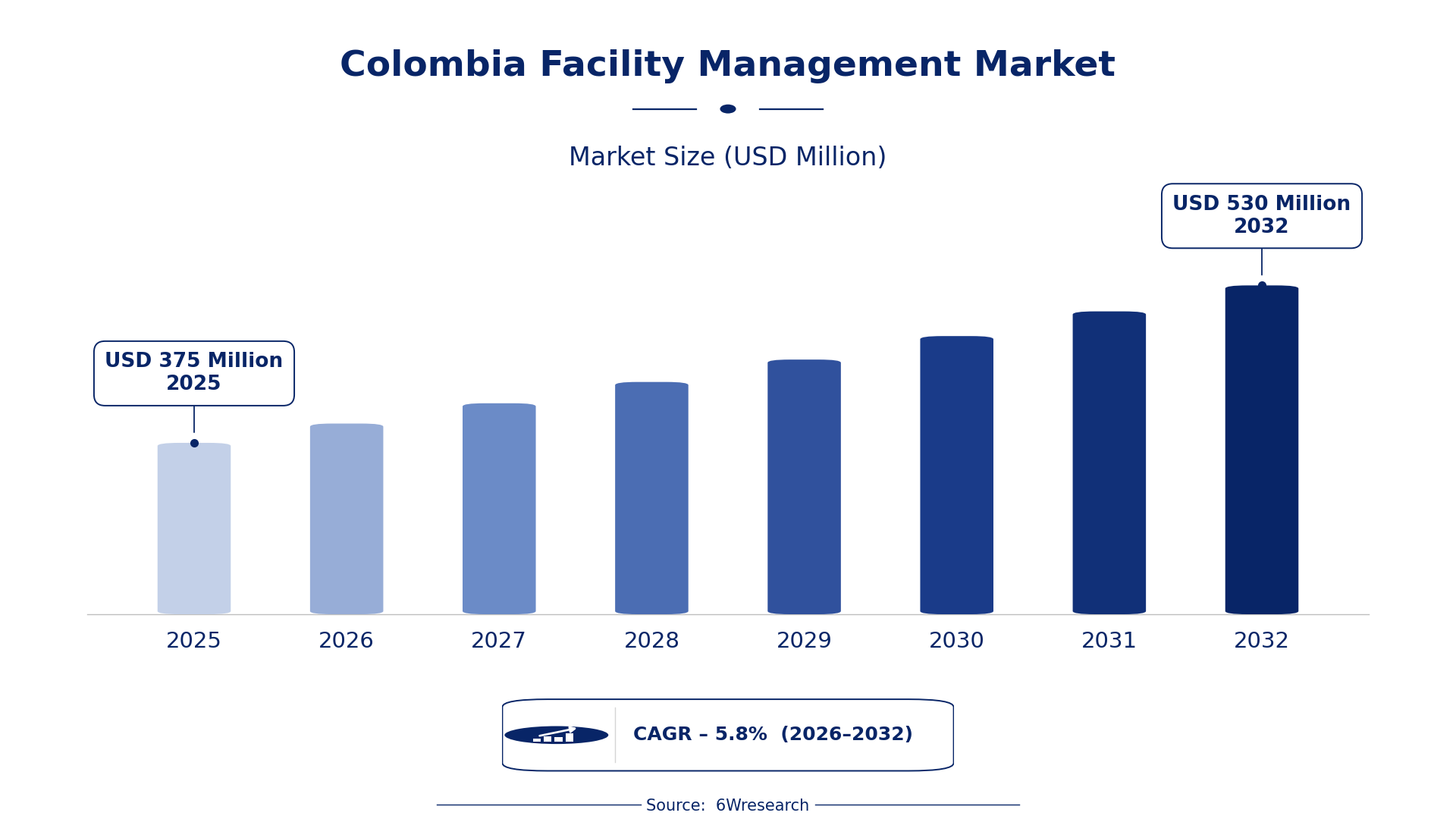
The Colombia Facility Management Market was estimated at USD 375 Million in 2025 and is projected to reach USD 530 Million by 2032, growing at a CAGR of 5.8% from 2026 to 2032.
Colombia Facility Management Market Synopsis
In recent years, the Colombia Facility Management Market has gained momentum, driven by a robust demand for outsourced services that enhance operational efficiency. Businesses are increasingly recognizing the value of focusing on their core functions while delegating facility management tasks to specialized providers, a trend that is reshaping the industry.
The landscape is characterized by a blend of local and international service providers, each offering diverse solutions ranging from maintenance to energy management. With a growing emphasis on sustainability and compliance, integrated facility management solutions are emerging as vital to address evolving business needs in Colombia.
Colombia Facility Management Market Year-wise Growth Rate and Key Drivers
This graph illustrates the annual growth rates of the Colombia Facility Management Market from 2021 to 2032, highlighting a steady upward trajectory and projected expansion over the forecast period.
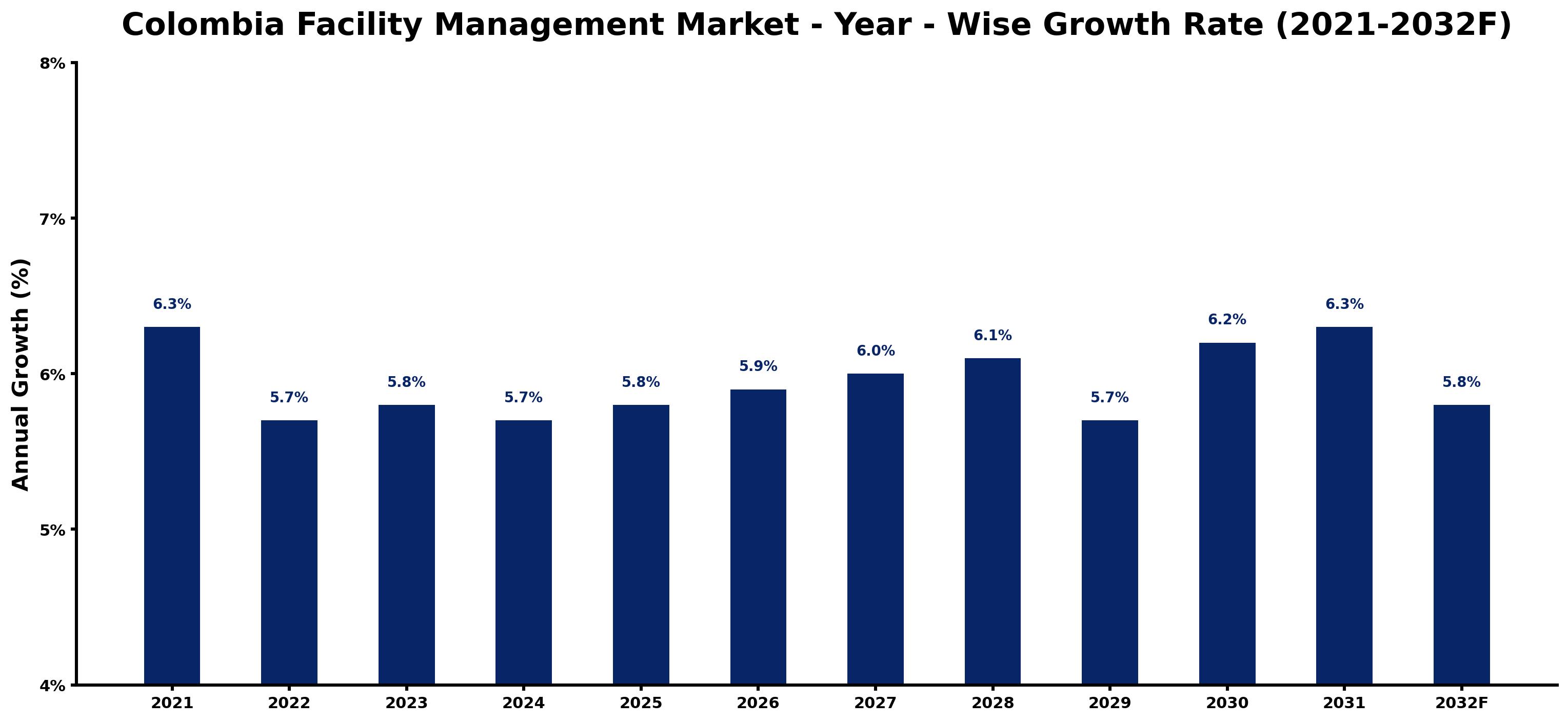
The table below presents the year‑wise growth rates along with the key drivers influencing the market
| Year | Growth Rate | Major Drivers |
| 2021 | 6.3% | Increased urbanization driving demand for efficient facilities. |
| 2022 | 5.7% | Government investment in infrastructure enhancing building management needs. |
| 2023 | 5.8% | Rising adoption of smart building technologies in urban centers. |
| 2024 | 5.7% | Regulatory push for sustainability in public facilities management. |
| 2025 | 5.8% | Digital transformation initiatives boosting demand for facility services. |
| 2026 | 5.9% | Surge in residential developments needing facility management solutions. |
| 2027 | 6.0% | Economic recovery leading to increased facility service contracts. |
| 2028 | 6.1% | Heightened focus on workplace health and safety regulations. |
| 2029 | 5.7% | Growth in corporate offices necessitating comprehensive management services. |
| 2030 | 6.2% | Increased environmental policies driving sustainable facility operations. |
| 2031 | 6.3% | Rising foreign investments requiring enhanced facility management services. |
| 2032 | 5.8% | Demographic shifts increasing services in mixed-use developments. |
Note: Market size estimations and growth projections presented in this report are based on 6Wresearch's proprietary forecasting methodology, utilizing the latest available industry data, government publications, and primary research inputs.
Colombia Facility Management Market Key Takeaways
Below are some of the specific key takeaways from the market, including:
- The shift towards outsourcing non-core functions is driving demand for facility management services.
- Advanced technologies like IoT and data analytics are enhancing service delivery and operational efficiency.
- There is a strong focus on sustainability, leading to the adoption of green practices in facility management.
- Regulatory frameworks are evolving, promoting compliance and quality assurance in service delivery.
- The market is expected to see significant investment opportunities as businesses modernize their infrastructure.
Evaluation of Restraints in Colombia Facility Management Market
Despite its growth potential, the Colombia Facility Management Market faces several challenges that hinder its expansion. A significant issue is the lack of standardized regulations, which can lead to inconsistencies in service quality. This fragmentation allows unregistered service providers to operate, creating unfair competition for established firms. on top of that, many businesses remain unaware of the benefits associated with outsourcing facility management, limiting market penetration.
Economic and political instability also poses risks, as fluctuating conditions can impact investment and operational decisions. Addressing these restraints is essential for fostering a more stable and thriving facility management environment in Colombia.
Colombia Facility Management Market Trends
The Colombia Facility Management Market is witnessing several key trends that are shaping its future. The integration of IoT and AI technologies is becoming increasingly prevalent, enabling better monitoring and predictive maintenance of facilities. Companies are also prioritizing energy efficiency, leading to the adoption of smart building solutions that reduce operational costs.
As businesses strive for greater efficiency, there is a noticeable shift towards comprehensive service packages that encompass various aspects of facility management. This trend not only streamlines operations but also enhances the customer experience, positioning providers for long-term success.
Colombia Facility Management Market Opportunities
Opportunities in the Colombia Facility Management Market are expanding as businesses increasingly seek efficient operational solutions. The rise in urbanization and infrastructure development creates a growing need for professional facility management services to ensure regulatory compliance and smooth operations.
Additionally, the push for sustainability presents avenues for providers to innovate and offer green solutions, catering to environmentally conscious clients. With the economy on an upward trajectory, investment in advanced facility management technologies is likely to accelerate, leading to further market growth.
Government Initiatives in the Colombia Facility Management Market
The Colombian government is actively fostering the growth of the facility management sector through various initiatives aimed at regulatory compliance and sustainability. Policies are being shaped to promote best practices and enhance the overall efficiency of service delivery. The focus on environmentally friendly practices aligns with global trends, signaling a commitment to sustainable development.
- A national regulatory framework introduced in 2025 mandates compliance with safety and maintenance standards for facility management companies.
- Currently underway is a public-private partnership aimed at enhancing infrastructure development across major urban centers, expected to improve service access.
- Incentives for adopting environmentally sustainable practices were rolled out in late 2025 to encourage companies to integrate green solutions.
- A planned initiative to promote technology adoption in facility management is expected to be launched in 2026, focusing on IoT and data analytics integration.
- Workshops and training programs for facility management professionals have been initiated to elevate service standards and improve industry knowledge.
Future Insights of the Colombia Facility Management Market
Looking ahead to 2026-2032, the Colombia Facility Management Market is set for sustained growth. As awareness of the benefits of outsourcing non-core activities continues to rise, more businesses will seek to enhance operational efficiency through facility management services. The shift towards integrated solutions that encompass a wide range of services will be a driving factor in this expansion.
Technological advancements will further play a crucial role, facilitating smarter decision-making and operational efficiencies. As the market matures, a focus on sustainability and compliance will remain paramount, influencing service offerings and client expectations.
Colombia Facility Management Market Latest Developments
Over the past year, the Colombia Facility Management Market has seen notable developments as companies adapt to changing demands and seize emerging opportunities. The integration of technology in service delivery is rapidly evolving, with firms exploring innovative solutions to enhance efficiency and customer satisfaction.
- A major technology vendor launched a cloud-based facility management platform in early 2025, streamlining operations for service providers.
- In late 2025, a leading regional operator completed the rollout of a smart building management system aimed at improving energy efficiency.
- Currently ongoing is an initiative by a consortium of service providers to develop training modules that focus on sustainability practices in facility management.
- A new partnership between facility management firms and technology startups is expected to enhance service offerings through AI integration, with activities slated for mid-2026.
- By late 2026, a nationwide campaign promoting the benefits of outsourcing facility management services is planned to increase awareness among businesses.
Colombia Facility Management Market - Key Attractiveness of the Report
- 10 Years of Market Numbers
- Historical Data Starting from 2022 to 2025
- Base Year: 2025
- Forecast Data until 2032
- Key Performance Indicators Impacting the Market
- Major Upcoming Developments and Projects
Key Highlights of the Report:
- Colombia Facility Management Market Outlook
- Market Size of Colombia Facility Management Market, 2025
- Forecast of Colombia Facility Management Market, 2032
- Historical Data and Forecast of Colombia Facility Management Revenues & Volume for the Period 2022-2032F
- Colombia Facility Management Market Trend Evolution
- Colombia Facility Management Market Drivers and Challenges
- Colombia Facility Management Price Trends
- Colombia Facility Management Porter's Five Forces
- Colombia Facility Management Industry Life Cycle
- Historical Data and Forecast of Colombia Facility Management Market Revenues & Volume By Component for the Period 2022-2032F
- Historical Data and Forecast of Colombia Facility Management Market Revenues & Volume By Solutions for the Period 2022-2032F
- Historical Data and Forecast of Colombia Facility Management Market Revenues & Volume By Services for the Period 2022-2032F
- Historical Data and Forecast of Colombia Facility Management Market Revenues & Volume By Deployment Mode for the Period 2022-2032F
- Historical Data and Forecast of Colombia Facility Management Market Revenues & Volume By Cloud for the Period 2022-2032F
- Historical Data and Forecast of Colombia Facility Management Market Revenues & Volume By On-premises for the Period 2022-2032F
- Historical Data and Forecast of Colombia Facility Management Market Revenues & Volume By Organization Size for the Period 2022-2032F
- Historical Data and Forecast of Colombia Facility Management Market Revenues & Volume By Large enterprises for the Period 2022-2032F
- Historical Data and Forecast of Colombia Facility Management Market Revenues & Volume By Small and medium-sized enterprises (SMEs) for the Period 2022-2032F
- Historical Data and Forecast of Colombia Facility Management Market Revenues & Volume By Vertical for the Period 2022-2032F
- Historical Data and Forecast of Colombia Facility Management Market Revenues & Volume By BFSI for the Period 2022-2032F
- Historical Data and Forecast of Colombia Facility Management Market Revenues & Volume By IT and Telecom for the Period 2022-2032F
- Historical Data and Forecast of Colombia Facility Management Market Revenues & Volume By Government and Public Administration for the Period 2022-2032F
- Historical Data and Forecast of Colombia Facility Management Market Revenues & Volume By Healthcare for the Period 2022-2032F
- Historical Data and Forecast of Colombia Facility Management Market Revenues & Volume By Education for the Period 2022-2032F
- Historical Data and Forecast of Colombia Facility Management Market Revenues & Volume By Retail for the Period 2022-2032F
- Historical Data and Forecast of Colombia Facility Management Market Revenues & Volume By Energy and Utilities for the Period 2022-2032F
- Historical Data and Forecast of Colombia Facility Management Market Revenues & Volume By Manufacturing for the Period 2022-2032F
- Colombia Facility Management Import Export Trade Statistics
- Market Opportunity Assessment By Component
- Market Opportunity Assessment By Deployment Mode
- Market Opportunity Assessment By Organization Size
- Market Opportunity Assessment By Vertical
- Colombia Facility Management Top Companies Market Share
- Colombia Facility Management Competitive Benchmarking By Technical and Operational Parameters
- Colombia Facility Management Company Profiles
- Colombia Facility Management Key Strategic Recommendations






































