Colombia Fish and Seafood Market Size, Share & Growth Rate
The Colombia Fish and Seafood Market was estimated at USD 959 Million in 2025 and is projected to reach USD 1382 Million by 2032, growing at a CAGR of 5.4% from 2026 to 2032. This growth trajectory is fueled by an increasing shift toward healthier dietary choices among Colombian consumers and an expanding culinary scene that highlights seafood. The rise of sustainable practices in fishing also aligns with consumer demand for ethically sourced products, ensuring market momentum.
Colombia Fish and Seafood Market Year-wise Growth Rate and Key Drivers
This graph highlights how the Colombia Fish and Seafood Market has steadily grown over the years, supported by major growth factors.
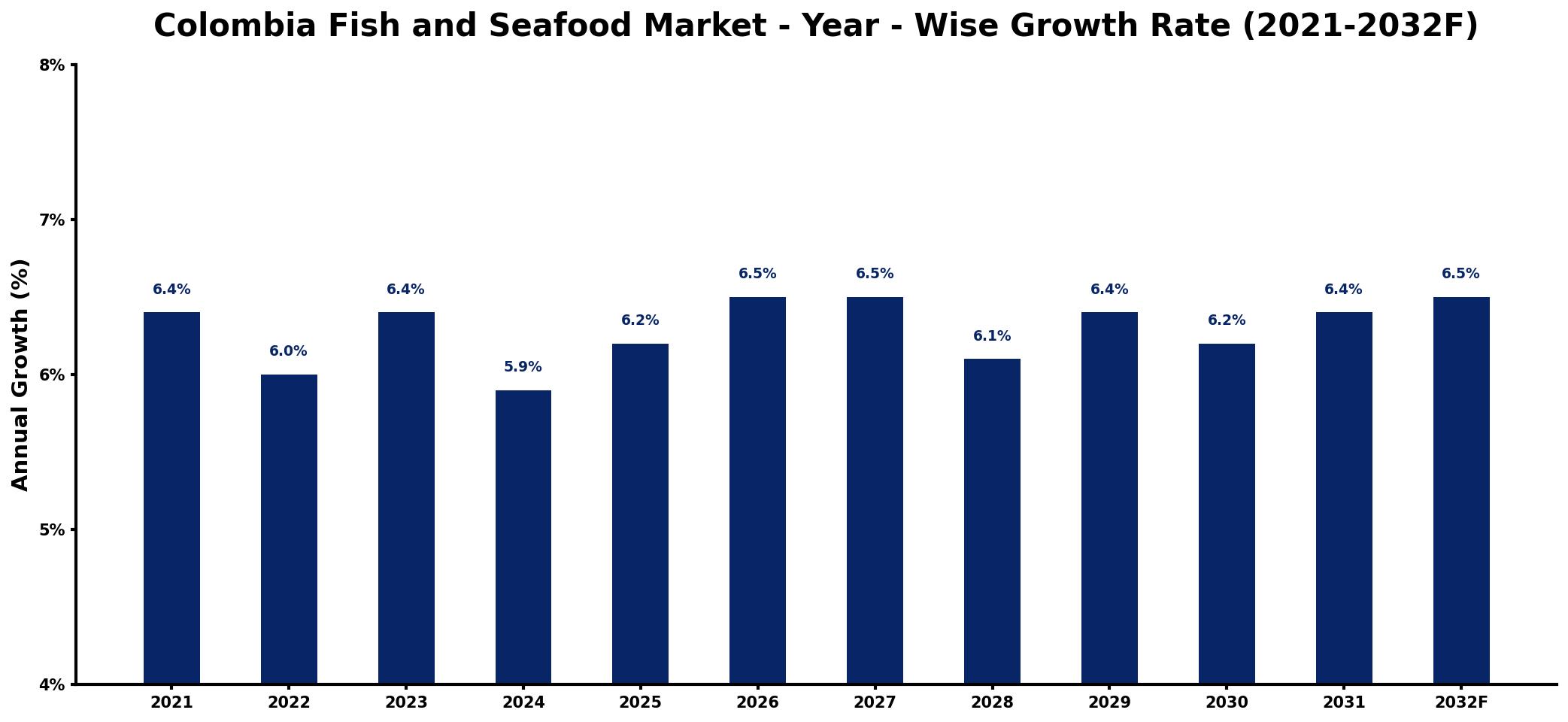
The table below presents the year‑wise growth rates along with the key drivers influencing the market
| Year | Growth Rate | Major Drivers |
| 2021 | 6.4% | Rising consumer health consciousness |
| 2022 | 6.0% | Increased export opportunities emerging |
| 2023 | 6.4% | Growing popularity of sustainable sourcing |
| 2024 | 5.9% | Expansion of aquaculture facilities |
| 2025 | 6.2% | Innovations in preservation technologies |
| 2026 | 6.5% | Boost in local market demand |
| 2027 | 6.5% | Strengthened distribution networks established |
| 2028 | 6.1% | Enhanced product variety offerings |
| 2029 | 6.4% | Higher investments in processing plants |
| 2030 | 6.2% | increased overall sector activity |
| 2031 | 6.4% | Increased collaboration with restaurants |
| 2032 | 6.5% | Growing trend of culinary tourism |
Note: Market size estimations and growth projections presented in this report are based on 6Wresearch's proprietary forecasting methodology, utilizing the latest available industry data, government publications, and primary research inputs.
Colombia Fish and Seafood Market Synopsis
The Colombia Fish and Seafood Market has witnessed significant momentum, driven by heightened awareness of the health benefits associated with seafood consumption. As consumer preferences evolve, the market is transitioning towards a broader range of sustainable and premium seafood offerings. This shift is complemented by the growing popularity of seafood restaurants, creating a dynamic landscape for fish and seafood products.
Looking ahead, the market's trajectory is poised for continued growth, bolstered by technological advancements in aquaculture and logistics. However, operational challenges such as illegal fishing practices and infrastructure limitations may pose hurdles that require strategic solutions for sustainable growth.
Colombia Fish and Seafood Market Key Takeaways
- The market is projected to expand significantly, with a focus on sustainability and high-quality seafood products.
- Increased health consciousness among consumers is driving demand for nutritious seafood options.
- Emerging online retail platforms are enhancing accessibility and convenience for seafood purchases.
- Investment in aquaculture and processing facilities presents lucrative growth opportunities.
- Government policies are fostering a more sustainable fishing environment, promoting both economic growth and marine conservation.
Evaluation of Restraints in Colombia Fish and Seafood Market
Despite its promising outlook, the Colombia Fish and Seafood Market faces significant restraints that could hinder growth. Illegal fishing remains a prevalent issue, undermining the efforts of legal fishers and threatening the sustainability of marine resources. Additionally, logistical challenges, particularly in rural regions, hinder the efficient distribution of fresh seafood products, impacting overall market performance. Environmental changes and fluctuating global seafood prices also introduce uncertainty that stakeholders must navigate to secure a stable future.
Colombia Fish and Seafood Market Trends
Several key trends are currently shaping the Colombia Fish and Seafood Market. There is a marked shift toward sustainably sourced and organic seafood, as Colombian consumers increasingly prioritize environmental responsibility. The rise of e-commerce platforms for seafood purchases is another noteworthy trend, providing greater convenience and access to a diverse range of products. Furthermore, health-driven trends are steering consumers towards premium and nutritious seafood, such as salmon and trout, as they seek to incorporate these options into their diets.
Colombia Fish and Seafood Market Opportunities
The Colombia Fish and Seafood Market is ripe with opportunities for growth and investment. There is a significant potential for expanding sustainable aquaculture practices, particularly given Colombia's extensive coastline and rich marine resources. Investors can also capitalize on the growing demand for processed and value-added seafood products by establishing processing facilities. Additionally, advancements in technology—ranging from improved fishing techniques to enhanced cold chain logistics—can foster greater efficiency and quality throughout the supply chain, further positioning the market for growth.
Government Initiatives in the Colombia Fish and Seafood Market
The Colombian government has implemented several policies to bolster the Fish and Seafood Market while emphasizing sustainability. These initiatives include the establishment of fishing quotas and regulations aimed at preventing overfishing and ensuring the long-term health of marine ecosystems. Incentives for aquaculture development are also in place to boost domestic production and reduce dependency on seafood imports. Additionally, infrastructure improvements and technological upgrades in the fishing industry are being prioritized to enhance overall market competitiveness.
Future Insights of the Colombia Fish and Seafood Market
Looking ahead to 2026-2032, the Colombia Fish and Seafood Market is expected to flourish, propelled by rising health consciousness and disposable incomes among consumers. With an increasing preference for sustainable and nutritious food options, the market is well-positioned for steady growth. Technological advancements will further refine supply chain efficiencies, allowing for a wider variety of seafood products to become more accessible to consumers. Colombia's rich biodiversity and favorable geographic location will also play a crucial role in expanding its influence within the global seafood market.
Colombia Fish and Seafood Market Latest Developments (2025 - 2026)
Recent developments in the Colombia Fish and Seafood Market reflect a strong commitment to sustainability and innovation. Industry stakeholders are increasingly adopting new technologies that enhance fishing efficiency and product traceability. Additionally, initiatives aimed at promoting domestic seafood consumption have been gaining traction, bolstered by a rising interest in local cuisines. Furthermore, partnerships among government agencies, environmental organizations, and industry players are being forged to tackle illegal fishing and promote sustainable practices within the market.
Colombia Fish and Seafood Market - Key Attractiveness of the Report
- 10 Years of Market Numbers
- Historical Data Starting from 2022 to 2025
- Base Year: 2025
- Forecast Data until 2032
- Key Performance Indicators Impacting the Market
- Major Upcoming Developments and Projects
Key Highlights of the Report:
- Colombia Fish and Seafood Market Outlook
- Market Size of Colombia Fish and Seafood Market, 2025
- Forecast of Colombia Fish and Seafood Market, 2032
- Historical Data and Forecast of Colombia Fish and Seafood Revenues & Volume for the Period 2022-2032F
- Colombia Fish and Seafood Market Trend Evolution
- Colombia Fish and Seafood Market Drivers and Challenges
- Colombia Fish and Seafood Price Trends
- Colombia Fish and Seafood Porter's Five Forces
- Colombia Fish and Seafood Industry Life Cycle
- Historical Data and Forecast of Colombia Fish and Seafood Market Revenues & Volume By Product Types for the Period 2022-2032F
- Historical Data and Forecast of Colombia Fish and Seafood Market Revenues & Volume By Fresh Fish and Seafood for the Period 2022-2032F
- Historical Data and Forecast of Colombia Fish and Seafood Market Revenues & Volume By Canned Fish and Seafood for the Period 2022-2032F
- Historical Data and Forecast of Colombia Fish and Seafood Market Revenues & Volume By Frozen Fish and Seafood for the Period 2022-2032F
- Historical Data and Forecast of Colombia Fish and Seafood Market Revenues & Volume By Other Fish and Seafood for the Period 2022-2032F
- Colombia Fish and Seafood Import Export Trade Statistics
- Market Opportunity Assessment By Product Types
- Colombia Fish and Seafood Top Companies Market Share
- Colombia Fish and Seafood Competitive Benchmarking By Technical and Operational Parameters
- Colombia Fish and Seafood Company Profiles
- Colombia Fish and Seafood Key Strategic Recommendations






































