Colombia Fleet Management Market Size & Growth Rate (2026-2032)
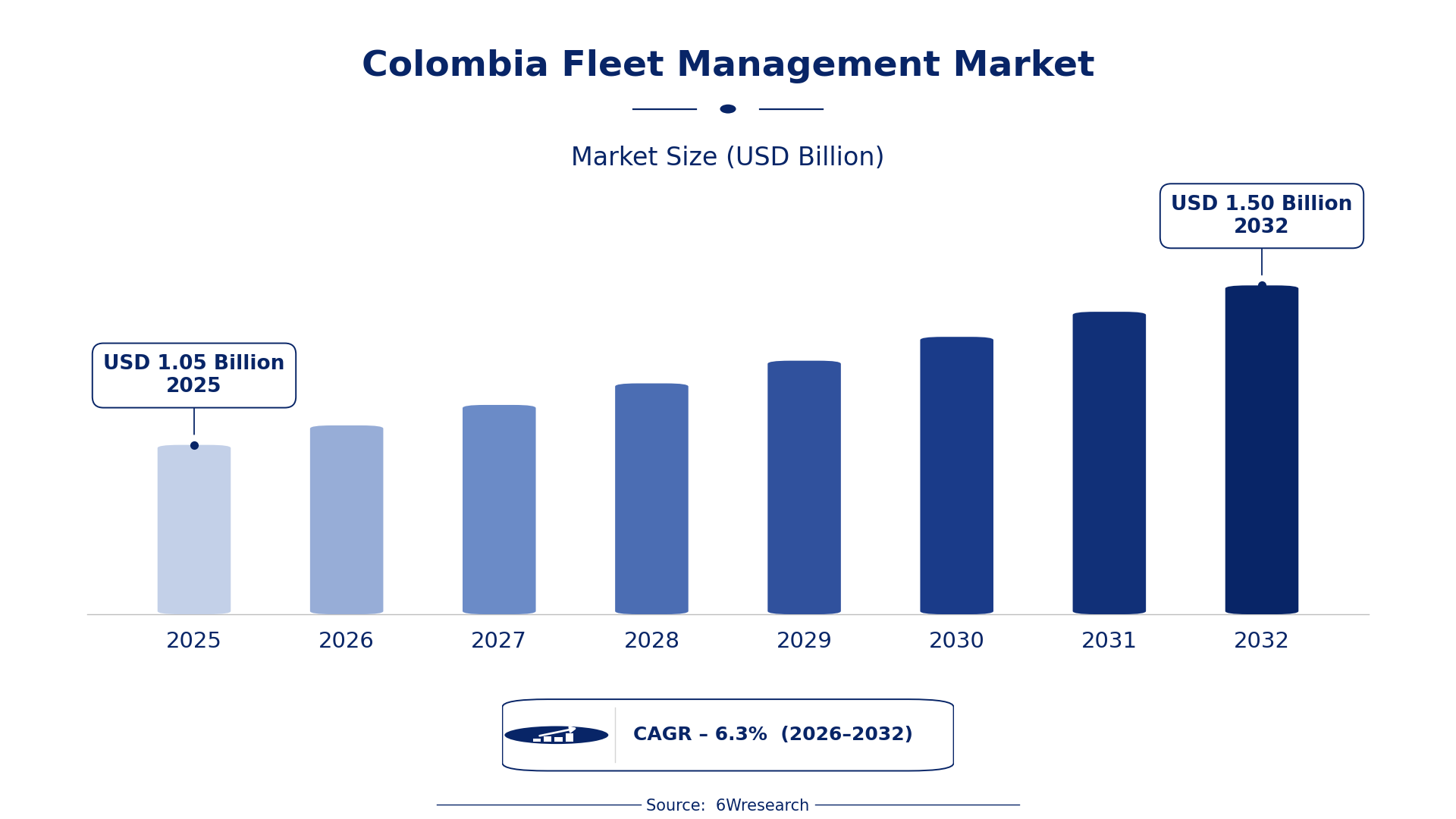
The Colombia Fleet Management Market was estimated at USD 1050 Million in 2025 and is projected to reach USD 1495 Million by 2032, growing at a CAGR of 6.3% from 2026 to 2032.
Colombia Fleet Management Market Synopsis
The Colombia Fleet Management Market has seen notable advancements driven by technological integration and regulatory changes. With the rising necessity for efficiency and safety, fleet operators are increasingly adopting telematics and cloud-based solutions. However, this growth is juxtaposed with infrastructure challenges and a market that is still maturing.
Looking ahead, the market is expected to expand significantly as businesses realize the full potential of fleet management technologies. The shift towards electric vehicle fleets and advanced analytics will be key to shaping the future, presenting both opportunities and challenges for existing players in this space.
Colombia Fleet Management Market Year-wise Growth Rate and Key Drivers
This graph illustrates the annual growth rates of the Colombia Fleet Management Market from 2021 to 2032, highlighting a steady upward trajectory and projected expansion over the forecast period.
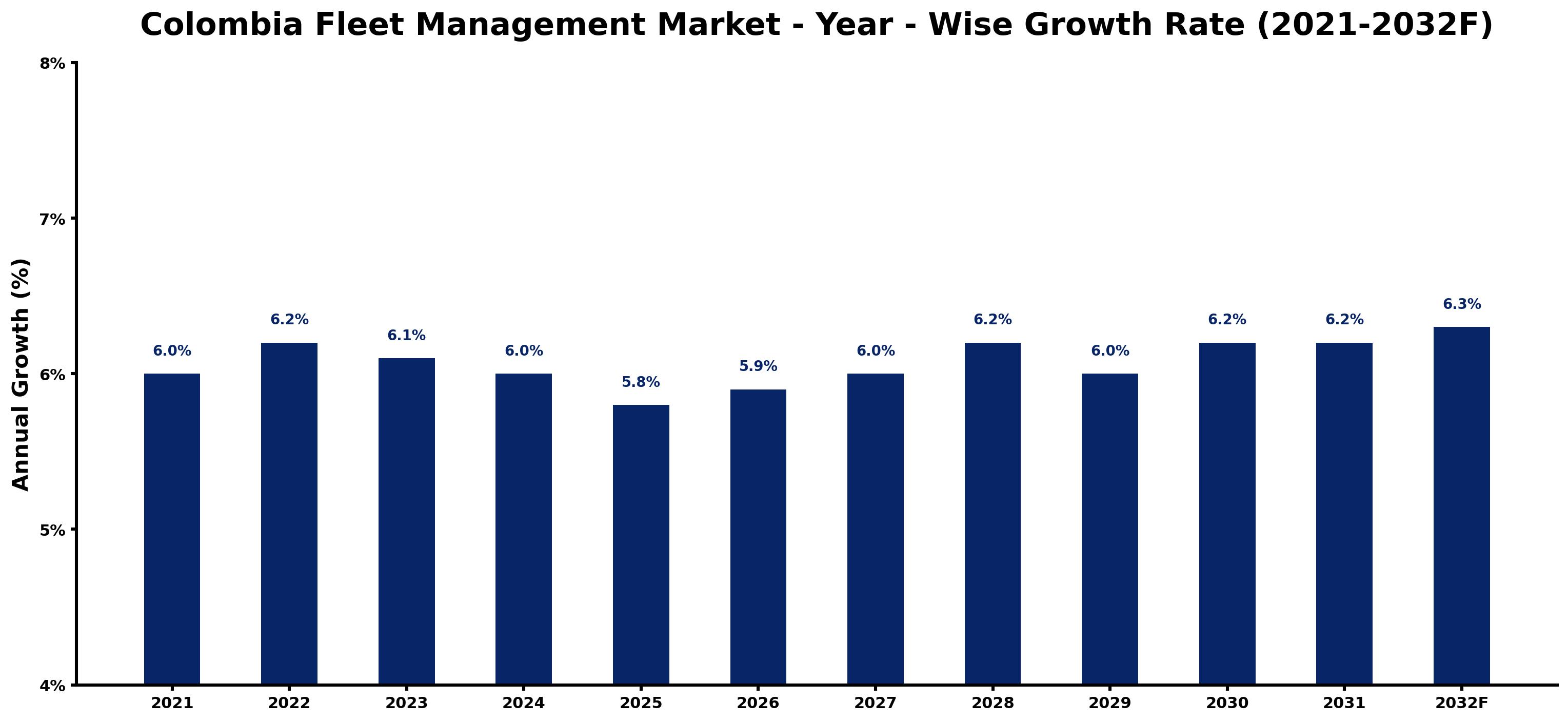
The table below presents the year‑wise growth rates along with the key drivers influencing the market
| Year | Growth Rate | Major Drivers |
| 2021 | 6.0% | Implementation of Colombia's Smart Mobility Policy boosts efficiency. |
| 2022 | 6.2% | Increased logistics demand from e-commerce growth accelerates adoption. |
| 2023 | 6.1% | Government incentives for emission-reducing fleet technologies drive investment. |
| 2024 | 6.0% | Rising fuel prices push fleet operators towards optimization solutions. |
| 2025 | 5.8% | Enhanced vehicle telematics adoption improves operational efficiency. |
| 2026 | 5.9% | Colombian infrastructure improvements facilitate better fleet utilization. |
| 2027 | 6.0% | Focus on road safety regulations promotes fleet tracking systems. |
| 2028 | 6.2% | Growing interest in sustainable transport fuels enhances fleet innovation. |
| 2029 | 6.0% | Telematics integration supporting maintenance forecasting attracts users. |
| 2030 | 6.2% | Increase in logistics start-ups drives fleet service demand. |
| 2031 | 6.2% | Urban congestion prompts rise in fleet management software use. |
| 2032 | 6.3% | Local partnerships strengthen fleet service network capabilities. |
Note: Market size estimations and growth projections presented in this report are based on 6Wresearch's proprietary forecasting methodology, utilizing the latest available industry data, government publications, and primary research inputs.
Colombia Fleet Management Market Key Takeaways
Below are some of the specific key takeaways from the market, including:
- The market is driven by increasing operational efficiency demands and cost savings.
- Telematics adoption is on the rise, emphasizing real-time data collection and analysis.
- Government policies are fostering a regulatory environment conducive to fleet tracking.
- There is a notable trend towards cloud-based solutions for scalability and flexibility.
- Opportunities exist in tailored fleet management solutions across various sectors.
Evaluation of Restraints in Colombia Fleet Management Market
Infrastructure limitations remain a significant barrier, particularly in rural areas where connectivity is poor. This hampers the implementation of advanced fleet management technologies, making it challenging for operators to achieve optimal efficiency. Additionally, many small and medium-sized enterprises lack awareness of the potential benefits of these solutions, which stifles market penetration. The high upfront costs associated with fleet management systems also deter adoption, particularly in the current economic climate.
Colombia Fleet Management Market Trends
The trend towards integrating advanced telematics solutions is evident, with fleet operators increasingly seeking out systems that offer comprehensive tracking and analytics capabilities. There's a clear shift towards cloud-based platforms that allow for greater flexibility and scalability, enabling businesses to adapt to changing operational demands. Additionally, the emergence of electric vehicles is steering the market towards more sustainable practices, making fleet management solutions vital for compliance and efficiency.
Colombia Fleet Management Market Opportunities
There’s a wealth of opportunity for providers who can offer customized fleet management solutions tailored to the unique needs of various industries such as logistics, transportation, and construction. As businesses seek to optimize their operations, there’s a growing demand for predictive maintenance capabilities and compliance management tools. Companies that focus on these areas can position themselves advantageously in a competitive market.
Government Initiatives in the Colombia Fleet Management Market
The Colombian government is actively shaping the Fleet Management Market through various regulations and initiatives aimed at improving safety and efficiency in transportation. Policies promoting vehicle tracking systems are now essential for commercial vehicles, enhancing compliance and operational efficiency. This proactive regulatory approach is crucial for driving the adoption of innovative fleet solutions.
- A recently completed initiative mandated vehicle tracking systems for all commercial fleets to improve safety standards.
- Current efforts focus on public-private partnerships to promote telematics solutions and modernize logistics operations.
- Upcoming regulations aim to provide tax incentives for companies investing in eco-friendly fleet technologies, expected to launch by 2026.
- Ongoing upgrades to national transportation infrastructure are expected to facilitate better connectivity for fleet operations.
Future Insights of the Colombia Fleet Management Market
As we look toward 2026 and beyond, the Colombia Fleet Management Market is set to experience transformative growth. The continued integration of AI and IoT technologies will enhance operational capabilities, allowing fleet operators to gather insights that were previously unattainable. This focus on innovation will not only drive efficiency but also improve compliance with evolving government regulations. The market will likely attract significant investments aimed at enhancing infrastructure and service offerings.
Colombia Fleet Management Market Latest Developments
In the past year, the Colombia Fleet Management Market has witnessed an uptick in technology adoption as operators respond to increasing demands for efficiency and safety. This trend is accompanied by the rollout of various initiatives aimed at enhancing fleet operations and regulatory compliance.
- A major technology vendor launched a new cloud-based fleet management platform in early 2025, offering enhanced tracking and analytics capabilities.
- An initiative that began in Q1 2025 focuses on integrating AI-driven solutions for predictive maintenance, currently underway.
- A partnership between regional logistics companies was formed in mid-2025 to share best practices and technology for fleet optimization.
- Upcoming enhancements to public transportation systems, expected to begin in late 2026, will improve connectivity for fleet operations.
Colombia Fleet Management Market - Key Attractiveness of the Report
- 10 Years of Market Numbers
- Historical Data Starting from 2022 to 2025
- Base Year: 2025
- Forecast Data until 2032
- Key Performance Indicators Impacting the Market
- Major Upcoming Developments and Projects
Key Highlights of the Report:
- Colombia Fleet Management Market Outlook
- Market Size of Colombia Fleet Management Market, 2025
- Forecast of Colombia Fleet Management Market, 2032
- Historical Data and Forecast of Colombia Fleet Management Revenues & Volume for the Period 2022-2032F
- Colombia Fleet Management Market Trend Evolution
- Colombia Fleet Management Market Drivers and Challenges
- Colombia Fleet Management Price Trends
- Colombia Fleet Management Porter's Five Forces
- Colombia Fleet Management Industry Life Cycle
- Historical Data and Forecast of Colombia Fleet Management Market Revenues & Volume By Solution for the Period 2022-2032F
- Historical Data and Forecast of Colombia Fleet Management Market Revenues & Volume By Operations Management for the Period 2022-2032F
- Historical Data and Forecast of Colombia Fleet Management Market Revenues & Volume By Vehicle Maintenance and Diagnostics for the Period 2022-2032F
- Historical Data and Forecast of Colombia Fleet Management Market Revenues & Volume By Fleet Analytics and Reporting for the Period 2022-2032F
- Historical Data and Forecast of Colombia Fleet Management Market Revenues & Volume By Deployment Type for the Period 2022-2032F
- Historical Data and Forecast of Colombia Fleet Management Market Revenues & Volume By Cloud for the Period 2022-2032F
- Historical Data and Forecast of Colombia Fleet Management Market Revenues & Volume By On-premises for the Period 2022-2032F
- Historical Data and Forecast of Colombia Fleet Management Market Revenues & Volume By Fleet Type for the Period 2022-2032F
- Historical Data and Forecast of Colombia Fleet Management Market Revenues & Volume By Commercial Fleets for the Period 2022-2032F
- Historical Data and Forecast of Colombia Fleet Management Market Revenues & Volume By Passenger Cars for the Period 2022-2032F
- Historical Data and Forecast of Colombia Fleet Management Market Revenues & Volume By Service for the Period 2022-2032F
- Historical Data and Forecast of Colombia Fleet Management Market Revenues & Volume By Professional Services for the Period 2022-2032F
- Historical Data and Forecast of Colombia Fleet Management Market Revenues & Volume By Managed Services for the Period 2022-2032F
- Historical Data and Forecast of Colombia Fleet Management Market Revenues & Volume By Vertical for the Period 2022-2032F
- Historical Data and Forecast of Colombia Fleet Management Market Revenues & Volume By Retail for the Period 2022-2032F
- Historical Data and Forecast of Colombia Fleet Management Market Revenues & Volume By Healthcare and Pharmaceutical for the Period 2022-2032F
- Historical Data and Forecast of Colombia Fleet Management Market Revenues & Volume By Construction for the Period 2022-2032F
- Historical Data and Forecast of Colombia Fleet Management Market Revenues & Volume By Transportation and Logistics for the Period 2022-2032F
- Historical Data and Forecast of Colombia Fleet Management Market Revenues & Volume By Utilities for the Period 2022-2032F
- Historical Data and Forecast of Colombia Fleet Management Market Revenues & Volume By Oil, Gas, and Mining for the Period 2022-2032F
- Historical Data and Forecast of Colombia Fleet Management Market Revenues & Volume By Government for the Period 2022-2032F
- Historical Data and Forecast of Colombia Fleet Management Market Revenues & Volume By Other Verticals for the Period 2022-2032F
- Colombia Fleet Management Import Export Trade Statistics
- Market Opportunity Assessment By Solution
- Market Opportunity Assessment By Deployment Type
- Market Opportunity Assessment By Fleet Type
- Market Opportunity Assessment By Service
- Market Opportunity Assessment By Vertical
- Colombia Fleet Management Top Companies Market Share
- Colombia Fleet Management Competitive Benchmarking By Technical and Operational Parameters
- Colombia Fleet Management Company Profiles
- Colombia Fleet Management Key Strategic Recommendations






































