Russia Fleet Management Market Size & Growth Rate (2026-2032)
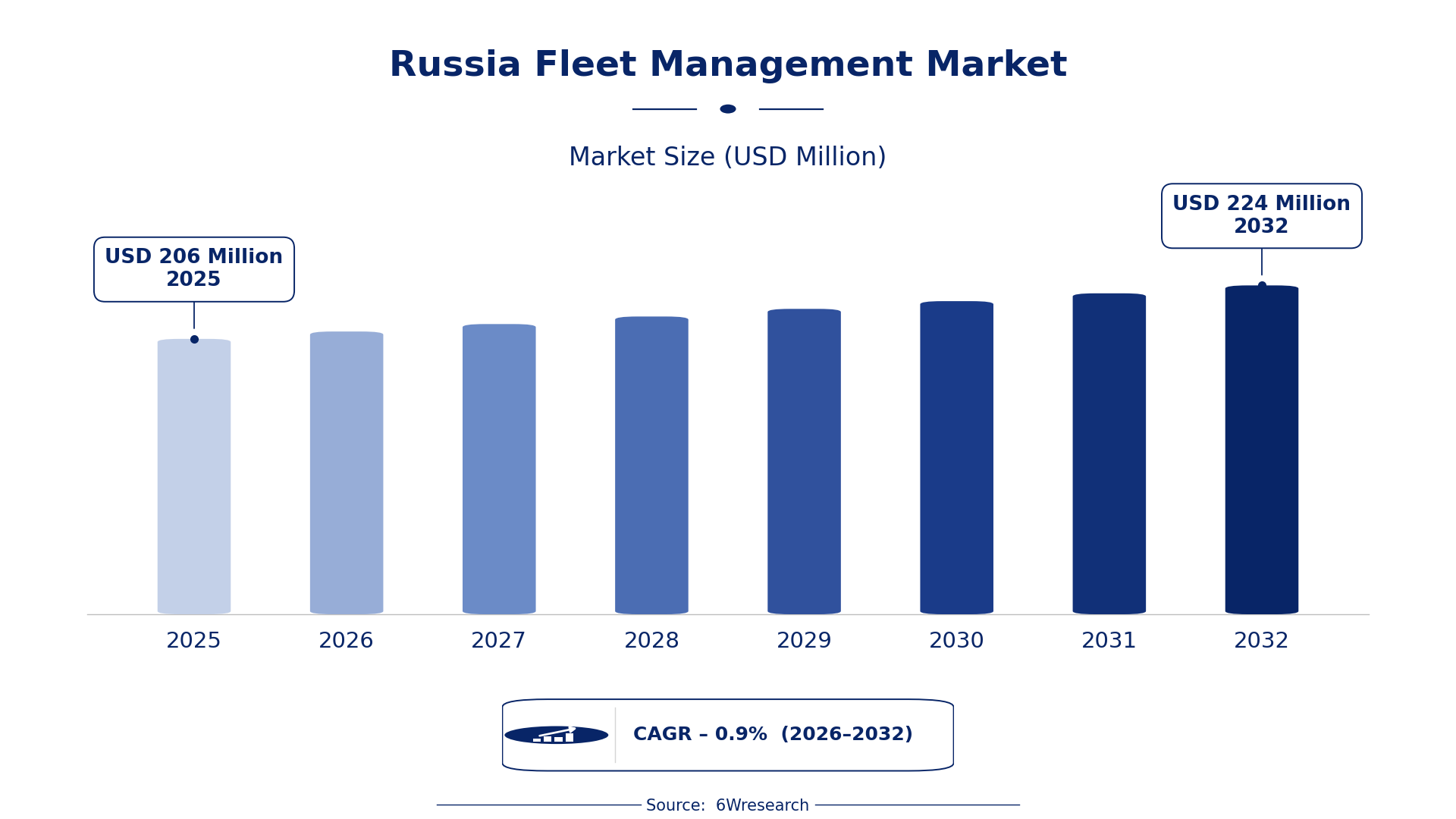
The Russia Fleet Management Market was estimated at USD 206 Million in 2025 and is projected to reach USD 224 Million by 2032, growing at a CAGR of 0.9% from 2026 to 2032.
Russia Fleet Management Market Synopsis
The Russia Fleet Management Market is at a critical juncture. Recent developments indicate a steady uptick in the adoption of advanced fleet technologies, particularly telematics and data analytics, which are reshaping how operators manage their fleets. However, the future trajectory hinges on navigating various challenges, including regulatory compliance and geopolitical factors that may affect operational stability.
In the coming years, the emphasis will shift towards integrating innovative solutions that enhance operational efficiency and safety. As businesses increasingly focus on sustainability and cost management, the demand for comprehensive fleet management systems that offer real-time insights will only intensify. The market is ripe for expansion, but only for those willing to adapt and innovate.
Russia Fleet Management Market Year-wise Growth Rate and Key Drivers
This graph illustrates the annual growth rates of the Russia Fleet Management Market from 2021 to 2032, highlighting a steady upward trajectory and projected expansion over the forecast period.
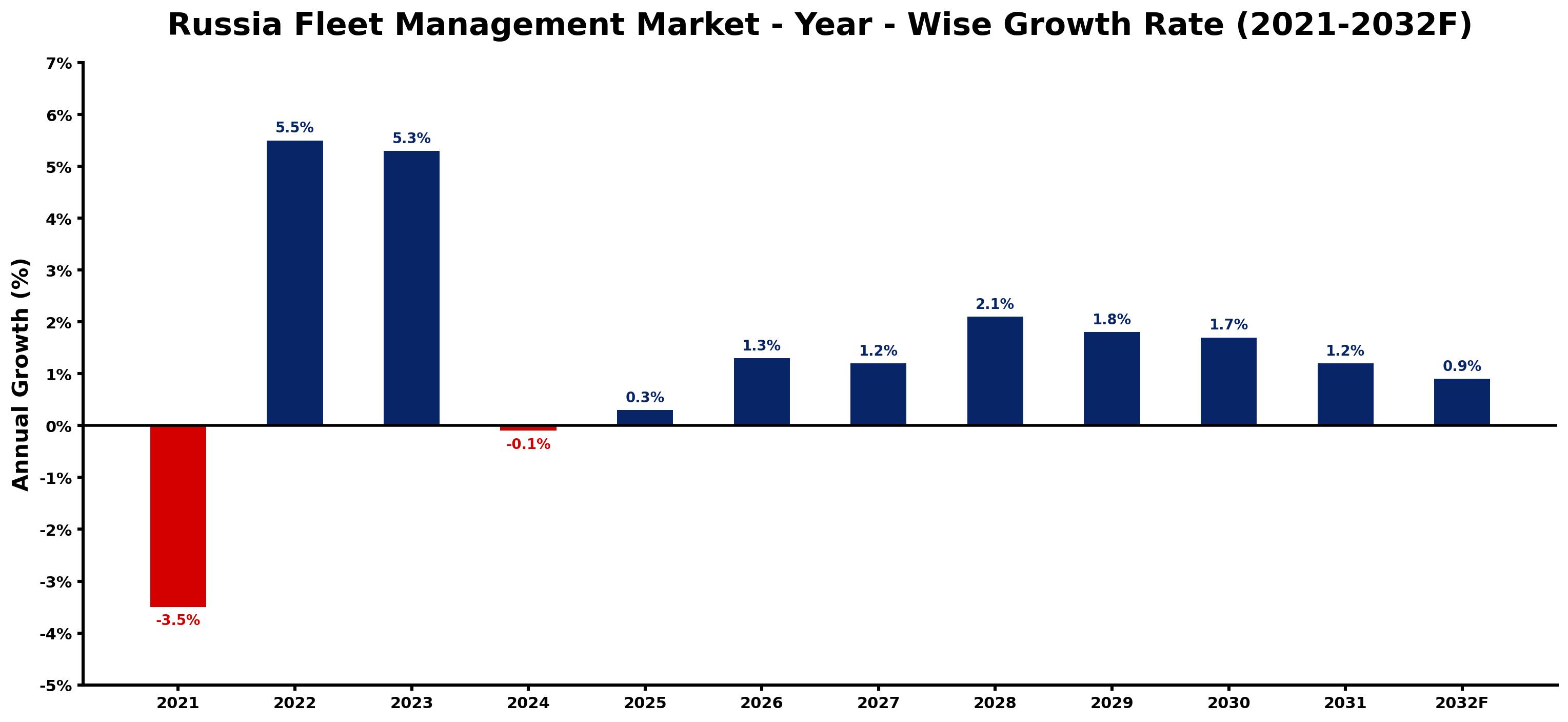
The table below presents the year‑wise growth rates along with the key drivers influencing the market
| Year | Growth Rate | Major Drivers |
| 2021 | -3.5% | Increased sanctions limiting foreign technology access |
| 2022 | 5.5% | Government promoting digital fleet tracking technologies. |
| 2023 | 5.3% | Increased investment in logistics infrastructure modernization efforts. |
| 2024 | -0.1% | Decline in oil prices affecting transport sector investments |
| 2025 | 0.3% | Emerging e-commerce driving need for efficient fleet management. |
| 2026 | 1.3% | Subsidies for eco-friendly fleet technology adoption. |
| 2027 | 1.2% | Rise in fuel prices boosting efficiency-focused solutions. |
| 2028 | 2.1% | Push for regulatory compliance in transportation sector. |
| 2029 | 1.8% | Growing importance of data analytics for fleet optimization. |
| 2030 | 1.7% | Development of domestic software for fleet operations. |
| 2031 | 1.2% | Increased awareness of fleet safety and maintenance standards. |
| 2032 | 0.9% | Local partnerships enhancing fleet technology integration. |
Note: Market size estimations and growth projections presented in this report are based on 6Wresearch's proprietary forecasting methodology, utilizing the latest available industry data, government publications, and primary research inputs.
Russia Fleet Management Market Key Takeaways
Below are some of the specific key takeaways from the market, including:
- The market is witnessing a significant rise in the use of telematics and IoT technologies.
- Government regulations are driving the need for better vehicle tracking and driver behavior monitoring.
- Increasing demand for eco-friendly practices is pushing the adoption of electric vehicles in fleets.
- Companies are focusing on integrating cloud-based solutions for improved operational efficiency.
- Investment opportunities are expanding in advanced fleet management solutions tailored for specific industries.
Evaluation of Restraints in Russia Fleet Management Market
The market is grappling with several key restraints that could hinder growth. Regulatory hurdles remain a significant barrier, with stringent compliance requirements placing pressure on fleet operators. Geopolitical uncertainties continue to create an unpredictable business environment, affecting investment decisions. Additionally, the vast and varied geography of Russia presents logistical challenges, especially in remote areas where infrastructure is lacking. These factors, coupled with the high competition among local and international players, make it essential for companies to be agile and strategic in their approach.
Russia Fleet Management Market Trends
Several trends are shaping the Russia Fleet Management Market. The integration of artificial intelligence and data analytics into fleet operations is gaining traction, enhancing decision-making processes and operational efficiencies. Businesses are increasingly gravitating towards cloud-based solutions, which facilitate real-time monitoring and reporting, making fleet management more accessible and efficient. The drive for sustainability is also notable, with a growing number of companies looking to implement electric vehicles and reduce carbon footprints as part of their fleet operations.
Russia Fleet Management Market Opportunities
The Russia Fleet Management Market presents numerous investment opportunities for businesses willing to innovate. Advanced fleet tracking systems and vehicle diagnostics are in high demand, as operators seek to optimize routes and reduce fuel consumption. There is also a growing need for platforms that provide comprehensive fleet visibility, allowing organizations to streamline their operations. With government initiatives focusing on modernization, there are ample opportunities for companies to develop integrated solutions that enhance productivity and efficiency within the transportation sector.
Government Initiatives in the Russia Fleet Management Market
Government policies are actively shaping the Russia Fleet Management Market by enforcing regulations that prioritize safety and efficiency. These initiatives are crucial for establishing a framework that promotes the adoption of technology within the fleet sector. Compliance with these regulations is essential for companies seeking to operate effectively in this environment.
- A recently completed initiative mandated the installation of GPS tracking devices in commercial vehicles to enhance monitoring and compliance with safety standards.
- Currently underway is a regulatory framework focused on improving driver behavior monitoring, which aims to reduce traffic accidents and improve road safety.
- A planned public-private partnership is expected to launch by 2026, aimed at upgrading transportation infrastructure to support more efficient fleet operations.
- In 2025, a new data protection policy was introduced, requiring fleet management companies to implement stringent measures for safeguarding sensitive driver and vehicle data.
- Upcoming initiatives include incentives for companies transitioning to electric vehicles, aimed at promoting sustainable fleet management practices.
Future Insights of the Russia Fleet Management Market
Looking ahead to 2026-2032, the Russia Fleet Management Market is expected to evolve significantly. As businesses increasingly recognize the value of data-driven decision-making, the integration of advanced technologies will become standard. The ongoing push for regulatory compliance and safety will further fuel demand for innovative fleet management solutions. Companies that invest in technology and adapt to the changing landscape will find themselves well-positioned for growth in this dynamic market.
Russia Fleet Management Market Latest Developments
In the past year, the Russia Fleet Management Market has seen a flurry of activity. Companies are rapidly innovating to meet the demands of a changing regulatory environment and shifting consumer expectations. The focus on sustainability and technology integration is palpable as firms seek to enhance their operational capabilities.
- A leading regional operator launched a new fleet management software platform in early 2025, providing advanced analytics and real-time tracking features.
- An initiative that began in mid-2025 is currently underway, focusing on enhancing vehicle diagnostics and predictive maintenance capabilities across fleets.
- A major technology vendor has announced plans for a rollout of an AI-driven route optimization tool expected to begin in the second half of 2026.
- In Q1 2025, a consortium of fleet operators completed a successful pilot program aimed at integrating electric vehicles into their fleets.
- Upcoming in late 2026, a comprehensive training program for fleet operators will be introduced to promote best practices in safety and efficiency.
Russia Fleet Management Market - Key Attractiveness of the Report
- 10 Years of Market Numbers
- Historical Data Starting from 2022 to 2025
- Base Year: 2025
- Forecast Data until 2032
- Key Performance Indicators Impacting the Market
- Major Upcoming Developments and Projects
Key Highlights of the Report:
- Russia Fleet Management Market Outlook
- Market Size of Russia Fleet Management Market, 2025
- Forecast of Russia Fleet Management Market, 2032
- Historical Data and Forecast of Russia Fleet Management Revenues & Volume for the Period 2022-2032F
- Russia Fleet Management Market Trend Evolution
- Russia Fleet Management Market Drivers and Challenges
- Russia Fleet Management Price Trends
- Russia Fleet Management Porter's Five Forces
- Russia Fleet Management Industry Life Cycle
- Historical Data and Forecast of Russia Fleet Management Market Revenues & Volume By Solution for the Period 2022-2032F
- Historical Data and Forecast of Russia Fleet Management Market Revenues & Volume By Operations Management for the Period 2022-2032F
- Historical Data and Forecast of Russia Fleet Management Market Revenues & Volume By Vehicle Maintenance and Diagnostics for the Period 2022-2032F
- Historical Data and Forecast of Russia Fleet Management Market Revenues & Volume By Fleet Analytics and Reporting for the Period 2022-2032F
- Historical Data and Forecast of Russia Fleet Management Market Revenues & Volume By Deployment Type for the Period 2022-2032F
- Historical Data and Forecast of Russia Fleet Management Market Revenues & Volume By Cloud for the Period 2022-2032F
- Historical Data and Forecast of Russia Fleet Management Market Revenues & Volume By On-premises for the Period 2022-2032F
- Historical Data and Forecast of Russia Fleet Management Market Revenues & Volume By Fleet Type for the Period 2022-2032F
- Historical Data and Forecast of Russia Fleet Management Market Revenues & Volume By Commercial Fleets for the Period 2022-2032F
- Historical Data and Forecast of Russia Fleet Management Market Revenues & Volume By Passenger Cars for the Period 2022-2032F
- Historical Data and Forecast of Russia Fleet Management Market Revenues & Volume By Service for the Period 2022-2032F
- Historical Data and Forecast of Russia Fleet Management Market Revenues & Volume By Professional Services for the Period 2022-2032F
- Historical Data and Forecast of Russia Fleet Management Market Revenues & Volume By Managed Services for the Period 2022-2032F
- Historical Data and Forecast of Russia Fleet Management Market Revenues & Volume By Vertical for the Period 2022-2032F
- Historical Data and Forecast of Russia Fleet Management Market Revenues & Volume By Retail for the Period 2022-2032F
- Historical Data and Forecast of Russia Fleet Management Market Revenues & Volume By Healthcare and Pharmaceutical for the Period 2022-2032F
- Historical Data and Forecast of Russia Fleet Management Market Revenues & Volume By Construction for the Period 2022-2032F
- Historical Data and Forecast of Russia Fleet Management Market Revenues & Volume By Transportation and Logistics for the Period 2022-2032F
- Historical Data and Forecast of Russia Fleet Management Market Revenues & Volume By Utilities for the Period 2022-2032F
- Historical Data and Forecast of Russia Fleet Management Market Revenues & Volume By Oil, Gas, and Mining for the Period 2022-2032F
- Historical Data and Forecast of Russia Fleet Management Market Revenues & Volume By Government for the Period 2022-2032F
- Historical Data and Forecast of Russia Fleet Management Market Revenues & Volume By Other Verticals for the Period 2022-2032F
- Russia Fleet Management Import Export Trade Statistics
- Market Opportunity Assessment By Solution
- Market Opportunity Assessment By Deployment Type
- Market Opportunity Assessment By Fleet Type
- Market Opportunity Assessment By Service
- Market Opportunity Assessment By Vertical
- Russia Fleet Management Top Companies Market Share
- Russia Fleet Management Competitive Benchmarking By Technical and Operational Parameters
- Russia Fleet Management Company Profiles
- Russia Fleet Management Key Strategic Recommendations






































