Colombia Industrial Computers Market Summary
The colombia industrial computers market was estimated at USD 218 Million in 2025 and is projected to reach USD 238 Million by 2032, growing at a CAGR of 1.0% from 2026 to 2032.
Colombia Industrial Computers Market Year-wise Growth Rate and Key Drivers
This graph highlights how the Colombia Industrial Computers Market has steadily grown over the past five years, supported by major growth factors.
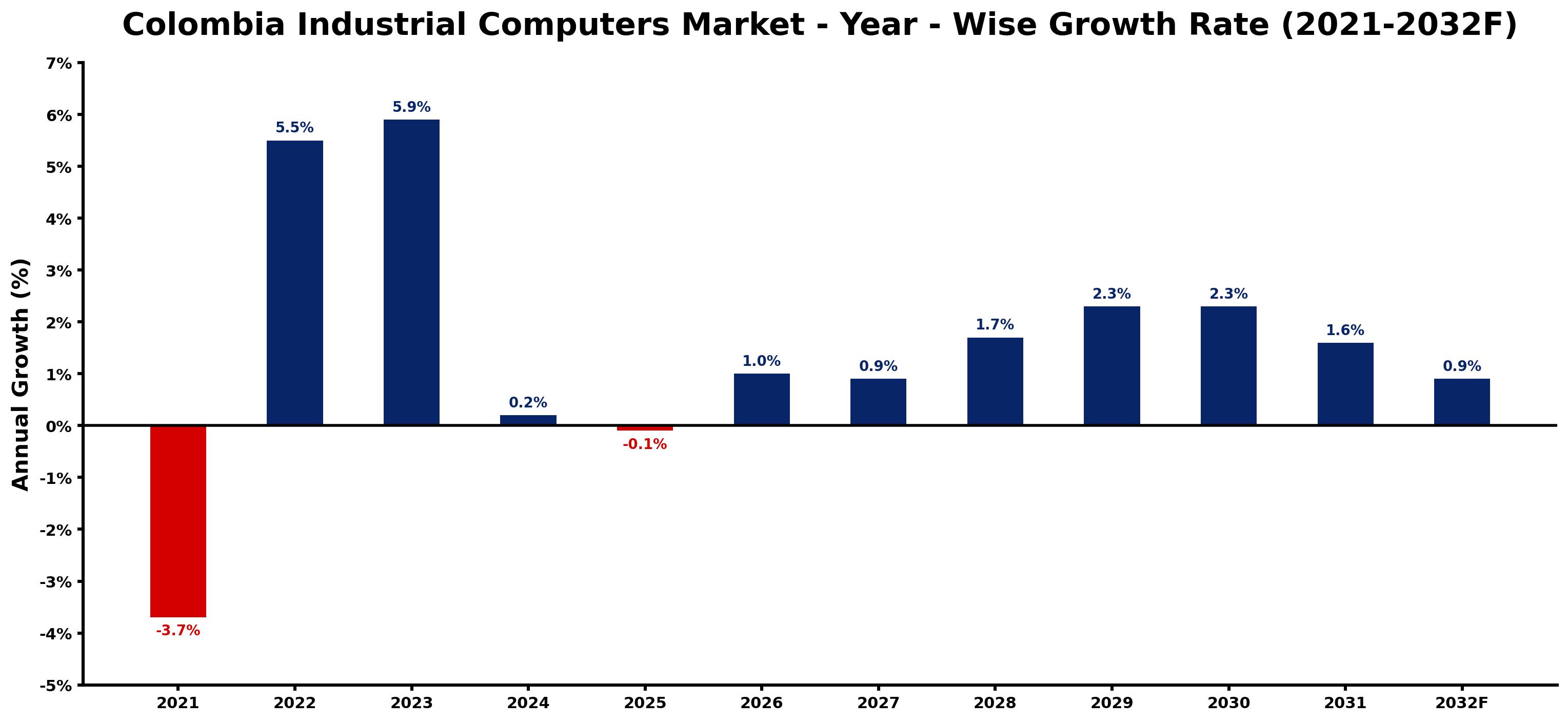
The table below presents the year wise growth rates along with the key drivers influencing the market
| Year | Growth Rate | Major Drivers |
| 2021 | -3.7% | Supply chain disruptions hampered delivery timelines, leading to project delays and decreased demand for industrial computing solutions. |
| 2022 | 5.5% | Post-pandemic recovery fosters investments in automation and digitization of industrial operations. |
| 2023 | 5.9% | Infrastructure upgrades stimulate interest in robust industrial computing solutions nationwide. |
| 2024 | 0.2% | Colombia's urbanization trend pushes industries to seek efficient computing power. |
| 2025 | -0.1% | Supply chain disruptions, exacerbated by geopolitical tensions, impeded timely production and delivery of industrial computers. |
| 2026 | 1.0% | Logistics challenges create a need for advanced computing solutions in supply chains. |
| 2027 | 0.9% | International partnerships enhance knowledge transfer in industrial computing technologies. |
| 2028 | 1.7% | Energy sector modernization encourages adoption of high-performance industrial computing systems. |
| 2029 | 2.3% | Increased focus on sustainability drives demand for energy-efficient computing solutions. |
| 2030 | 2.3% | Local manufacturing initiatives highlight the need for tailored industrial computing applications. |
| 2031 | 1.6% | Cybersecurity threats prompt investment in secure industrial computing infrastructures. |
| 2032 | 0.9% | Technological convergence in automation and AI stimulates growth of industrial computer market. |
Note - Market size estimations and growth projections presented in this report are based on 6Wresearch's advanced forecasting approach, validated with industry datasets as of June 2026.
Colombia Industrial Computers Market Synopsis
The Colombia Industrial Computers Market is projected to reach 1.0% and witness significant growth during the forecast period (2026-2032). This sector is driven primarily by increased automation in manufacturing, transportation, and healthcare industries, where the demand for robust and dependable computing solutions is on the rise. As companies pursue greater efficiency through advanced technology, the necessity for reliable industrial computers that can withstand tough environments continues to escalate.
Colombia Industrial Computers Market Growth Drivers
Several factors are driving growth in the Colombia Industrial Computers Market. First, the integration of Industry 4.0 technologies, including the Internet of Things (IoT) and artificial intelligence (AI), is revolutionizing operational processes, enhancing productivity, and minimizing downtime in various sectors. Second, as the need for automation escalates, industries are investing in sophisticated computing solutions that can adeptly manage complex tasks.
- The push for digital transformation across Colombian industries is prompting companies to adopt innovative technologies, paving the way for industrial computers that facilitate higher data processing capacity.
- Increased focus on operational efficiency and cost reduction is leading businesses to seek out ruggedized industrial computers that can operate reliably in challenging conditions.
- The expansion of smart factories and automated systems is creating a heightened demand for industrial PCs capable of real-time data processing and decision-making.
- Investment in infrastructure is crucial; as Colombia enhances its technological frameworks, the appetite for industrial computing solutions will likely accelerate.
- The ongoing trend towards edge computing will drive demand for more sophisticated industrial computers that can process data closer to the source, reducing latency and enhancing performance.
Colombia Industrial Computers Market Trends and Opportunities
The Colombia Industrial Computers Market is witnessing key trends that indicate substantial opportunities for growth and investment. A noticeable trend is the shift towards compact yet ruggedized industrial PCs designed to endure harsh environmental conditions. As operational landscapes become more challenging, manufacturers are increasingly prioritizing the durability and reliability of their computer systems.
- The adoption of advanced features, such as high processing capabilities and enhanced connectivity, is gaining traction, making industrial PCs more appealing to various sectors.
- Industries such as manufacturing, energy, and transportation are increasingly focusing on control and automation applications, which is intensifying the demand for specialized industrial computers.
- An innovative approach to industrial computers is evident with technologies that support edge computing, catering to the real-time processing needs of contemporary industrial applications.
- With the rise of Industry 4.0, there is a burgeoning market for embedded systems and industrial IoT solutions that facilitate integrated operations across various sectors.
- The convergence of IT and operational technologies presents a lucrative avenue for businesses that can offer integrated computing solutions tailored to the needs of industries moving towards digitalization.
Colombia Industrial Computers Market Challenges and Restraints
Despite the positive growth trajectory, the Colombia Industrial Computers Market faces several challenges. One significant barrier is the high initial cost associated with implementing industrial computing and automation systems. Many companies, especially small and medium enterprises, find it challenging to justify these upfront investments, which could hinder broader adoption.
- The limited availability of a skilled workforce experienced in advanced industrial computing poses a problem, as organizations struggle to find qualified personnel for their technological needs.
- Cybersecurity concerns remain paramount, with industrial computer systems facing heightened risks as they become more interconnected, necessitating robust protection measures.
- Interoperability issues among different industrial systems can lead to inefficiencies and complications, inhibiting seamless integration across platforms.
- To remain competitive, continuous technological advancement is needed, presenting a challenge for companies to keep pace with rapid evolution in technology.
Colombia Industrial Computers Market Investment Opportunities
The potential for investment in the Colombia Industrial Computers Market is promising. As various sectors, including manufacturing and energy, increasingly prioritize automation and digitalization, the need for advanced industrial computing solutions is expected to grow.
- Investors should consider companies focused on the development of ruggedized industrial computers and embedded systems, which are well-positioned to thrive in this environment.
- The modernization of Colombia's infrastructure is a critical factor, providing an ideal landscape for growth in the industrial computers sector.
- There is a growing trend towards participatory partnerships between private entities and government initiatives aimed at nurturing innovation in industrial computing.
- Investment in cybersecurity solutions tailored for industrial settings presents an additional opportunity, as protection of data becomes increasingly crucial.
- Geographical expansion into emerging regions within Colombia's industrial landscape can open new avenues for growth and foster competitive advantages.
Colombia Industrial Computers Market Government Investment and Initiatives
The Colombian government is actively promoting the growth of the industrial computers market through a series of initiatives and investments. Policies are designed to foster innovation, technological advancement, and partnerships between the industry and academic institutions to facilitate research and development.
- The provision of tax incentives for companies investing in the research and production of industrial computing technologies is a key aspect of government support.
- Regulatory frameworks are in place to enhance product quality, safety, and compliance with industry standards, positioning Colombian manufacturers favorably in the global market.
- Government initiatives often focus on stimulating collaborative projects that integrate different sectors, enhancing the overall ecosystem for industrial computing.
- Investment in infrastructure development projects further lays the groundwork for companies to adopt modern industrial computing solutions.
- The Colombian government aims to create a conducive environment for the growth of industrial computing, contributing positively to the nation's economic development.
Colombia Industrial Computers Market Latest Developments (May 2025 - June 2026)
During the period from May 2025 to June 2026, the Colombia Industrial Computers Market has witnessed several notable developments. The industry's direction has shifted towards greater integration of IoT capabilities, reflecting a broader trend in industrial automation. Companies are increasingly investing in advanced computing solutions that facilitate smart operations and interconnected systems.
- There has been a marked increase in projects focusing on the modernization of existing industrial facilities, demonstrating a commitment to embracing cutting-edge technologies.
- Strategic partnerships between technology providers and industrial sectors have been established to foster innovation and enhance product offerings, reinforcing market dynamism.
- A focus on addressing cybersecurity challenges has gained momentum, with companies prioritizing the implementation of robust security measures for their industrial computing environments.
- The emphasis on training and developing a skilled workforce to support advanced industrial computing solutions has garnered attention from both government and private sectors.
- Overall, the advancements and strategic movements within this period indicate an optimistic outlook for the Colombia Industrial Computers Market, driven by technological innovation and market demand.
Colombia Industrial Computers Market - Key Attractiveness of the Report
- 10 Years of Market Numbers
- Historical Data Starting from 2022 to 2025
- Base Year: 2025
- Forecast Data until 2032
- Key Performance Indicators Impacting the Market
- Major Upcoming Developments and Projects
Key Highlights of the Report:
- Colombia Industrial Computers Market Outlook
- Market Size of Colombia Industrial Computers Market, 2025
- Forecast of Colombia Industrial Computers Market, 2032F
- Historical Data and Forecast of Colombia Industrial Computers Revenues & Volume for the Period 2022-2032F
- Colombia Industrial Computers Market Trend Evolution
- Colombia Industrial Computers Market Drivers and Challenges
- Colombia Industrial Computers Price Trends
- Colombia Industrial Computers Porter's Five Forces
- Colombia Industrial Computers Industry Life Cycle
- Historical Data and Forecast of Colombia Industrial Computers Market Revenues & Volume By Type for the Period 2022-2032F
- Historical Data and Forecast of Colombia Industrial Computers Market Revenues & Volume By Panel for the Period 2022-2032F
- Historical Data and Forecast of Colombia Industrial Computers Market Revenues & Volume By Box for the Period 2022-2032F
- Historical Data and Forecast of Colombia Industrial Computers Market Revenues & Volume By Embedded for the Period 2022-2032F
- Historical Data and Forecast of Colombia Industrial Computers Market Revenues & Volume By Din Rail for the Period 2022-2032F
- Historical Data and Forecast of Colombia Industrial Computers Market Revenues & Volume By Rack Mount for the Period 2022-2032F
- Historical Data and Forecast of Colombia Industrial Computers Market Revenues & Volume By Thin Client for the Period 2022-2032F
- Historical Data and Forecast of Colombia Industrial Computers Market Revenues & Volume By Technology for the Period 2022-2032F
- Historical Data and Forecast of Colombia Industrial Computers Market Revenues & Volume By Resistive for the Period 2022-2032F
- Historical Data and Forecast of Colombia Industrial Computers Market Revenues & Volume By Capacitive for the Period 2022-2032F
- Historical Data and Forecast of Colombia Industrial Computers Market Revenues & Volume By Others for the Period 2022-2032F
- Historical Data and Forecast of Colombia Industrial Computers Market Revenues & Volume By ?End Use for the Period 2022-2032F
- Historical Data and Forecast of Colombia Industrial Computers Market Revenues & Volume By Automotive for the Period 2022-2032F
- Historical Data and Forecast of Colombia Industrial Computers Market Revenues & Volume By Chemicals for the Period 2022-2032F
- Historical Data and Forecast of Colombia Industrial Computers Market Revenues & Volume By Electronics for the Period 2022-2032F
- Historical Data and Forecast of Colombia Industrial Computers Market Revenues & Volume By Oil & Gas for the Period 2022-2032F
- Historical Data and Forecast of Colombia Industrial Computers Market Revenues & Volume By Food & Beverages for the Period 2022-2032F
- Historical Data and Forecast of Colombia Industrial Computers Market Revenues & Volume By Pharmaceuticals for the Period 2022-2032F
- Historical Data and Forecast of Colombia Industrial Computers Market Revenues & Volume By Others for the Period 2022-2032F
- Colombia Industrial Computers Import Export Trade Statistics
- Market Opportunity Assessment By Type
- Market Opportunity Assessment By Technology
- Market Opportunity Assessment By ?End Use
- Colombia Industrial Computers Top Companies Market Share
- Colombia Industrial Computers Competitive Benchmarking By Technical and Operational Parameters
- Colombia Industrial Computers Company Profiles
- Colombia Industrial Computers Key Strategic Recommendations






































