Colombia Used Car Market Summary
The colombia used car market was estimated at USD 242 Million in 2025 and is projected to reach USD 264 Million by 2032, growing at a CAGR of 0.9% from 2026 to 2032.
Colombia Used Car Market Year-wise Growth Rate and Key Drivers
This graph highlights how the Colombia Used Car Market has steadily grown over the past five years, supported by major growth factors.
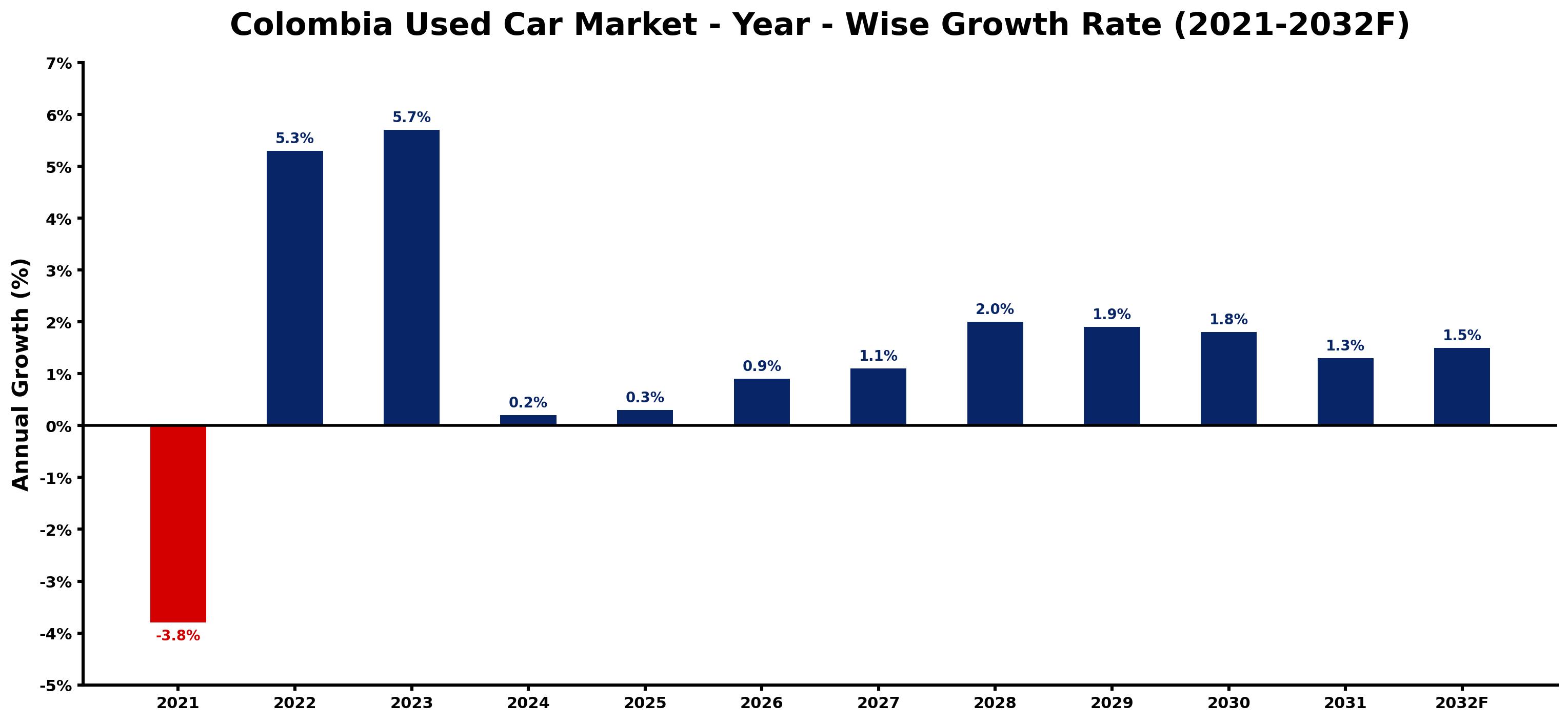
The table below presents the year wise growth rates along with the key drivers influencing the market
| Year | Growth Rate | Major Drivers |
| 2021 | -3.8% | Increased economic uncertainty led to a decline in discretionary spending on used vehicles. |
| 2022 | 5.3% | Rising inflation led buyers to seek budget-friendly alternatives rather than new cars. |
| 2023 | 5.7% | Increased online marketplaces enabled easier access to used car listings across Colombia. |
| 2024 | 0.2% | Financial institutions began offering competitive loans tailored for used car purchases, boosting sales. |
| 2025 | 0.3% | Younger generations started prioritizing sustainability, favoring pre-owned vehicles over new ones. |
| 2026 | 0.9% | Improved vehicle inspection regulations enhanced buyer confidence in used car quality and safety. |
| 2027 | 1.1% | Urbanization trends increased demand for compact used cars suited for city living conditions. |
| 2028 | 2.0% | The proliferation of social media platforms helped facilitate peer-to-peer car sales connections. |
| 2029 | 1.9% | Rising fuel prices pushed consumers towards fuel-efficient used vehicles that lower operational costs. |
| 2030 | 1.8% | Growing environmental awareness led to increased interest in electric and hybrid used cars. |
| 2031 | 1.3% | E-commerce advancements provided seamless buying experiences, driving online used car transactions. |
| 2032 | 1.5% | Strengthening economic conditions encouraged higher disposable incomes, expanding the used car market further. |
Note - Market size estimations and growth projections presented in this report are based on 6Wresearch's advanced forecasting approach, validated with industry datasets as of June 2026.
Colombia Used Car Market Synopsis
The Colombia Used Car Market is projected to reach 0.9% and witness significant growth during the forecast period (2026-2032). This market is fundamentally shaped by a variety of consumer preferences, economic factors, and regulatory influences. The increasing demand for affordable transportation options, combined with an expanding middle-class population, is driving the growth of the used car sector. Consumers are showing a preference for vehicles that offer reliability, fuel efficiency, and competitive resale value, further contributing to this upward trend.
Colombia Used Car Market Trends and Opportunities
In the evolving landscape of the Colombia Used Car Market, several significant trends are emerging that offer lucrative opportunities for stakeholders. Chief among these is the rising demand for fuel-efficient and environmentally friendly vehicles. As Colombian consumers become increasingly conscious of sustainability and operational costs, there is a discernible shift toward vehicles that meet these criteria.
- Moreover, the integration of advanced technological features such as infotainment systems and driver-assist technologies is becoming a priority for buyers. As technology in vehicles enhances the driving experience and safety, interest in used cars equipped with these features is on the rise.
- Online platforms and digital marketplaces are revolutionizing the way used cars are bought and sold. The convenience and transparency these platforms provide are appealing to consumers, who appreciate the ability to compare options from the comfort of their homes.
- The popularity of certified pre-owned vehicles is increasing as consumers seek assurance of quality and warranty. This trend not only enhances consumer confidence but also expands the market for dealerships offering certified pre-owned options.
- The Colombian government's focus on enhancing urban mobility is further supporting these trends, as policies aimed at promoting efficient transportation systems help increase the attractiveness of pre-owned vehicles among urban dwellers.
- Additionally, flexible financing solutions are becoming critical, enabling more consumers to access pre-owned vehicles and thereby expanding the market base.
Colombia Used Car Market Challenges and Restraints
Despite the promising outlook for the Colombia Used Car Market, several challenges persist that could impede growth. One of the primary concerns is the lack of transparency regarding vehicle history and condition, which contributes to buyer skepticism and increases the potential for fraud.
- Counterfeit parts prevalent in the market complicate the purchasing process, as buyers often face difficulties in verifying the authenticity and quality of parts used in pre-owned vehicles.
- The limited financing options available to consumers, particularly those with lower incomes, hinder access to used cars, creating a barrier to entry for a significant segment of the population.
- Additionally, high-interest rates can deter consumers from considering financing options, further slowing market growth.
- Competition from the new car market poses a substantial threat, as the allure of purchasing new vehicles with advanced features can overshadow the appeal of used cars.
- Informal sales channels also contribute to market complexity, leading to regulatory challenges and further complicating consumer trust in the industry.
Colombia Used Car Market Government Investment and Initiatives
The role of government policy in shaping the Colombia Used Car Market is significant. Regulations concerning vehicle emissions and safety standards are pertinent, ensuring that pre-owned vehicles meet necessary environmental requirements, which aligns with global sustainability trends.
- The Colombian government has implemented several initiatives aimed at enhancing consumer protection, focusing on mitigating vehicle theft and fraud through improved registration and inspection processes.
- Import tariffs on used vehicles serve to protect local industries while generating government revenue, balancing the interests of consumers and domestic manufacturers.
- Public spending on transportation infrastructure and urban mobility initiatives also influences the market, with plans to improve road conditions and accessibility, making ownership of used vehicles more appealing.
- Ongoing efforts to educate consumers about the benefits and risks associated with used car purchases further demonstrate the government's commitment to fostering a transparent and trustworthy market environment.
- Overall, these policies aim to create a stable landscape for the Colombia Used Car Market, promoting fair competition and ensuring the safety and satisfaction of consumers.
Colombia Used Car Market Latest Developments (May 2025 - June 2026)
Recent developments in the Colombia Used Car Market from May 2025 to June 2026 indicate an ongoing evolution toward greater reliance on digital platforms for transactions. The increased adoption of technology by dealerships and consumers alike is streamlining the buying and selling process, enabling more efficient transactions.
- Additionally, new partnerships between financial institutions and dealerships have emerged, offering innovative financing solutions that are more accessible to a broader audience.
- Consumer interest in electric and hybrid vehicles is rising, catalyzed by government incentives that encourage eco-friendly transportation, further impacting vehicle availability and market dynamics.
- Enhanced regulatory frameworks have been introduced to promote transparency, including stricter standards for documentation and vehicle history, which aim to build consumer trust in the used car sector.
- Market participants are increasingly focusing on customer service and post-sale support as a key differentiator to enhance competitiveness in an increasingly crowded market.
- The overall sentiment in the market remains optimistic, with stakeholders preparing for further growth driven by improving economic conditions and a focus on sustainable practices.
Colombia Used Car Market - Key Attractiveness of the Report
- 10 Years of Market Numbers
- Historical Data Starting from 2022 to 2025
- Base Year: 2025
- Forecast Data until 2032
- Key Performance Indicators Impacting the Market
- Major Upcoming Developments and Projects
Key Highlights of the Report:
- Colombia Used Car Market Outlook
- Market Size of Colombia Used Car Market, 2025
- Forecast of Colombia Used Car Market, 2032F
- Historical Data and Forecast of Colombia Used Car Revenues & Volume for the Period 2022-2032F
- Colombia Used Car Market Trend Evolution
- Colombia Used Car Market Drivers and Challenges
- Colombia Used Car Price Trends
- Colombia Used Car Porter's Five Forces
- Colombia Used Car Industry Life Cycle
- Historical Data and Forecast of Colombia Used Car Market Revenues & Volume By Vehicle Type for the Period 2022-2032F
- Historical Data and Forecast of Colombia Used Car Market Revenues & Volume By Hatchbacks for the Period 2022-2032F
- Historical Data and Forecast of Colombia Used Car Market Revenues & Volume By Sedan for the Period 2022-2032F
- Historical Data and Forecast of Colombia Used Car Market Revenues & Volume By Sports Utility Vehicle for the Period 2022-2032F
- Historical Data and Forecast of Colombia Used Car Market Revenues & Volume By Others for the Period 2022-2032F
- Historical Data and Forecast of Colombia Used Car Market Revenues & Volume By Vendor for the Period 2022-2032F
- Historical Data and Forecast of Colombia Used Car Market Revenues & Volume By Organized for the Period 2022-2032F
- Historical Data and Forecast of Colombia Used Car Market Revenues & Volume By Unorganized for the Period 2022-2032F
- Historical Data and Forecast of Colombia Used Car Market Revenues & Volume By Fuel Type for the Period 2022-2032F
- Historical Data and Forecast of Colombia Used Car Market Revenues & Volume By Gasoline for the Period 2022-2032F
- Historical Data and Forecast of Colombia Used Car Market Revenues & Volume By Diesel for the Period 2022-2032F
- Historical Data and Forecast of Colombia Used Car Market Revenues & Volume By Alternative Fuel Vehicles for the Period 2022-2032F
- Colombia Used Car Import Export Trade Statistics
- Market Opportunity Assessment By Vehicle Type
- Market Opportunity Assessment By Vendor
- Market Opportunity Assessment By Fuel Type
- Colombia Used Car Top Companies Market Share
- Colombia Used Car Competitive Benchmarking By Technical and Operational Parameters
- Colombia Used Car Company Profiles
- Colombia Used Car Key Strategic Recommendations






































