Italy Used Car Market Summary
The italy used car market was estimated at USD 152 Million in 2025 and is projected to reach USD 167 Million by 2032, growing at a CAGR of 1.5% from 2026 to 2032.
Italy Used Car Market Year-wise Growth Rate and Key Drivers
This graph highlights how the Italy Used Car Market has steadily grown over the past five years, supported by major growth factors.
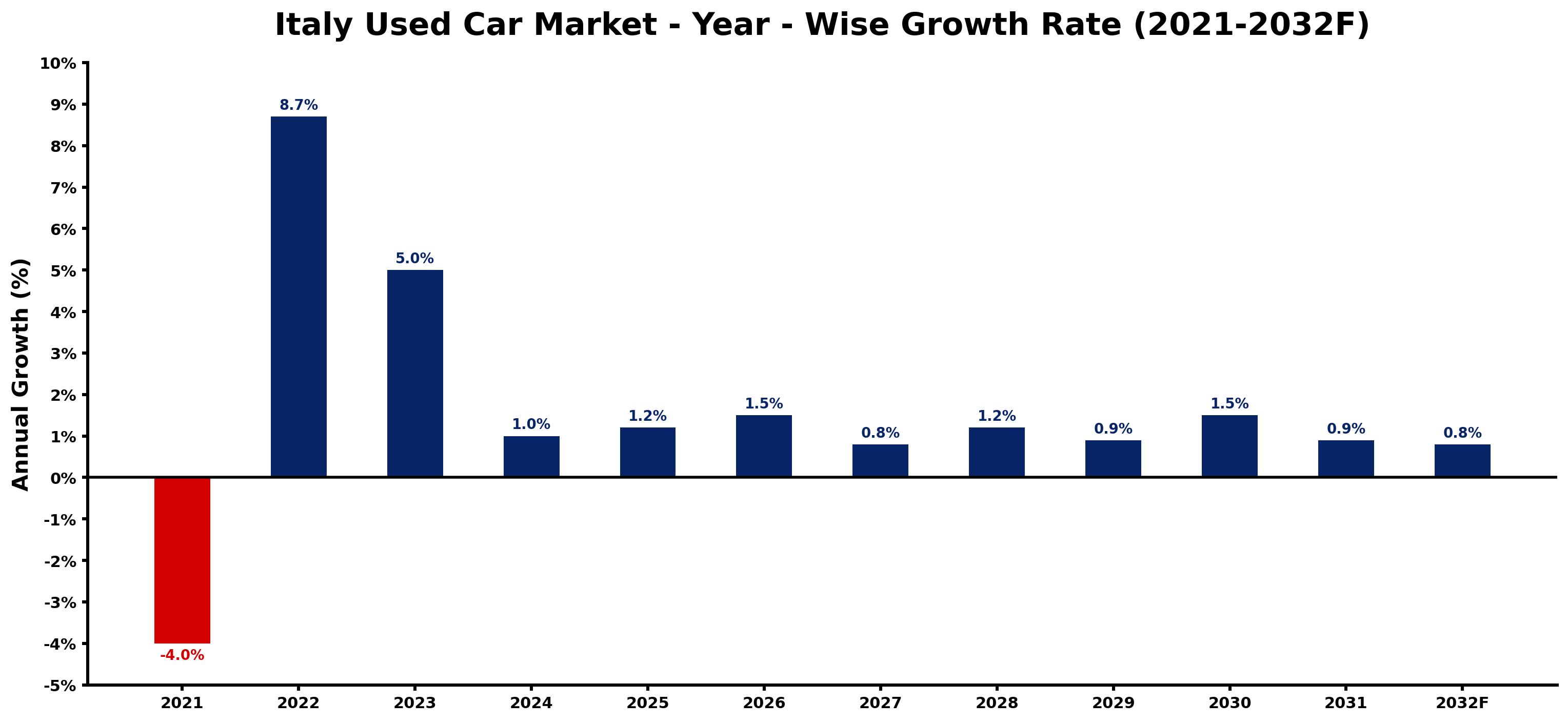
The table below presents the year wise growth rates along with the key drivers influencing the market
| Year | Growth Rate | Major Drivers |
| 2021 | -4.0% | Increased pandemicrelated restrictions limited consumer mobility and suppressed demand for used vehicles. |
| 2022 | 8.7% | Economic recovery prompted consumers to seek budget-friendly alternatives to new cars. |
| 2023 | 5.0% | Digital marketplaces emerged as popular platforms for buying and selling used vehicles. |
| 2024 | 1.0% | Rising fuel prices encouraged consumers to opt for fuel-efficient used cars. |
| 2025 | 1.2% | Urbanization trends increased demand for compact and affordable used vehicles in cities. |
| 2026 | 1.5% | Technological innovations enhanced vehicle inspection processes, boosting buyer confidence in used cars. |
| 2027 | 0.8% | Environmental awareness shifted preferences towards hybrid and electric used vehicles in Italy. |
| 2028 | 1.2% | Financing options expanded, making it easier for consumers to purchase used cars. |
| 2029 | 0.9% | Aging vehicle fleet in Italy created high demand for reliable pre-owned automobiles. |
| 2030 | 1.5% | Shifts in consumer behavior favored personal vehicles over public transport post-pandemic. |
| 2031 | 0.9% | Insurance incentives for used car purchases attracted customers seeking affordable mobility solutions. |
| 2032 | 0.8% | Trade-in programs gained popularity, facilitating the exchange of older vehicles for newer used options. |
Note - Market size estimations and growth projections presented in this report are based on 6Wresearch's advanced forecasting approach, validated with industry datasets as of June 2026.
Italy Used Car Market Synopsis
The Italy Used Car Market is projected to reach 1.5% and witness significant growth during the forecast period (2026-2032). This vibrant sector is shaped by a variety of elements, particularly the increasing demand for affordable transportation alternatives. The market has proven resilient, adapting to changing consumer preferences while capitalizing on the popularity of certain brands and the growing trend of purchasing used vehicles as a cost-effective solution.
Italy Used Car Market Growth Drivers
The growth trajectory of the Italy Used Car Market is driven by multiple factors. First and foremost, economic conditions play a crucial role; as consumers look to minimize costs, used cars become a more appealing option. Additionally, the reputation of established brands such as Fiat and Volkswagen continues to fuel demand, with shoppers often gravitating towards familiar names. Furthermore, legislative changes aimed at reducing emissions have prompted consumers to consider alternative vehicle types, including electric and hybrid options, enhancing the market's versatility. Online platforms have also emerged as vital facilitators of the buying process, providing access to a wide range of options and streamlined transactions. Finally, the overall consumer tendency to seek value in their purchases strengthens the used car segment's position.
Italy Used Car Market Trends and Opportunities
In recent years, the Italy Used Car Market has witnessed several key trends reshaping its landscape. A notable shift towards electric and hybrid vehicles is emerging, spurred by increased environmental awareness among consumers. This trend indicates a significant opportunity for sellers to focus on eco-friendly pre-owned options. The digital transformation of the industry is also significant; online marketplaces have become essential for buying and selling, enhancing the convenience and accessibility of transactions. The rising interest in certified pre-owned vehicles underscores a consumer preference for quality and reliability, motivating dealers to invest in enhancing their offerings. As competition intensifies, value-added services such as vehicle inspections and warranties are becoming important differentiators in attracting buyers. Collectively, these trends point to a market that is evolving towards sustainability, digital innovation, and customer-centric approaches.
Italy Used Car Market Challenges and Restraints
Despite robust growth, the Italy Used Car Market faces several challenges. A primary concern is the prevalence of counterfeit vehicles, which creates trust issues for potential buyers. Additionally, the absence of a standardized pricing framework complicates the process for consumers attempting to ascertain the fair market value of a vehicle. Bureaucratic hurdles related to ownership transfer can also discourage participation, as the time-consuming paperwork presents a significant barrier. Furthermore, competition from the new car market, along with shifting consumer preferences towards eco-friendly options, poses an ongoing challenge to the used car segment. Lastly, fluctuations in economic conditions and regulatory changes could introduce further uncertainties that stakeholders must navigate.
Italy Used Car Market Investment Opportunities
There are promising investment opportunities within the Italy Used Car Market for those prepared to engage strategically. The expansion of online marketplaces presents a lucrative avenue; investing in technology that enhances the buying and selling process for used cars can lead to significant returns. Furthermore, the increasing focus on electric and hybrid vehicles suggests that investors can find success in promoting the resale of eco-friendly options. The market also shows potential in developing value-added services such as thorough vehicle inspections, certifications, and extended warranties, which can enhance the overall consumer experience and elevate the perceived value of pre-owned vehicles. By embracing innovative solutions and sustainable practices, investors can position themselves favorably in this evolving marketplace.
Italy Used Car Market Government Investment and Initiatives
The Italian government has implemented several policies aimed at strengthening the used car market. These initiatives include regulations designed to combat odometer tampering, which helps to ensure transparency in vehicle history reports. Strict emissions standards are enforced to mitigate the environmental impact of older vehicles, encouraging consumers to opt for newer, less polluting models. To protect consumer rights, policies mandate warranties on used car purchases and prohibit unfair sales practices. The government also promotes the trade-in of older vehicles for more environmentally friendly models through financial incentives. Collectively, these policies are intended to foster a fair, competitive, and environmentally responsible used car market in Italy.
Italy Used Car Market Latest Developments (May 2025 - June 2026)
In the months leading up to the mid-2026 period, the Italy Used Car Market has seen a marked acceleration towards digitalization. The ongoing integration of advanced technologies in online platforms has increased consumer engagement, while providing a more efficient buying and selling experience. Additionally, there has been a notable rise in partnerships between technology firms and automotive platforms aimed at enhancing vehicle transparency and consumer trust. The push for sustainable transportation has further intensified, reflected in the growing acceptance of electric and hybrid vehicles among consumers. Furthermore, legislative actions taken to bolster consumer protection and vehicle transparency have gained momentum, reinforcing confidence in the market.
Italy Used Car Market - Key Attractiveness of the Report
- 10 Years of Market Numbers
- Historical Data Starting from 2022 to 2025
- Base Year: 2025
- Forecast Data until 2032
- Key Performance Indicators Impacting the Market
- Major Upcoming Developments and Projects
Key Highlights of the Report:
- Italy Used Car Market Outlook
- Market Size of Italy Used Car Market, 2025
- Forecast of Italy Used Car Market, 2032F
- Historical Data and Forecast of Italy Used Car Revenues & Volume for the Period 2022-2032F
- Italy Used Car Market Trend Evolution
- Italy Used Car Market Drivers and Challenges
- Italy Used Car Price Trends
- Italy Used Car Porter's Five Forces
- Italy Used Car Industry Life Cycle
- Historical Data and Forecast of Italy Used Car Market Revenues & Volume By Vehicle Type for the Period 2022-2032F
- Historical Data and Forecast of Italy Used Car Market Revenues & Volume By Hatchbacks for the Period 2022-2032F
- Historical Data and Forecast of Italy Used Car Market Revenues & Volume By Sedan for the Period 2022-2032F
- Historical Data and Forecast of Italy Used Car Market Revenues & Volume By Sports Utility Vehicle for the Period 2022-2032F
- Historical Data and Forecast of Italy Used Car Market Revenues & Volume By Others for the Period 2022-2032F
- Historical Data and Forecast of Italy Used Car Market Revenues & Volume By Vendor for the Period 2022-2032F
- Historical Data and Forecast of Italy Used Car Market Revenues & Volume By Organized for the Period 2022-2032F
- Historical Data and Forecast of Italy Used Car Market Revenues & Volume By Unorganized for the Period 2022-2032F
- Historical Data and Forecast of Italy Used Car Market Revenues & Volume By Fuel Type for the Period 2022-2032F
- Historical Data and Forecast of Italy Used Car Market Revenues & Volume By Gasoline for the Period 2022-2032F
- Historical Data and Forecast of Italy Used Car Market Revenues & Volume By Diesel for the Period 2022-2032F
- Historical Data and Forecast of Italy Used Car Market Revenues & Volume By Alternative Fuel Vehicles for the Period 2022-2032F
- Italy Used Car Import Export Trade Statistics
- Market Opportunity Assessment By Vehicle Type
- Market Opportunity Assessment By Vendor
- Market Opportunity Assessment By Fuel Type
- Italy Used Car Top Companies Market Share
- Italy Used Car Competitive Benchmarking By Technical and Operational Parameters
- Italy Used Car Company Profiles
- Italy Used Car Key Strategic Recommendations






































