Croatia Locomotive Market - Import Trends (2019-2025)
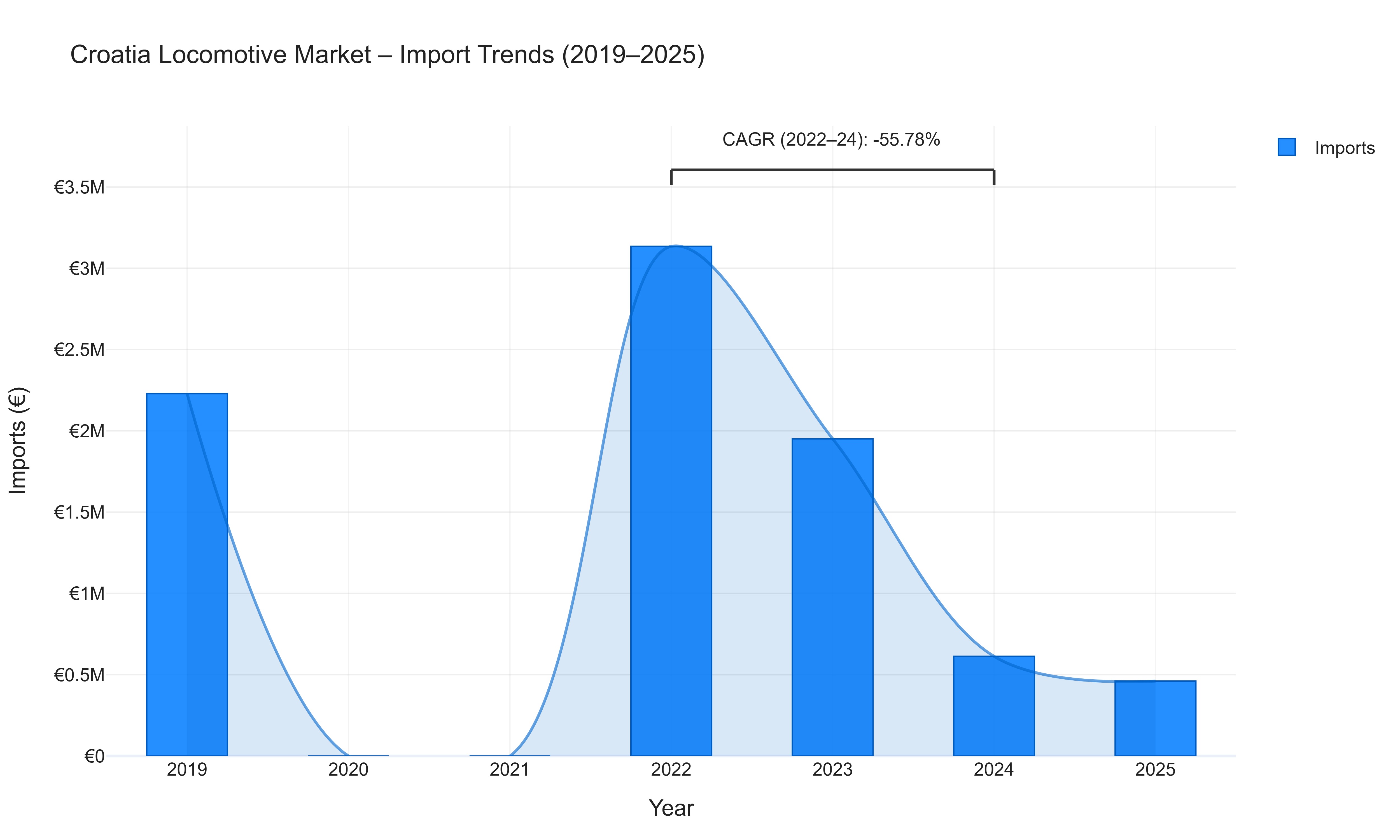
In the Croatia Locomotive Market, import values have shown significant fluctuations in recent years. Import values increased from €2.23 million in 2019 to €3.13 million in 2022, indicating a positive growth trend. However, a sharp decline followed in the subsequent years, with import values plummeting to €460.77 thousand in 2025, representing a notable -68.58% CAGR from 2022 to 2024. The peak import activity was observed in 2022, suggesting a period of heightened demand or strategic sourcing decisions. The subsequent declines in import values could be attributed to various factors such as changes in supplier relationships, shifts in global trade dynamics, or fluctuations in domestic demand for locomotives. The negative CAGR of -55.78% indicates a substantial downturn in import values, reflecting a challenging period for the Croatia Locomotive Market in terms of international procurement activities.
Croatia Export Potential Assessment For Locomotive Market (Values in USD Thousand)
Croatia Locomotive Market Overview
In Croatia, the location of things market is growing as the integration of IoT devices with location-based services becomes more prevalent. This market encompasses technologies that enable real-time tracking and management of assets, devices, and people, supporting sectors like logistics, healthcare, and smart cities.
Drivers of the market
The Croatian locomotive market is driven by the ongoing investments in rail infrastructure and the modernization of railway fleets to improve efficiency, reduce emissions, and enhance connectivity. The push towards sustainable transportation solutions and the need for reliable and cost-effective freight and passenger services are key drivers. Additionally, government initiatives supporting public transport development and the integration of advanced technologies, such as electric and hybrid locomotives, are contributing to market growth.
Challenges of the market
The locomotive market in Croatia faces several challenges, including high manufacturing and maintenance costs. The market is also impacted by competition from international manufacturers and the need for adherence to strict regulatory and safety standards. Ensuring technological advancements and energy efficiency in locomotive designs is crucial. Additionally, fluctuations in demand and supply chain issues can affect market stability.
Government Policy of the market
In the locomotive market, the Croatian government supports the industry through policies that promote investment in modern rail infrastructure and technology. This includes subsidies for the purchase of new locomotives and funding for research into energy-efficient and environmentally friendly rail technologies.
Key Highlights of the Report:
- Croatia Locomotive Market Outlook
- Market Size of Croatia Locomotive Market, 2024
- Forecast of Croatia Locomotive Market, 2031
- Historical Data and Forecast of Croatia Locomotive Revenues & Volume for the Period 2021-2031
- Croatia Locomotive Market Trend Evolution
- Croatia Locomotive Market Drivers and Challenges
- Croatia Locomotive Price Trends
- Croatia Locomotive Porter`s Five Forces
- Croatia Locomotive Industry Life Cycle
- Historical Data and Forecast of Croatia Locomotive Market Revenues & Volume By Technology Type for the Period 2021-2031
- Historical Data and Forecast of Croatia Locomotive Market Revenues & Volume By IGBT Module for the Period 2021-2031
- Historical Data and Forecast of Croatia Locomotive Market Revenues & Volume By GTO Thyristor for the Period 2021-2031
- Historical Data and Forecast of Croatia Locomotive Market Revenues & Volume By SiC Module for the Period 2021-2031
- Historical Data and Forecast of Croatia Locomotive Market Revenues & Volume By Propulsion Type for the Period 2021-2031
- Historical Data and Forecast of Croatia Locomotive Market Revenues & Volume By Diesel for the Period 2021-2031
- Historical Data and Forecast of Croatia Locomotive Market Revenues & Volume By Electric for the Period 2021-2031
- Croatia Locomotive Import Export Trade Statistics
- Market Opportunity Assessment By Technology Type
- Market Opportunity Assessment By Propulsion Type
- Croatia Locomotive Top Companies Market Share
- Croatia Locomotive Competitive Benchmarking By Technical and Operational Parameters
- Croatia Locomotive Company Profiles
- Croatia Locomotive Key Strategic Recommendations






































