Croatia Phenol Market Size (2020-2030)
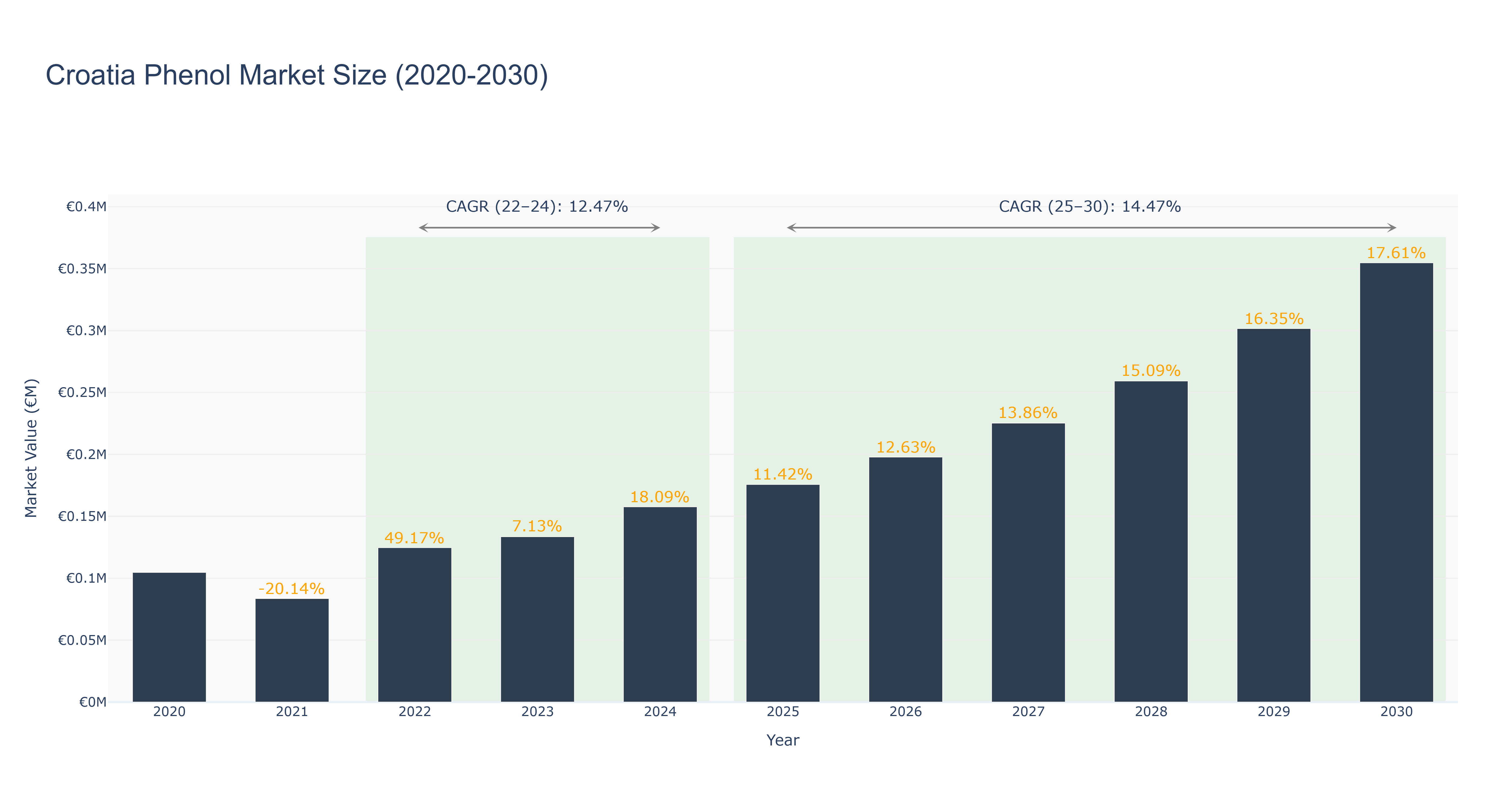
The Croatia Phenol Market has shown a positive growth trend over the years. The peak market size of €0.35 million was reached in 2030, with consistent growth observed from 2020 to 2030. The actual market size increased steadily from €0.10 million in 2020 to €0.16 million in 2024, with a notable growth rate of 18.09%. Forecasted market size is expected to continue growing from €0.18 million in 2025 to €0.35 million in 2030, with CAGR values of 14.47% for the period 2025-30. The market's growth can be attributed to increasing demand for phenol in various industries, such as pharmaceuticals, plastics, and agriculture. Looking ahead, Croatia is set to launch a new phenol production facility in 2027, which is expected to further boost the market's growth trajectory.
Croatia Phenol Market: Production & Trade Performance (2019-2025)
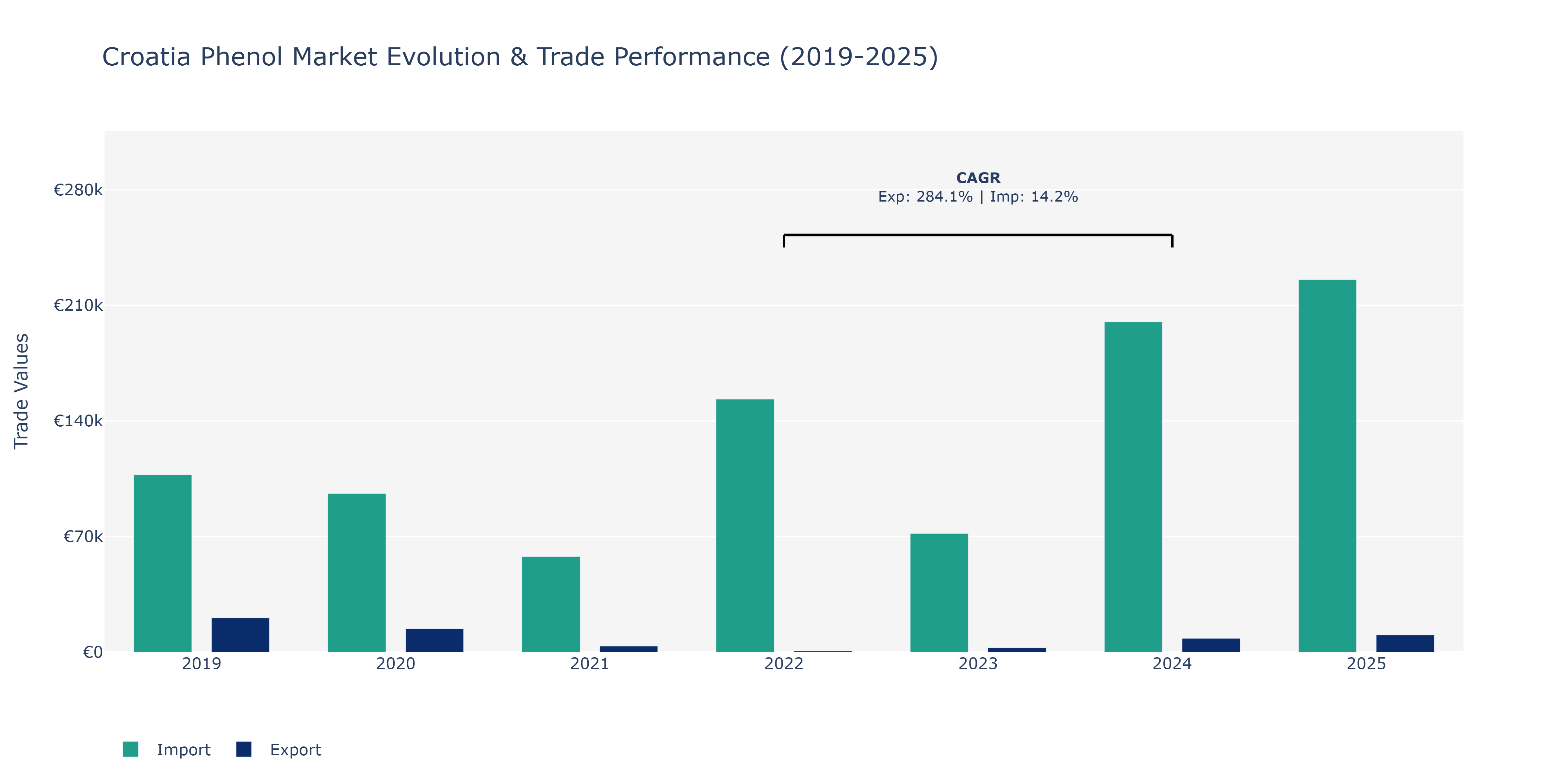
Croatia's Phenol Market witnessed notable fluctuations in both Exports and Imports from 2019 to 2025. Exports decreased from €20.73 thousand in 2019 to €3.65 thousand in 2021, showing a substantial decline attributed to various factors such as global demand shifts, economic conditions, and trade dynamics. However, there was a significant rebound in 2022, with Exports reaching €567 thousand, followed by a steady increase to €10.32 thousand in 2025. On the other hand, Imports displayed a mixed trend, surging from €107.29 thousand in 2019 to €199.97 thousand in 2024 before slightly dipping to €225.55 thousand in 2025. This growth can be linked to rising domestic consumption, technological advancements, and government initiatives supporting the chemical industry. The varying patterns in Exports and Imports reflect the market's sensitivity to global trade movements, pricing fluctuations, and regulatory changes impacting Croatia's Phenol Market. As the industry continues to evolve, strategic partnerships, innovation in production processes, and sustainable practices will likely play pivotal roles in shaping future trade dynamics and market competitiveness.
Key Highlights of the Report:
- Croatia Phenol Market Outlook
- Market Size of Croatia Phenol Market, 2025
- Forecast of Croatia Phenol Market, 2032
- Historical Data and Forecast of Croatia Phenol Revenues & Volume for the Period 2022 - 2032F
- Croatia Phenol Market Trend Evolution
- Croatia Phenol Market Drivers and Challenges
- Croatia Phenol Price Trends
- Croatia Phenol Porter`s Five Forces
- Croatia Phenol Industry Life Cycle
- Historical Data and Forecast of Croatia Phenol Market Revenues & Volume By End-users for the Period 2022 - 2032F
- Historical Data and Forecast of Croatia Phenol Market Revenues & Volume By Bisphenol A for the Period 2022 - 2032F
- Historical Data and Forecast of Croatia Phenol Market Revenues & Volume By Phenolic Resins for the Period 2022 - 2032F
- Historical Data and Forecast of Croatia Phenol Market Revenues & Volume By Caprolactam for the Period 2022 - 2032F
- Historical Data and Forecast of Croatia Phenol Market Revenues & Volume By Alkyl Phenyls for the Period 2022 - 2032F
- Historical Data and Forecast of Croatia Phenol Market Revenues & Volume By Others for the Period 2022 - 2032F
- Croatia Phenol Import Export Trade Statistics
- Market Opportunity Assessment By End-users
- Croatia Phenol Top Companies Market Share
- Croatia Phenol Competitive Benchmarking By Technical and Operational Parameters
- Croatia Phenol Company Profiles
- Croatia Phenol Key Strategic Recommendations






































