Kazakhstan Phenol Market: Import Trend Analysis
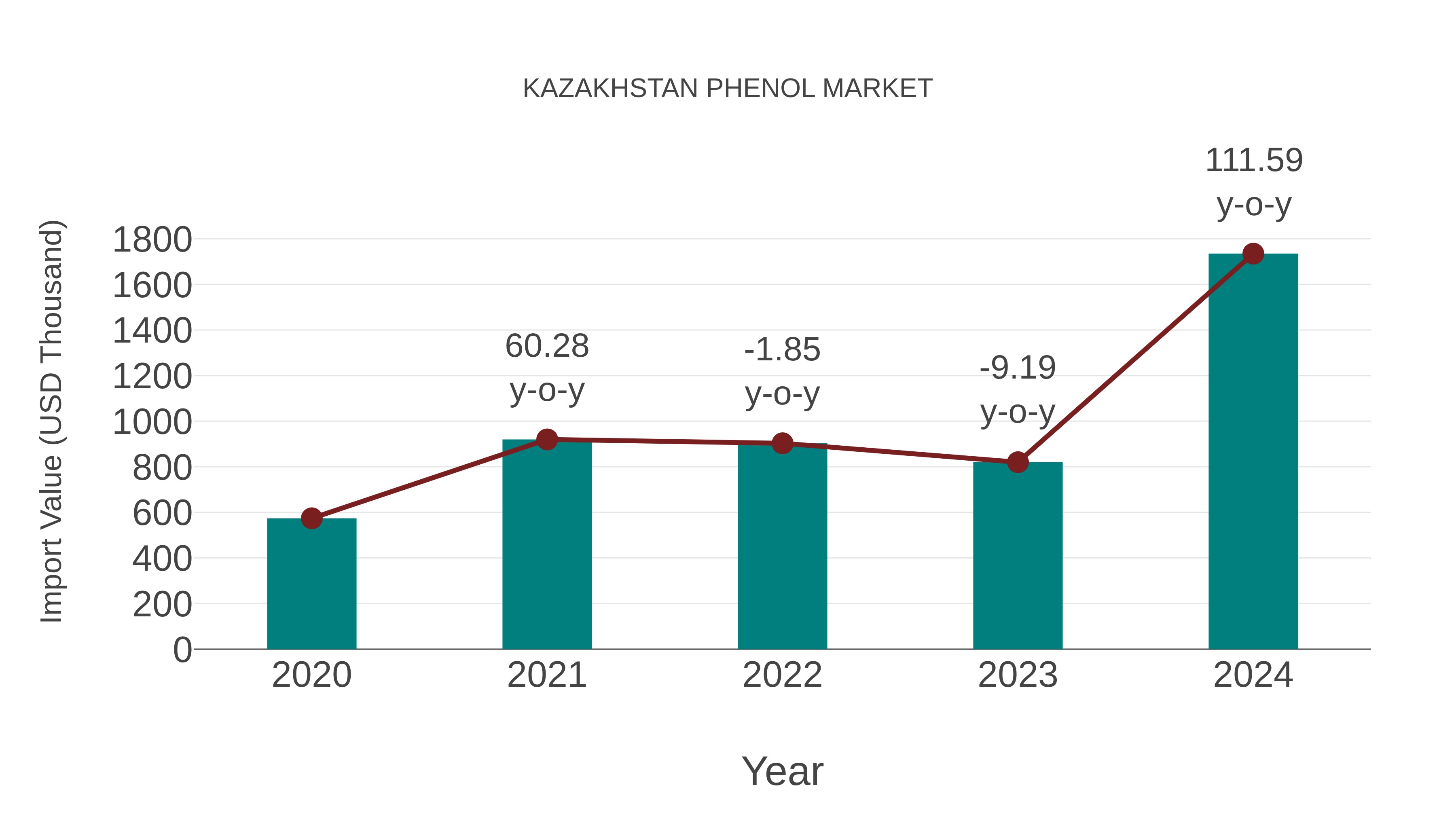
In the Kazakhstan phenol market, the import trend exhibited significant growth from 2023 to 2024, with a notable increase of 111.59%. The compound annual growth rate (CAGR) for imports over the period 2020-2024 stood at 31.86%. This surge in import momentum can be attributed to the expanding demand for phenol-based products in various industries, indicating a shift in market dynamics towards increased reliance on imported phenol to meet domestic needs.
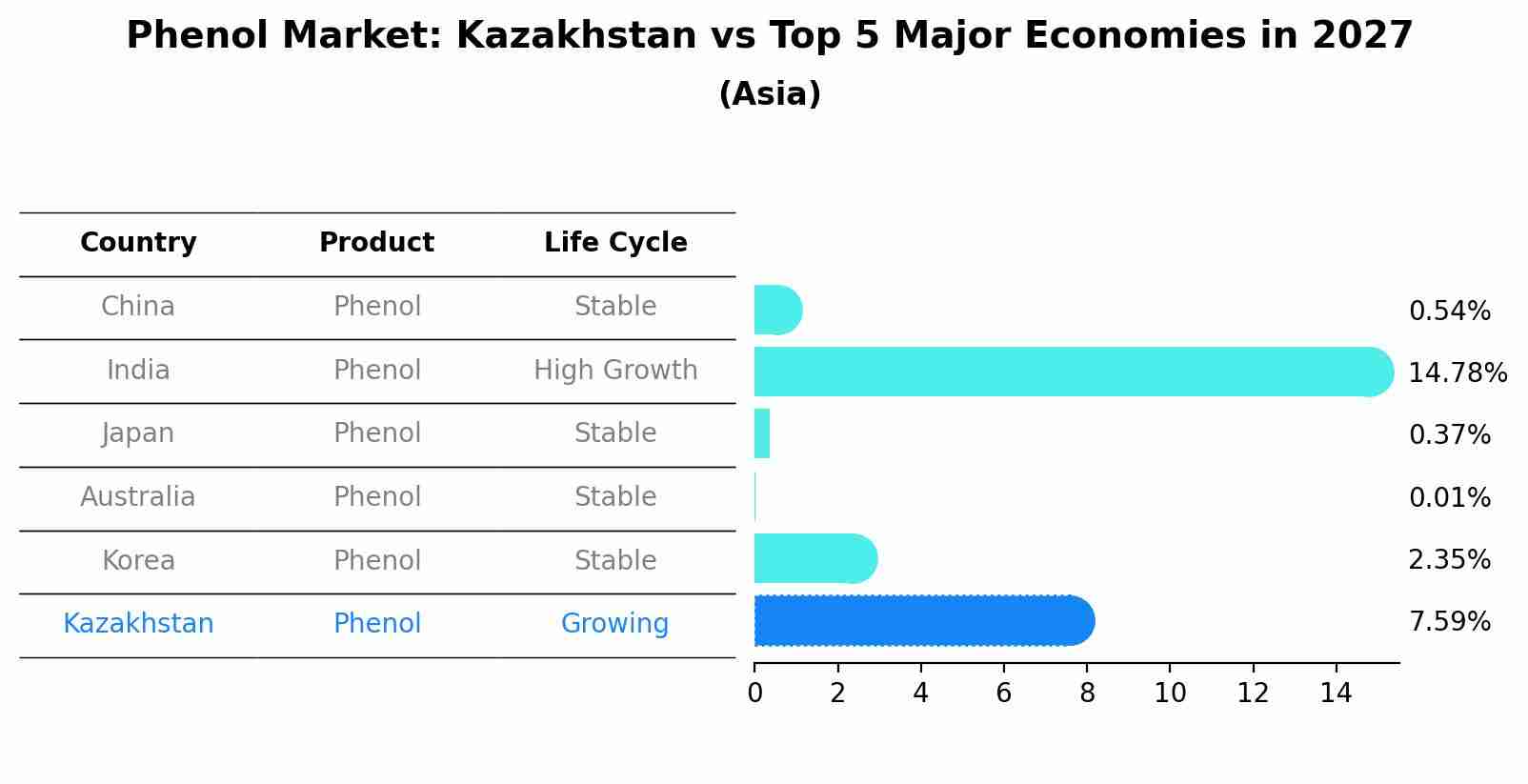
Phenol Market: Kazakhstan vs Top 5 Major Economies in 2027 (Asia)
In the Asia region, the Phenol market in Kazakhstan is projected to expand at a growing growth rate of 7.59% by 2027. The largest economy is China, followed by India, Japan, Australia and South Korea.
Kazakhstan Phenol Market Overview
The Kazakhstan Phenol Market is experiencing steady growth, driven by the increasing demand from various industries such as construction, automotive, and electronics. Phenol, a key chemical compound used in the production of plastics, resins, and other industrial products, is witnessing rising consumption in the country. The market is also benefiting from the growing emphasis on sustainable and eco-friendly practices, leading to a shift towards bio-based phenol production methods. Government initiatives to promote domestic manufacturing and attract foreign investments are further fueling market expansion. Key players in the Kazakhstan Phenol Market include domestic producers as well as international companies looking to capitalize on the country`s strategic location and abundant natural resources. Overall, the Kazakhstan Phenol Market presents promising opportunities for growth and development in the coming years.
Kazakhstan Phenol Market Trends
The Kazakhstan Phenol Market is experiencing steady growth driven by increasing demand from various industries such as pharmaceuticals, plastics, and automotive. The growing emphasis on sustainable practices and environmental regulations is also influencing the market dynamics, leading to a shift towards eco-friendly and bio-based phenol production methods. Additionally, the rising investments in research and development activities to enhance product quality and efficiency are contributing to the market expansion. Market players are focusing on strategic partnerships and collaborations to strengthen their market presence and expand their product offerings. Overall, the Kazakhstan Phenol Market is poised for further growth in the foreseeable future, driven by evolving consumer preferences and technological advancements in the industry.
Kazakhstan Phenol Market Challenges
In the Kazakhstan Phenol Market, some of the key challenges include fluctuating raw material prices, limited domestic production capacity, and intense competition from established international players. The market heavily relies on imports to meet the demand for phenol, leading to vulnerability to global market dynamics and exchange rate fluctuations. Additionally, regulatory barriers and compliance requirements can pose hurdles for market entry and expansion. The lack of advanced technology and infrastructure could also hinder the growth and efficiency of phenol production in Kazakhstan. Overall, navigating these challenges requires strategic planning, strong partnerships, and continuous innovation to stay competitive in the market.
Kazakhstan Phenol Market Investment Opportunities
The Kazakhstan Phenol Market presents promising investment opportunities due to the country`s growing chemical industry and increasing demand for phenol in various applications such as resin production, pharmaceuticals, and agriculture. With Kazakhstan`s strategic location and abundant raw material sources, investors can capitalize on the country`s potential to become a key player in the global phenol market. Additionally, ongoing government initiatives to attract foreign investment and promote industrial growth further enhance the attractiveness of investing in the Kazakhstan Phenol Market. By strategically positioning investments in production facilities or partnering with local manufacturers, investors can benefit from the market`s growth potential and establish a strong presence in the region.
Kazakhstan Phenol Market Government Policy
In Kazakhstan, government policies related to the phenol market primarily focus on promoting domestic production and reducing reliance on imports. The government has implemented measures to support the development of the chemical industry, including providing incentives for local manufacturing and investing in research and development to enhance phenol production capacity. Additionally, there are regulations in place to ensure environmental sustainability and safety standards in phenol production processes. The government aims to increase self-sufficiency in phenol production to meet domestic demand and reduce import dependency, ultimately fostering economic growth and creating a competitive market environment for local producers in Kazakhstan.
Kazakhstan Phenol Market Future Outlook
The future outlook for the Kazakhstan Phenol Market appears promising, driven by the increasing demand for phenol in various industries such as automotive, construction, and electronics. The market is expected to witness steady growth due to the country`s burgeoning manufacturing sector and the government`s initiatives to attract foreign investments. Additionally, the rising awareness regarding the benefits of phenol in applications such as plastics, adhesives, and pharmaceuticals is likely to further propel market growth. However, factors such as fluctuating raw material prices and environmental regulations may pose challenges to the market`s expansion. Overall, with the right strategies in place to address these challenges, the Kazakhstan Phenol Market is anticipated to experience positive growth in the coming years.
Key Highlights of the Report:
- Kazakhstan Phenol Market Outlook
- Market Size of Kazakhstan Phenol Market, 2025
- Forecast of Kazakhstan Phenol Market, 2032
- Historical Data and Forecast of Kazakhstan Phenol Revenues & Volume for the Period 2022 - 2032F
- Kazakhstan Phenol Market Trend Evolution
- Kazakhstan Phenol Market Drivers and Challenges
- Kazakhstan Phenol Price Trends
- Kazakhstan Phenol Porter's Five Forces
- Kazakhstan Phenol Industry Life Cycle
- Historical Data and Forecast of Kazakhstan Phenol Market Revenues & Volume By End-users for the Period 2022 - 2032F
- Historical Data and Forecast of Kazakhstan Phenol Market Revenues & Volume By Bisphenol A for the Period 2022 - 2032F
- Historical Data and Forecast of Kazakhstan Phenol Market Revenues & Volume By Phenolic Resins for the Period 2022 - 2032F
- Historical Data and Forecast of Kazakhstan Phenol Market Revenues & Volume By Caprolactam for the Period 2022 - 2032F
- Historical Data and Forecast of Kazakhstan Phenol Market Revenues & Volume By Alkyl Phenyls for the Period 2022 - 2032F
- Historical Data and Forecast of Kazakhstan Phenol Market Revenues & Volume By Others for the Period 2022 - 2032F
- Kazakhstan Phenol Import Export Trade Statistics
- Market Opportunity Assessment By End-users
- Kazakhstan Phenol Top Companies Market Share
- Kazakhstan Phenol Competitive Benchmarking By Technical and Operational Parameters
- Kazakhstan Phenol Company Profiles
- Kazakhstan Phenol Key Strategic Recommendations






































