Czech Republic Coconut Products Market: Import Trend Analysis
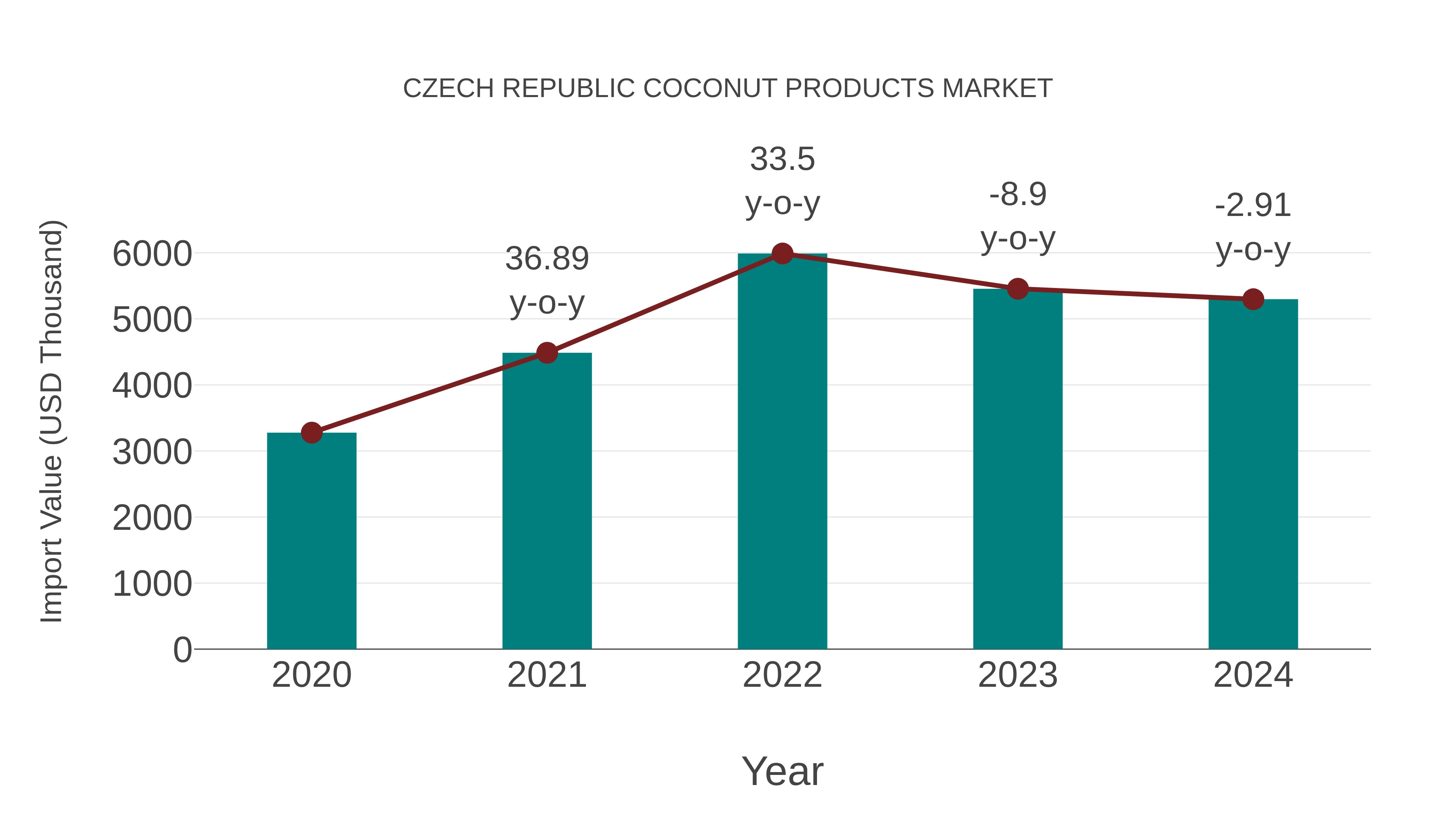
The Czech Republic`s import trend for coconut products experienced a decline from 2023 to 2024, with a growth rate of -2.91%. However, the compound annual growth rate (CAGR) for 2020-2024 stood at a healthy 12.76%. This decline in import momentum could be attributed to shifting consumer preferences or changes in trade policies affecting the market stability.
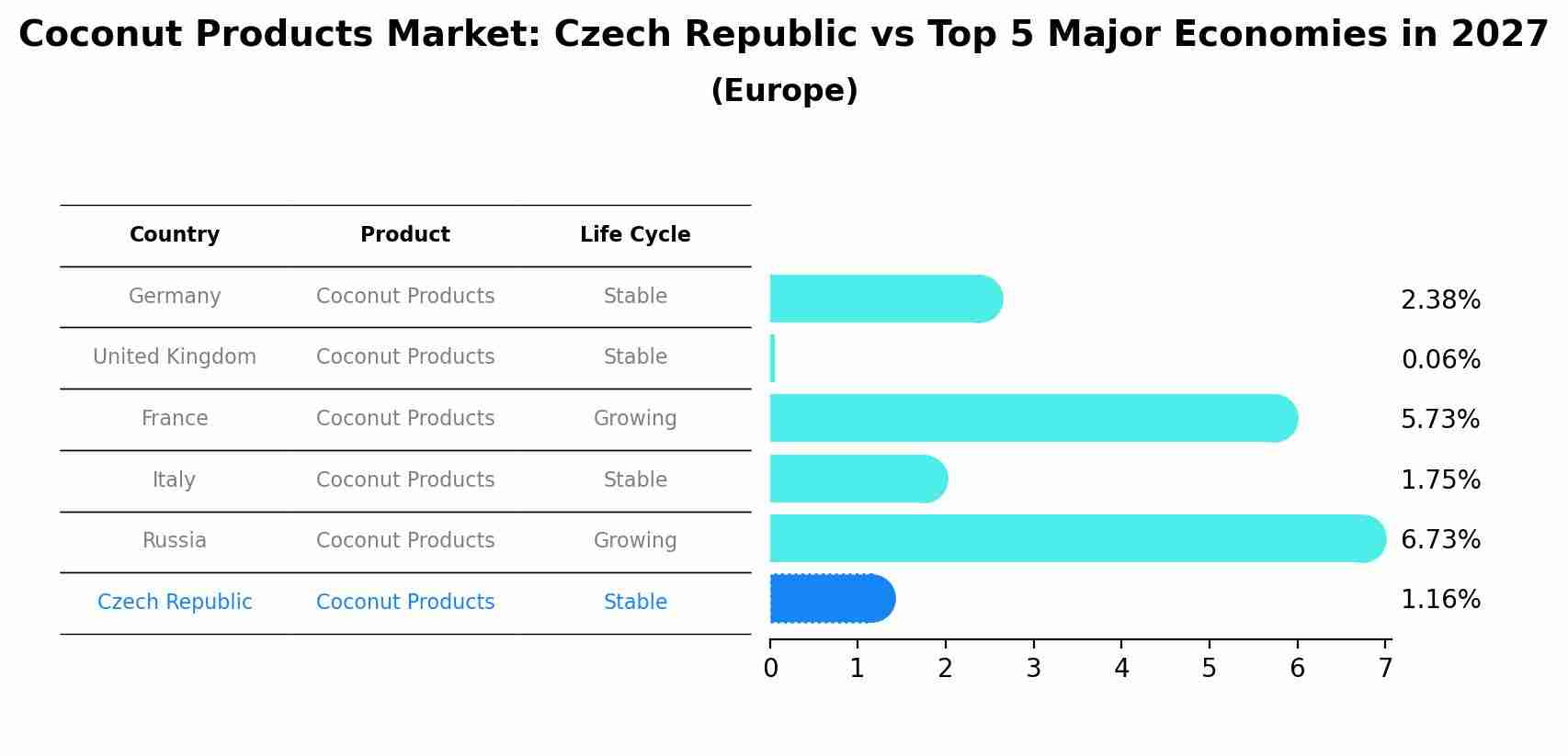
Coconut Products Market: Czech Republic vs Top 5 Major Economies in 2027 (Europe)
Czech Republic's Coconut Products market is anticipated to experience a stable growth rate of 1.16% by 2027, reflecting trends observed in the largest economy Germany, followed by United Kingdom, France, Italy and Russia.
Czech Republic Coconut Products Market Overview
The coconut products market in the Czech Republic is evolving as the demand for diverse coconut-derived products grows. This market includes a wide range of offerings, such as coconut milk, coconut flour, and shredded coconut, which are gaining traction in various food applications. The increasing popularity of plant-based diets and the trend towards healthier cooking alternatives are driving the demand for coconut products. As consumers seek innovative and versatile ingredients, the coconut products market is positioned for significant growth.
Drivers of the market
The coconut products market in the Czech Republic is expanding due to the growing consumer interest in plant-based and healthy alternatives. Products like coconut milk, water, and flour are increasingly used in food preparation and baking, driven by the rise in vegan diets and lactose intolerance concerns. The versatility of coconut products in both food and non-food applications is contributing to market growth.
Challenges of the market
The Coconut Products Market in the Czech Republic encounters challenges related to sustainability and supply chain management. As consumers increasingly demand organic and ethically sourced coconut products, manufacturers must adapt their sourcing practices to meet these expectations. However, the reliance on specific regions for coconut cultivation can lead to supply chain vulnerabilities. Companies need to focus on building strong relationships with suppliers and investing in sustainable practices to overcome these challenges and attract environmentally conscious consumers.
Government Policy of the market
Coconut products, including oil, water, and desiccated coconut, are governed by trade policies that regulate imports and exports. The Czech government promotes sustainability in the coconut supply chain, encouraging fair trade practices and organic certification to meet growing consumer demand for ethically sourced products.
Key Highlights of the Report:
- Czech Republic Coconut Products Market Outlook
- Market Size of Czech Republic Coconut Products Market, 2024
- Forecast of Czech Republic Coconut Products Market, 2031
- Historical Data and Forecast of Czech Republic Coconut Products Revenues & Volume for the Period 2018 - 2031
- Czech Republic Coconut Products Market Trend Evolution
- Czech Republic Coconut Products Market Drivers and Challenges
- Czech Republic Coconut Products Price Trends
- Czech Republic Coconut Products Porter's Five Forces
- Czech Republic Coconut Products Industry Life Cycle
- Historical Data and Forecast of Czech Republic Coconut Products Market Revenues & Volume By Type for the Period 2018 - 2031
- Historical Data and Forecast of Czech Republic Coconut Products Market Revenues & Volume By Coconut Water for the Period 2018 - 2031
- Historical Data and Forecast of Czech Republic Coconut Products Market Revenues & Volume By Coconut Oil for the Period 2018 - 2031
- Historical Data and Forecast of Czech Republic Coconut Products Market Revenues & Volume By Coconut Milk for the Period 2018 - 2031
- Historical Data and Forecast of Czech Republic Coconut Products Market Revenues & Volume By Dried Coconut Products for the Period 2018 - 2031
- Historical Data and Forecast of Czech Republic Coconut Products Market Revenues & Volume By Others for the Period 2018 - 2031
- Historical Data and Forecast of Czech Republic Coconut Products Market Revenues & Volume By Application for the Period 2018 - 2031
- Historical Data and Forecast of Czech Republic Coconut Products Market Revenues & Volume By Food for the Period 2018 - 2031
- Historical Data and Forecast of Czech Republic Coconut Products Market Revenues & Volume By Beverage for the Period 2018 - 2031
- Historical Data and Forecast of Czech Republic Coconut Products Market Revenues & Volume By Cosmetics for the Period 2018 - 2031
- Historical Data and Forecast of Czech Republic Coconut Products Market Revenues & Volume By Others for the Period 2018 - 2031
- Historical Data and Forecast of Czech Republic Coconut Products Market Revenues & Volume By Form for the Period 2018 - 2031
- Historical Data and Forecast of Czech Republic Coconut Products Market Revenues & Volume By Solid for the Period 2018 - 2031
- Historical Data and Forecast of Czech Republic Coconut Products Market Revenues & Volume By Liquid for the Period 2018 - 2031
- Czech Republic Coconut Products Import Export Trade Statistics
- Market Opportunity Assessment By Type
- Market Opportunity Assessment By Application
- Market Opportunity Assessment By Form
- Czech Republic Coconut Products Top Companies Market Share
- Czech Republic Coconut Products Competitive Benchmarking By Technical and Operational Parameters
- Czech Republic Coconut Products Company Profiles
- Czech Republic Coconut Products Key Strategic Recommendations






































