Czech Republic Metal Fabrication Market: Import Trend Analysis
In 2024, the Czech Republic`s metal fabrication market saw a consistent upward trend in imports. This growth was driven by increased demand for metal products and components, leading to higher volumes of imported materials to meet market needs.
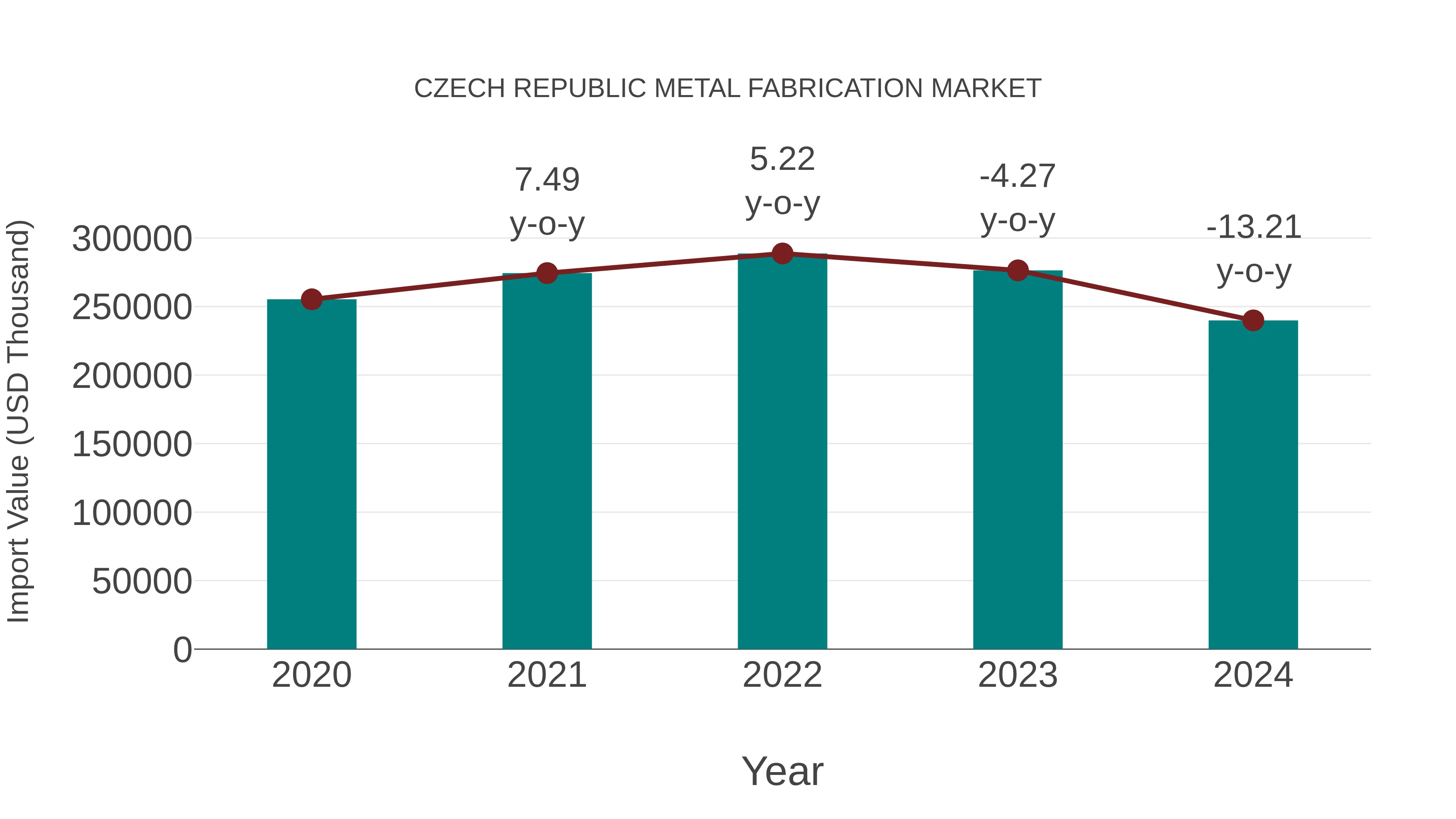
Czech Republic Metal Fabrication Market Overview
The metal fabrication market in the Czech Republic is a crucial part of the manufacturing sector, providing services such as cutting, welding, and assembly for industries like automotive, aerospace, and construction. The market is experiencing growth due to increasing demand for customized metal products and advancements in fabrication technologies.
Drivers of the market
The metal fabrication market in the Czech Republic is influenced by the rising demand for customized and high-quality metal products across various industries. As sectors such as automotive, construction, and aerospace continue to grow, the need for precise and efficient metal fabrication services is becoming increasingly important. The trend toward automation and the adoption of advanced manufacturing technologies are driving innovations in the metal fabrication process, enhancing productivity and reducing lead times. Furthermore, the focus on sustainability and recycling is pushing fabricators to explore eco-friendly practices and materials, contributing to market growth.
Challenges of the market
The metal fabrication market is hindered by high labor costs and the need for skilled workers, which limits the speed and scale of production. Fluctuations in raw material prices, especially steel and aluminum, create cost uncertainties for fabricators. Moreover, competition from low-cost imports and automation technologies also pressures traditional metal fabrication businesses.
Government Policy of the market
The Czech government supports the metal fabrication market through policies aimed at enhancing workforce development and manufacturing capabilities. Initiatives focus on promoting advanced fabrication techniques and encouraging the adoption of Industry 4.0 technologies. The government provides training programs and funding opportunities for businesses investing in innovative metal fabrication solutions, fostering a competitive environment in the manufacturing sector.
Key Highlights of the Report:
- Czech Republic Metal Fabrication Market Outlook
- Market Size of Czech Republic Metal Fabrication Market, 2025
- Forecast of Czech Republic Metal Fabrication Market, 2032
- Historical Data and Forecast of Czech Republic Metal Fabrication Revenues & Volume for the Period 2022-2032F
- Czech Republic Metal Fabrication Market Trend Evolution
- Czech Republic Metal Fabrication Market Drivers and Challenges
- Czech Republic Metal Fabrication Price Trends
- Czech Republic Metal Fabrication Porter's Five Forces
- Czech Republic Metal Fabrication Industry Life Cycle
- Historical Data and Forecast of Czech Republic Metal Fabrication Market Revenues & Volume By End-user Industry for the Period 2022-2032F
- Historical Data and Forecast of Czech Republic Metal Fabrication Market Revenues & Volume By Manufacturing for the Period 2022-2032F
- Historical Data and Forecast of Czech Republic Metal Fabrication Market Revenues & Volume By Power and Utilities for the Period 2022-2032F
- Historical Data and Forecast of Czech Republic Metal Fabrication Market Revenues & Volume By Construction for the Period 2022-2032F
- Historical Data and Forecast of Czech Republic Metal Fabrication Market Revenues & Volume By Oil and Gas for the Period 2022-2032F
- Historical Data and Forecast of Czech Republic Metal Fabrication Market Revenues & Volume By Other End-user Industries for the Period 2022-2032F
- Historical Data and Forecast of Czech Republic Metal Fabrication Market Revenues & Volume By Metal Folding for the Period 2022-2032F
- Historical Data and Forecast of Czech Republic Metal Fabrication Market Revenues & Volume By Product category for the Period 2022-2032F
- Historical Data and Forecast of Czech Republic Metal Fabrication Market Revenues & Volume By Structural steel fabrication for the Period 2022-2032F
- Historical Data and Forecast of Czech Republic Metal Fabrication Market Revenues & Volume By Process Equipment Fabrication for the Period 2022-2032F
- Czech Republic Metal Fabrication Import Export Trade Statistics
- Market Opportunity Assessment By End-user Industry
- Market Opportunity Assessment By Product category
- Czech Republic Metal Fabrication Top Companies Market Share
- Czech Republic Metal Fabrication Competitive Benchmarking By Technical and Operational Parameters
- Czech Republic Metal Fabrication Company Profiles
- Czech Republic Metal Fabrication Key Strategic Recommendations






































