Czech Republic Polyester Fabric Market: Import Trend Analysis
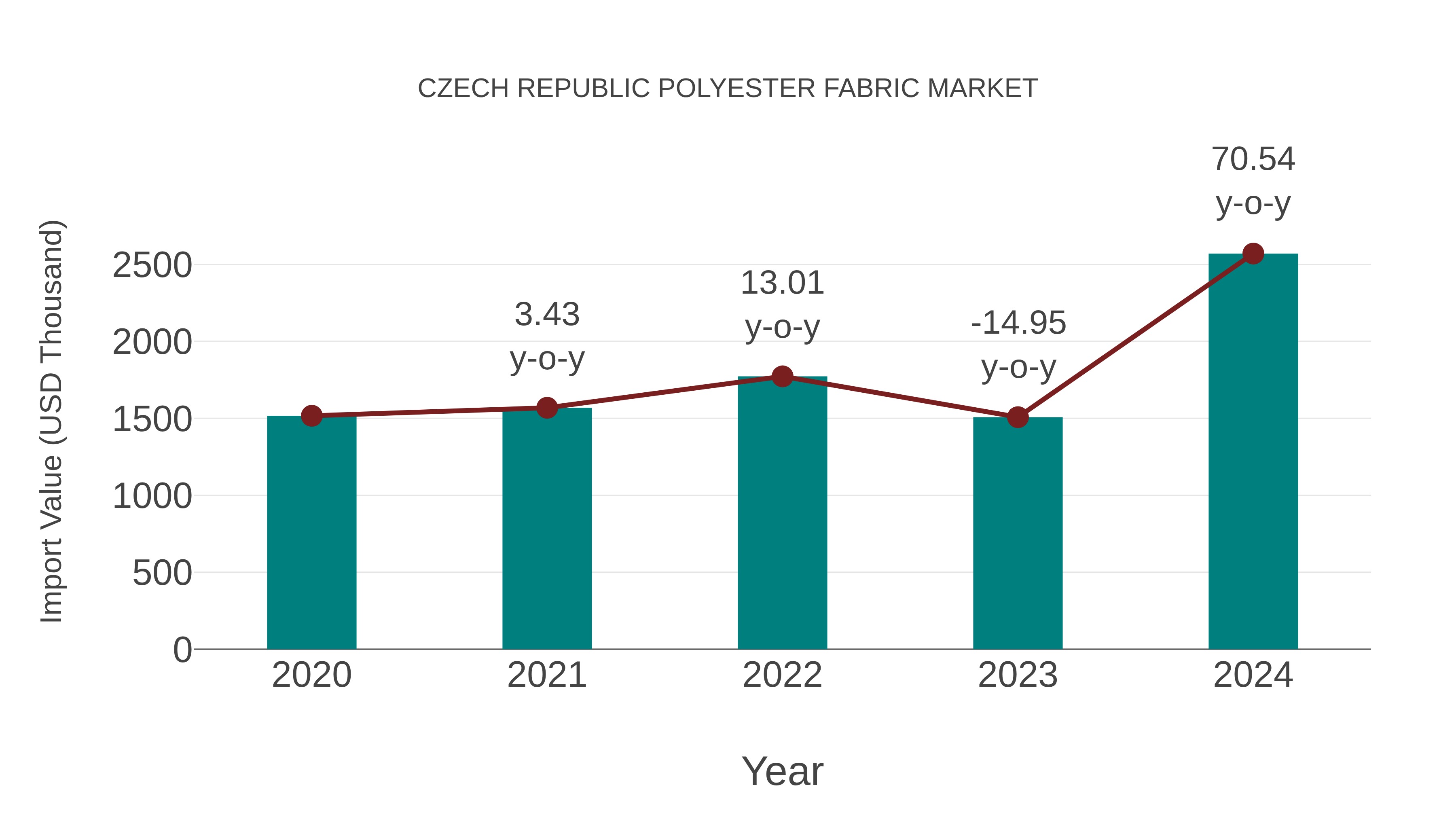
In 2024, the Czech Republic`s polyester fabric market saw a notable increase in imports. This trend was driven by rising demand for quality synthetic textiles in various industries, reflecting a shift towards imported materials over domestically produced ones.
Czech Republic Polyester Fabric Market Synopsis
The Czech Republic polyester fabric market is expected to witness a CAGR of 3.7% during the forecast period (2020-2026). The growing demand for polyester garments from the fashion industry, coupled with increasing investment in textile manufacturing, are some of the factors driving growth in this market. Additionally, advancements in technology and increasing consumer preferences for synthetic fabrics are also contributing to the growth of this market. Furthermore, government initiatives such as subsidies on raw materials and tax exemptions for investments in new technologies are further promoting investments into this sector. However, fluctuating prices of petroleum-based feedstock can pose a challenge to manufacturers operating within this market space over the forecast period
Key Highlights of the Report:
- Czech Republic Polyester Fabric Market Outlook
- Market Size of Czech Republic Polyester Fabric Market, 2019
- Forecast of Czech Republic Polyester Fabric Market, 2026
- Historical Data and Forecast of Czech Republic Polyester Fabric Revenues & Volume for the Period 2016 - 2026
- Czech Republic Polyester Fabric Market Trend Evolution
- Czech Republic Polyester Fabric Market Drivers and Challenges
- Czech Republic Polyester Fabric Price Trends
- Czech Republic Polyester Fabric Porter's Five Forces
- Czech Republic Polyester Fabric Industry Life Cycle
- Historical Data and Forecast of Czech Republic Polyester Fabric Market Revenues & Volume By Type for the Period 2016 - 2026
- Historical Data and Forecast of Czech Republic Polyester Fabric Market Revenues & Volume By PET for the Period 2016 - 2026
- Historical Data and Forecast of Czech Republic Polyester Fabric Market Revenues & Volume By PCDT for the Period 2016 - 2026
- Historical Data and Forecast of Czech Republic Polyester Fabric Market Revenues & Volume By Applications for the Period 2016 - 2026
- Historical Data and Forecast of Czech Republic Polyester Fabric Market Revenues & Volume By Carpets & Rugs for the Period 2016 - 2026
- Historical Data and Forecast of Czech Republic Polyester Fabric Market Revenues & Volume By Non-Woven Fabrics Fiberfill for the Period 2016 - 2026
- Historical Data and Forecast of Czech Republic Polyester Fabric Market Revenues & Volume By Apparels for the Period 2016 - 2026
- Historical Data and Forecast of Czech Republic Polyester Fabric Market Revenues & Volume By Home Textiles for the Period 2016 - 2026
- Historical Data and Forecast of Czech Republic Polyester Fabric Market Revenues & Volume By Others? for the Period 2016 - 2026
- Czech Republic Polyester Fabric Import Export Trade Statistics
- Market Opportunity Assessment By Type
- Market Opportunity Assessment By Applications
- Czech Republic Polyester Fabric Top Companies Market Share
- Czech Republic Polyester Fabric Competitive Benchmarking By Technical and Operational Parameters
- Czech Republic Polyester Fabric Company Profiles
- Czech Republic Polyester Fabric Key Strategic Recommendations






































