Denmark Canned Tuna Market Size (2020-2030)
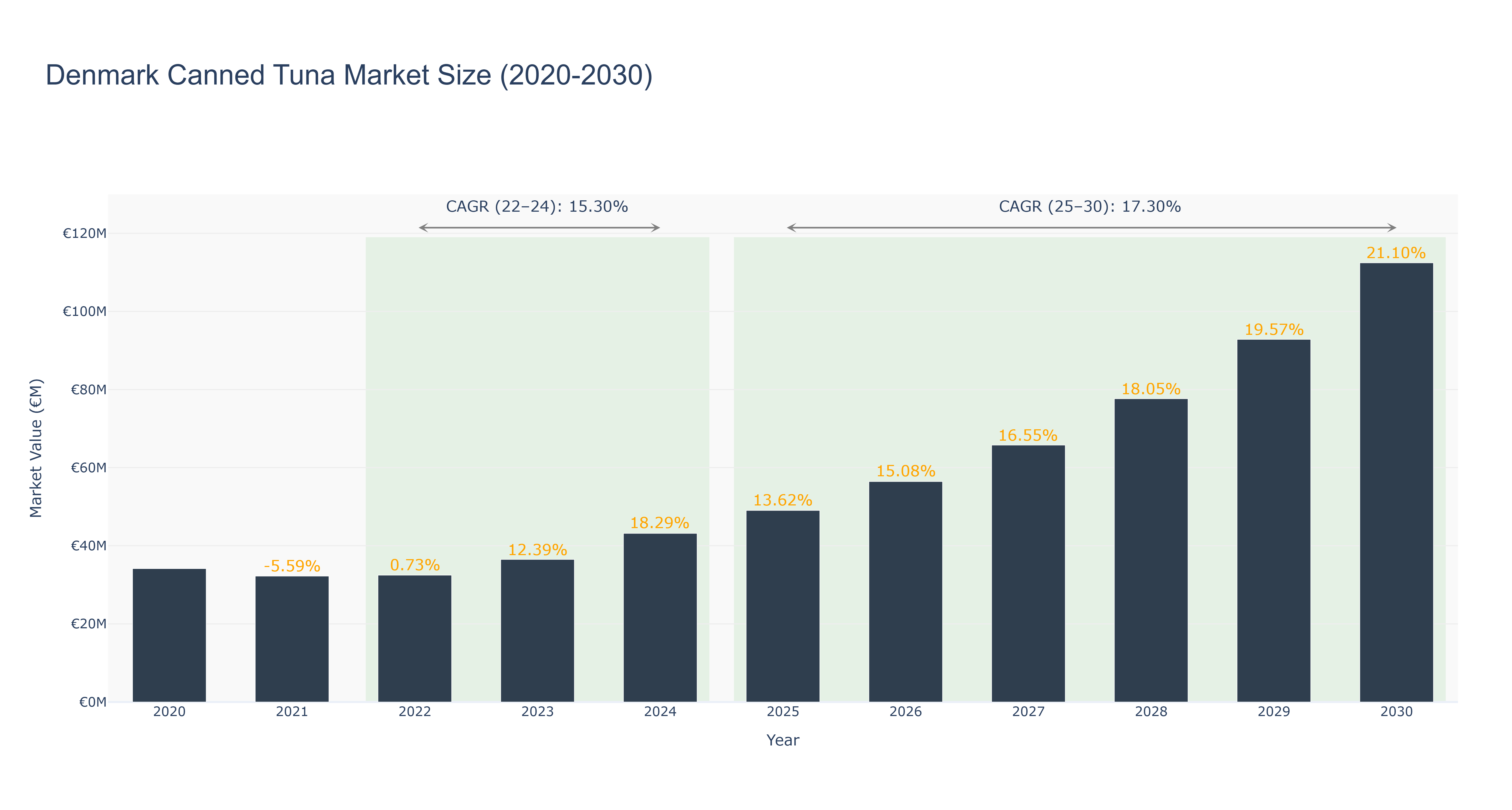
The Denmark Canned Tuna Market has shown a consistent growth trend over the years. The peak market size was reached in 2030 at €112.44 million. From 2020 to 2024, the market size increased steadily from €34.14 million to €43.17 million, with a notable CAGR of 15.30%. The forecasted market size from 2025 to 2030 is expected to continue this growth trajectory, reaching €112.44 million by 2030, with a CAGR of 17.30%. The market's growth can be attributed to increasing health consciousness among consumers, rising demand for convenient and protein-rich food options, and strategic marketing initiatives by key players. Looking ahead, Denmark's canned tuna market is poised for further expansion with upcoming investments in sustainable fishing practices and innovative packaging solutions aimed at enhancing product freshness and shelf life.
Denmark Canned Tuna Market: Production & Trade Performance (2019-2025)
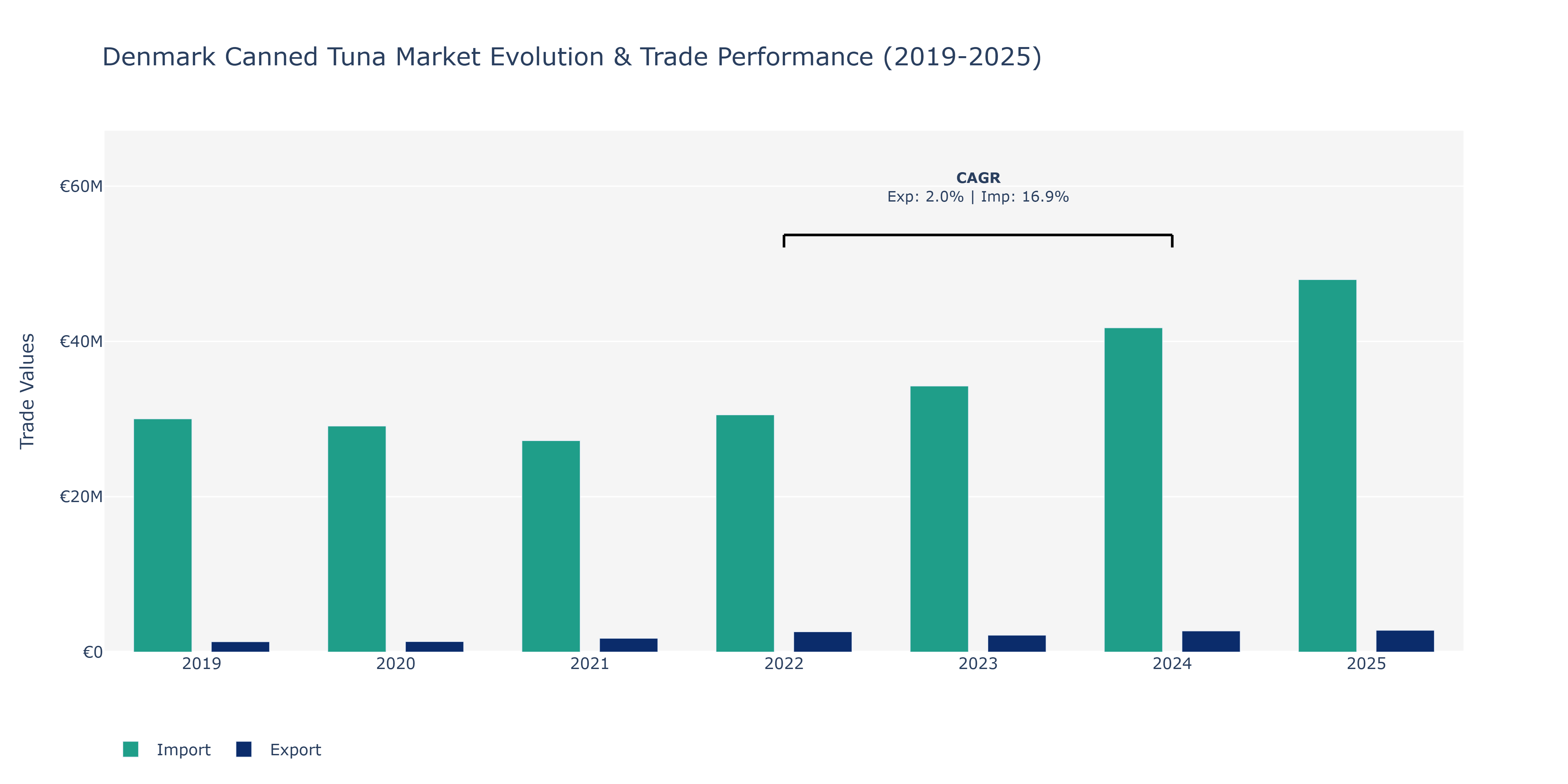
The Denmark Canned Tuna Market witnessed notable fluctuations in both Exports and Imports from 2019 to 2025. Exports showed a steady increase during this period, starting at €1.33 million in 2019 and reaching a peak of €2.80 million in 2025. On the other hand, Imports displayed a more erratic pattern fluctuating between €27.22 million in 2021 and €47.96 million in 2025. The peak points in 2025 for both Exports and Imports signify a growing demand for canned tuna in Denmark. Possible factors driving this trend include changing consumer preferences towards healthier protein sources like tuna, increased awareness of the health benefits associated with consuming fish, and the convenience of canned tuna products. Additionally, the surge in Imports could be attributed to expanding product varieties and quality offerings from international suppliers, catering to the evolving tastes of Danish consumers.
Denmark Canned Tuna Market Overview
Canned tuna remains a popular choice in Denmark, where health-conscious consumers appreciate its high protein content and omega-3 fatty acids. The market benefits from a growing preference for seafood and ready-to-eat meal solutions in Danish households.
Drivers of the market
The canned tuna market in Denmark is witnessing growth due to the increasing demand for affordable, healthy, and protein-rich food options. Tuna is widely favored for its high protein content, low fat, and convenience as a shelf-stable product. The growing awareness of the health benefits associated with seafood consumption, such as the intake of omega-3 fatty acids, is also propelling market growth. Additionally, the rise in demand for sustainable seafood options is encouraging consumers to choose responsibly sourced canned tuna products, further driving the market.
Challenges of the market
The canned tuna market faces significant challenges related to sustainability concerns, particularly regarding overfishing and environmental impact. Producers must adapt to changing consumer preferences for responsibly sourced products while complying with strict regulatory standards.
Government Policy of the market
The Danish governments environmental and fisheries policies, along with compliance with EU sustainability standards, impact the canned tuna market. Denmark promotes responsible fishing practices and supports the reduction of overfishing through stringent regulations on tuna sourcing. Manufacturers of canned tuna must adhere to food safety regulations and sustainability guidelines to meet market demand and ensure compliance with government policies.
Key Highlights of the Report:
- Denmark Canned Tuna Market Outlook
- Market Size of Denmark Canned Tuna Market, 2024
- Forecast of Denmark Canned Tuna Market, 2031
- Historical Data and Forecast of Denmark Canned Tuna Revenues & Volume for the Period 2021-2031
- Denmark Canned Tuna Market Trend Evolution
- Denmark Canned Tuna Market Drivers and Challenges
- Denmark Canned Tuna Price Trends
- Denmark Canned Tuna Porter`s Five Forces
- Denmark Canned Tuna Industry Life Cycle
- Historical Data and Forecast of Denmark Canned Tuna Market Revenues & Volume By Product for the Period 2021-2031
- Historical Data and Forecast of Denmark Canned Tuna Market Revenues & Volume By Skipjack for the Period 2021-2031
- Historical Data and Forecast of Denmark Canned Tuna Market Revenues & Volume By Yellowfin for the Period 2021-2031
- Historical Data and Forecast of Denmark Canned Tuna Market Revenues & Volume By Others for the Period 2021-2031
- Historical Data and Forecast of Denmark Canned Tuna Market Revenues & Volume By Distribution Channel for the Period 2021-2031
- Historical Data and Forecast of Denmark Canned Tuna Market Revenues & Volume By Hypermarket & Supermarket for the Period 2021-2031
- Historical Data and Forecast of Denmark Canned Tuna Market Revenues & Volume By Specialty Stores for the Period 2021-2031
- Historical Data and Forecast of Denmark Canned Tuna Market Revenues & Volume By Online for the Period 2021-2031
- Denmark Canned Tuna Import Export Trade Statistics
- Market Opportunity Assessment By Product
- Market Opportunity Assessment By Distribution Channel
- Denmark Canned Tuna Top Companies Market Share
- Denmark Canned Tuna Competitive Benchmarking By Technical and Operational Parameters
- Denmark Canned Tuna Company Profiles
- Denmark Canned Tuna Key Strategic Recommendations






































