Ecuador Protein Market Growth Rate Analysis (2025 - 2031)
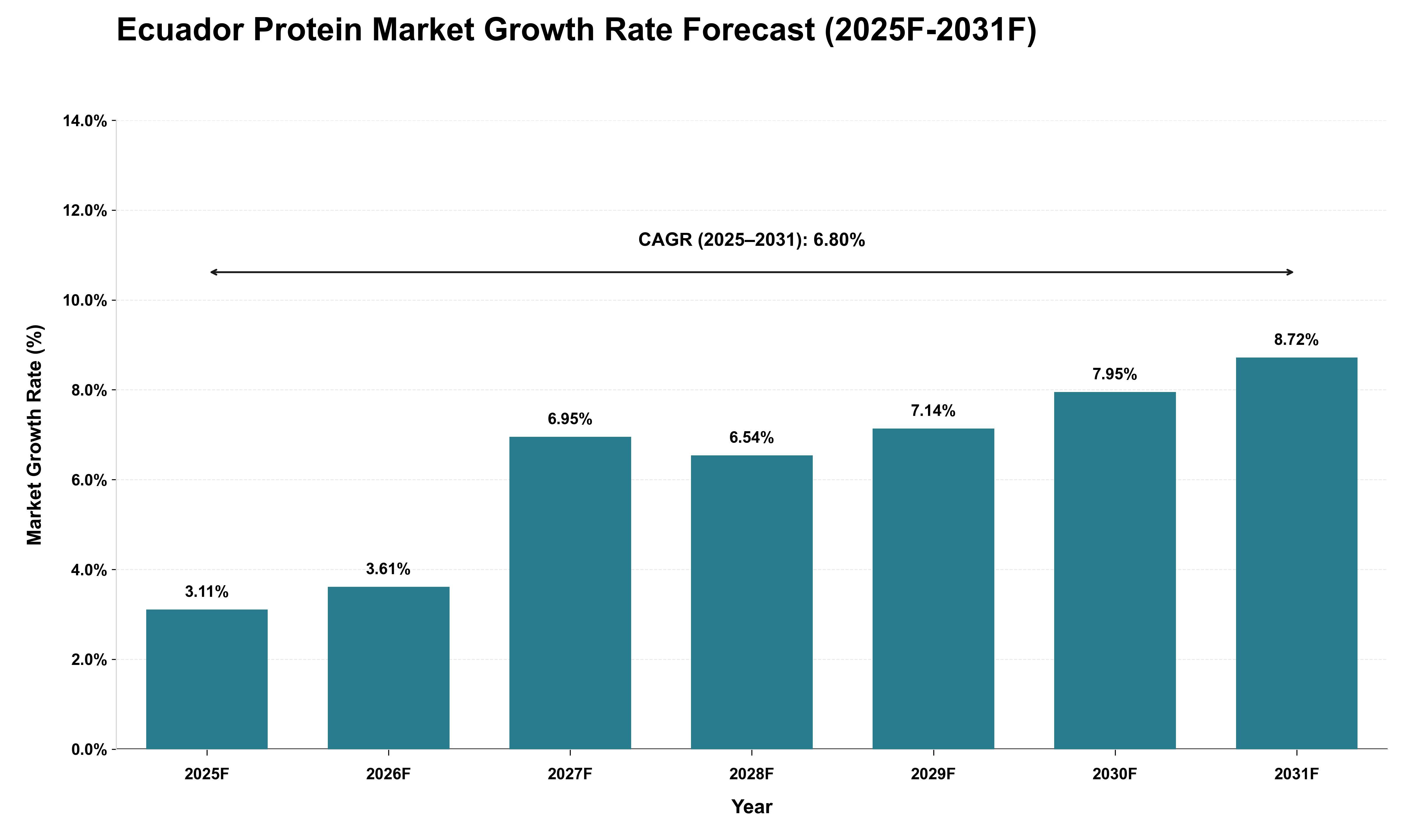
The forecasted trajectory for Ecuador's protein market indicates a notable acceleration in growth rates, particularly from 2027 onward, where annual growth is projected to exceed 6.5%. This upward trend suggests a robust increase in both domestic consumption and export potential, driven by rising global demand for protein sources. As the CAGR of 6.80% reflects, the market will likely benefit from enhanced trade flows, with Ecuador positioning itself as a competitive player in international protein exports. The anticipated growth in 2031 at 8.72% underscores an increasing reliance on import dependencies to meet consumer preferences and dietary shifts, which may further stimulate trade dynamics. Additionally, cyclical trends in agricultural production and global supply chain adjustments will play critical roles in shaping these outcomes, potentially leading to increased investment in processing capabilities and logistics infrastructure to support this expanding market segment.
Key Highlights of the Report:
- Ecuador Protein Market Outlook
- Market Size of Ecuador Protein Market, 2025
- Forecast of Ecuador Protein Market, 2032
- Historical Data and Forecast of Ecuador Protein Revenues & Volume for the Period 2022 - 2032
- Ecuador Protein Market Trend Evolution
- Ecuador Protein Market Drivers and Challenges
- Ecuador Protein Price Trends
- Ecuador Protein Porter's Five Forces
- Ecuador Protein Industry Life Cycle
- Historical Data and Forecast of Ecuador Protein Market Revenues & Volume By Source for the Period 2022 - 2032
- Historical Data and Forecast of Ecuador Protein Market Revenues & Volume By Animal for the Period 2022 - 2032
- Historical Data and Forecast of Ecuador Protein Market Revenues & Volume By Microbial for the Period 2022 - 2032
- Historical Data and Forecast of Ecuador Protein Market Revenues & Volume By End User for the Period 2022 - 2032
- Historical Data and Forecast of Ecuador Protein Market Revenues & Volume By Animal Feed for the Period 2022 - 2032
- Historical Data and Forecast of Ecuador Protein Market Revenues & Volume By Food and Beverages for the Period 2022 - 2032
- Historical Data and Forecast of Ecuador Protein Market Revenues & Volume By Personal Care and Cosmetics for the Period 2022 - 2032
- Historical Data and Forecast of Ecuador Protein Market Revenues & Volume By Supplements for the Period 2022 - 2032
- Ecuador Protein Import Export Trade Statistics
- Market Opportunity Assessment By Source
- Market Opportunity Assessment By End User
- Ecuador Protein Top Companies Market Share
- Ecuador Protein Competitive Benchmarking By Technical and Operational Parameters
- Ecuador Protein Company Profiles
- Ecuador Protein Key Strategic Recommendations






































