Ecuador Thread Rolling Machine Market Growth Rate Analysis (2025 - 2031)
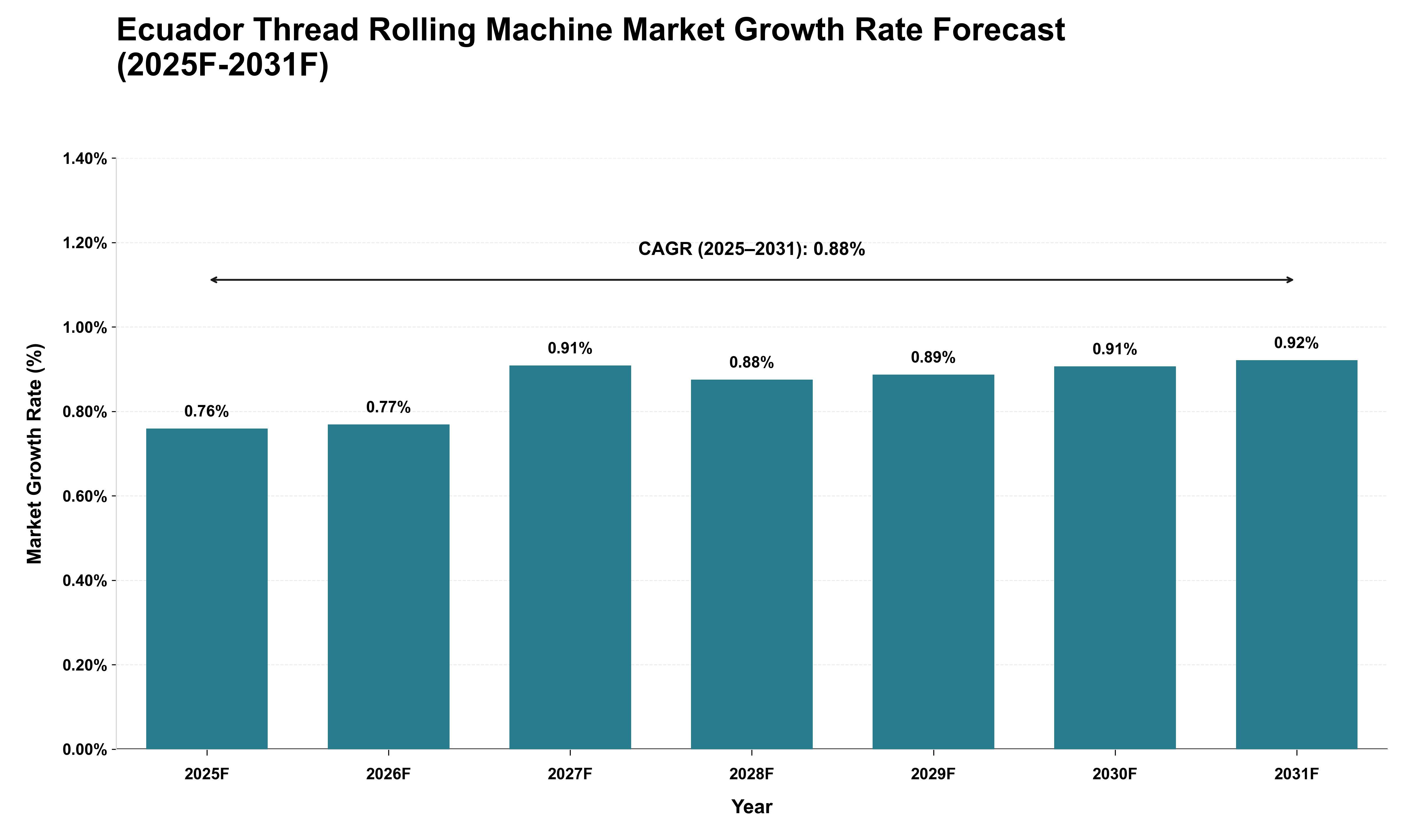
The Ecuador Thread Rolling Machine market is projected to experience a compound annual growth rate of 0.88% from 2025 to 2031, reflecting a gradual upward trend in demand driven by regulatory and trade policy factors. As Ecuador continues to navigate its import dependencies, particularly for machinery components, the anticipated growth will likely be influenced by evolving tariffs and trade agreements that could either facilitate or hinder access to essential technologies. The annual growth rates indicate a steady increase, with notable upticks in 2027 and beyond, suggesting that cyclical trends in manufacturing output may align with broader economic recovery phases. Additionally, the government's potential focus on enhancing local manufacturing capabilities could spur investments in thread rolling technology, thereby fostering an environment conducive to incremental advancements in production efficiency and competitiveness within the regional market landscape.
Key Highlights of the Report:
- Ecuador Thread Rolling Machine Market Outlook
- Market Size of Ecuador Thread Rolling Machine Market, 2024
- Forecast of Ecuador Thread Rolling Machine Market, 2031
- Historical Data and Forecast of Ecuador Thread Rolling Machine Revenues & Volume for the Period 2021-2031
- Ecuador Thread Rolling Machine Market Trend Evolution
- Ecuador Thread Rolling Machine Market Drivers and Challenges
- Ecuador Thread Rolling Machine Price Trends
- Ecuador Thread Rolling Machine Porter`s Five Forces
- Ecuador Thread Rolling Machine Industry Life Cycle
- Historical Data and Forecast of Ecuador Thread Rolling Machine Market Revenues & Volume By Type for the Period 2021-2031
- Historical Data and Forecast of Ecuador Thread Rolling Machine Market Revenues & Volume By Two Axis Thread Rolling Machine for the Period 2021-2031
- Historical Data and Forecast of Ecuador Thread Rolling Machine Market Revenues & Volume By Three Axis Thread Rolling Machine for the Period 2021-2031
- Historical Data and Forecast of Ecuador Thread Rolling Machine Market Revenues & Volume By Application for the Period 2021-2031
- Historical Data and Forecast of Ecuador Thread Rolling Machine Market Revenues & Volume By Construction for the Period 2021-2031
- Historical Data and Forecast of Ecuador Thread Rolling Machine Market Revenues & Volume By Industrial for the Period 2021-2031
- Historical Data and Forecast of Ecuador Thread Rolling Machine Market Revenues & Volume By Others for the Period 2021-2031
- Ecuador Thread Rolling Machine Import Export Trade Statistics
- Market Opportunity Assessment By Type
- Market Opportunity Assessment By Application
- Ecuador Thread Rolling Machine Top Companies Market Share
- Ecuador Thread Rolling Machine Competitive Benchmarking By Technical and Operational Parameters
- Ecuador Thread Rolling Machine Company Profiles
- Ecuador Thread Rolling Machine Key Strategic Recommendations






































