Egypt Bamboos Market Size Growth Rate
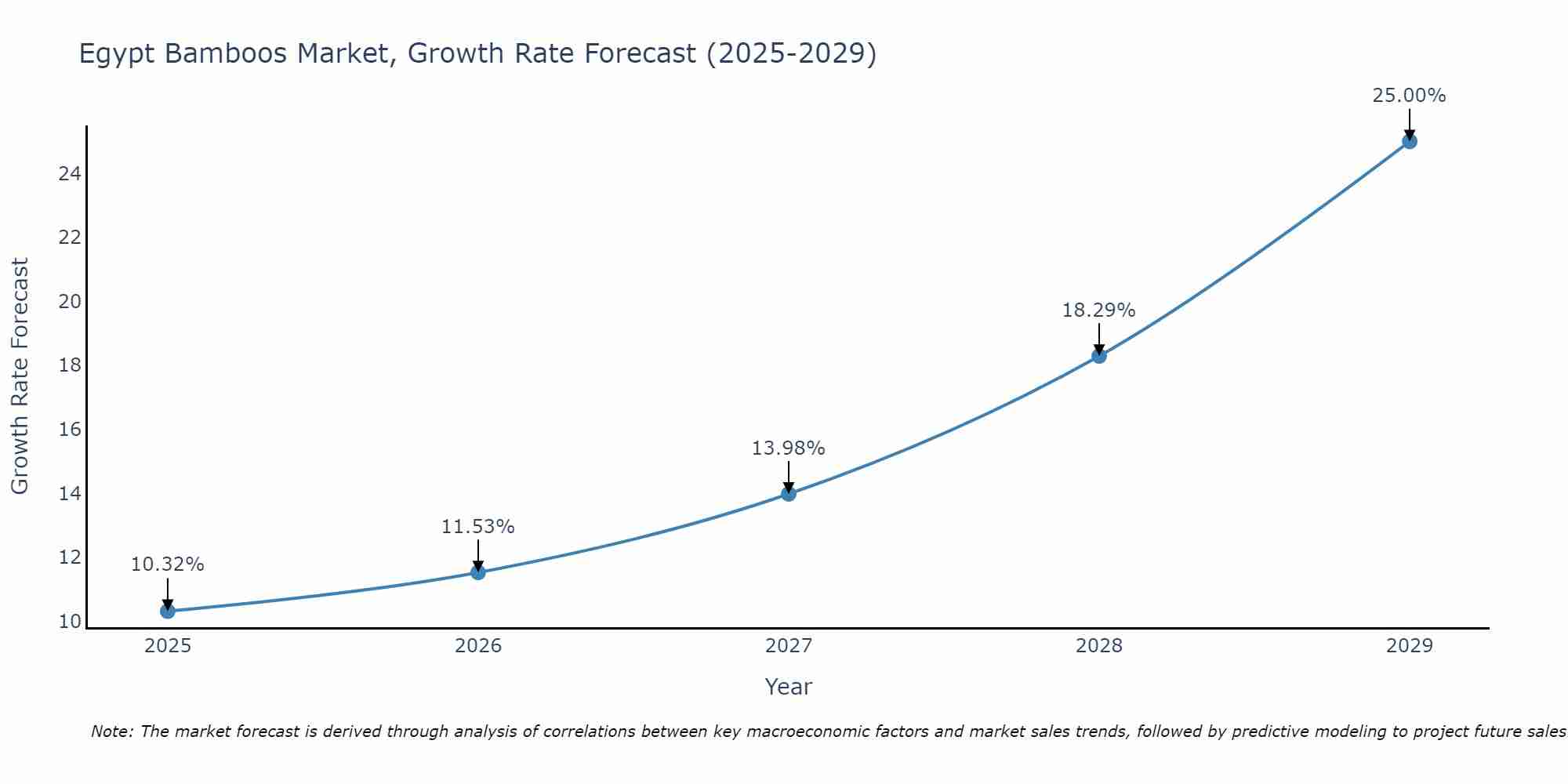
The Egypt Bamboos Market is likely to experience consistent growth rate gains over the period 2025 to 2029. The growth rate starts at 10.32% in 2025 and reaches 25.00% by 2029.
Egypt Bamboos Market Overview
The Egypt Bamboos Market is experiencing steady growth due to the rising demand for sustainable and eco-friendly construction materials. Bamboos are being increasingly used in various industries such as construction, furniture, and textiles for their versatility, strength, and environmental benefits. The market is also driven by the government`s initiatives to promote bamboo cultivation and usage in different sectors. Additionally, the growing awareness among consumers about the importance of sustainable products is further fueling the demand for bamboos in Egypt. Key players in the market are focusing on product innovations, quality control, and strategic partnerships to gain a competitive edge. Overall, the Egypt Bamboos Market presents lucrative opportunities for growth and expansion in the coming years.
Egypt Bamboos Market Trends
The Egypt Bamboos Market is experiencing a growth trend driven by the increasing awareness of the environmental benefits of bamboo products. Consumers are showing a preference for sustainable and eco-friendly materials, which has led to a rise in the demand for bamboo-based products in various industries such as construction, furniture, and textiles. Additionally, the versatility of bamboo as a material, known for its strength, durability, and fast-growing nature, is attracting both manufacturers and consumers. The market is also witnessing a trend towards innovative applications of bamboo, such as in the production of biodegradable packaging and renewable energy sources. Overall, the Egypt Bamboos Market is poised for further expansion as sustainability becomes a key focus for businesses and consumers alike.
Egypt Bamboos Market Challenges
In the Egypt Bamboos Market, some key challenges include limited awareness and understanding of the benefits of bamboo products among consumers, resulting in lower demand compared to traditional materials. Additionally, there may be issues related to inconsistent quality control and standardization of bamboo products, leading to concerns about durability and reliability. Access to sustainable bamboo sources and the high costs associated with importing bamboo materials or technology for processing can also pose challenges for local manufacturers and suppliers. Furthermore, competition from other materials in the market, such as plastic or wood, further complicates the market landscape for bamboo products in Egypt. Overcoming these challenges would require concerted efforts to educate consumers, improve product quality, establish sustainable supply chains, and enhance competitiveness in the market.
Egypt Bamboos Market Investment Opportunities
The Egypt Bamboos Market presents several promising investment opportunities due to the increasing demand for sustainable and eco-friendly building materials. Bamboo is known for its fast growth rate, strength, and versatility, making it an attractive alternative to traditional construction materials. Investors can explore opportunities in bamboo plantations for commercial harvesting, manufacturing of bamboo-based products such as flooring, furniture, and textiles, as well as construction projects utilizing bamboo as a primary material. With the growing emphasis on sustainability and environmental conservation, the Egypt Bamboos Market offers potential for long-term growth and profitability for investors looking to capitalize on the trend towards green building practices and eco-conscious consumer preferences.
Egypt Bamboos Market Government Policy
The Egyptian government has implemented policies to support the growth of the bamboo market in the country. In 2015, the Ministry of Agriculture and Land Reclamation launched a program to promote the cultivation of bamboo as an alternative to traditional wood sources, aiming to reduce deforestation and promote sustainable practices. Additionally, the government has provided subsidies and incentives to farmers and businesses engaged in bamboo production, such as tax breaks and financial support for establishing bamboo plantations. These policies align with Egypt`s commitment to environmental sustainability and economic development, fostering a more sustainable and resilient bamboo market in the country.
Egypt Bamboos Market Future Outlook
The Egypt Bamboos Market is expected to witness steady growth in the coming years due to increasing awareness about the environmental benefits of bamboo products and the rising demand for sustainable materials. The government`s initiatives to promote the use of bamboo in various sectors such as construction, furniture, and textiles are also expected to drive market growth. Additionally, the versatility of bamboo as a raw material, its fast growth rate, and its ability to sequester carbon make it an attractive option for both consumers and businesses looking to reduce their environmental footprint. With a growing emphasis on sustainability and eco-friendly products, the Egypt Bamboos Market is poised for expansion in the near future.
Key Highlights of the Report:
- Egypt Bamboos Market Outlook
- Market Size of Egypt Bamboos Market, 2024
- Forecast of Egypt Bamboos Market, 2031
- Historical Data and Forecast of Egypt Bamboos Revenues & Volume for the Period 2021 - 2031
- Egypt Bamboos Market Trend Evolution
- Egypt Bamboos Market Drivers and Challenges
- Egypt Bamboos Price Trends
- Egypt Bamboos Porter's Five Forces
- Egypt Bamboos Industry Life Cycle
- Historical Data and Forecast of Egypt Bamboos Market Revenues & Volume By Application for the Period 2021 - 2031
- Historical Data and Forecast of Egypt Bamboos Market Revenues & Volume By Raw Materials for the Period 2021 - 2031
- Historical Data and Forecast of Egypt Bamboos Market Revenues & Volume By Industrial Products for the Period 2021 - 2031
- Historical Data and Forecast of Egypt Bamboos Market Revenues & Volume By Furniture for the Period 2021 - 2031
- Historical Data and Forecast of Egypt Bamboos Market Revenues & Volume By Shoots for the Period 2021 - 2031
- Historical Data and Forecast of Egypt Bamboos Market Revenues & Volume By Others for the Period 2021 - 2031
- Egypt Bamboos Import Export Trade Statistics
- Market Opportunity Assessment By Application
- Egypt Bamboos Top Companies Market Share
- Egypt Bamboos Competitive Benchmarking By Technical and Operational Parameters
- Egypt Bamboos Company Profiles
- Egypt Bamboos Key Strategic Recommendations






































