Egypt Crystal Lighting Market Summary
The egypt crystal lighting market was estimated at USD 271 Million in 2025 and is projected to reach USD 368 Million by 2032, growing at a CAGR of 4.9% from 2026 to 2032.
Egypt Crystal Lighting Market Year-wise Growth Rate and Key Drivers
This graph highlights how the Egypt Crystal Lighting Market has steadily grown over the past five years, supported by major growth factors.
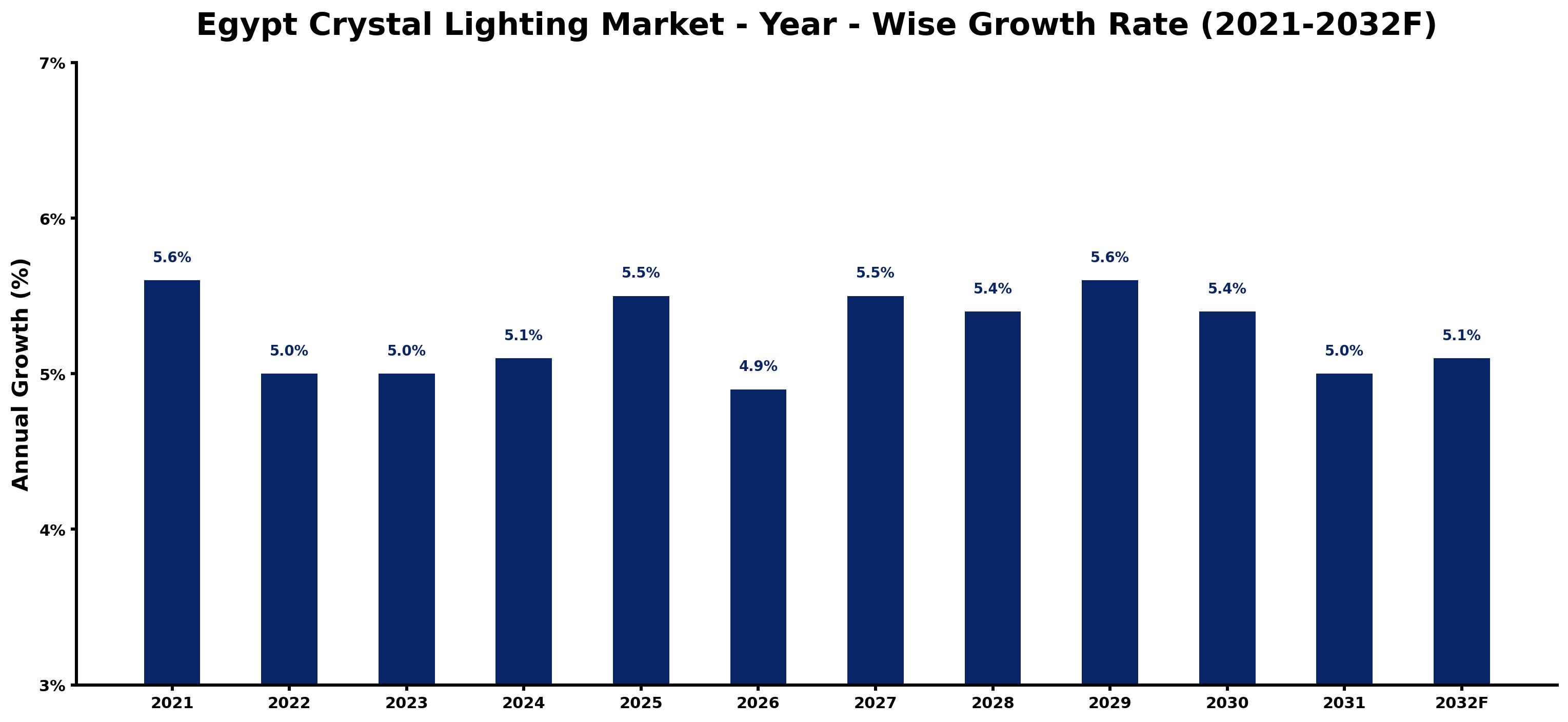
The table below presents the year wise growth rates along with the key drivers influencing the market
| Year | Growth Rate | Major Drivers |
| 2021 | 5.6% | Consumer interest in energy efficiency boosts the demand for crystal lighting solutions. |
| 2022 | 5.0% | Local manufacturers enhance production capacity to meet emerging market needs effectively. |
| 2023 | 5.0% | Tourism recovery sees increased investment in hospitality lighting design projects. |
| 2024 | 5.1% | Innovative designs captivate architects, integrating crystal fixtures into luxury residential projects. |
| 2025 | 5.5% | E-commerce platforms expand, making decorative lighting more accessible to consumers. |
| 2026 | 4.9% | Smart lighting technology integration appeals to tech-savvy homebuyers seeking modern solutions. |
| 2027 | 5.5% | Urbanization trends lead to upgraded infrastructure requiring aesthetically pleasing lighting options. |
| 2028 | 5.4% | Cultural festivals and events create heightened demand for decorative and functional lighting. |
| 2029 | 5.6% | Sustainability concerns prompt shifts towards eco-friendly lighting materials and production methods. |
| 2030 | 5.4% | Collaborations between designers and manufacturers yield unique crystal lighting collections. |
| 2031 | 5.0% | Export opportunities emerge as international markets show interest in Egyptian craftsmanship. |
| 2032 | 5.1% | Continued population growth necessitates innovative solutions in residential and commercial lighting. |
Note - Market size estimations and growth projections presented in this report are based on 6Wresearch's advanced forecasting approach, validated with industry datasets as of June 2026.
Egypt Crystal Lighting Market Synopsis
The Egypt Crystal Lighting Market is projected to reach 4.9% and witness significant growth during the forecast period (2026-2032). This market is anticipated to register a compound annual growth rate (CAGR) of 8.6%, driven by increasing demand for energy-efficient lighting solutions. The adoption of LED technology and the rising popularity of crystal chandeliers have played pivotal roles in shaping this market over the past five years. Additionally, heightened investments in large-scale infrastructure development across Egypt's major urban centers are further fueling the growth dynamics of the Egypt Crystal Lighting Market. Furthermore, governmental initiatives aimed at promoting energy-saving products are enhancing the demand across both residential and commercial sectors, thereby supporting overall market expansion. However, challenges such as high operational costs related to installation and maintenance, along with insufficient awareness regarding the safety measures associated with crystal lighting installations, may marginally restrain market growth during the forecast period.
Egypt Crystal Lighting Market Growth Drivers
The growth trajectory of the Egypt Crystal Lighting Market is influenced by several key factors:
- Consumer Preference Shifts: There is a growing preference among consumers for aesthetic and energy-efficient lighting solutions, favoring crystal lighting products that blend modern design with traditional elegance.
- Infrastructure Development: Ongoing urbanization and infrastructure projects throughout Egypt's major cities create heightened demand for decorative lighting, including crystal fixtures for both residential and commercial properties.
- Government Policies: Various initiatives aimed at promoting energy-efficient technologies have spurred market growth by incentivizing the adoption of crystal lighting solutions.
- Technological Advancements: Innovations in LED technology and crystal production are enhancing product offerings, leading to increased efficiency and reduced costs, which are attractive to both consumers and businesses.
- Environmental Awareness: An increasing emphasis on sustainability and energy conservation among consumers drives the demand for energy-efficient lighting alternatives, including crystal lighting options.
Egypt Crystal Lighting Market Trends and Opportunities
The Egypt Crystal Lighting Market is poised to capture numerous trends and opportunities that could further enhance its development:
- Integration of Smart Technology: The emergence of smart lighting solutions that integrate with home automation systems presents significant opportunities for growth within the crystal lighting segment.
- Luxury Market Expansion: A rising middle class and growing disposable incomes in Egypt are contributing to increased spending on luxury home decor, including high-end crystal lighting products.
- Online Retail Growth: The proliferation of e-commerce platforms is facilitating greater access to a variety of crystal lighting products, catering to a broader consumer base.
- Customization Demand: There is an increasing demand for customized lighting solutions that cater to specific consumer needs, creating opportunities for manufacturers to innovate.
- Eco-Friendly Products: As consumers become more environmentally conscious, the demand for energy-efficient and sustainably sourced crystal lighting options is expected to rise significantly.
Egypt Crystal Lighting Market Challenges and Restraints
While the Egypt Crystal Lighting Market shows promising growth potential, several challenges may hinder its progress:
- High Installation Costs: The initial investment required for crystal lighting systems, including the costs of installation, can deter potential consumers, particularly in the residential sector.
- Maintenance Expenses: Ongoing maintenance costs associated with crystal lighting products can also pose barriers for long-term adoption, particularly in commercial settings.
- Safety Concerns: A lack of awareness regarding safety measures and potential risks associated with improper installation of crystal lighting could negatively impact consumer confidence.
- Market Saturation: The increasing availability of alternative lighting solutions may lead to market saturation, making it difficult for crystal lighting products to compete effectively.
- Economic Factors: Economic fluctuations and uncertainties can impact consumer spending and investment in decorative lighting, influencing market growth.
Egypt Crystal Lighting Market Government Investment and Initiatives
The government of Egypt has initiated several programs and policies aimed at enhancing the growth of the crystal lighting market. As part of a broader effort to improve energy efficiency and promote sustainability, the government is investing significantly in infrastructure projects that necessitate advanced lighting solutions. Initiatives targeting urban development include plans for smart city projects, which incorporate energy-saving lighting technologies. Public spending on such initiatives is expected to bolster market demand for crystal lighting products. Moreover, campaigns aimed at educating consumers about the benefits of energy-saving solutions are facilitating greater acceptance and adoption of these products in both residential and commercial applications. Through these investments and initiatives, the government is actively working to create an enabling environment for the growth of the Egypt Crystal Lighting Market.
Egypt Crystal Lighting Market Latest Developments (May 2025 - June 2026)
In the period from May 2025 to June 2026, the Egypt Crystal Lighting Market has witnessed several key developments in response to shifting consumer preferences and technological advancements. Notably, there has been an uptick in the integration of smart technologies within crystal lighting products, enhancing user experience and energy efficiency. Concurrently, a surge in online sales platforms has allowed for greater access and variety of crystal lighting options, catering to a wider audience. Additionally, manufacturers are increasingly focusing on sustainable materials and eco-friendly production processes, aligning with global trends towards environmental consciousness. Marketing campaigns aimed at increasing awareness of the benefits of crystal lighting have also gained traction, effectively stimulating consumer interest and demand.
Egypt Crystal Lighting Market - Key Attractiveness of the Report
- 10 Years of Market Numbers
- Historical Data Starting from 2022 to 2025
- Base Year: 2025
- Forecast Data until 2032
- Key Performance Indicators Impacting the Market
- Major Upcoming Developments and Projects
Key Highlights of the Report:
- Egypt Crystal Lighting Market Outlook
- Market Size of Egypt Crystal Lighting Market, 2025
- Forecast of Egypt Crystal Lighting Market, 2032F
- Historical Data and Forecast of Egypt Crystal Lighting Revenues & Volume for the Period 2022-2032F
- Egypt Crystal Lighting Market Trend Evolution
- Egypt Crystal Lighting Market Drivers and Challenges
- Egypt Crystal Lighting Price Trends
- Egypt Crystal Lighting Porter's Five Forces
- Egypt Crystal Lighting Industry Life Cycle
- Historical Data and Forecast of Egypt Crystal Lighting Market Revenues & Volume By Product Type for the Period 2022-2032F
- Historical Data and Forecast of Egypt Crystal Lighting Market Revenues & Volume By Ceiling Crystal Lights for the Period 2022-2032F
- Historical Data and Forecast of Egypt Crystal Lighting Market Revenues & Volume By Crystal Chandeliers for the Period 2022-2032F
- Historical Data and Forecast of Egypt Crystal Lighting Market Revenues & Volume By Others for the Period 2022-2032F
- Historical Data and Forecast of Egypt Crystal Lighting Market Revenues & Volume By Applications for the Period 2022-2032F
- Historical Data and Forecast of Egypt Crystal Lighting Market Revenues & Volume By Commercial for the Period 2022-2032F
- Historical Data and Forecast of Egypt Crystal Lighting Market Revenues & Volume By Designer for the Period 2022-2032F
- Historical Data and Forecast of Egypt Crystal Lighting Market Revenues & Volume By Superior Residential for the Period 2022-2032F
- Egypt Crystal Lighting Import Export Trade Statistics
- Market Opportunity Assessment By Product Type
- Market Opportunity Assessment By Applications
- Egypt Crystal Lighting Top Companies Market Share
- Egypt Crystal Lighting Competitive Benchmarking By Technical and Operational Parameters
- Egypt Crystal Lighting Company Profiles
- Egypt Crystal Lighting Key Strategic Recommendations






































