El Salvador Canned Tuna Market Top 5 Importing Countries and Market Competition (HHI) Analysis
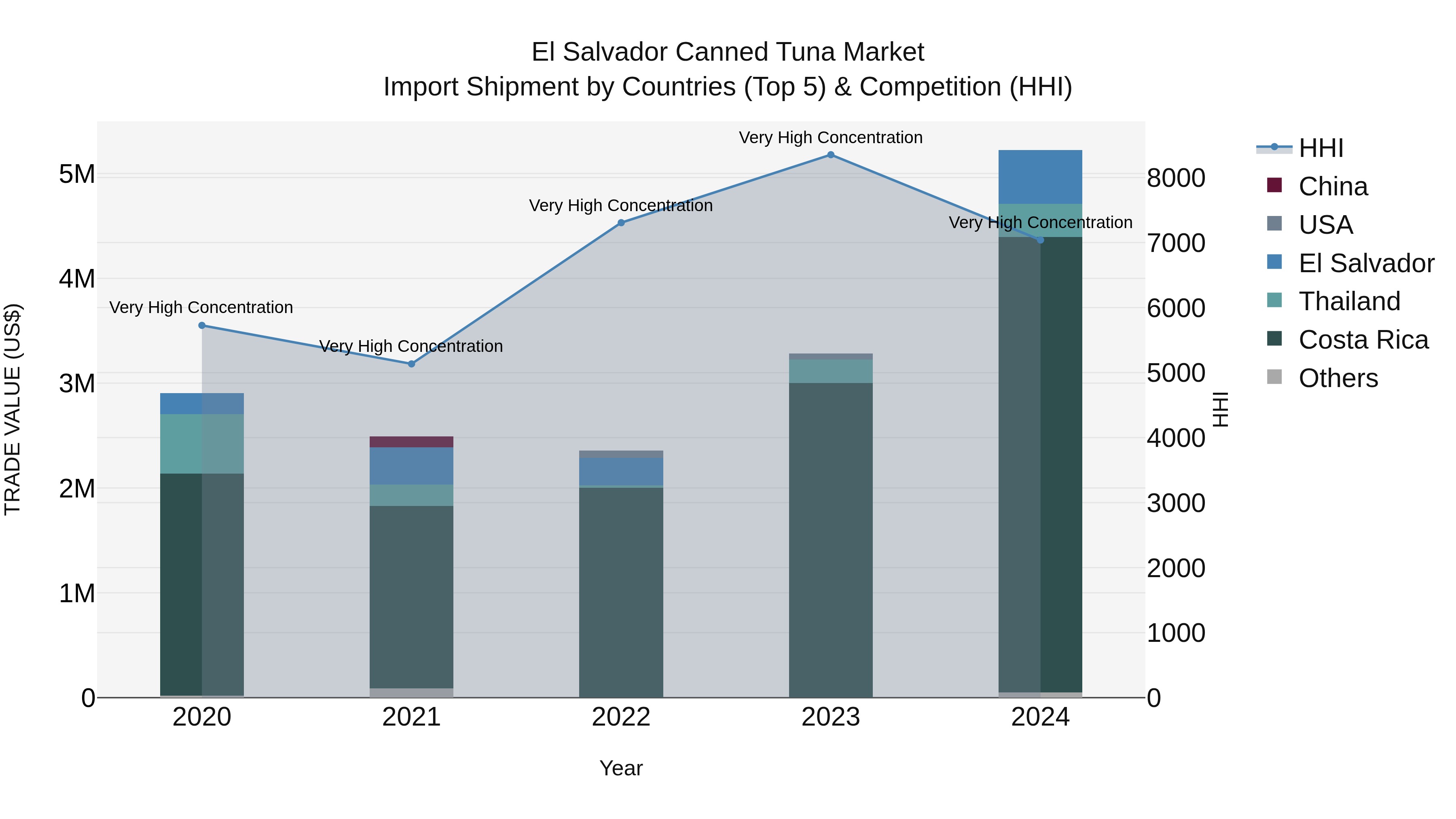
El Salvador`s canned tuna import market saw significant growth in 2024, with top exporting countries being Costa Rica, El Salvador, Thailand, Spain, and Ecuador. The market concentration, as measured by HHI, remained high, indicating a competitive landscape. The impressive compound annual growth rate (CAGR) of 15.79% from 2020 to 2024 highlights the increasing demand for canned tuna in El Salvador. Moreover, the notable growth rate of 59.04% from 2023 to 2024 suggests a thriving market with opportunities for both domestic and international suppliers to capitalize on the growing consumer interest in canned tuna products.
Canned Tuna Market: El Salvador vs Top 5 Major Economies in 2027 (Latin America)
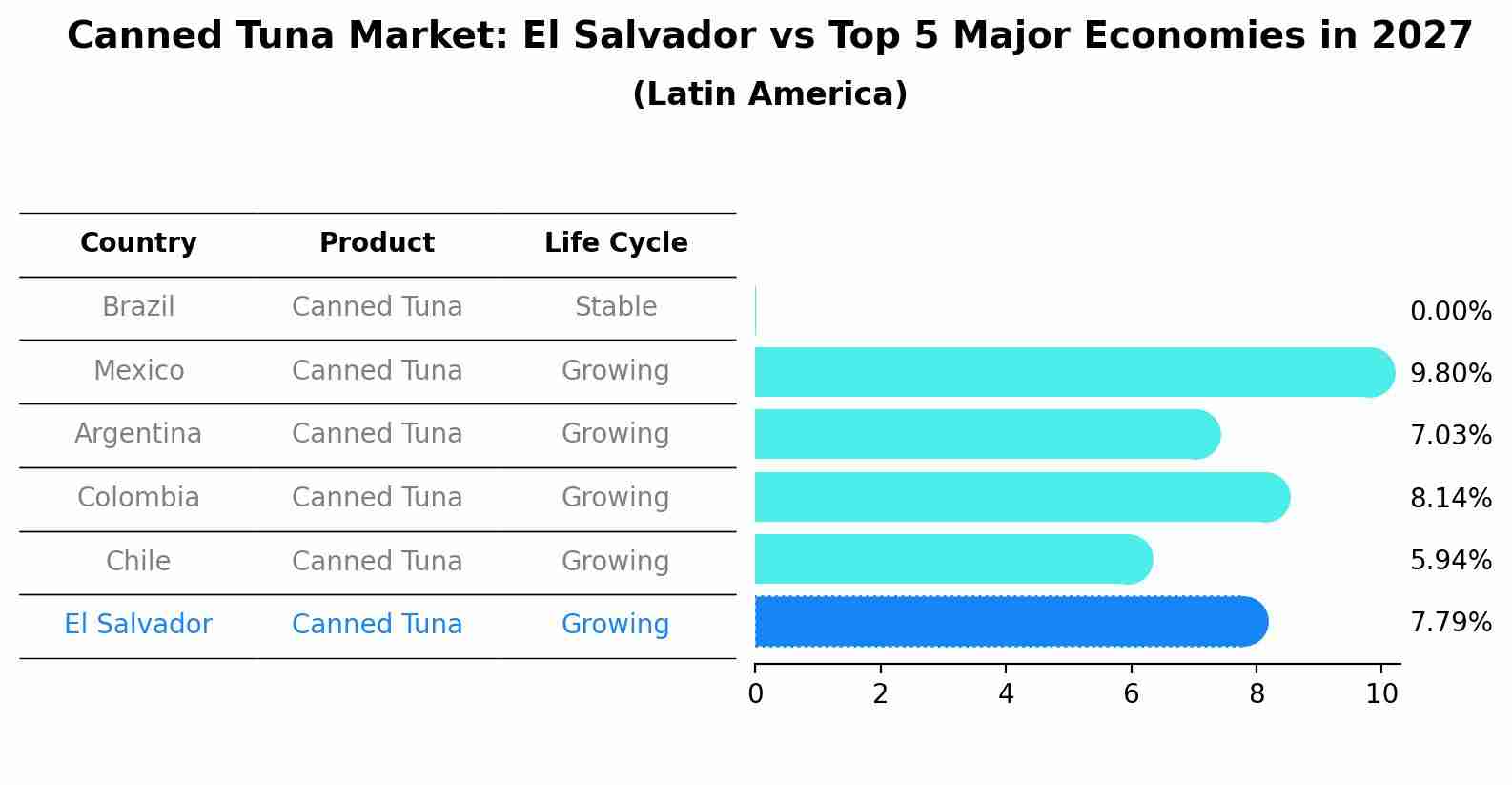
The Canned Tuna market in El Salvador is projected to grow at a growing growth rate of 7.79% by 2027, highlighting the country's increasing focus on advanced technologies within the Latin America region, where Brazil holds the dominant position, followed closely by Mexico, Argentina, Colombia and Chile, shaping overall regional demand.
El Salvador Canned Tuna Market Overview
The canned tuna market in El Salvador is expanding due to the growing popularity of tuna as a protein source in both home and foodservice applications. Canned tuna is known for its convenience, affordability, and nutritional value. With rising consumer interest in quick and easy meal options, as well as increased awareness of the health benefits of tuna, the demand for canned tuna is increasing in El Salvador.
Drivers of the market
Canned tuna is one of the most popular canned foods in El Salvador, driven by its affordability and convenience. As a high-protein food source, canned tuna is a popular choice among consumers with busy lifestyles. The growing retail sector and the expansion of supermarkets further support the availability and sales of canned tuna, solidifying its place in the countrys food market.
Challenges of the market
The El Salvador Canned Tuna Market faces challenges linked to the global supply chain, with the country being dependent on tuna imports for canning purposes. As a major consumer of canned tuna, El Salvador is impacted by fluctuations in tuna prices, which are subject to global market dynamics and the availability of sustainably sourced fish. Environmental concerns regarding overfishing and the depletion of tuna stocks have led to stricter regulations, which can raise production costs for local processors. Additionally, the market is highly competitive, with international brands dominating the canned tuna segment. The relatively low local production capacity further limits the ability of domestic producers to compete on a large scale. Additionally, consumer awareness of sustainability issues and the health implications of consuming canned fish could impact demand.
Government Policy of the market
El Salvador is a major player in the canned tuna market, and government policies related to the fishing industry significantly influence this sector. The government enforces regulations on sustainable fishing practices to ensure the long-term viability of tuna stocks. There are also policies promoting the growth of the local tuna canning industry, including incentives for investment in processing facilities and export opportunities. Quality control measures and food safety regulations help ensure that canned tuna products meet both local and international standards.
Key Highlights of the Report:
- El Salvador Canned Tuna Market Outlook
- Market Size of El Salvador Canned Tuna Market, 2024
- Forecast of El Salvador Canned Tuna Market, 2031
- Historical Data and Forecast of El Salvador Canned Tuna Revenues & Volume for the Period 2021-2031
- El Salvador Canned Tuna Market Trend Evolution
- El Salvador Canned Tuna Market Drivers and Challenges
- El Salvador Canned Tuna Price Trends
- El Salvador Canned Tuna Porter`s Five Forces
- El Salvador Canned Tuna Industry Life Cycle
- Historical Data and Forecast of El Salvador Canned Tuna Market Revenues & Volume By Product for the Period 2021-2031
- Historical Data and Forecast of El Salvador Canned Tuna Market Revenues & Volume By Skipjack for the Period 2021-2031
- Historical Data and Forecast of El Salvador Canned Tuna Market Revenues & Volume By Yellowfin for the Period 2021-2031
- Historical Data and Forecast of El Salvador Canned Tuna Market Revenues & Volume By Others for the Period 2021-2031
- Historical Data and Forecast of El Salvador Canned Tuna Market Revenues & Volume By Distribution Channel for the Period 2021-2031
- Historical Data and Forecast of El Salvador Canned Tuna Market Revenues & Volume By Hypermarket & Supermarket for the Period 2021-2031
- Historical Data and Forecast of El Salvador Canned Tuna Market Revenues & Volume By Specialty Stores for the Period 2021-2031
- Historical Data and Forecast of El Salvador Canned Tuna Market Revenues & Volume By Online for the Period 2021-2031
- El Salvador Canned Tuna Import Export Trade Statistics
- Market Opportunity Assessment By Product
- Market Opportunity Assessment By Distribution Channel
- El Salvador Canned Tuna Top Companies Market Share
- El Salvador Canned Tuna Competitive Benchmarking By Technical and Operational Parameters
- El Salvador Canned Tuna Company Profiles
- El Salvador Canned Tuna Key Strategic Recommendations






































