Estonia Egg Powder Market Size (2020-2030)
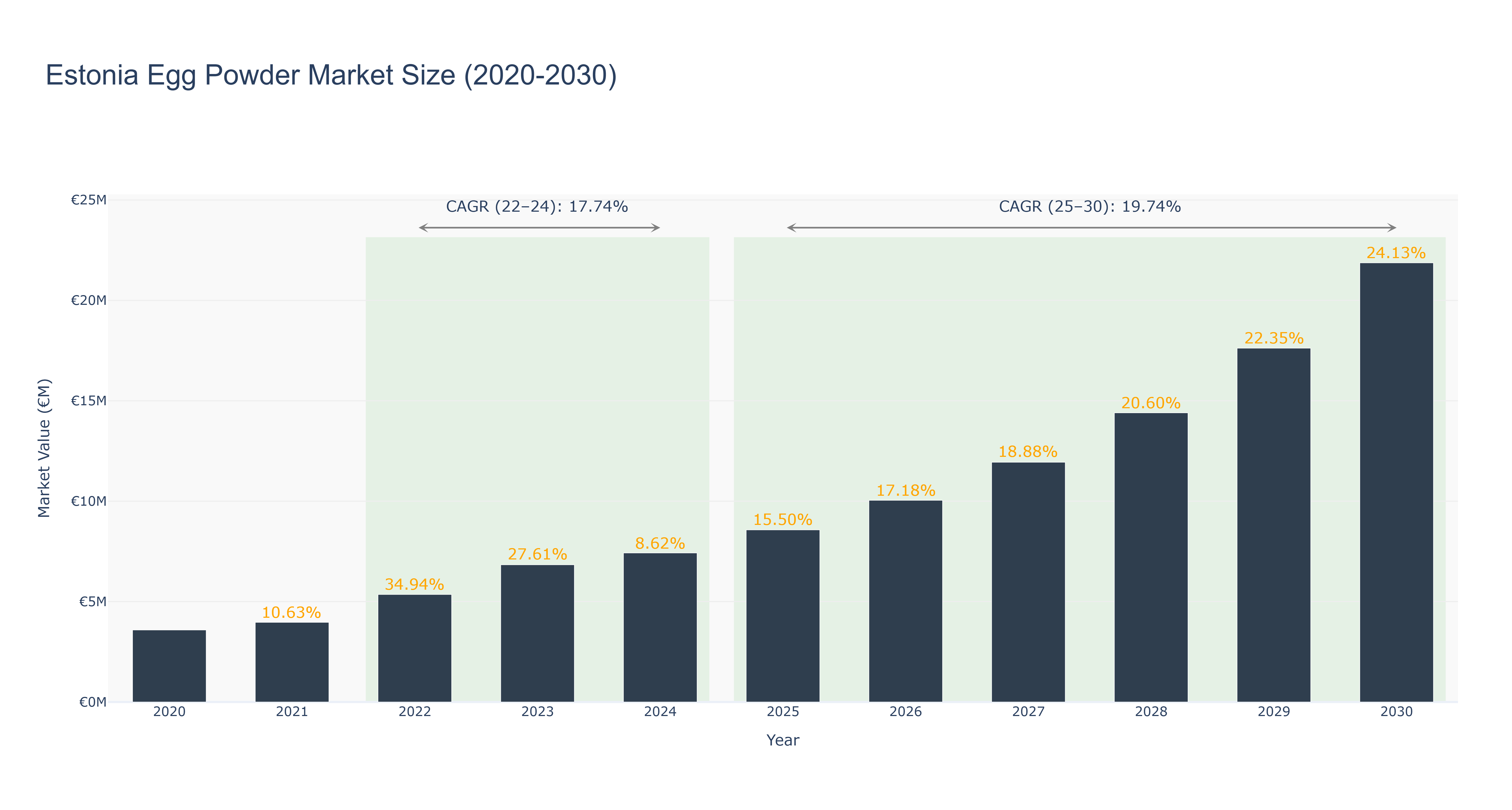
Estonia's Egg Powder Market has shown a steady growth trajectory over the past decade. With a peak market size of €21.87 million in 2030, the market has witnessed significant expansion. From 2020 to 2024, the market size increased from €3.59 million to €7.42 million, driven by increased consumer demand and technological advancements in production. The forecasted market size from 2025 to 2030 is projected to reach €21.87 million, showcasing a strong CAGR of 19.74%. The market's growth can be attributed to the rising trend of convenience foods and the increasing awareness of the nutritional benefits of egg powder products. Looking ahead, Estonia's Egg Powder Market is set to witness further growth with upcoming investments in sustainable production practices and innovative product offerings tailored to evolving consumer preferences.
Estonia Egg Powder Market: Production & Trade Performance (2019-2025)
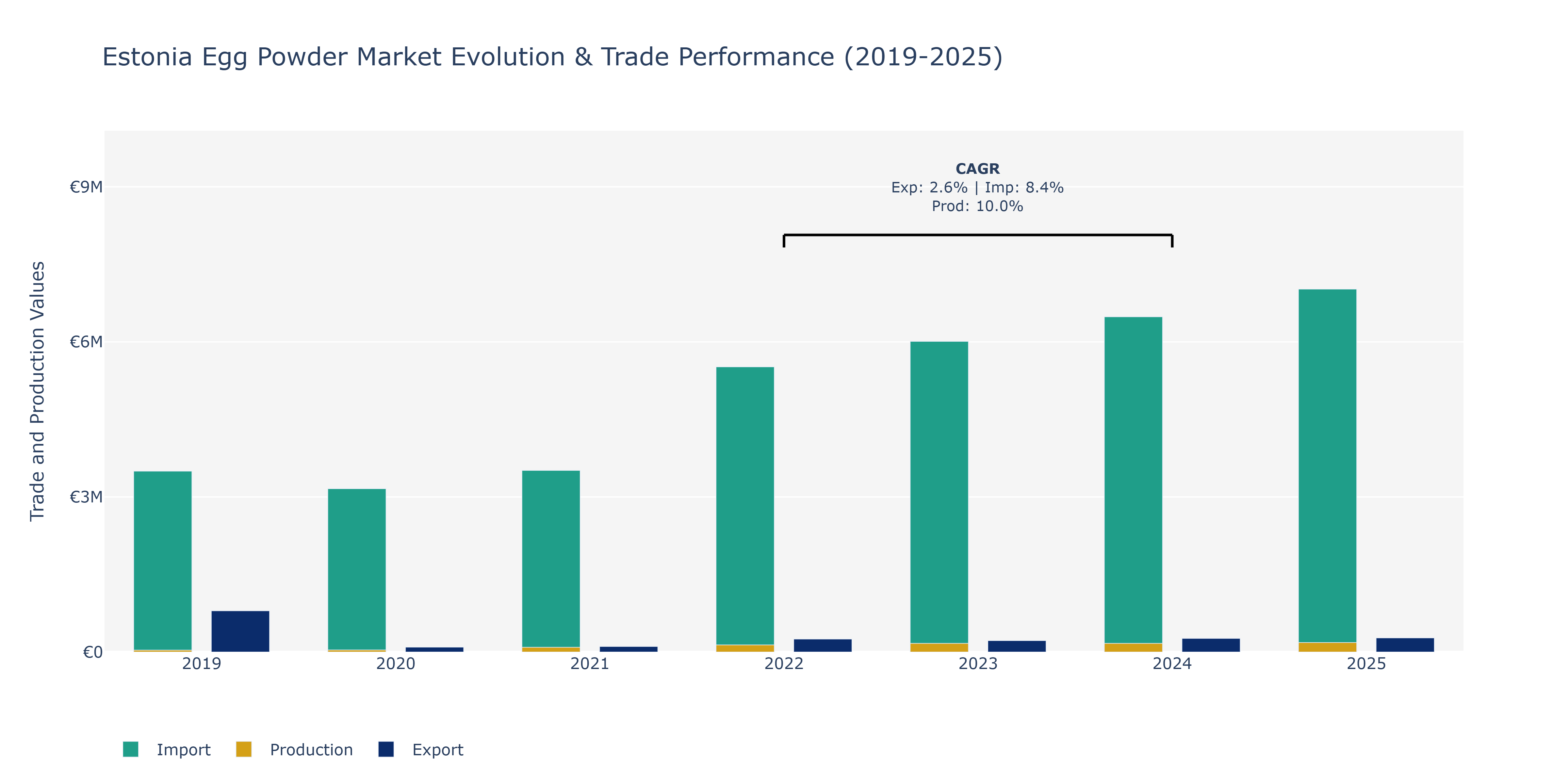
In the Estonia Egg Powder Market, exports experienced notable fluctuations over the years, reaching a peak in 2025 at approximately €273.87 thousand. This growth can be attributed to increased demand for egg powder in various food processing industries globally, driven by factors like convenience, longer shelf life, and easy storage. Imports, on the other hand, saw a consistent upward trend, hitting around €7.02 million in 2025. This surge may be linked to Estonia's reliance on importing raw materials for its egg powder production due to limited local egg supply or cost-effectiveness. Production levels also displayed a steady increase, notably soaring to €183 million in 2025, indicating a significant rise in domestic manufacturing capacity. The escalating production reflects Estonia's strategic focus on expanding its egg powder industry to cater to the growing demand both domestically and internationally.
Key Highlights of the Report:
- Estonia Egg Powder Market Outlook
- Market Size of Estonia Egg Powder Market, 2025
- Forecast of Estonia Egg Powder Market, 2032
- Historical Data and Forecast of Estonia Egg Powder Revenues & Volume for the Period 2022 - 2032F
- Estonia Egg Powder Market Trend Evolution
- Estonia Egg Powder Market Drivers and Challenges
- Estonia Egg Powder Price Trends
- Estonia Egg Powder Porter`s Five Forces
- Estonia Egg Powder Industry Life Cycle
- Historical Data and Forecast of Estonia Egg Powder Market Revenues & Volume By Types for the Period 2022 - 2032F
- Historical Data and Forecast of Estonia Egg Powder Market Revenues & Volume By Whole Eggfor the Period 2022 - 2032F
- Historical Data and Forecast of Estonia Egg Powder Market Revenues & Volume By Egg Yolkfor the Period 2022 - 2032F
- Historical Data and Forecast of Estonia Egg Powder Market Revenues & Volume By White Eggfor the Period 2022 - 2032F
- Historical Data and Forecast of Estonia Egg Powder Market Revenues & Volume By End-user for the Period 2022 - 2032F
- Historical Data and Forecast of Estonia Egg Powder Market Revenues & Volume By Bakery for the Period 2022 - 2032F
- Historical Data and Forecast of Estonia Egg Powder Market Revenues & Volume By Sauces, Dressings, and Mixesfor the Period 2022 - 2032F
- Historical Data and Forecast of Estonia Egg Powder Market Revenues & Volume By Others for the Period 2022 - 2032F
- Estonia Egg Powder Import Export Trade Statistics
- Market Opportunity Assessment By Types
- Market Opportunity Assessment By End-user
- Estonia Egg Powder Top Companies Market Share
- Estonia Egg Powder Competitive Benchmarking By Technical and Operational Parameters
- Estonia Egg Powder Company Profiles
- Estonia Egg Powder Key Strategic Recommendations






































