Ethiopia Grape Wine Market Growth Rate Analysis (2025 - 2031)
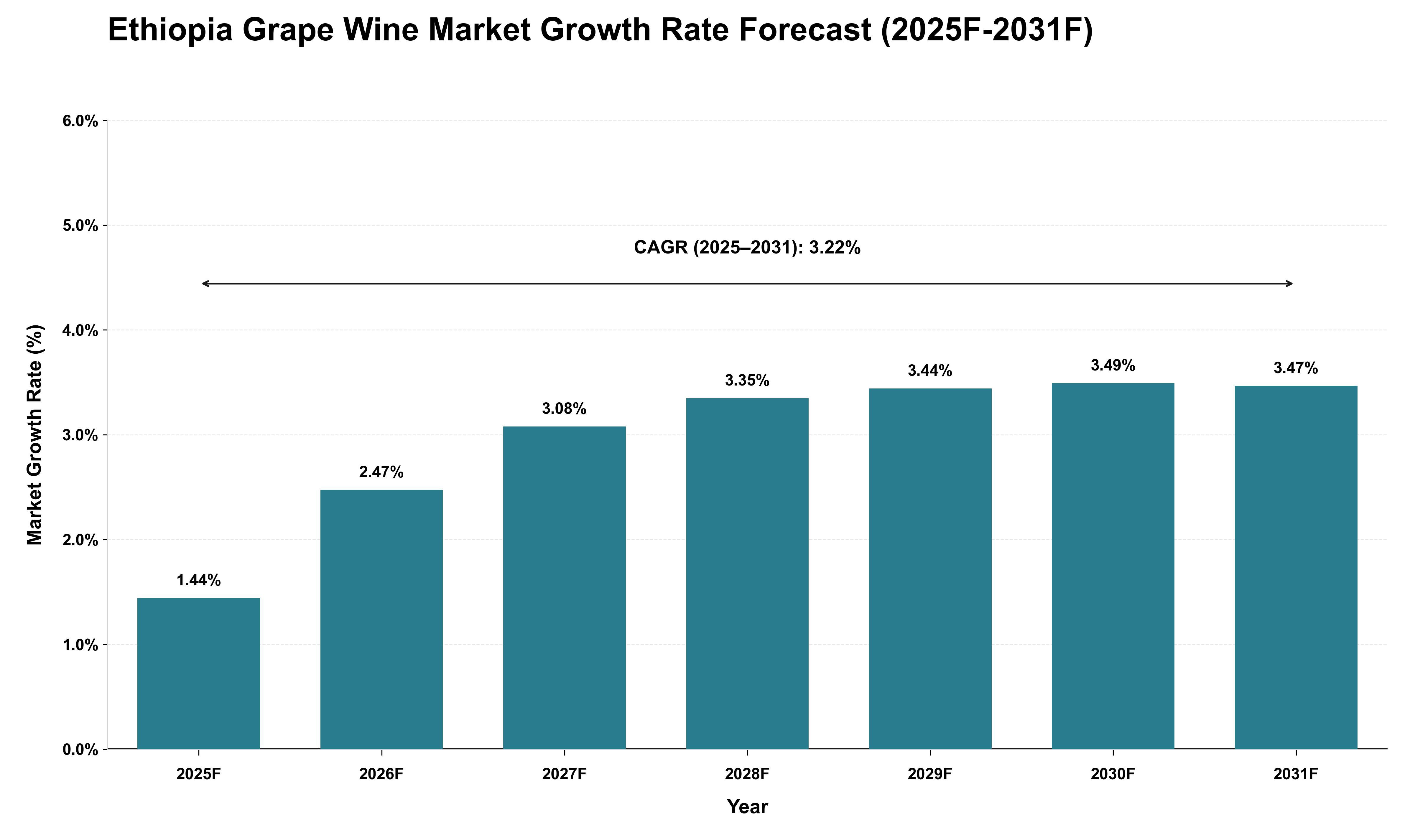
The Ethiopian grape wine market is poised for a gradual growth trajectory, with an anticipated compound annual growth rate (CAGR) of 3.22% from 2025 to 2031. This period will likely witness a steady increase in consumer demand, driven by rising disposable incomes and changing social norms surrounding alcohol consumption. The initial growth rate of 1.44% in 2025 will evolve as import dependencies shift, potentially enhancing local production capabilities and reducing reliance on foreign wines. As domestic wineries expand their capacity and improve quality, the market is expected to experience incremental increases in growth rates, peaking at 3.49% in 2030 before slightly tapering off. This cyclical trend reflects broader economic factors such as urbanization and demographic shifts that favor premium products, positioning Ethiopia's grape wine sector for sustained development amidst evolving competitive dynamics within the region.
Key Highlights of the Report:
- Ethiopia Grape Wine Market Outlook
- Market Size of Ethiopia Grape Wine Market, 2024
- Forecast of Ethiopia Grape Wine Market, 2031
- Historical Data and Forecast of Ethiopia Grape Wine Revenues & Volume for the Period 2021-2031
- Ethiopia Grape Wine Market Trend Evolution
- Ethiopia Grape Wine Market Drivers and Challenges
- Ethiopia Grape Wine Price Trends
- Ethiopia Grape Wine Porter`s Five Forces
- Ethiopia Grape Wine Industry Life Cycle
- Historical Data and Forecast of Ethiopia Grape Wine Market Revenues & Volume By Type for the Period 2021-2031
- Historical Data and Forecast of Ethiopia Grape Wine Market Revenues & Volume By Red Wine for the Period 2021-2031
- Historical Data and Forecast of Ethiopia Grape Wine Market Revenues & Volume By White Wine for the Period 2021-2031
- Historical Data and Forecast of Ethiopia Grape Wine Market Revenues & Volume By Rose Wine for the Period 2021-2031
- Historical Data and Forecast of Ethiopia Grape Wine Market Revenues & Volume By Other for the Period 2021-2031
- Historical Data and Forecast of Ethiopia Grape Wine Market Revenues & Volume By Applications for the Period 2021-2031
- Historical Data and Forecast of Ethiopia Grape Wine Market Revenues & Volume By Commercial Consumption for the Period 2021-2031
- Historical Data and Forecast of Ethiopia Grape Wine Market Revenues & Volume By Household Consumption for the Period 2021-2031
- Historical Data and Forecast of Ethiopia Grape Wine Market Revenues & Volume By Other for the Period 2021-2031
- Ethiopia Grape Wine Import Export Trade Statistics
- Market Opportunity Assessment By Type
- Market Opportunity Assessment By Applications
- Ethiopia Grape Wine Top Companies Market Share
- Ethiopia Grape Wine Competitive Benchmarking By Technical and Operational Parameters
- Ethiopia Grape Wine Company Profiles
- Ethiopia Grape Wine Key Strategic Recommendations






































