Ethiopia Nylon Market Growth Rate Analysis (2025 - 2031)
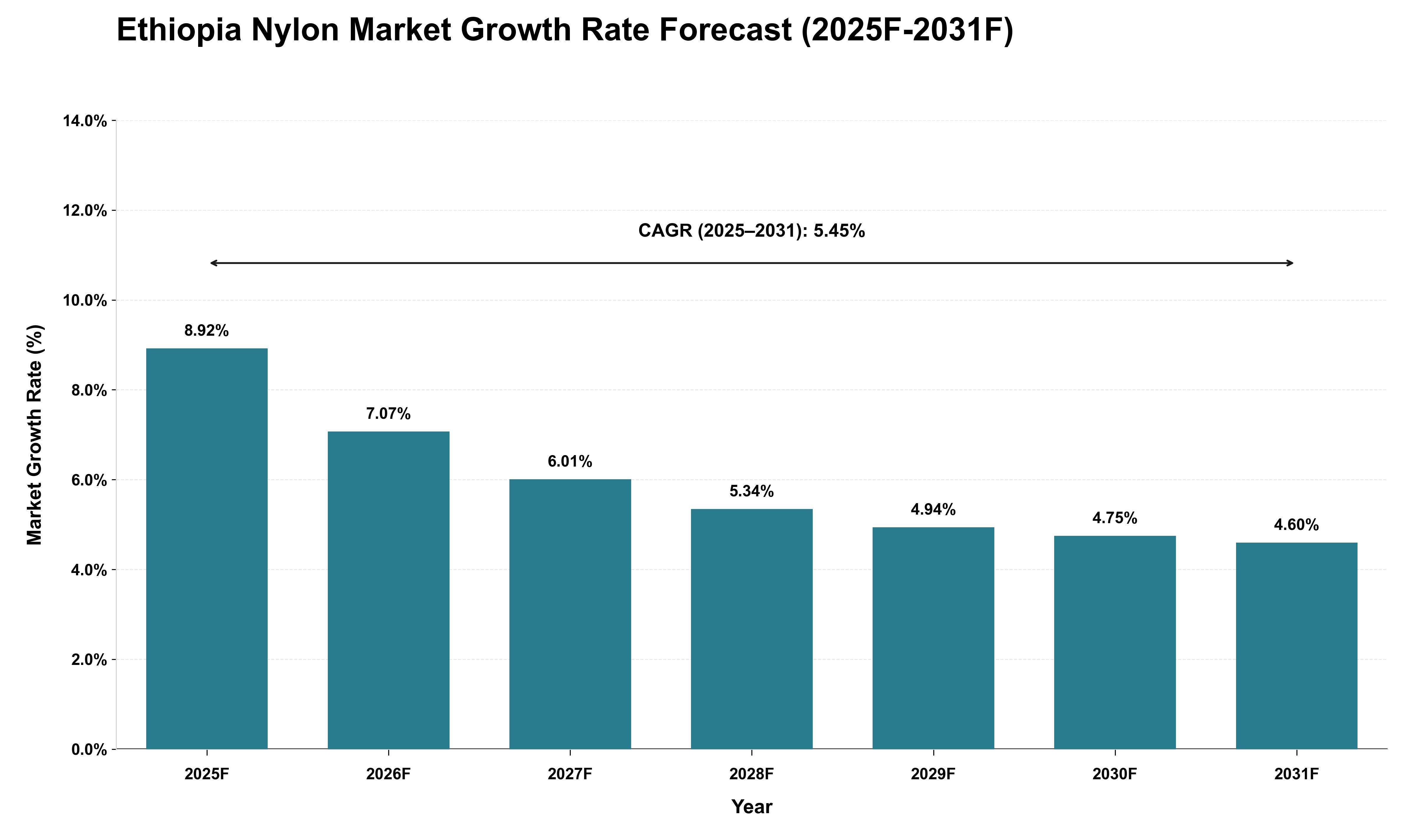
The Ethiopian nylon market is poised for a robust trajectory from 2025 onward, driven by anticipated shifts in end-use demand across various sectors, including textiles and automotive applications. The forecasted CAGR of 5.45% reflects a strong underlying growth pattern, with initial annual growth rates peaking at 8.92% in 2025 before gradually moderating to 4.60% by 2031. This deceleration will likely stem from evolving consumer preferences and increased competition within the regional market, necessitating innovation and efficiency improvements among producers. Additionally, Ethiopia's reliance on imported raw materials may influence pricing dynamics and supply chain stability, impacting overall market performance. As domestic production capabilities expand and infrastructure develops, the nylon sector is expected to adapt to these macroeconomic factors while responding to global trends in sustainability and material efficiency, ultimately shaping its competitive landscape through the forecast period.
Key Highlights of the Report:
- Ethiopia Nylon Market Outlook
- Market Size of Ethiopia Nylon Market, 2024
- Forecast of Ethiopia Nylon Market, 2031
- Historical Data and Forecast of Ethiopia Nylon Revenues & Volume for the Period 2021-2031
- Ethiopia Nylon Market Trend Evolution
- Ethiopia Nylon Market Drivers and Challenges
- Ethiopia Nylon Price Trends
- Ethiopia Nylon Porter`s Five Forces
- Ethiopia Nylon Industry Life Cycle
- Historical Data and Forecast of Ethiopia Nylon Market Revenues & Volume By Product for the Period 2021-2031
- Historical Data and Forecast of Ethiopia Nylon Market Revenues & Volume By Nylon 6 for the Period 2021-2031
- Historical Data and Forecast of Ethiopia Nylon Market Revenues & Volume By Nylon 66 for the Period 2021-2031
- Historical Data and Forecast of Ethiopia Nylon Market Revenues & Volume By Application for the Period 2021-2031
- Historical Data and Forecast of Ethiopia Nylon Market Revenues & Volume By Automobile for the Period 2021-2031
- Historical Data and Forecast of Ethiopia Nylon Market Revenues & Volume By Electrical & Electronics for the Period 2021-2031
- Historical Data and Forecast of Ethiopia Nylon Market Revenues & Volume By Engineering Plastics for the Period 2021-2031
- Historical Data and Forecast of Ethiopia Nylon Market Revenues & Volume By Textiles for the Period 2021-2031
- Historical Data and Forecast of Ethiopia Nylon Market Revenues & Volume By Others for the Period 2021-2031
- Ethiopia Nylon Import Export Trade Statistics
- Market Opportunity Assessment By Product
- Market Opportunity Assessment By Application
- Ethiopia Nylon Top Companies Market Share
- Ethiopia Nylon Competitive Benchmarking By Technical and Operational Parameters
- Ethiopia Nylon Company Profiles
- Ethiopia Nylon Key Strategic Recommendations






































