Fiji Window Blinds Market Growth Rate Analysis (2025 - 2031)
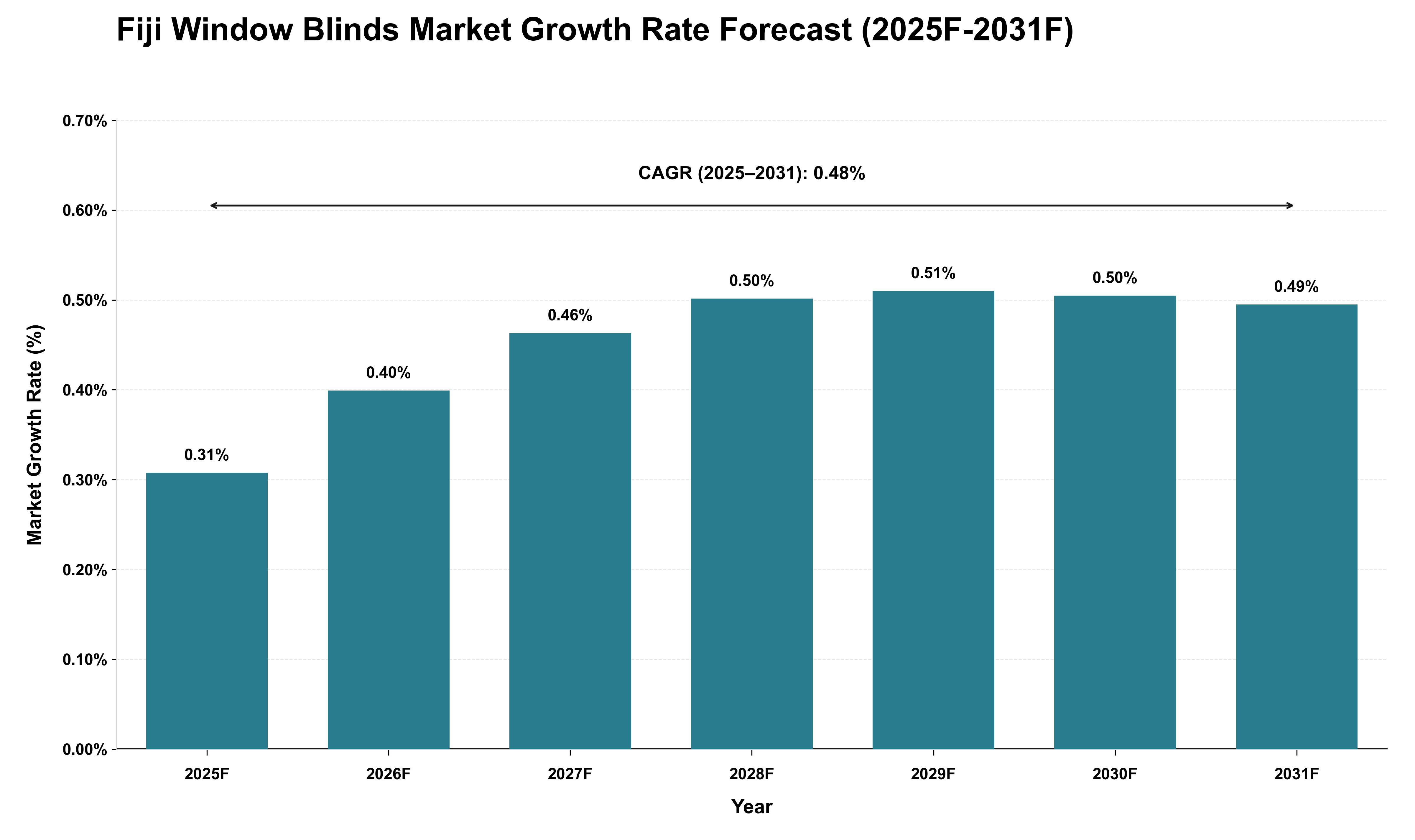
From 2025 onward, the Fiji window blinds market will likely experience a gradual growth trajectory, with a projected CAGR of 0.48%. This modest expansion can be attributed to evolving regulatory frameworks that may enhance import tariffs on foreign window treatment products, thereby incentivizing local manufacturing and reducing dependency on imports. As trade policies adapt to prioritize domestic production, the market could witness a slight uptick in consumer preference for locally sourced materials. Additionally, cyclical trends in construction and home improvement sectors will influence demand; as economic conditions stabilize post-pandemic, increased residential renovations are anticipated to drive sales. The annual growth rates indicate a steady increase from 0.31% in 2025 to a peak of 0.51% in 2029 before slightly tapering off, reflecting an environment where regulatory shifts and consumer behavior converge to shape market dynamics effectively.
Key Highlights of the Report:
- Fiji Window Blinds Market Outlook
- Market Size of Fiji Window Blinds Market, 2024
- Forecast of Fiji Window Blinds Market, 2031
- Historical Data and Forecast of Fiji Window Blinds Revenues & Volume for the Period 2021- 2031
- Fiji Window Blinds Market Trend Evolution
- Fiji Window Blinds Market Drivers and Challenges
- Fiji Window Blinds Price Trends
- Fiji Window Blinds Porter's Five Forces
- Fiji Window Blinds Industry Life Cycle
- Historical Data and Forecast of Fiji Window Blinds Market Revenues & Volume By Product for the Period 2021- 2031
- Historical Data and Forecast of Fiji Window Blinds Market Revenues & Volume By Roller Blinds for the Period 2021- 2031
- Historical Data and Forecast of Fiji Window Blinds Market Revenues & Volume By Venetian Blinds for the Period 2021- 2031
- Historical Data and Forecast of Fiji Window Blinds Market Revenues & Volume By Vertical Blinds for the Period 2021- 2031
- Historical Data and Forecast of Fiji Window Blinds Market Revenues & Volume By Panel Blinds for the Period 2021- 2031
- Historical Data and Forecast of Fiji Window Blinds Market Revenues & Volume By Corded Blinds for the Period 2021- 2031
- Historical Data and Forecast of Fiji Window Blinds Market Revenues & Volume By Others for the Period 2021- 2031
- Historical Data and Forecast of Fiji Window Blinds Market Revenues & Volume By Material for the Period 2021- 2031
- Historical Data and Forecast of Fiji Window Blinds Market Revenues & Volume By Metal for the Period 2021- 2031
- Historical Data and Forecast of Fiji Window Blinds Market Revenues & Volume By Wood for the Period 2021- 2031
- Historical Data and Forecast of Fiji Window Blinds Market Revenues & Volume By Plastic for the Period 2021- 2031
- Historical Data and Forecast of Fiji Window Blinds Market Revenues & Volume By Others for the Period 2021- 2031
- Historical Data and Forecast of Fiji Window Blinds Market Revenues & Volume By Application for the Period 2021- 2031
- Historical Data and Forecast of Fiji Window Blinds Market Revenues & Volume By Automatic for the Period 2021- 2031
- Historical Data and Forecast of Fiji Window Blinds Market Revenues & Volume By Manual for the Period 2021- 2031
- Historical Data and Forecast of Fiji Window Blinds Market Revenues & Volume By Installation for the Period 2021- 2031
- Historical Data and Forecast of Fiji Window Blinds Market Revenues & Volume By New Construction for the Period 2021- 2031
- Historical Data and Forecast of Fiji Window Blinds Market Revenues & Volume By Retro-fit for the Period 2021- 2031
- Fiji Window Blinds Import Export Trade Statistics
- Market Opportunity Assessment By Product
- Market Opportunity Assessment By Material
- Market Opportunity Assessment By Application
- Market Opportunity Assessment By Installation
- Fiji Window Blinds Top Companies Market Share
- Fiji Window Blinds Competitive Benchmarking By Technical and Operational Parameters
- Fiji Window Blinds Company Profiles
- Fiji Window Blinds Key Strategic Recommendations






































