Finland Automotive Electric Bus Market Size (2020-2030)
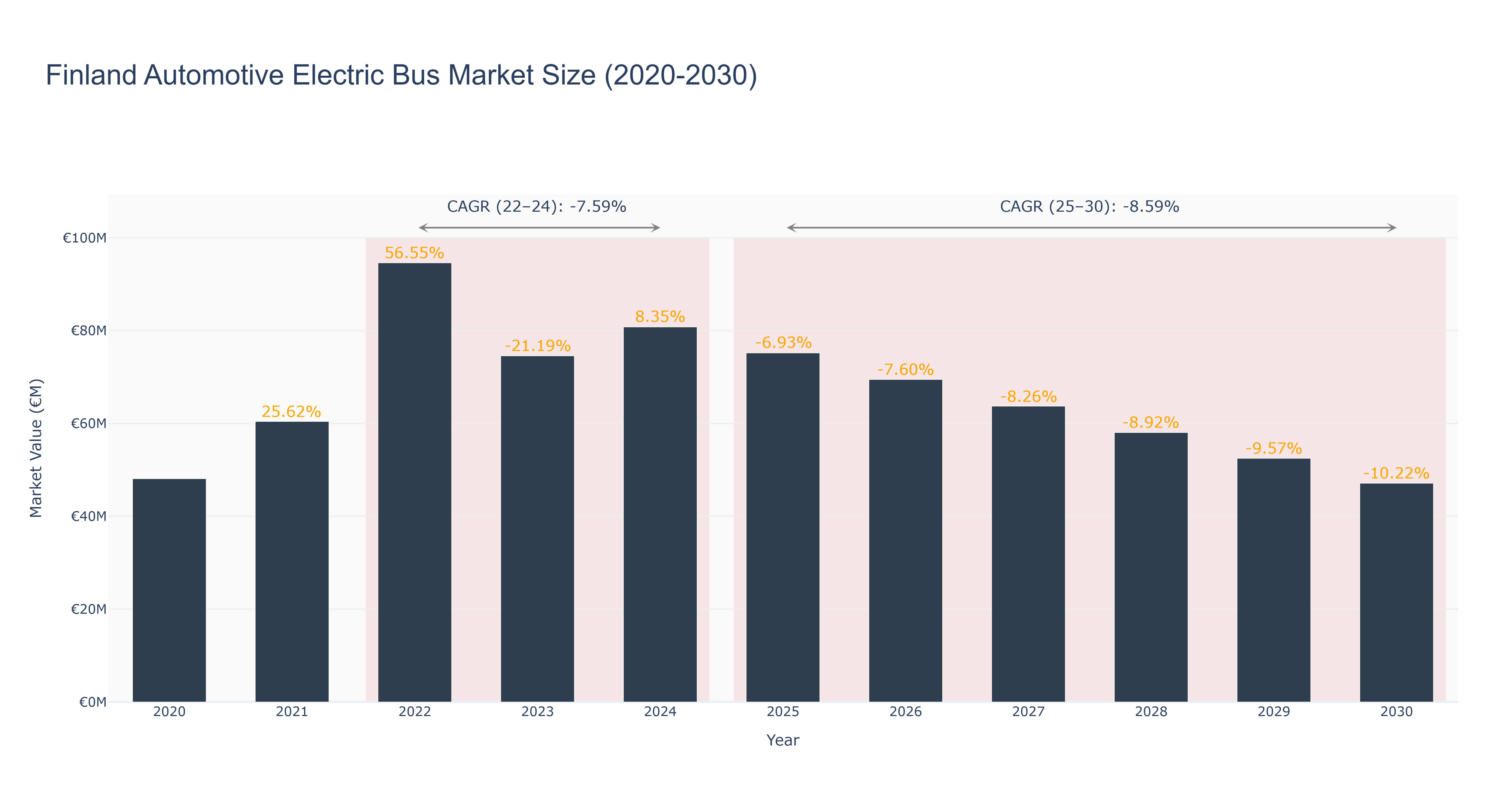
The Finland Automotive Electric Bus Market experienced a peak market size of €94.61 million in 2022. The market size saw a decline over the next few years, reaching €69.47 million in 2026. The forecasted trend suggests a further decrease, with the market size expected to be around €47.13 million by 2030. The CAGR for the period 2022-24 was -7.59%, while the CAGR for 2025-30 is projected to be -8.59%. The downward trend can be attributed to factors such as regulatory challenges, evolving consumer preferences, and economic uncertainties impacting the demand for electric buses. Looking ahead, Finland is set to introduce new government initiatives promoting sustainable transportation, including increased investments in electric vehicle infrastructure and partnerships with leading manufacturers to boost the adoption of electric buses in public transportation systems.
Finland Automotive Electric Bus Market: Production & Trade Performance (2019-2025)
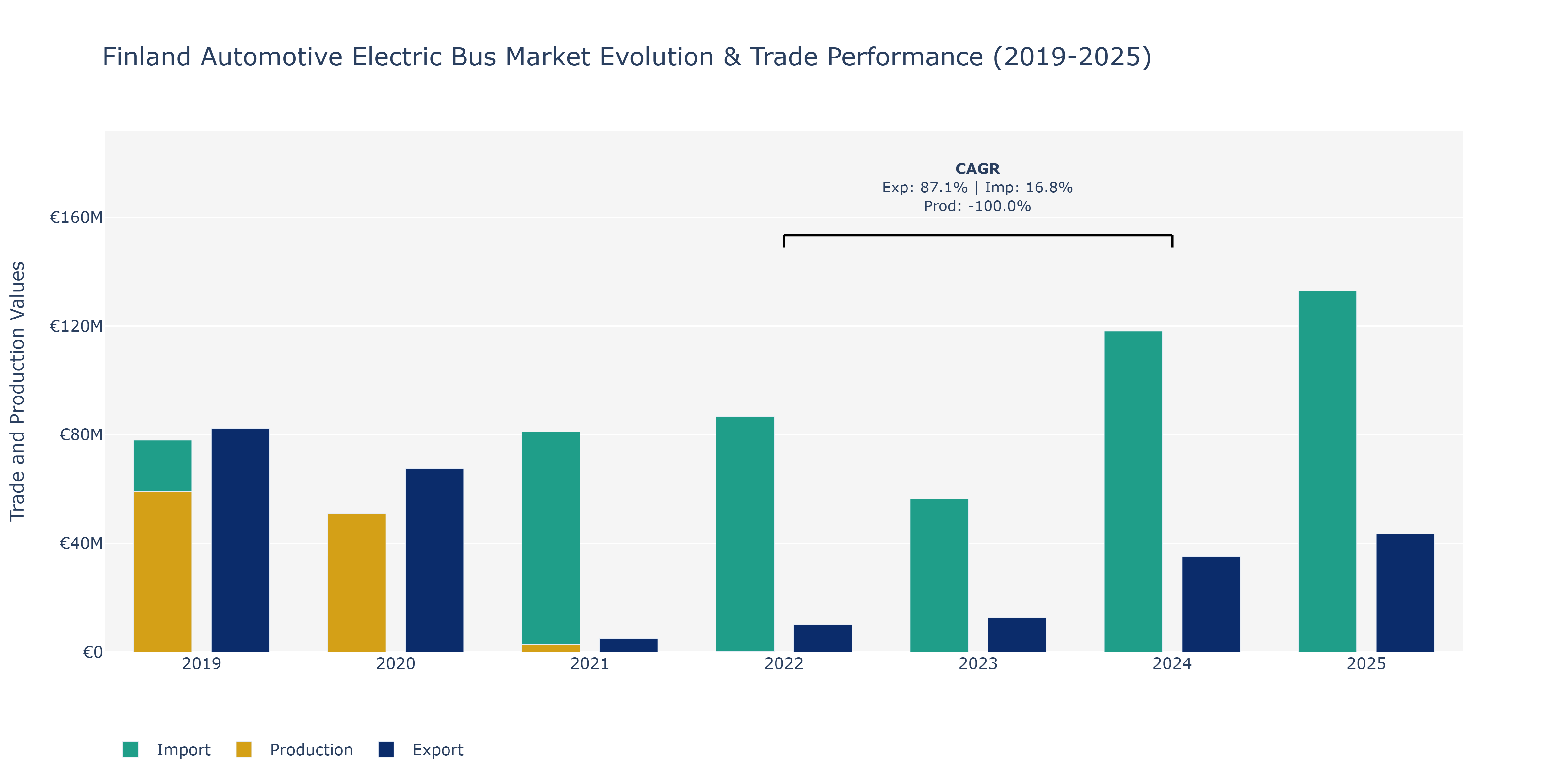
The Finland Automotive Electric Bus Market witnessed dynamic shifts in key metrics from 2019 to 2025. In 2019, exports stood at €82.26 million, dipping to €67.45 million in 2020 before significantly declining to €5.05 million in 2021. However, a notable recovery occurred in the following years, with exports reaching €43.42 million in 2025. Imports, on the other hand, fluctuated drastically, from €78.01 million in 2019 to a peak value of €132.86 million in 2025. Production value followed a contrasting trend, decreasing steeply from €59.07 million in 2019 to €2.15 million in 2022. This decline could be attributed to various factors such as shifts in consumer demand towards electric vehicles, advancements in technology impacting production efficiencies, and government policies promoting sustainable transportation. The market's resilience and adaptability are evident in the recovery of exports and imports post-2021, reflecting the industry's responsiveness to changing market dynamics and environmental concerns.
Key Highlights of the Report:
- Finland Automotive Electric Bus Market Outlook
- Market Size of Finland Automotive Electric Bus Market, 2024
- Forecast of Finland Automotive Electric Bus Market, 2031
- Historical Data and Forecast of Finland Automotive Electric Bus Revenues & Volume for the Period 2021- 2031
- Finland Automotive Electric Bus Market Trend Evolution
- Finland Automotive Electric Bus Market Drivers and Challenges
- Finland Automotive Electric Bus Price Trends
- Finland Automotive Electric Bus Porter's Five Forces
- Finland Automotive Electric Bus Industry Life Cycle
- Historical Data and Forecast of Finland Automotive Electric Bus Market Revenues & Volume By Vehicle Type for the Period 2021- 2031
- Historical Data and Forecast of Finland Automotive Electric Bus Market Revenues & Volume By Battery Electric Bus for the Period 2021- 2031
- Historical Data and Forecast of Finland Automotive Electric Bus Market Revenues & Volume By Other for the Period 2021- 2031
- Historical Data and Forecast of Finland Automotive Electric Bus Market Revenues & Volume By Consumer Type for the Period 2021- 2031
- Historical Data and Forecast of Finland Automotive Electric Bus Market Revenues & Volume By Government for the Period 2021- 2031
- Historical Data and Forecast of Finland Automotive Electric Bus Market Revenues & Volume By Fleet Owners for the Period 2021- 2031
- Finland Automotive Electric Bus Import Export Trade Statistics
- Market Opportunity Assessment By Vehicle Type
- Market Opportunity Assessment By Consumer Type
- Finland Automotive Electric Bus Top Companies Market Share
- Finland Automotive Electric Bus Competitive Benchmarking By Technical and Operational Parameters
- Finland Automotive Electric Bus Company Profiles
- Finland Automotive Electric Bus Key Strategic Recommendations






































