Finland Lavender Oil Market Top 5 Importing Countries and Market Competition (HHI) Analysis
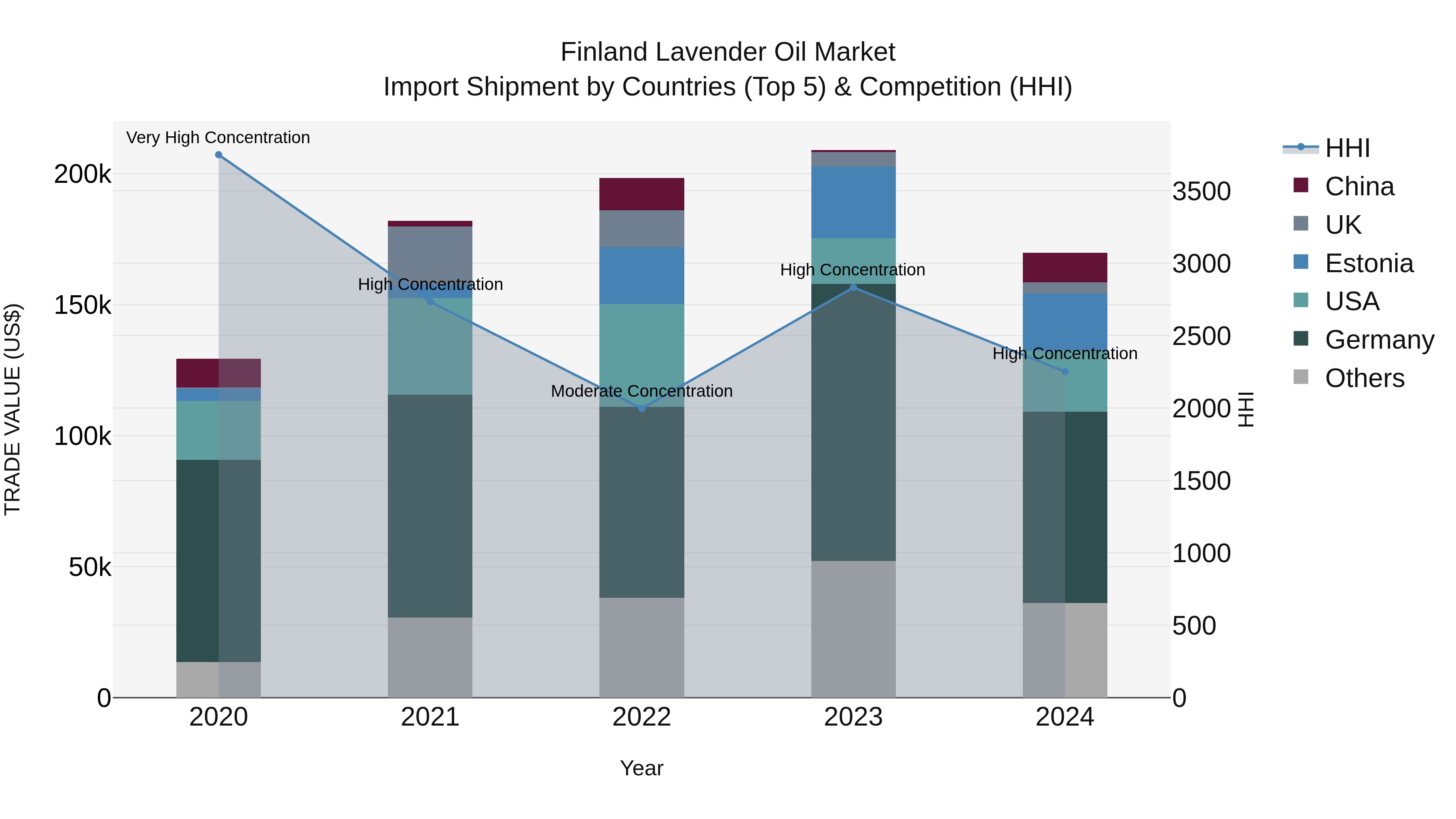
In 2024, Finland saw significant lavender oil imports from top exporting countries including Germany, USA, Estonia, China, and India. Despite a slight decrease in growth rate from 2023 to 2024, the compound annual growth rate (CAGR) from 2020 to 2024 remained strong at 7.04%. The high concentration of Herfindahl-Hirschman Index (HHI) indicates a competitive market landscape. Finland`s reliance on these key exporting countries underscores the importance of continued market analysis and strategic partnerships to drive growth in the lavender oil import industry.
Finland Lavender oil Market Overview
The lavender oil market in Finland is growing, fueled by increasing consumer interest in natural and therapeutic products. Lavender oil is used in cosmetics, aromatherapy, and household products, contributing to its rising demand.
Drivers of the market
The lavender oil market in Finland is growing due to the increasing demand for natural essential oils used in aromatherapy, cosmetics, and personal care products. Lavender oil is valued for its calming and therapeutic properties. As consumer preferences shift towards natural and sustainable ingredients, Finlands growing wellness and personal care markets are contributing to the rise of lavender oil.
Challenges of the market
The lavender oil market in Finland faces challenges related to the high cost of cultivation and extraction, which can limit the availability of lavender oil in the market. Additionally, there is increasing competition from other essential oils and synthetic alternatives. As consumer demand for natural and organic products rises, producers must find ways to maintain sustainable practices and address potential environmental concerns regarding lavender cultivation. Furthermore, fluctuations in the price of raw materials and growing global competition impact the market.
Government Policy of the market
Finland`s government supports the lavender oil market by fostering organic farming practices and sustainable production techniques. Policies promote the cultivation of lavender in environmentally friendly conditions, offering financial assistance to local farmers who adopt eco-conscious farming methods. The government also funds research into the therapeutic benefits of lavender oil, particularly in areas like aromatherapy and wellness products. Finlands commitment to promoting green innovation aligns with the increasing demand for natural products, and the government actively encourages the export of lavender oil to international markets. These policies are part of Finland`s broader goal to create a sustainable and thriving bioeconomy.
Key Highlights of the Report:
- Finland Lavender oil Market Outlook
- Market Size of Finland Lavender oil Market, 2024
- Forecast of Finland Lavender oil Market, 2031
- Historical Data and Forecast of Finland Lavender oil Revenues & Volume for the Period 2021-2031
- Finland Lavender oil Market Trend Evolution
- Finland Lavender oil Market Drivers and Challenges
- Finland Lavender oil Price Trends
- Finland Lavender oil Porter`s Five Forces
- Finland Lavender oil Industry Life Cycle
- Historical Data and Forecast of Finland Lavender oil Market Revenues & Volume By Application for the Period 2021-2031
- Historical Data and Forecast of Finland Lavender oil Market Revenues & Volume By Food and Beverage for the Period 2021-2031
- Historical Data and Forecast of Finland Lavender oil Market Revenues & Volume By Cosmetic for the Period 2021-2031
- Historical Data and Forecast of Finland Lavender oil Market Revenues & Volume By Pharmaceutical for the Period 2021-2031
- Historical Data and Forecast of Finland Lavender oil Market Revenues & Volume By Distribution Channel for the Period 2021-2031
- Historical Data and Forecast of Finland Lavender oil Market Revenues & Volume By Pharmacy and Drug Stores for the Period 2021-2031
- Historical Data and Forecast of Finland Lavender oil Market Revenues & Volume By Health and Beauty Stores for the Period 2021-2031
- Historical Data and Forecast of Finland Lavender oil Market Revenues & Volume By Online Retailing for the Period 2021-2031
- Historical Data and Forecast of Finland Lavender oil Market Revenues & Volume By Others for the Period 2021-2031
- Finland Lavender oil Import Export Trade Statistics
- Market Opportunity Assessment By Application
- Market Opportunity Assessment By Distribution Channel
- Finland Lavender oil Top Companies Market Share
- Finland Lavender oil Competitive Benchmarking By Technical and Operational Parameters
- Finland Lavender oil Company Profiles
- Finland Lavender oil Key Strategic Recommendations






































