Finland Luxury Perfume Market Top 5 Importing Countries and Market Competition (HHI) Analysis
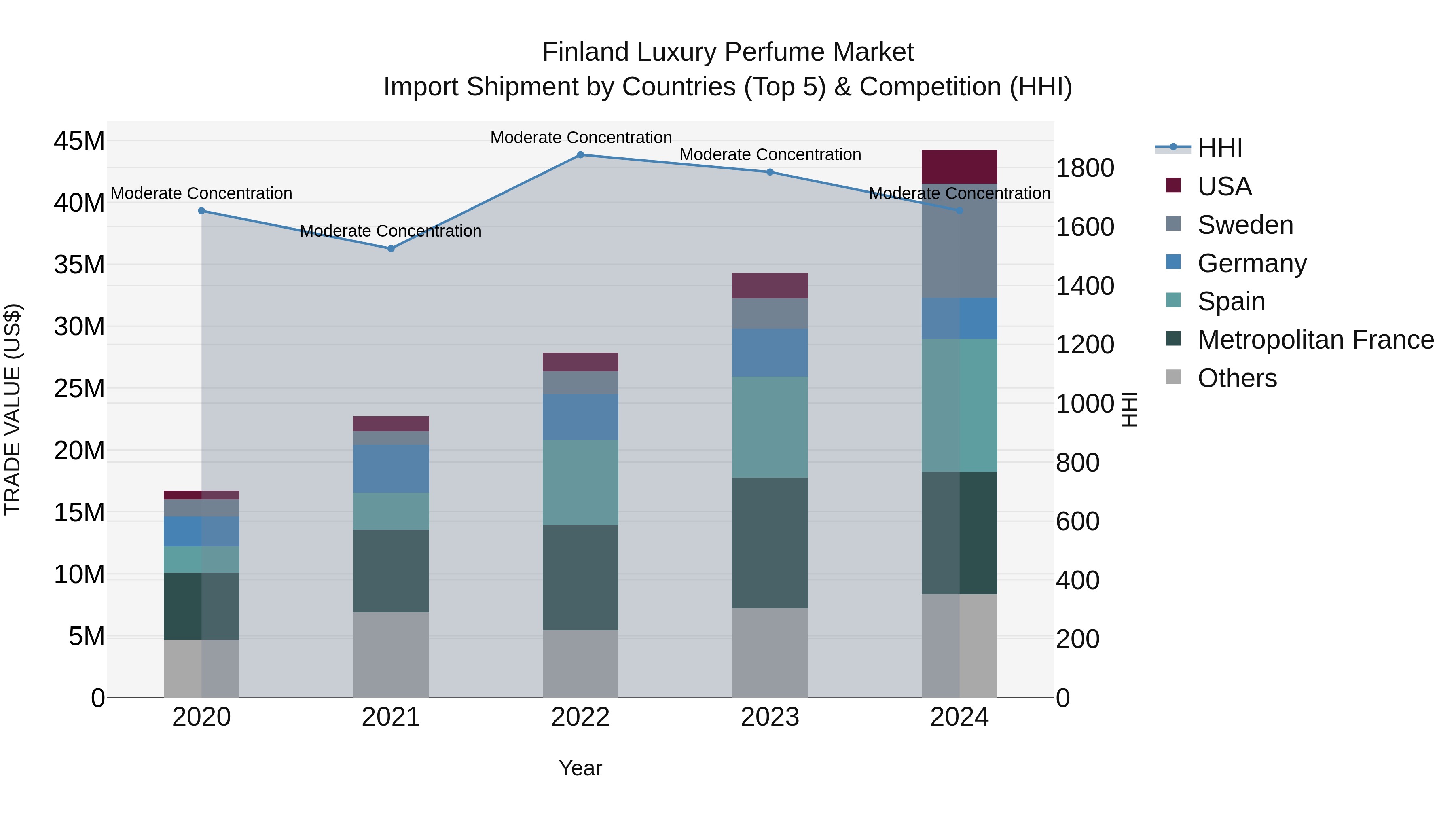
The luxury perfume import market in Finland saw impressive growth in 2024, with top exporting countries like Spain, Metropolitan France, and the USA leading the way. The market concentration remained moderate, indicating a healthy level of competition. The high CAGR of 27.51% from 2020 to 2024 and a growth rate of 28.9% from 2023 to 2024 highlight the increasing demand for luxury perfumes in Finland. This trend suggests a positive outlook for the luxury perfume market in the coming years.
Finland Luxury Perfume Market Synopsis
The Finland luxury perfume market is characterized by a growing demand for high-quality, exclusive fragrances among affluent consumers. Major luxury perfume brands have a strong presence in the market, offering a wide range of premium scents that cater to different preferences and lifestyles. Key factors driving the market include increasing disposable income levels, evolving consumer preferences towards luxury goods, and a desire for unique and sophisticated fragrances. The market is also influenced by trends such as sustainability, natural ingredients, and personalized fragrances. Retail channels like specialty stores, department stores, and online platforms play a significant role in distributing luxury perfumes to consumers. To succeed in the Finland luxury perfume market, brands need to focus on product innovation, effective marketing strategies, and providing exceptional customer experiences to maintain a competitive edge.
Finland Luxury Perfume Market Trends
The Finland Luxury Perfume Market is witnessing a growing trend towards sustainable and eco-friendly products, with consumers increasingly seeking natural ingredients and ethical production practices. There is an opportunity for luxury perfume brands to cater to this demand by introducing sustainable packaging, cruelty-free formulations, and transparent sourcing processes. Personalization and unique fragrance experiences are also gaining popularity among Finnish consumers, presenting an opportunity for brands to offer customizable perfumes tailored to individual preferences. Furthermore, the rise of online shopping has opened up new avenues for luxury perfume sales, allowing brands to reach a wider customer base and engage with consumers through e-commerce platforms and social media channels. Overall, focusing on sustainability, personalization, and digital marketing strategies can help luxury perfume brands capitalize on current trends and opportunities in the Finnish market.
Finland Luxury Perfume Market Challenges
In the Finland Luxury Perfume Market, some challenges include increasing competition from international luxury perfume brands, changing consumer preferences towards natural and sustainable products, and the impact of economic fluctuations on consumer spending. Additionally, the stringent regulations on the use of certain ingredients in perfumes, the high import taxes on luxury goods, and the limited distribution channels for luxury perfumes in Finland pose challenges for both domestic and international luxury perfume brands looking to establish a strong presence in the market. To succeed in this competitive landscape, companies need to innovate with unique product offerings, emphasize sustainability and authenticity in their marketing strategies, and forge strategic partnerships with local retailers to enhance their market reach and brand visibility.
Finland Luxury Perfume Market Investment Opportunities
The Finland Luxury Perfume Market is primarily driven by increasing disposable income levels, shifting consumer preferences towards premium and high-quality products, and a growing demand for exclusive fragrances. Consumers are increasingly valuing unique scents and luxury branding, leading to a rise in the popularity of luxury perfumes. Additionally, the influence of social media and celebrity endorsements plays a significant role in driving awareness and demand for luxury perfume brands in Finland. The market is also benefiting from a growing trend of gifting luxury perfumes on special occasions, further fueling sales and market growth. Overall, the combination of rising affluence, evolving consumer preferences, and effective marketing strategies are key drivers propelling the Finland Luxury Perfume Market forward.
Finland Luxury Perfume Market Government Polices
In Finland, the luxury perfume market is influenced by government policies related to taxation, import regulations, and consumer protection. The government imposes a value-added tax (VAT) on luxury perfumes, which affects their pricing and affordability for consumers. Import regulations govern the importation of luxury perfumes into Finland, ensuring compliance with quality and safety standards. Consumer protection laws also play a role in regulating marketing practices and product labeling within the luxury perfume market to safeguard consumers from false advertising or deceptive claims. Overall, government policies in Finland aim to strike a balance between promoting a competitive luxury perfume market while ensuring consumer safety and fair trade practices.
Finland Luxury Perfume Market Future Outlook
The Finland Luxury Perfume Market is expected to witness steady growth in the coming years, driven by increasing consumer demand for high-quality and exclusive fragrances. Factors such as rising disposable incomes, changing consumer preferences towards premium products, and a growing trend towards personalized and niche perfumes are projected to fuel market growth. Additionally, the influence of social media and celebrity endorsements on consumer purchasing decisions is likely to further boost the demand for luxury perfumes in Finland. With a focus on sustainability and natural ingredients becoming increasingly important to consumers, we can also expect to see a rise in eco-friendly and organic luxury perfume offerings in the market. Overall, the future outlook for the Finland Luxury Perfume Market appears promising, with opportunities for brands to innovate and differentiate themselves in a competitive landscape.
Key Highlights of the Report:
- Finland Luxury Perfume Market Outlook
- Market Size of Finland Luxury Perfume Market, 2024
- Forecast of Finland Luxury Perfume Market, 2031
- Historical Data and Forecast of Finland Luxury Perfume Revenues & Volume for the Period 2021- 2031
- Finland Luxury Perfume Market Trend Evolution
- Finland Luxury Perfume Market Drivers and Challenges
- Finland Luxury Perfume Price Trends
- Finland Luxury Perfume Porter's Five Forces
- Finland Luxury Perfume Industry Life Cycle
- Historical Data and Forecast of Finland Luxury Perfume Market Revenues & Volume By End User for the Period 2021- 2031
- Historical Data and Forecast of Finland Luxury Perfume Market Revenues & Volume By Men for the Period 2021- 2031
- Historical Data and Forecast of Finland Luxury Perfume Market Revenues & Volume By Women for the Period 2021- 2031
- Historical Data and Forecast of Finland Luxury Perfume Market Revenues & Volume By Unisex for the Period 2021- 2031
- Historical Data and Forecast of Finland Luxury Perfume Market Revenues & Volume By Distribution Channel for the Period 2021- 2031
- Historical Data and Forecast of Finland Luxury Perfume Market Revenues & Volume By Supermarkets for the Period 2021- 2031
- Historical Data and Forecast of Finland Luxury Perfume Market Revenues & Volume By Hypermarkets for the Period 2021- 2031
- Historical Data and Forecast of Finland Luxury Perfume Market Revenues & Volume By Specialty Stores for the Period 2021- 2031
- Historical Data and Forecast of Finland Luxury Perfume Market Revenues & Volume By Online retail for the Period 2021- 2031
- Finland Luxury Perfume Import Export Trade Statistics
- Market Opportunity Assessment By End User
- Market Opportunity Assessment By Distribution Channel
- Finland Luxury Perfume Top Companies Market Share
- Finland Luxury Perfume Competitive Benchmarking By Technical and Operational Parameters
- Finland Luxury Perfume Company Profiles
- Finland Luxury Perfume Key Strategic Recommendations






































