France Automotive Electric Bus Market Size (2020-2030)
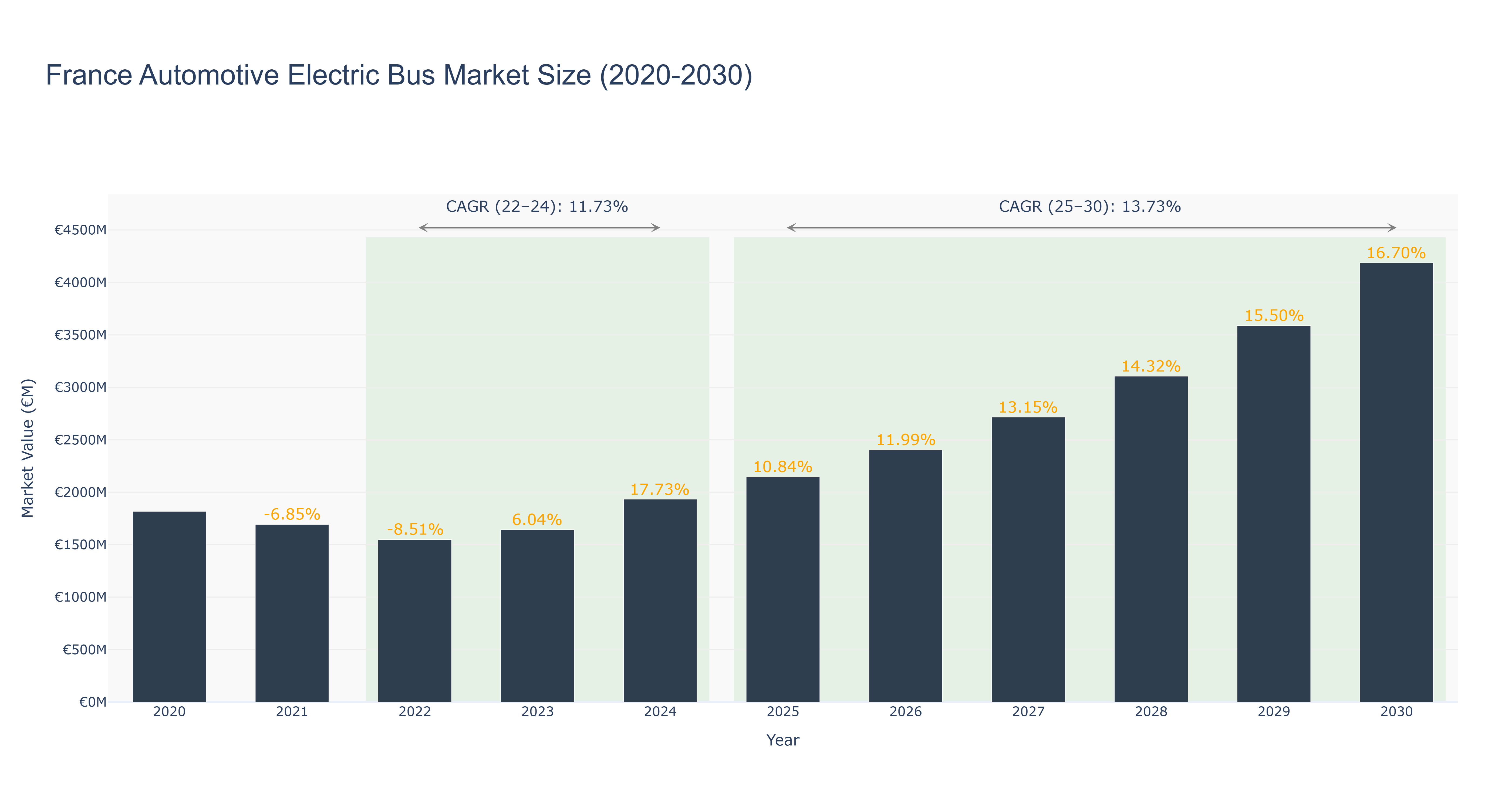
France Automotive Electric Bus Market has shown a steady growth trajectory over the years. The market peaked in 2030 at €4186.56 million, with a notable increase in market size observed from 2020 to 2030. The actual market size from 2020 to 2024 ranged from €1817.91 million to €1934.26 million, showcasing consistent growth. Forecasted market size from 2025 to 2030 is expected to continue this trend, with a CAGR of 13.73% from 2025 to 2030. The market saw a significant growth spurt from 2026 onwards, attributed to increasing government initiatives promoting sustainable transportation solutions. Looking ahead, upcoming projects in France include the expansion of electric bus fleets in major cities, further driving market growth. The industry drivers behind this trend include environmental concerns, technological advancements in electric vehicles, and government support for clean energy initiatives.
France Automotive Electric Bus Market: Production & Trade Performance (2019-2025)
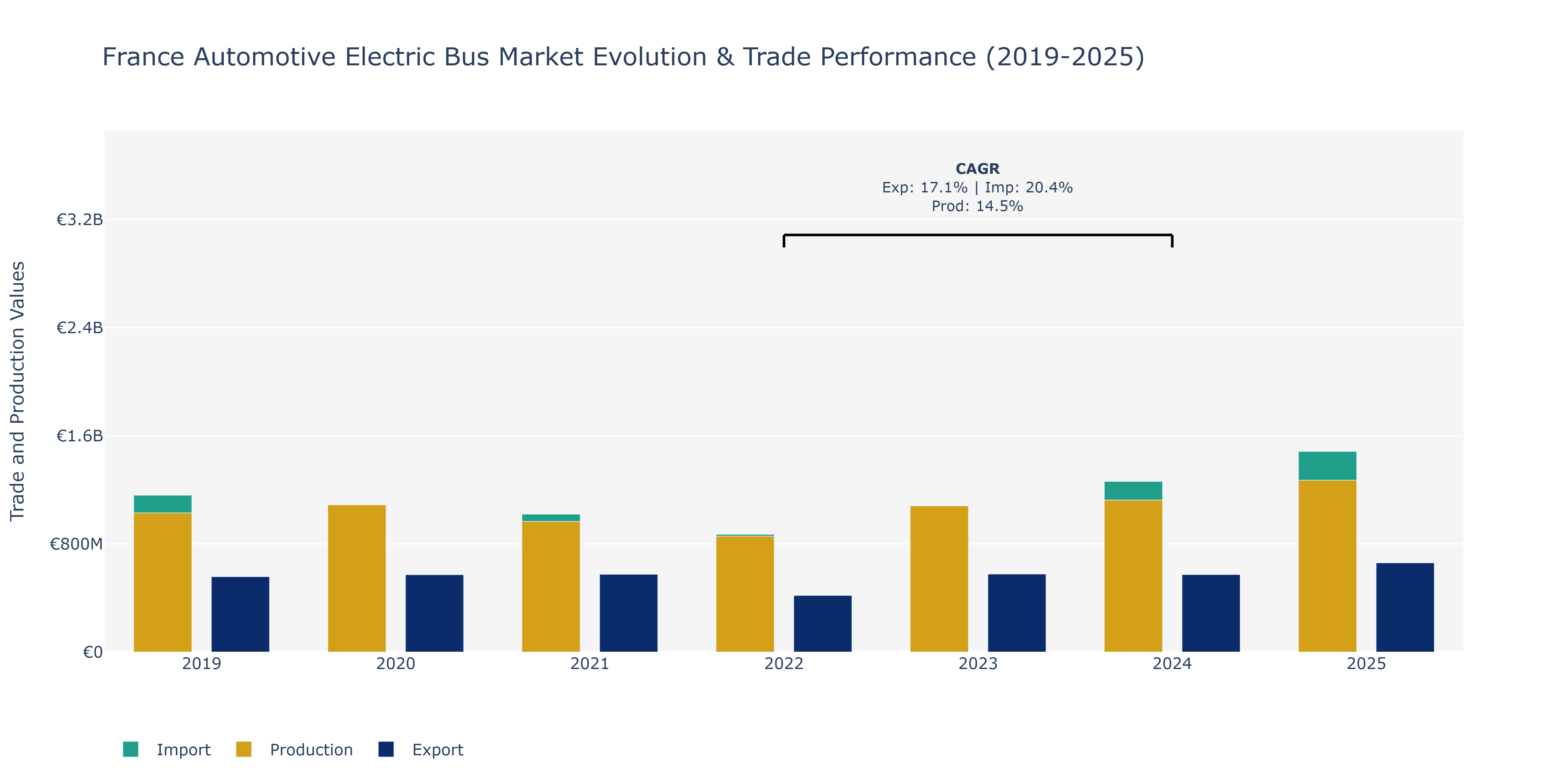
The France Automotive Electric Bus Market exhibited varying trends in Exports, Imports, and Production over the years. In 2019, Exports stood at €557.75 million, climbing to €659.67 million in 2025, indicating a steady increase. Imports, on the other hand, started at €1.16 billion in 2019, peaking at €1.48 billion in 2025. Production value fluctuated, with 2025 showing the highest value of €1.27 billion. The surge in Exports can be attributed to the growing global demand for eco-friendly transportation solutions, aligning with France's commitment to reducing carbon emissions. The rise in Imports reflects the country's need to meet domestic demand for electric buses, possibly due to advancements in technology and government initiatives promoting sustainable mobility. The fluctuations in Production might be influenced by investments in manufacturing capabilities and innovation in electric bus technologies, as the market strives to enhance efficiency and meet evolving consumer preferences.
Key Highlights of the Report:
- France Automotive Electric Bus Market Outlook
- Market Size of France Automotive Electric Bus Market, 2025
- Forecast of France Automotive Electric Bus Market, 2032
- Historical Data and Forecast of France Automotive Electric Bus Revenues & Volume for the Period 2022 - 2032
- France Automotive Electric Bus Market Trend Evolution
- France Automotive Electric Bus Market Drivers and Challenges
- France Automotive Electric Bus Price Trends
- France Automotive Electric Bus Porter's Five Forces
- France Automotive Electric Bus Industry Life Cycle
- Historical Data and Forecast of France Automotive Electric Bus Market Revenues & Volume By Vehicle Type for the Period 2022 - 2032
- Historical Data and Forecast of France Automotive Electric Bus Market Revenues & Volume By Battery Electric Bus for the Period 2022 - 2032
- Historical Data and Forecast of France Automotive Electric Bus Market Revenues & Volume By Other for the Period 2022 - 2032
- Historical Data and Forecast of France Automotive Electric Bus Market Revenues & Volume By Consumer Type for the Period 2022 - 2032
- Historical Data and Forecast of France Automotive Electric Bus Market Revenues & Volume By Government for the Period 2022 - 2032
- Historical Data and Forecast of France Automotive Electric Bus Market Revenues & Volume By Fleet Owners for the Period 2022 - 2032
- France Automotive Electric Bus Import Export Trade Statistics
- Market Opportunity Assessment By Vehicle Type
- Market Opportunity Assessment By Consumer Type
- France Automotive Electric Bus Top Companies Market Share
- France Automotive Electric Bus Competitive Benchmarking By Technical and Operational Parameters
- France Automotive Electric Bus Company Profiles
- France Automotive Electric Bus Key Strategic Recommendations






































