France Raw Cane Sugar Market Size (2020-2030)
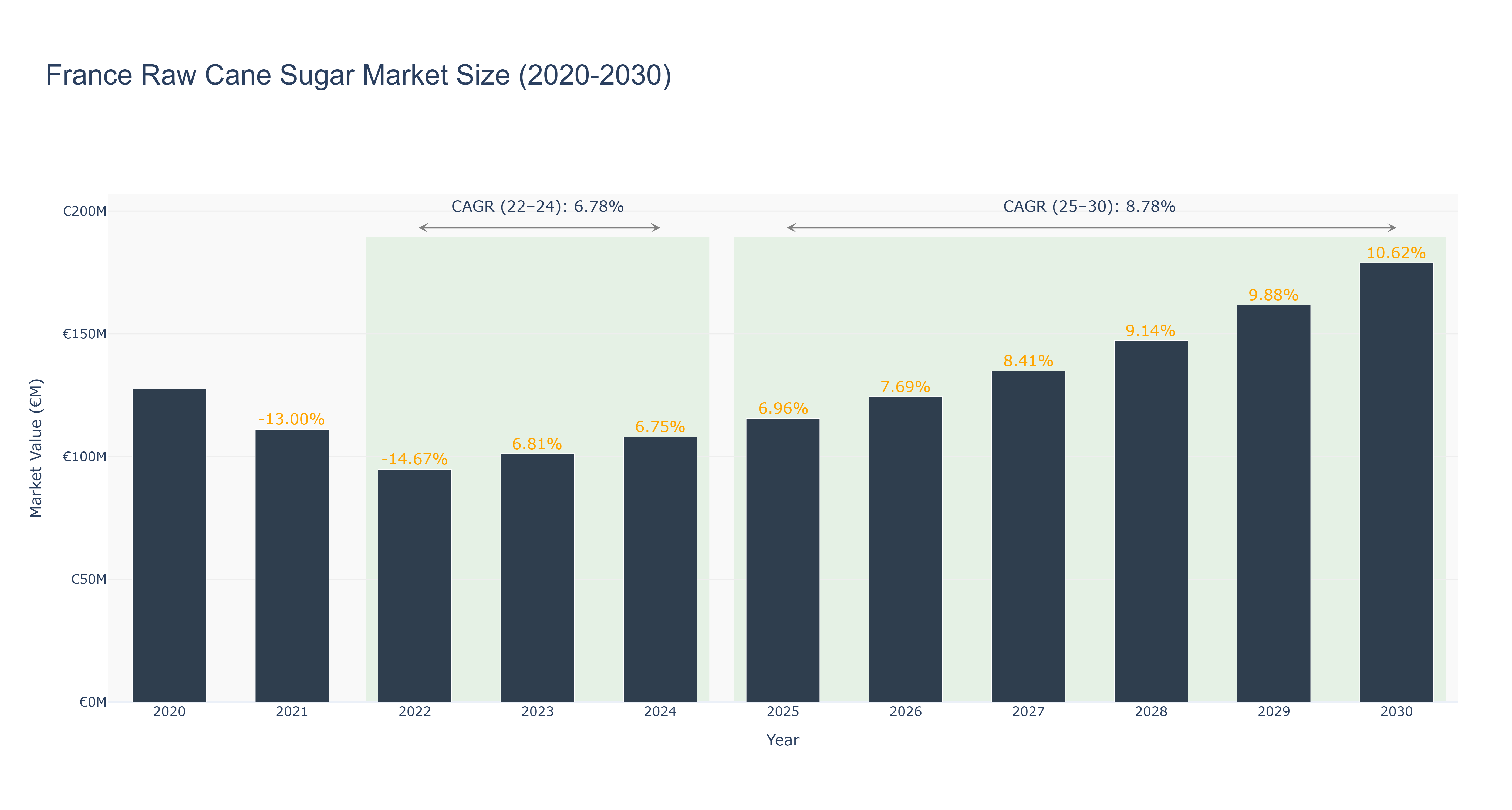
France Raw Cane Sugar Market has shown a fluctuating trend over the years. The peak market size of €178.92 million is forecasted for 2030, with a steady growth rate. From 2020 to 2024, the market experienced a slight decrease in size, attributed to changing consumer preferences and economic factors. However, from 2025 to 2030, a promising growth trajectory is anticipated, with a CAGR of 8.78%. The market's resilience can be attributed to increasing demand for organic and natural sweeteners, as well as technological advancements in sugar production. Recent developments include collaborations between industry players to enhance sustainability practices and introduce innovative product offerings. Future projects focus on expanding market reach globally and investing in research to develop healthier sugar alternatives.
France Raw Cane Sugar Market: Production & Trade Performance (2019-2025)
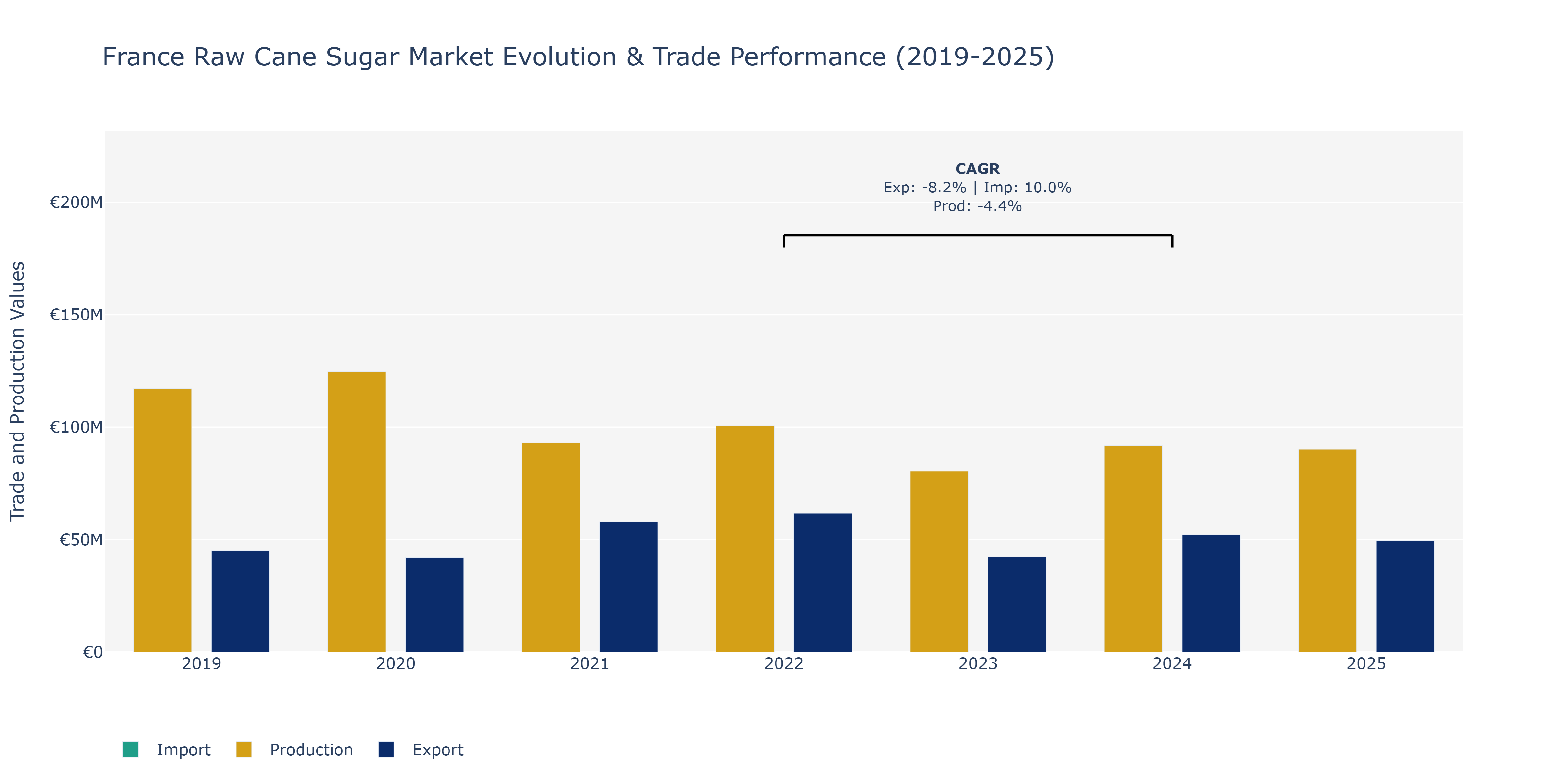
Between 2019 and 2025, France's Raw Cane Sugar Market saw notable shifts in key metrics. In 2021, exports surged to €57.86 million, a considerable increase from the previous year, possibly driven by increased global demand or specific trade agreements. However, by 2023, exports dropped to €42.31 million, indicating potential market fluctuations or changes in consumer preferences. Imports followed a similar pattern, rising steadily to €66.53 million by 2025, possibly due to supply chain adjustments or price differentials. Production value fluctuated as well, with a peak in 2020 at €124.64 million, then declining to €90.11 million in 2025. This could be attributed to varying agricultural conditions affecting cane sugar yields or shifts in production focus. Such dynamics highlight the market's sensitivity to both internal and external factors, necessitating strategic planning for market players to navigate uncertainties effectively.
France Raw Cane Sugar Market Overview
The raw cane sugar market in France is experiencing steady growth driven by the increasing demand for natural and minimally processed sweeteners in the food and beverage industry. Raw cane sugar, derived from the juice of sugarcane plants, is favored for its distinct flavor profile, nutritional content, and perceived health benefits compared to refined white sugar. With consumers becoming more conscious of their dietary choices and seeking alternatives to processed sugars, there is a growing market for raw cane sugar in various applications such as confectionery, bakery, beverages, and dairy products. Moreover, the trend towards organic and sustainable food products is further driving demand for certified organic and fair trade raw cane sugar in France.
Drivers of the market
The France Raw Cane Sugar Market is growing due to factors such as increasing consumer preference for natural sweeteners, the rising demand for organic and non-GMO food products, and the expanding applications of raw cane sugar in the food and beverage industry. Raw cane sugar is minimally processed and retains more nutrients and flavor compared to refined sugar. It is used in various food products such as confectionery, bakery, beverages, and dairy products to impart sweetness and enhance flavor profiles. Additionally, growing concerns about the health risks associated with refined sugars and artificial sweeteners are driving the demand for raw cane sugar as a healthier alternative in France.
Challenges of the market
Market volatility and price fluctuations in the global sugar market present challenges for stakeholders in the France raw cane sugar market. Additionally, shifting consumer preferences towards alternative sweeteners and health concerns impact demand patterns.
Government Policy of the market
Government policies in France support domestic sugar production from raw cane to maintain agricultural diversity and ensure food security. Measures include price support mechanisms, import tariffs on competing sugar sources, and subsidies for sugar beet and cane growers to sustainably manage sugar production while complying with EU agricultural policies.
Key Highlights of the Report:
- France Raw Cane Sugar Market Outlook
- Market Size of France Raw Cane Sugar Market, 2024
- Forecast of France Raw Cane Sugar Market, 2031
- Historical Data and Forecast of France Raw Cane Sugar Revenues & Volume for the Period 2021-2031
- France Raw Cane Sugar Market Trend Evolution
- France Raw Cane Sugar Market Drivers and Challenges
- France Raw Cane Sugar Price Trends
- France Raw Cane Sugar Porter's Five Forces
- France Raw Cane Sugar Industry Life Cycle
- Historical Data and Forecast of France Raw Cane Sugar Market Revenues & Volume By Product Type for the Period 2021-2031
- Historical Data and Forecast of France Raw Cane Sugar Market Revenues & Volume By Demerara-style Sugar for the Period 2021-2031
- Historical Data and Forecast of France Raw Cane Sugar Market Revenues & Volume By Organic Sugar for the Period 2021-2031
- Historical Data and Forecast of France Raw Cane Sugar Market Revenues & Volume By End User for the Period 2021-2031
- Historical Data and Forecast of France Raw Cane Sugar Market Revenues & Volume By Food Processors for the Period 2021-2031
- Historical Data and Forecast of France Raw Cane Sugar Market Revenues & Volume By Livestock Feed for the Period 2021-2031
- Historical Data and Forecast of France Raw Cane Sugar Market Revenues & Volume By Retailers for the Period 2021-2031
- Historical Data and Forecast of France Raw Cane Sugar Market Revenues & Volume By Industrial Uses for the Period 2021-2031
- France Raw Cane Sugar Import Export Trade Statistics
- Market Opportunity Assessment By Product Type
- Market Opportunity Assessment By End User
- France Raw Cane Sugar Top Companies Market Share
- France Raw Cane Sugar Competitive Benchmarking By Technical and Operational Parameters
- France Raw Cane Sugar Company Profiles
- France Raw Cane Sugar Key Strategic Recommendations






































