France Vetiver Oil Market Size, Share & Growth Rate
The France Vetiver Oil Market was estimated at USD 223 Million in 2025 and is projected to reach USD 248 Million by 2032, growing at a CAGR of 1.5% from 2026 to 2032. This growth trajectory is being driven by the increasing consumer preference for natural ingredients in personal care and aromatherapy products. As the wellness trend continues to gain traction, the demand for vetiver oil, known for its grounding and soothing properties, is expected to rise, positioning it as a vital component in the fragrance and beauty sectors.
France Vetiver Oil Market Year-wise Growth Rate and Key Drivers
This graph highlights how the France Vetiver Oil Market has steadily grown over the years, supported by major growth factors.
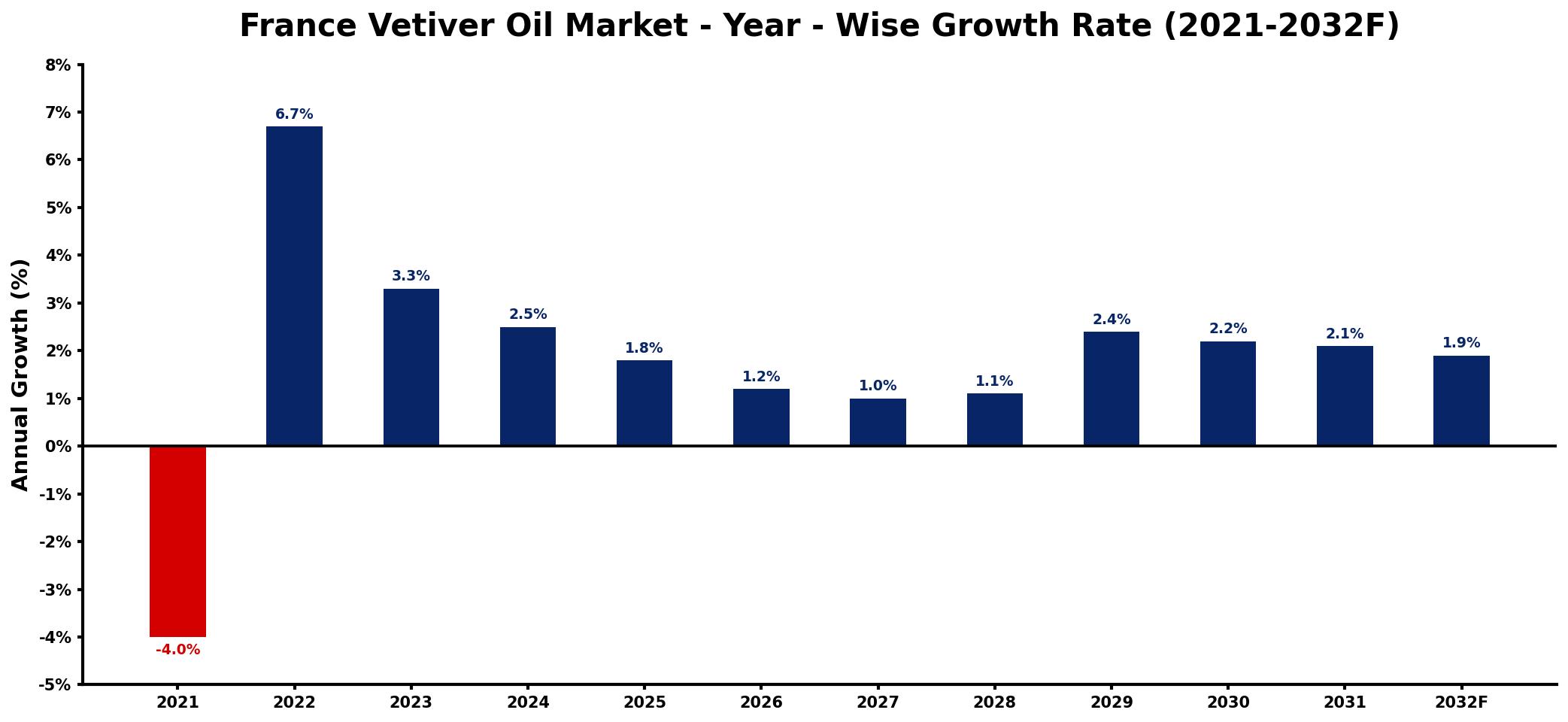
The table below presents the year‑wise growth rates along with the key drivers influencing the market
| Year | Growth Rate | Major Drivers |
| 2021 | -4.0% | decrease in consumer spending habits |
| 2022 | 6.7% | increased demand for natural fragrances |
| 2023 | 3.3% | growth in aromatherapy applications |
| 2024 | 2.5% | rising popularity of organic products |
| 2025 | 1.8% | expansion of wellness industry trends |
| 2026 | 1.2% | investments in sustainable sourcing practices |
| 2027 | 1.0% | growing market for niche perfumes |
| 2028 | 1.1% | increased usage in cosmetics formulations |
| 2029 | 2.4% | enhanced awareness of therapeutic benefits |
| 2030 | 2.2% | development of new product lines |
| 2031 | 2.1% | rising interest in eco-friendly solutions |
| 2032 | 1.9% | increased capital investment inflows |
Note: Market size estimations and growth projections presented in this report are based on 6Wresearch's proprietary forecasting methodology, utilizing the latest available industry data, government publications, and primary research inputs.
France Vetiver Oil Market Synopsis
The most influential factor currently shaping the France Vetiver Oil Market is the surging demand for natural and organic fragrance ingredients. Consumers are increasingly gravitating toward products that reflect sustainability and ethical sourcing, making vetiver oil an attractive choice in various applications. Its distinct earthy, woody aroma and therapeutic benefits not only enhance personal care products but also elevate experiences in aromatherapy.
Additionally, the expanding applications of vetiver oil in skincare and home fragrance products are providing new avenues for market growth. As brands look to innovate and diversify their product lines, vetiver oil stands out as a versatile ingredient that can meet the evolving preferences of health-conscious consumers.
France Vetiver Oil Market Key Takeaways
- The France Vetiver Oil Market is projected to reach USD 248 Million by 2032.
- Rising interest in natural and sustainable products is significantly driving demand.
- Vetiver oil's therapeutic properties make it ideal for wellness and aromatherapy applications.
- Consumer preference is shifting towards organic ingredients in beauty and personal care.
- Government support for sustainable vetiver cultivation is fostering market growth.
Evaluation of Restraints in France Vetiver Oil Market
The France Vetiver Oil Market faces several constraints that may hinder growth. Fluctuations in the supply chain, largely due to environmental factors affecting production areas like Haiti and India, can impact the availability of high-quality vetiver oil. Additionally, socio-economic conditions in these regions may affect fair trade practices, creating challenges for producers striving to meet ethical sourcing standards. The need for sustainable practices is crucial, as is the necessity for producers to adapt to changing market demands and pricing pressures.
France Vetiver Oil Market Trends
The current trend within the France Vetiver Oil Market is the shift toward holistic wellness products. This reflects a growing consumer awareness regarding mental health and self-care, leading to an increased utilization of vetiver oil in aromatherapy and personal care lines. Moreover, as brands pivot toward clean beauty and natural formulations, vetiver oil is becoming a preferred ingredient, driving innovations in fragrance blending and product diversification.
Furthermore, the rise in DIY beauty and home fragrance trends is prompting consumers to explore the benefits of essential oils, including vetiver. This exploration is encouraging manufacturers to educate consumers on vetivers multiple uses, thereby broadening its appeal and market penetration.
France Vetiver Oil Market Opportunities
There are considerable opportunities for growth within the France Vetiver Oil Market, particularly in the sectors of natural perfumes and organic personal care products. As eco-consciousness permeates consumer behavior, brands can capitalize on this by incorporating vetiver oil into their offerings. Moreover, the potential for vetiver oil in niche markets, such as artisanal and bespoke fragrance lines, is expanding. Collaborations between producers and local distillers could foster unique products that resonate with consumers seeking authenticity and quality.
Government Initiatives in the France Vetiver Oil Market
The French government has recognized the economic and ecological importance of vetiver oil and is actively supporting its production through various initiatives. These include agricultural subsidies aimed at promoting sustainable farming practices, alongside grants for research and development focused on enhancing vetiver oil quality and extraction methods. Policies encouraging fair trade practices and promoting biodiversity conservation reflect the governments commitment to ensuring that vetiver oil production benefits both the environment and local communities.
Future Insights of the France Vetiver Oil Market
Looking ahead to 2026-2032, the France Vetiver Oil Market is set to experience continued growth, driven by the persistent consumer shift towards natural, ethically sourced products. As the trend for holistic wellness gains momentum, the demand for vetiver oil in aromatherapy and personal care will likely soar. Innovations in extraction techniques and product formulations will play a critical role in maintaining quality and accessibility, while government initiatives will bolster the sustainability of vetiver production, ensuring a resilient market landscape.
France Vetiver Oil Market Latest Developments (2025 - 2026)
Recent developments in the France Vetiver Oil Market have highlighted a surge in consumer interest for organic and sustainably sourced products. Several brands are now introducing new lines that prominently feature vetiver oil, aligning with the clean beauty trend. Additionally, collaborative efforts between agricultural organizations and private companies are fostering improvements in vetiver cultivation techniques, ensuring higher quality yields. Such partnerships are increasingly recognized as essential for maintaining competitive advantages within the market.
France Vetiver Oil Market - Key Attractiveness of the Report
- 10 Years of Market Numbers
- Historical Data Starting from 2022 to 2025
- Base Year: 2025
- Forecast Data until 2032
- Key Performance Indicators Impacting the Market
- Major Upcoming Developments and Projects
Key Highlights of the Report:
- France Vetiver Oil Market Outlook
- Market Size of France Vetiver Oil Market, 2025
- Forecast of France Vetiver Oil Market, 2032
- Historical Data and Forecast of France Vetiver Oil Revenues & Volume for the Period 2022-2032F
- France Vetiver Oil Market Trend Evolution
- France Vetiver Oil Market Drivers and Challenges
- France Vetiver Oil Price Trends
- France Vetiver Oil Porter's Five Forces
- France Vetiver Oil Industry Life Cycle
- Historical Data and Forecast of France Vetiver Oil Market Revenues & Volume By Application for the Period 2022-2032F
- Historical Data and Forecast of France Vetiver Oil Market Revenues & Volume By Medical for the Period 2022-2032F
- Historical Data and Forecast of France Vetiver Oil Market Revenues & Volume By Food & Beverage for the Period 2022-2032F
- Historical Data and Forecast of France Vetiver Oil Market Revenues & Volume By Spa & Relaxation for the Period 2022-2032F
- France Vetiver Oil Import Export Trade Statistics
- Market Opportunity Assessment By Application
- France Vetiver Oil Top Companies Market Share
- France Vetiver Oil Competitive Benchmarking By Technical and Operational Parameters
- France Vetiver Oil Company Profiles
- France Vetiver Oil Key Strategic Recommendations






































