Iraq Vetiver Oil Market Size, Share & Growth Rate
The Iraq Vetiver Oil Market was estimated at USD 401 Million in 2025 and is projected to reach USD 569 Million by 2032, growing at a CAGR of 5.1% from 2026 to 2032. This growth trajectory is primarily driven by the increasing consumer preference for natural ingredients in personal care products and the rising demand for aromatherapy solutions. The unique calming properties of vetiver oil further enhance its appeal among wellness and beauty brands operating within Iraq.
Iraq Vetiver Oil Market Year-wise Growth Rate and Key Drivers
This graph highlights how the Iraq Vetiver Oil Market has steadily grown over the years, supported by major growth factors.
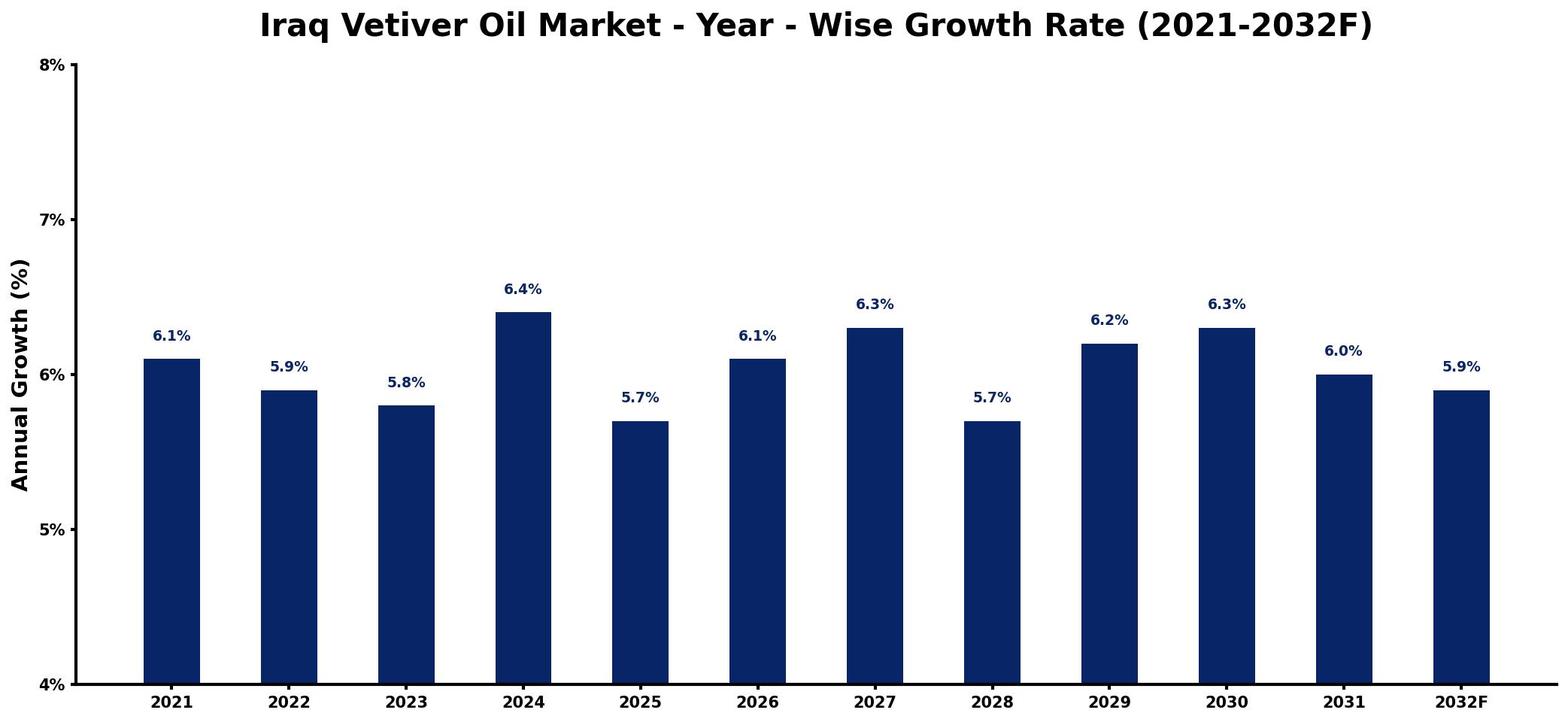
The table below presents the year‑wise growth rates along with the key drivers influencing the market
| Year | Growth Rate | Major Drivers |
| 2021 | 6.1% | Rising global aromatherapy popularity |
| 2022 | 5.9% | Growth in natural cosmetics sector |
| 2023 | 5.8% | Increased demand for sustainable products |
| 2024 | 6.4% | Expansion of fragrance manufacturing facilities |
| 2025 | 5.7% | rising export shipment volumes |
| 2026 | 6.1% | Investments in organic farming initiatives |
| 2027 | 6.3% | Growing awareness of health benefits |
| 2028 | 5.7% | Surge in personal care innovations |
| 2029 | 6.2% | Strengthening e-commerce distribution channels |
| 2030 | 6.3% | Heightened interest in wellness trends |
| 2031 | 6.0% | Development of eco-friendly packaging solutions |
| 2032 | 5.9% | Increased collaboration among industry players |
Note: Market size estimations and growth projections presented in this report are based on 6Wresearch's proprietary forecasting methodology, utilizing the latest available industry data, government publications, and primary research inputs.
Iraq Vetiver Oil Market Synopsis
The robust interest in vetiver oil is evident in Iraq's expanding wellness sector, where traditional practices blend seamlessly with modern approaches. Local producers are beginning to adopt sustainable farming methods to enhance the quality and supply of vetiver oil, responding to both domestic and international demand.
In addition, the Iraqi market is experiencing a notable shift towards the use of vetiver in cosmetics and perfumery. Companies are increasingly incorporating vetiver oil into their formulations, leveraging its earthy aroma and reputed therapeutic benefits, which are highly sought after by consumers looking for natural solutions.
Iraq Vetiver Oil Market Key Takeaways
- Growing consumer demand for natural products drives the vetiver oil market's expansion.
- The calming and grounding properties of vetiver oil make it highly favored in aromatherapy.
- Local producers are gradually improving cultivation practices to enhance oil quality.
- Government initiatives are supporting sustainable practices within the vetiver oil sector.
- Price volatility poses challenges, but market potential remains strong due to increasing applications.
Evaluation of Restraints in Iraq Vetiver Oil Market
Despite the promising growth, the Iraq Vetiver Oil Market faces significant challenges that could hinder its potential. Limited cultivation practices affect the consistency of supply and quality of vetiver oil, creating uncertainty in pricing and availability. Additionally, many producers lack access to advanced processing technologies, which can lead to subpar products that struggle to compete in an increasingly global market. Furthermore, the reliance on established supply chains presents risks of disruption, further complicating the market landscape.
Iraq Vetiver Oil Market Trends
The trend toward sustainable sourcing and natural ingredients is gaining momentum in Iraq's vetiver oil market. Consumers are increasingly favoring products made from environmentally friendly and ethically sourced materials, pushing brands to adopt more transparent and responsible practices. Furthermore, there's a notable rise in the popularity of aromatherapy, with consumers seeking holistic approaches to health and well-being. This trend is encouraging businesses to invest in marketing and product development centered around vetiver oil's unique benefits.
Iraq Vetiver Oil Market Opportunities
The Iraq Vetiver Oil Market presents considerable growth opportunities, particularly in the cosmetics and wellness sectors. As consumer awareness of the benefits of essential oils increases, brands have the potential to innovate and create unique product lines featuring vetiver oil. Additionally, the growing trend of wellness tourism could amplify the demand for aromatherapy services utilizing vetiver oil, providing a substantial avenue for investment and growth in the local market.
Government Initiatives in the Iraq Vetiver Oil Market
The Iraqi government recognizes the potential of the vetiver oil market and has initiated several policies aimed at promoting sustainable cultivation and quality assurance. Incentives for local farmers to adopt eco-friendly practices and improved regulatory frameworks for essential oil quality are helping to elevate the industry. Furthermore, support for training programs on vetiver oil production is designed to enhance skill sets among local producers, ensuring a brighter future for the sector.
Future Insights of the Iraq Vetiver Oil Market
Looking ahead to 2026-2032, the Iraq Vetiver Oil Market is poised for significant transformation. As consumer preferences lean more towards natural products, and with continued government support for the sector, the market is likely to attract new players and innovations. The integration of technology into cultivation and processing could further enhance product quality, addressing current supply chain challenges. In this evolving landscape, those who adapt to changing consumer demands and invest in sustainable practices will likely emerge as market leaders.
Iraq Vetiver Oil Market Latest Developments (2025 - 2026)
Recent developments in the Iraq Vetiver Oil Market indicate a growing interest from both local and international brands in establishing partnerships focused on sustainability. Workshops aimed at educating farmers on advanced cultivation methods have also gained traction, contributing to better yield and quality of vetiver oil. As companies launch new products incorporating vetiver oil, market dynamics are shifting towards a focus on holistic wellness, aligning with global trends.
Iraq Vetiver Oil Market - Key Attractiveness of the Report
- 10 Years of Market Numbers
- Historical Data Starting from 2022 to 2025
- Base Year: 2025
- Forecast Data until 2032
- Key Performance Indicators Impacting the Market
- Major Upcoming Developments and Projects
Key Highlights of the Report:
- Iraq Vetiver Oil Market Outlook
- Market Size of Iraq Vetiver Oil Market, 2025
- Forecast of Iraq Vetiver Oil Market, 2032
- Historical Data and Forecast of Iraq Vetiver Oil Revenues & Volume for the Period 2022-2032F
- Iraq Vetiver Oil Market Trend Evolution
- Iraq Vetiver Oil Market Drivers and Challenges
- Iraq Vetiver Oil Price Trends
- Iraq Vetiver Oil Porter's Five Forces
- Iraq Vetiver Oil Industry Life Cycle
- Historical Data and Forecast of Iraq Vetiver Oil Market Revenues & Volume By Application for the Period 2022-2032F
- Historical Data and Forecast of Iraq Vetiver Oil Market Revenues & Volume By Medical for the Period 2022-2032F
- Historical Data and Forecast of Iraq Vetiver Oil Market Revenues & Volume By Food & Beverage for the Period 2022-2032F
- Historical Data and Forecast of Iraq Vetiver Oil Market Revenues & Volume By Spa & Relaxation for the Period 2022-2032F
- Iraq Vetiver Oil Import Export Trade Statistics
- Market Opportunity Assessment By Application
- Iraq Vetiver Oil Top Companies Market Share
- Iraq Vetiver Oil Competitive Benchmarking By Technical and Operational Parameters
- Iraq Vetiver Oil Company Profiles
- Iraq Vetiver Oil Key Strategic Recommendations






































