Georgia Bathroom Furniture Market Summary
The georgia bathroom furniture market was estimated at USD 395 Million in 2025 and is projected to reach USD 542 Million by 2032, growing at a CAGR of 5.3% from 2026 to 2032.
Georgia Bathroom Furniture Market Year-wise Growth Rate and Key Drivers
This graph highlights how the Georgia Bathroom Furniture Market has steadily grown over the past five years, supported by major growth factors.
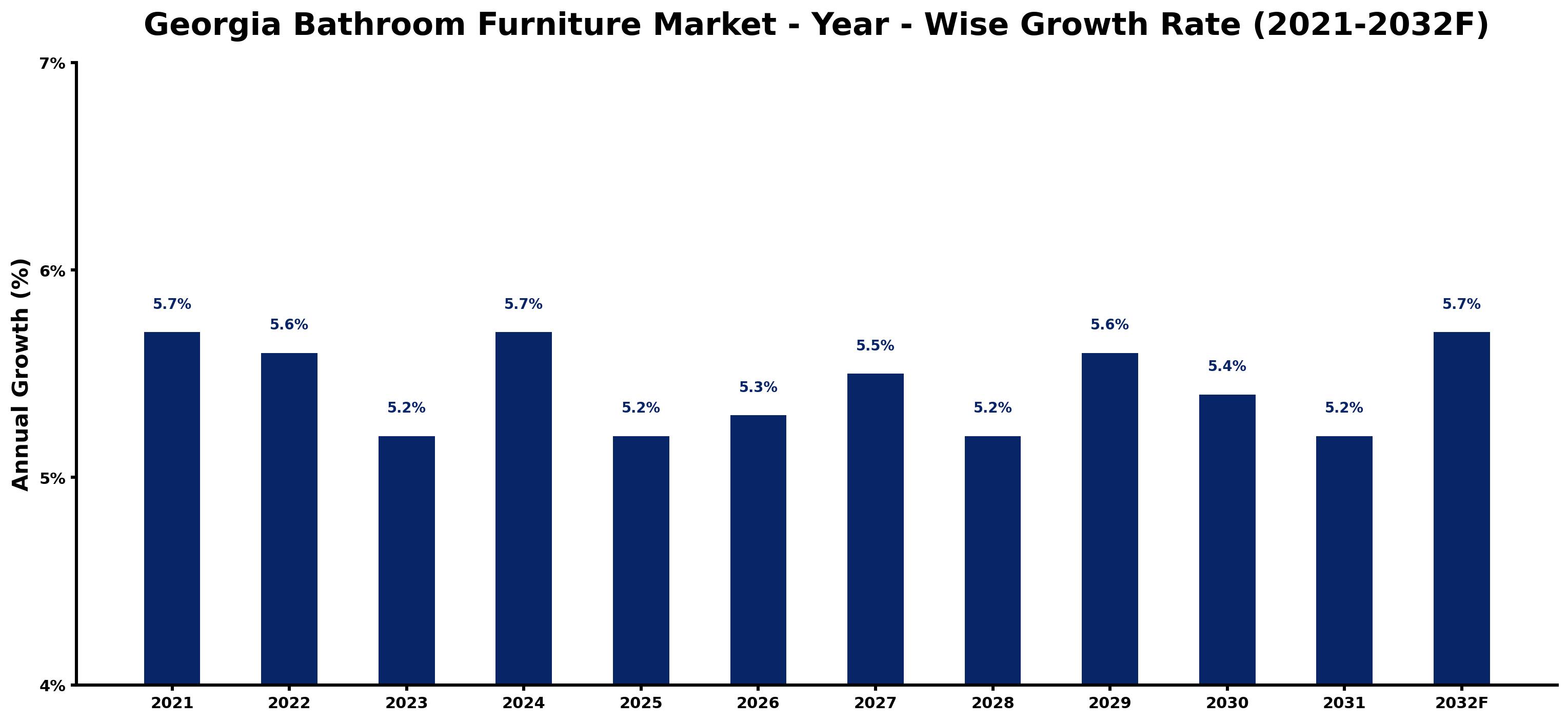
The table below presents the year wise growth rates along with the key drivers influencing the market
| Year | Growth Rate | Major Drivers |
| 2021 | 5.7% | Post-lockdown retail projects fueled a renewed interest in home improvement investments. |
| 2022 | 5.6% | Increased real estate activity spurred demand for stylish bathroom furniture solutions. |
| 2023 | 5.2% | Shifts towards e-commerce made bathroom furniture more accessible to consumers nationwide. |
| 2024 | 5.7% | Sustainable materials gained traction, aligning with eco-conscious consumer preferences and trends. |
| 2025 | 5.2% | Innovative designs began capturing market attention, enhancing overall customer engagement and satisfaction. |
| 2026 | 5.3% | Urbanization trends influenced small-space solutions, creating niche opportunities for compact furniture options. |
| 2027 | 5.5% | Technological integration in retail experiences encouraged individualized shopping journeys and customization. |
| 2028 | 5.2% | Rising disposable incomes allowed families to invest in higher-quality bathroom furniture products. |
| 2029 | 5.6% | Design collaborations with influencers shifted consumer behavior towards modern aesthetics and functionality. |
| 2030 | 5.4% | Increased focus on wellness brought spa-like elements into bathroom furniture design considerations. |
| 2031 | 5.2% | Emerging demographic preferences highlighted the need for multifunctional and adaptable furniture pieces. |
| 2032 | 5.7% | Sustainability certifications became essential, guiding consumer choices toward eco-friendly brands. |
Note - Market size estimations and growth projections presented in this report are based on 6Wresearch's advanced forecasting approach, validated with industry datasets as of June 2026.
Georgia Bathroom Furniture Market Synopsis
The Georgia Bathroom Furniture Market is projected to reach 5.3% and witness significant growth during the forecast period (2026-2032). The demand for stylish and functional bathroom furnishings is on the rise, driven by an increasing focus on home renovations and personalized interior design. Consumers are investing in quality items such as vanities, cabinets, mirrors, and storage units to enhance both the aesthetics and utility of their bathrooms. This growing trend is influenced by a combination of factors, including a shift towards sustainable practices, technological innovations, and a heightened awareness of the importance of bathroom spaces in residential design.
Georgia Bathroom Furniture Market Trends and Opportunities
The Georgia Bathroom Furniture Market is currently experiencing a notable trend towards modern and minimalist designs. Homeowners are increasingly favoring sleek and contemporary styles that efficiently maximize space, particularly in smaller bathrooms. The following trends are particularly relevant:
- A heightened focus on sustainability is shaping consumer choices, with an increased demand for eco-friendly materials that are both durable and stylish.
- Integration of smart technologies in bathroom furniture is on the rise; features such as touchless faucets and smart mirrors are becoming increasingly popular among tech-savvy consumers.
- Customization and personalization are driving demands, as consumers seek unique furniture solutions that reflect their individual tastes and lifestyles.
- The influence of online shopping is reshaping distribution channels, with more consumers turning to e-commerce platforms for their furniture purchases.
- There is a growing interest in portable and modular furniture options, allowing for flexibility in smaller spaces while maintaining functionality.
Georgia Bathroom Furniture Market Challenges and Restraints
Despite its growth potential, the Georgia Bathroom Furniture Market faces several challenges. Competitive dynamics are intense, with both domestic and international players vying for market share. Other challenges include:
- Fluctuating prices of raw materials can impact production costs, creating uncertainty for manufacturers and retailers alike.
- There is a constant evolution in consumer preferences, with a shift towards modern and space-saving designs that may require businesses to adapt quickly.
- Economic uncertainties attributed to global events can pose risks to consumer spending, potentially affecting the overall market growth.
- Logistics and supply chain challenges may arise, affecting the timely availability of products in the market.
- Maintaining compliance with evolving regulations related to product safety and environmental sustainability can create additional operational burdens for companies.
Georgia Bathroom Furniture Market Investment Opportunities
The Georgia Bathroom Furniture Market presents numerous investment opportunities driven by consumer demand for high-quality and stylish bathroom solutions. Potential avenues for investment include:
- Manufacturing eco-friendly bathroom furniture products that align with the growing consumer preference for sustainability.
- Developing innovative storage solutions to cater to the needs of urban dwellers with limited bathroom space.
- Collaborating with interior designers and home improvement retailers to expand market reach and enhance product visibility.
- Investing in smart technology integrations within bathroom furnishings, targeting the tech-savvy consumer segment.
- Exploring online sales channels to tap into the growing trend of e-commerce and reach a broader audience.
Georgia Bathroom Furniture Market Government Investment and Initiatives
Government policies in Georgia play a crucial role in shaping the Bathroom Furniture Market. Initiatives focus on ensuring product safety, consumer protection, and promoting sustainability within the industry. Key aspects include:
- Regulations by the Georgia Department of Community Affairs ensure that bathroom furniture meets established quality and safety standards.
- Incentives for businesses that prioritize sustainable practices in manufacturing and waste management are becoming more prevalent.
- Public spending on infrastructure and housing development indirectly supports the growth of the bathroom furniture sector, as new homes require modern bathroom installations.
- State-supported training programs aim to enhance skills within the furniture manufacturing sector, fostering innovation and competitiveness.
- Policies are increasingly focused on supporting small and medium-sized enterprises within the industry to encourage local production and reduce dependency on imports.
Georgia Bathroom Furniture Market Latest Developments (May 2025 - June 2026)
During the period from May 2025 to June 2026, the Georgia Bathroom Furniture Market witnessed a range of developments reflecting the industry's dynamism. Notably, there has been a robust push towards the integration of smart technologies into bathroom furniture, with many manufacturers exploring innovations like touchless faucets and LED mirror systems. Additionally, there is a marked increase in consumer awareness surrounding sustainability, prompting manufacturers to prioritize eco-friendly product lines. There is also a trend of local enterprises enhancing their offerings to meet the unique design preferences of Georgia consumers. Furthermore, partnerships between designers and furniture suppliers have become more common, facilitating customized solutions that cater to contemporary bathroom aesthetics. These developments indicate a market poised for continued growth and adaptation to evolving consumer needs.
Georgia Bathroom Furniture Market - Key Attractiveness of the Report
- 10 Years of Market Numbers
- Historical Data Starting from 2022 to 2025
- Base Year: 2025
- Forecast Data until 2032
- Key Performance Indicators Impacting the Market
- Major Upcoming Developments and Projects
Key Highlights of the Report:
- Georgia Bathroom Furniture Market Outlook
- Market Size of Georgia Bathroom Furniture Market, 2025
- Forecast of Georgia Bathroom Furniture Market, 2032F
- Historical Data and Forecast of Georgia Bathroom Furniture Revenues & Volume for the Period 2022-2032F
- Georgia Bathroom Furniture Market Trend Evolution
- Georgia Bathroom Furniture Market Drivers and Challenges
- Georgia Bathroom Furniture Price Trends
- Georgia Bathroom Furniture Porter's Five Forces
- Georgia Bathroom Furniture Industry Life Cycle
- Historical Data and Forecast of Georgia Bathroom Furniture Market Revenues & Volume By Type for the Period 2022-2032F
- Historical Data and Forecast of Georgia Bathroom Furniture Market Revenues & Volume By Bath Vanities for the Period 2022-2032F
- Historical Data and Forecast of Georgia Bathroom Furniture Market Revenues & Volume By Console Vanity for the Period 2022-2032F
- Historical Data and Forecast of Georgia Bathroom Furniture Market Revenues & Volume By Vanity Tops for the Period 2022-2032F
- Historical Data and Forecast of Georgia Bathroom Furniture Market Revenues & Volume By Bathroom Mirrors for the Period 2022-2032F
- Historical Data and Forecast of Georgia Bathroom Furniture Market Revenues & Volume By Other for the Period 2022-2032F
- Historical Data and Forecast of Georgia Bathroom Furniture Market Revenues & Volume By Application for the Period 2022-2032F
- Historical Data and Forecast of Georgia Bathroom Furniture Market Revenues & Volume By Household for the Period 2022-2032F
- Historical Data and Forecast of Georgia Bathroom Furniture Market Revenues & Volume By Commercial for the Period 2022-2032F
- Historical Data and Forecast of Georgia Bathroom Furniture Market Revenues & Volume By Other for the Period 2022-2032F
- Georgia Bathroom Furniture Import Export Trade Statistics
- Market Opportunity Assessment By Type
- Market Opportunity Assessment By Application
- Georgia Bathroom Furniture Top Companies Market Share
- Georgia Bathroom Furniture Competitive Benchmarking By Technical and Operational Parameters
- Georgia Bathroom Furniture Company Profiles
- Georgia Bathroom Furniture Key Strategic Recommendations






































