Germany Castor Oil Market: Import Trend Analysis
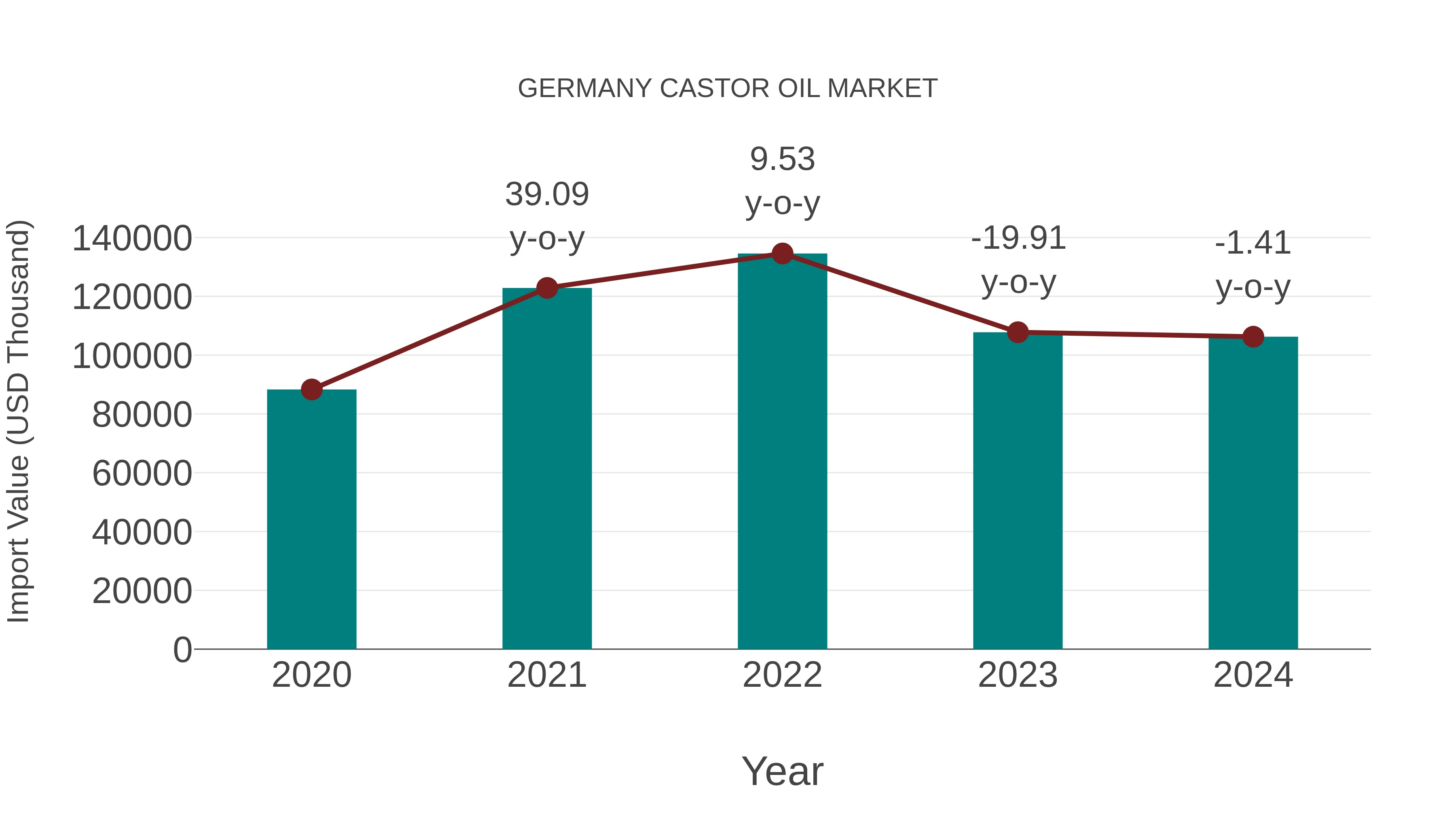
Germany`s import trend for castor oil exhibited a slight decline from 2023 to 2024, with a growth rate of -1.41%. However, the compound annual growth rate (CAGR) from 2020 to 2024 stood at 4.73%. This dip in import momentum could be attributed to shifting demand patterns or evolving trade policies impacting the market stability during the period.
Germany Castor Oil Market Overview
The castor oil market in Germany is expanding, driven by the growing demand for natural and sustainable ingredients in the cosmetics, pharmaceutical, and industrial sectors. Castor oil, derived from the castor bean plant, is valued for its moisturizing, anti-inflammatory, and antimicrobial properties, making it a versatile ingredient in skincare products, pharmaceutical formulations, and industrial lubricants. Furthermore, the market is benefiting from increasing consumer awareness regarding the benefits of plant-based products and the shift towards environmentally friendly alternatives, driving the adoption of castor oil in various applications.
Drivers of the market
The Germany castor oil market is experiencing growth owing to the expanding applications of castor oil across various industries such as pharmaceuticals, cosmetics, lubricants, and biofuels. Castor oil is valued for its diverse properties, including lubrication, moisturization, and anti-inflammatory effects, making it a key ingredient in a wide range of products. Additionally, the growing demand for sustainable and eco-friendly alternatives in industrial applications is driving the adoption of castor oil-based formulations in Germany.
Challenges of the market
The castor oil market in Germany confronts challenges related to sustainability concerns and competition from alternative vegetable oils. Addressing environmental sustainability issues, such as deforestation and land use change associated with castor oil production, while meeting the growing demand for natural and eco-friendly ingredients presents a significant challenge for suppliers and manufacturers.
Government Policy of the market
Government policies in Germany regarding the production and sale of castor oil may include quality standards, labeling requirements, and regulations related to its use in various industries such as pharmaceuticals, cosmetics, and lubricants.
Key Highlights of the Report:
- Germany Castor Oil Market Outlook
- Market Size of Germany Castor Oil Market, 2024
- Forecast of Germany Castor Oil Market, 2031
- Historical Data and Forecast of Germany Castor Oil Revenues & Volume for the Period 2018 - 2031
- Germany Castor Oil Market Trend Evolution
- Germany Castor Oil Market Drivers and Challenges
- Germany Castor Oil Price Trends
- Germany Castor Oil Porter's Five Forces
- Germany Castor Oil Industry Life Cycle
- Historical Data and Forecast of Germany Castor Oil Market Revenues & Volume By End Use for the Period 2018 - 2031
- Historical Data and Forecast of Germany Castor Oil Market Revenues & Volume By Pharmaceuticals for the Period 2018 - 2031
- Historical Data and Forecast of Germany Castor Oil Market Revenues & Volume By Lubricants for the Period 2018 - 2031
- Historical Data and Forecast of Germany Castor Oil Market Revenues & Volume By Paints for the Period 2018 - 2031
- Historical Data and Forecast of Germany Castor Oil Market Revenues & Volume By Soaps for the Period 2018 - 2031
- Historical Data and Forecast of Germany Castor Oil Market Revenues & Volume By Others for the Period 2018 - 2031
- Germany Castor Oil Import Export Trade Statistics
- Market Opportunity Assessment By End Use
- Germany Castor Oil Top Companies Market Share
- Germany Castor Oil Competitive Benchmarking By Technical and Operational Parameters
- Germany Castor Oil Company Profiles
- Germany Castor Oil Key Strategic Recommendations






































