Germany Cottonseed Oil Market: Import Trend Analysis
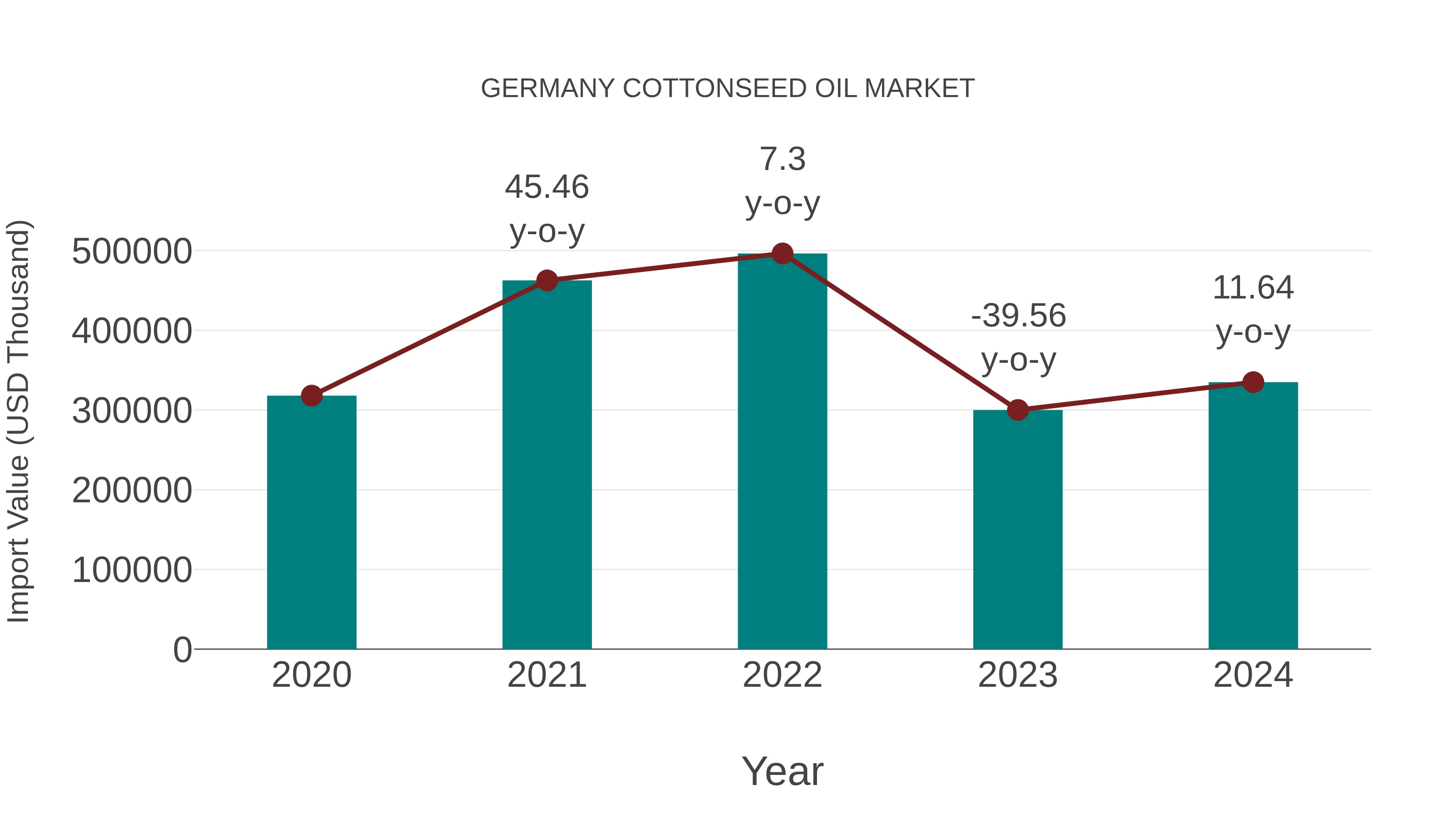
Germany`s cottonseed oil import trend exhibited a notable growth rate of 11.64% from 2023 to 2024, with a compound annual growth rate (CAGR) of 1.3% from 2020 to 2024. This import momentum can be attributed to shifting consumer preferences towards healthier cooking oils, indicating a potential demand shift in the market.
Germany Cottonseed Oil Market Overview
Cottonseed oil is widely used in food processing, cosmetics, and pharmaceutical industries due to its neutral flavor, high smoke point, and health benefits. In Germany, the cottonseed oil market is influenced by factors such as changing dietary preferences, increasing consumer awareness regarding healthy cooking oils, and the growing demand for natural and organic products. Key players in the Germany cottonseed oil market focus on product quality, sustainability, and traceability to meet the stringent regulatory requirements and consumer expectations.
Drivers of the market
In Germany, the cottonseed oil market is driven by the increasing demand for healthy cooking oils and the versatile applications of cottonseed oil in food processing, cosmetics, and industrial sectors. Cottonseed oil is valued for its high smoke point, mild flavor, and nutritional profile, making it a popular choice among health-conscious consumers and food manufacturers. Additionally, advancements in extraction technologies and the availability of non-GMO and organic cottonseed oil variants are contributing to market expansion.
Challenges of the market
The cottonseed oil market in Germany encounters challenges related to health and sustainability concerns. While cottonseed oil is a versatile cooking oil with various culinary applications, its high levels of saturated fats and concerns over genetically modified organisms (GMOs) have led some consumers to seek alternative cooking oils perceived as healthier. Additionally, sustainable sourcing practices and transparent supply chains are becoming increasingly important considerations for consumers and regulatory bodies.
Government Policy of the market
The cottonseed oil market in Germany is subject to regulations governing food safety, labeling, and quality standards. Cottonseed oil is a versatile cooking oil with applications in food processing, culinary, and industrial sectors. Regulatory authorities enforce strict quality control measures to ensure the absence of contaminants, such as pesticides and heavy metals, in cottonseed oil products. Additionally, labeling requirements mandate clear and accurate information regarding product composition, nutritional content, and allergen warnings to inform consumer choices and prevent misrepresentation. The market for cottonseed oil is influenced by consumer preferences for healthier cooking oils, driving demand for products with low trans-fat content and high levels of unsaturated fatty acids. Manufacturers and retailers in Germany prioritize product quality, traceability, and sustainability to maintain consumer trust and market competitiveness in the cottonseed oil segment.
Key Highlights of the Report:
- Germany Cottonseed Oil Market Outlook
- Market Size of Germany Cottonseed Oil Market, 2024
- Forecast of Germany Cottonseed Oil Market, 2031
- Historical Data and Forecast of Germany Cottonseed Oil Revenues & Volume for the Period 2018 - 2031
- Germany Cottonseed Oil Market Trend Evolution
- Germany Cottonseed Oil Market Drivers and Challenges
- Germany Cottonseed Oil Price Trends
- Germany Cottonseed Oil Porter's Five Forces
- Germany Cottonseed Oil Industry Life Cycle
- Historical Data and Forecast of Germany Cottonseed Oil Market Revenues & Volume By Raw Material for the Period 2018 - 2031
- Historical Data and Forecast of Germany Cottonseed Oil Market Revenues & Volume By Genetically Modified Cotton for the Period 2018 - 2031
- Historical Data and Forecast of Germany Cottonseed Oil Market Revenues & Volume By Non-GM Cotton for the Period 2018 - 2031
- Historical Data and Forecast of Germany Cottonseed Oil Market Revenues & Volume By End-Users for the Period 2018 - 2031
- Historical Data and Forecast of Germany Cottonseed Oil Market Revenues & Volume By Retail for the Period 2018 - 2031
- Historical Data and Forecast of Germany Cottonseed Oil Market Revenues & Volume By Food Processing for the Period 2018 - 2031
- Historical Data and Forecast of Germany Cottonseed Oil Market Revenues & Volume By Cosmetics for the Period 2018 - 2031
- Historical Data and Forecast of Germany Cottonseed Oil Market Revenues & Volume By Other Applications for the Period 2018 - 2031
- Germany Cottonseed Oil Import Export Trade Statistics
- Market Opportunity Assessment By Raw Material
- Market Opportunity Assessment By End-Users
- Germany Cottonseed Oil Top Companies Market Share
- Germany Cottonseed Oil Competitive Benchmarking By Technical and Operational Parameters
- Germany Cottonseed Oil Company Profiles
- Germany Cottonseed Oil Key Strategic Recommendations






































