Sweden Cottonseed Oil Market Top 5 Importing Countries and Market Competition (HHI) Analysis
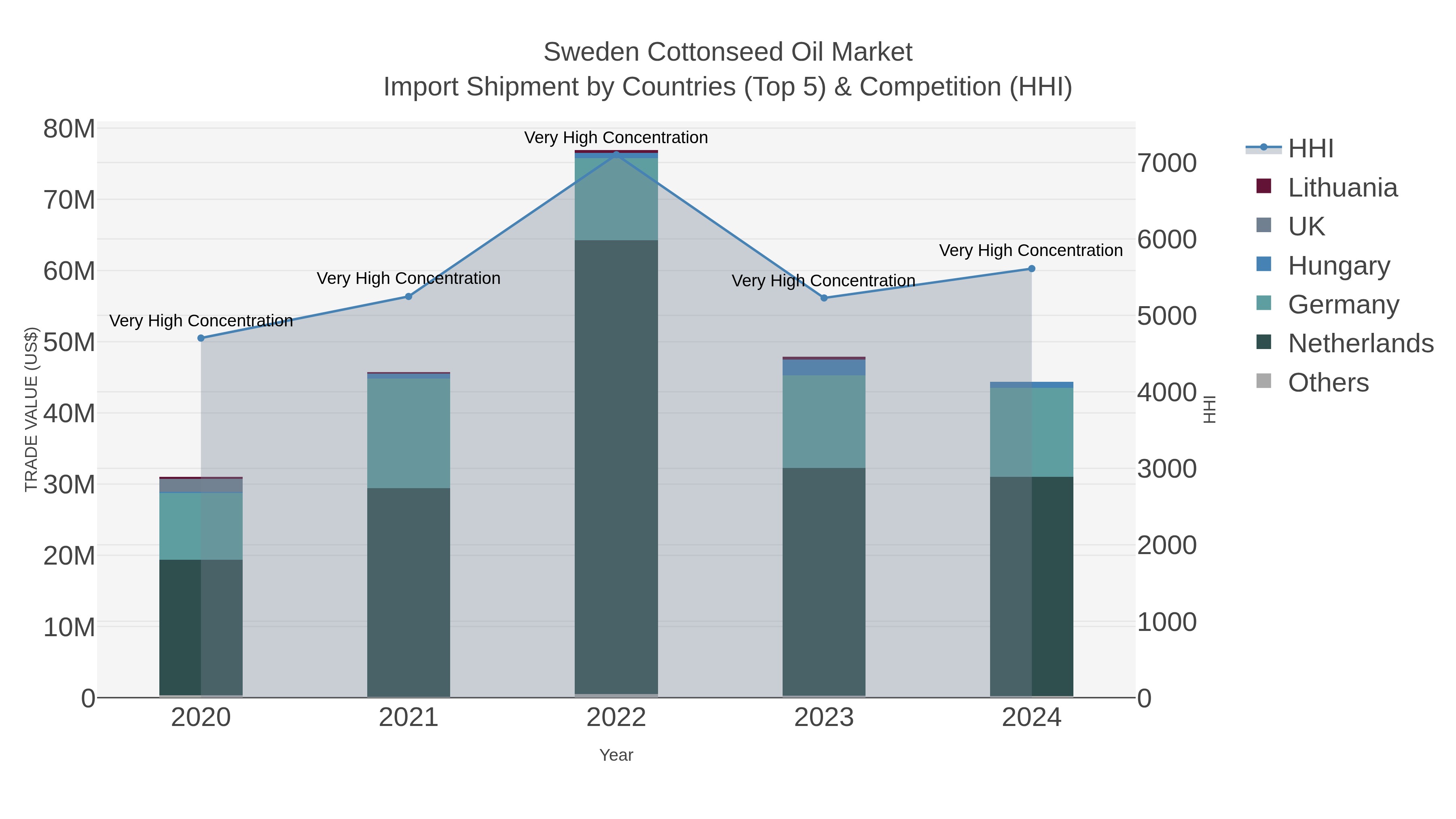
Sweden`s cottonseed oil import market in 2024 continued to be dominated by top exporting countries such as Netherlands, Germany, Hungary, Spain, and Denmark. The high Herfindahl-Hirschman Index (HHI) indicates a concentrated market. Despite a strong compound annual growth rate (CAGR) of 9.33% from 2020 to 2024, there was a notable decline in growth rate from 2023 to 2024 at -7.37%. This data suggests a competitive landscape in the cottonseed oil import market in Sweden, with potential shifts in market dynamics in the coming years.
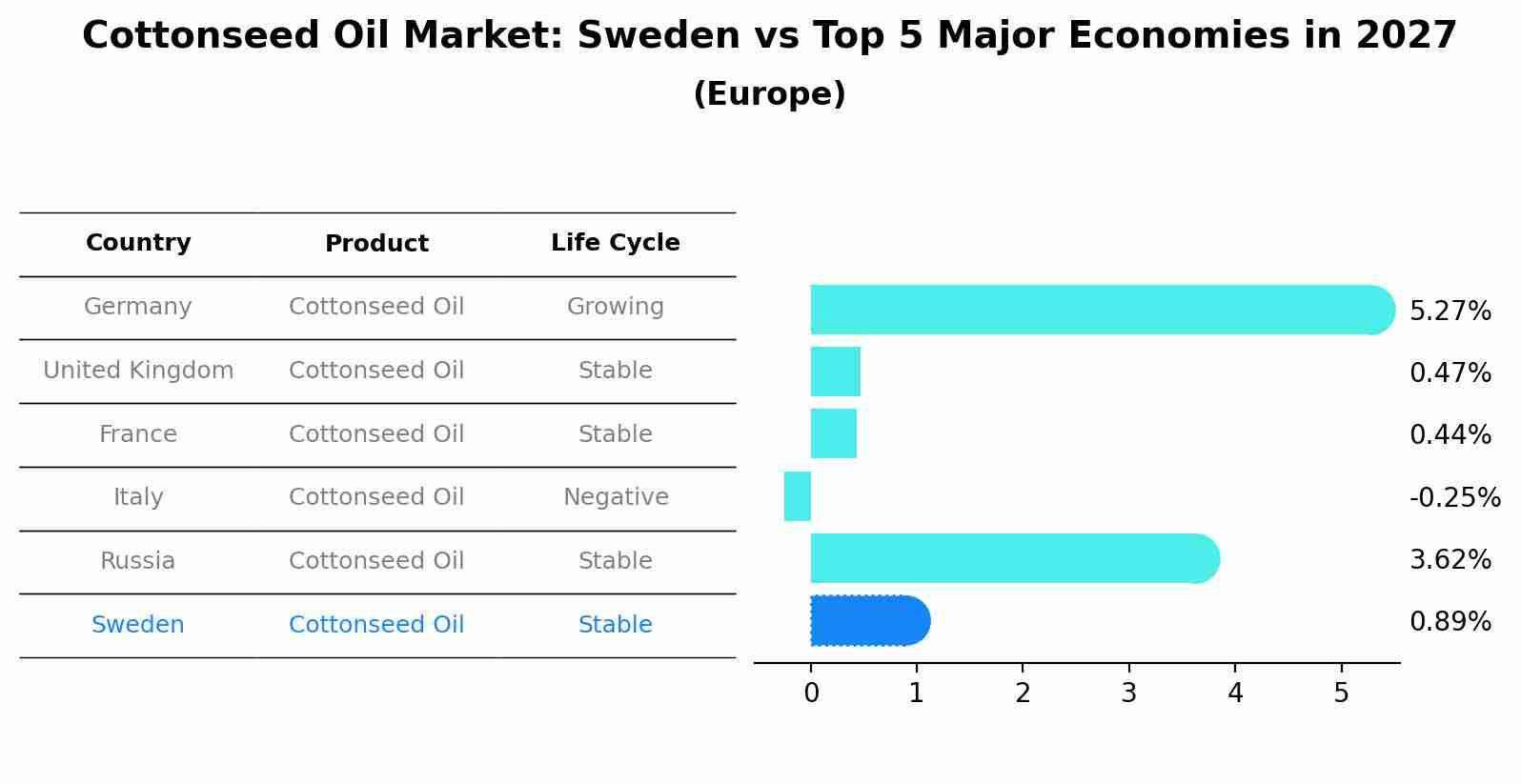
Cottonseed Oil Market: Sweden vs Top 5 Major Economies in 2027 (Europe)
The Cottonseed Oil market in Sweden is projected to grow at a stable growth rate of 0.89% by 2027, within the Europe region led by Germany, along with other countries like United Kingdom, France, Italy and Russia, collectively shaping a dynamic and evolving market environment driven by innovation and increasing adoption of emerging technologies.
Sweden Cottonseed Oil Market Overview
The cottonseed oil market in Sweden is influenced by the increasing awareness of health and nutrition among consumers. Cottonseed oil, known for its light flavor and high smoke point, is gaining popularity in cooking and food processing. The market is characterized by a growing demand for natural and healthy cooking oils, with consumers seeking alternatives to traditional oils. Additionally, the expansion of the food industry and the trend towards healthier eating habits are driving the growth of cottonseed oil in various applications. As sustainability becomes a priority, producers are focusing on eco-friendly extraction methods and promoting the nutritional benefits of cottonseed oil.
Drivers of the market
The cottonseed oil market in Sweden is primarily driven by the growing awareness of health and nutrition. As consumers become more health-conscious, the demand for cottonseed oil, known for its light flavor and high smoke point, is increasing in the food industry. Additionally, cottonseed oil is gaining popularity in the cosmetics and personal care industries due to its moisturizing properties and suitability for various formulations. The rise of plant-based diets and cooking oils is also contributing to the market growth, as consumers seek healthier alternatives to traditional oils. Furthermore, innovations in extraction and refining processes are enhancing the quality and appeal of cottonseed oil, leading to increased adoption in various sectors.
Challenges of the market
The cottonseed oil market in Sweden faces challenges primarily due to the increasing competition from alternative vegetable oils such as sunflower, canola, and olive oil, which are perceived as healthier by consumers. This shift in consumer preference forces producers to invest in marketing campaigns to promote the benefits of cottonseed oil. Additionally, concerns over the environmental impact of cotton farming, which is pesticide and water-intensive, have led to regulatory pressures and increased production costs. Lastly, supply chain disruptions and fluctuations in global cotton production can affect the availability and pricing of cottonseed oil.
Government Policy of the market
In Sweden, the production and sale of cottonseed oil are subject to food safety regulations overseen by the Swedish National Food Agency. These regulations ensure that oils meet health standards before reaching consumers. Import regulations and tariffs are also significant, as Sweden relies on imported raw materials for cottonseed oil production. Additionally, the Swedish government promotes the use of sustainable agricultural practices, encouraging the market to align with environmental goals such as reducing pesticide use and adopting organic farming.
Key Highlights of the Report:
- Sweden Cottonseed Oil Market Outlook
- Market Size of Sweden Cottonseed Oil Market, 2025
- Forecast of Sweden Cottonseed Oil Market, 2032
- Historical Data and Forecast of Sweden Cottonseed Oil Revenues & Volume for the Period 2022 - 2032
- Sweden Cottonseed Oil Market Trend Evolution
- Sweden Cottonseed Oil Market Drivers and Challenges
- Sweden Cottonseed Oil Price Trends
- Sweden Cottonseed Oil Porter`s Five Forces
- Sweden Cottonseed Oil Industry Life Cycle
- Historical Data and Forecast of Sweden Cottonseed Oil Market Revenues & Volume By Raw Material for the Period 2022 - 2032
- Historical Data and Forecast of Sweden Cottonseed Oil Market Revenues & Volume By Genetically Modified Cotton for the Period 2022 - 2032
- Historical Data and Forecast of Sweden Cottonseed Oil Market Revenues & Volume By Non-GM Cotton for the Period 2022 - 2032
- Historical Data and Forecast of Sweden Cottonseed Oil Market Revenues & Volume By End-Users for the Period 2022 - 2032
- Historical Data and Forecast of Sweden Cottonseed Oil Market Revenues & Volume By Retail for the Period 2022 - 2032
- Historical Data and Forecast of Sweden Cottonseed Oil Market Revenues & Volume By Food Processing for the Period 2022 - 2032
- Historical Data and Forecast of Sweden Cottonseed Oil Market Revenues & Volume By Cosmetics for the Period 2022 - 2032
- Historical Data and Forecast of Sweden Cottonseed Oil Market Revenues & Volume By Other Applications for the Period 2022 - 2032
- Sweden Cottonseed Oil Import Export Trade Statistics
- Market Opportunity Assessment By Raw Material
- Market Opportunity Assessment By End-Users
- Sweden Cottonseed Oil Top Companies Market Share
- Sweden Cottonseed Oil Competitive Benchmarking By Technical and Operational Parameters
- Sweden Cottonseed Oil Company Profiles
- Sweden Cottonseed Oil Key Strategic Recommendations






































