Germany Ethanol Market: Import Trend Analysis
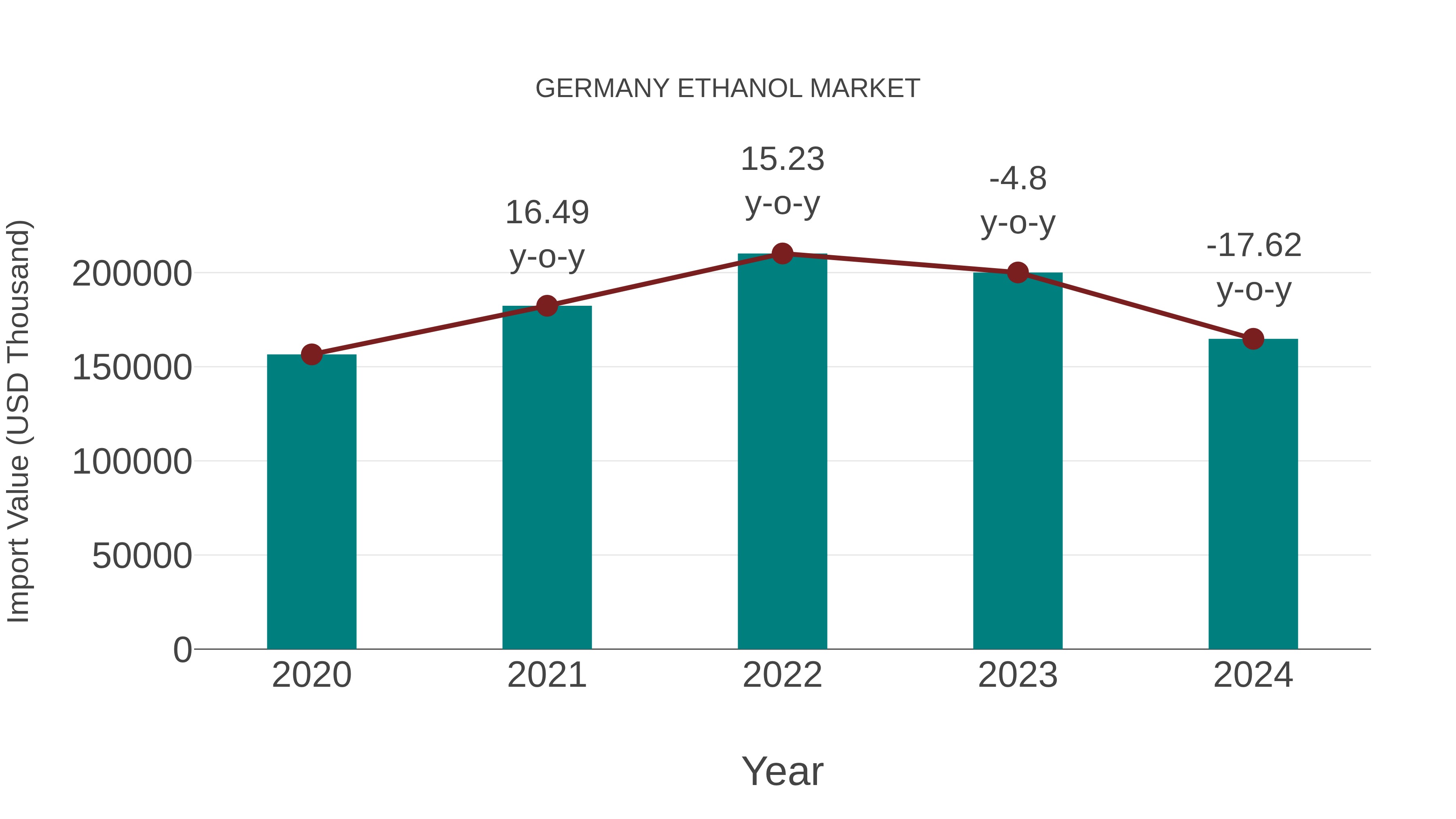
In the Germany ethanol market, the import trend experienced a decline from 2023 to 2024, with a growth rate of -17.62%. However, the compound annual growth rate (CAGR) for imports between 2020 and 2024 stood at 1.29%. This negative momentum in 2024 could be attributed to shifting demand patterns or evolving trade policies impacting market stability.
Germany Ethanol Market Highlights
| Report Name | Germany Ethanol Market |
| Forecast period | 2026-2032 |
| CAGR | 5.3% |
| Growing Sector | Fuel & Fuel Additives |
Topics Covered in Germany Ethanol Market Report
The Germany Ethanol Market report comprehensively covers the market by Purity, Sources, and Application. The market report provides an unbiased and detailed analysis of the ongoing market trends, opportunities/high-growth areas, and market drivers, which would help stakeholders devise and align their market strategies according to the current and future market dynamics.
Germany Ethanol Market Synopsis
The Germany Ethanol Market is witnessing substantial growth, propelled by the increasing demand for biofuels and the rising use of ethanol in various industrial applications.
According to 6Wresearch, the Germany Ethanol Market is projected to grow at a CAGR of 5.3% from 2026-2032. The fuel & fuel additives sector is experiencing rapid growth due to stringent environmental regulations and the push towards cleaner fuels. Additionally, the use of ethanol as an industrial solvent and in personal care products is gaining traction, further boosting market demand. The increasing preference for sustainable and eco-friendly products is also driving the growth of the ethanol market in Germany.
However, the market faces significant challenges, including fluctuating raw material prices, which can affect production costs and pricing strategies. The competition from alternative biofuels and synthetic chemicals also presents a challenge to market growth. Furthermore, regulatory changes and the complexity of meeting stringent quality standards for different applications can pose barriers for manufacturers. Despite these challenges, the market is expected to grow steadily, driven by innovations and increasing consumer awareness about the benefits of ethanol.
Germany Ethanol Market: Leading Players
Key players in the Germany Ethanol Market include CropEnergies AG, Südzucker AG, and Verbio Vereinigte BioEnergie AG. CropEnergies AG is a leading producer of ethanol for fuel and industrial applications, known for its high-quality products and sustainable practices. Südzucker AG specializes in producing ethanol from sugar beet, offering a range of ethanol-based products for various applications. Verbio Vereinigte BioEnergie AG is a major player in the bioenergy sector, providing ethanol and other biofuels, focusing on renewable and sustainable production methods.
Germany Ethanol Industry: Government Initiatives
The German government has implemented various initiatives to promote the use of biofuels and reduce carbon emissions. These initiatives include subsidies for biofuel production, tax incentives for using ethanol-blended fuels, and strict regulations on greenhouse gas emissions. The government is also investing in research and development for second-generation biofuels, which are produced from non-food biomass and offer a more sustainable alternative. Additionally, there are efforts to enhance the infrastructure for ethanol distribution, such as expanding biofuel refueling stations across the country.
Future Insights of the Market
The Germany Ethanol Market is poised for significant growth, driven by increasing demand for biofuels and sustainable products. The growing adoption of ethanol in the personal care industry, due to its eco-friendly and non-toxic properties, is expected to create new market opportunities. The development of second-generation ethanol technologies, which utilize waste materials and non-food crops, is also anticipated to boost market growth. The rising trend of using ethanol as a disinfectant, particularly in the wake of increased hygiene awareness, will further support the market. Overall, the focus on sustainability, innovation, and regulatory compliance will be key drivers for the market's future expansion.
Market Segmentation By Purity
According to Ravi Bhandari, Research Head, 6Wresearch, the non-denatured ethanol segment leads the market due to its extensive use in beverages and personal care products. Non-denatured ethanol is preferred in applications requiring high purity, such as in the pharmaceutical and food industries, due to its high ethanol content and lack of additives. Denatured ethanol, which includes additives to render it non-consumable, is primarily used in industrial applications, including as a solvent and fuel additive, due to its lower cost.
Market Segmentation By Sources
The sugar & molasses-based segment dominates the market, driven by the abundant availability of raw materials and established production processes. Grain-based ethanol is also significant, especially in the beverage industry, where it is used to produce alcoholic beverages. The second-generation ethanol segment, though currently smaller, is expected to grow as it provides a more sustainable and environmentally friendly alternative, utilizing agricultural residues and other non-food biomass.
Market Segmentation By Application
The fuel & fuel additives segment is the largest application area, fueled by the demand for cleaner and renewable energy sources. Ethanol is commonly blended with gasoline to reduce emissions and enhance fuel efficiency. The industrial solvent segment is also significant, with ethanol used in various industries for its solvent properties. The beverages segment includes the production of alcoholic drinks, where ethanol is a primary ingredient. Disinfectant applications have seen a surge, particularly with the heightened emphasis on hygiene and sanitation. Personal care applications include the use of ethanol in products like perfumes and cosmetics, leveraging its properties as a solvent and preservative.
Key Attractiveness of the Report
- 10 Years of Market Numbers.
- Historical Data Starting from 2022 to 2025.
- Base Year: 2025
- Forecast Data until 2032.
- Key Performance Indicators Impacting the market.
- Major Upcoming Developments and Projects.
Key Highlights of the Report:
- Germany Ethanol Market Overview
- Germany Ethanol Market Outlook
- Germany Ethanol Market Forecast
- Historical Data of Germany Ethanol Market Revenues and Volumes, for the Period 2022-2032.
- Market Size & Forecast of Germany Ethanol Market Revenues and Volumes, until 2032.
- Historical Data of Germany Ethanol Market Revenues and Volumes, by purity, for the Period 2022-2032.
- Market Size & Forecast of Germany Ethanol Market Revenues and Volumes, by purity, until 2032.
- Historical Data of Germany Ethanol Market Revenues and Volumes, by Source, for the Period 2022-2032.
- Market Size & Forecast of Germany Ethanol Market Revenues and Volumes, by source, until 2032.
- Historical Data of Germany Ethanol Market Revenues and Volumes, by application, for the Period 2022-2032.
- Market Size & Forecast of Germany Ethanol Market Revenues and Volumes, by application, until 2032.
- Market Drivers and Restraints
- Germany Ethanol Market Price Trends
- Germany Ethanol Market Trends and Industry Life Cycle
- Porter’s Five Force Analysis
- Market Opportunity Assessment
- Germany Ethanol Market Share, By Players
- Germany Ethanol Market Overview on Competitive Benchmarking
- Company Profiles
- Key Strategic Recommendations
Market Scope and Segmentation
The report provides a detailed analysis of the following market segments:
By Purity
- Denatured
- Non-Denatured
By Sources
- Sugar & Molasses Based
- Grain Based
- Second Generation
By Application
- Industrial Solvent
- Fuel & Fuel Additives
- Beverages
- Disinfectant
- Personal Care
- Others






































