Germany Glufosinate Market: Import Trend Analysis
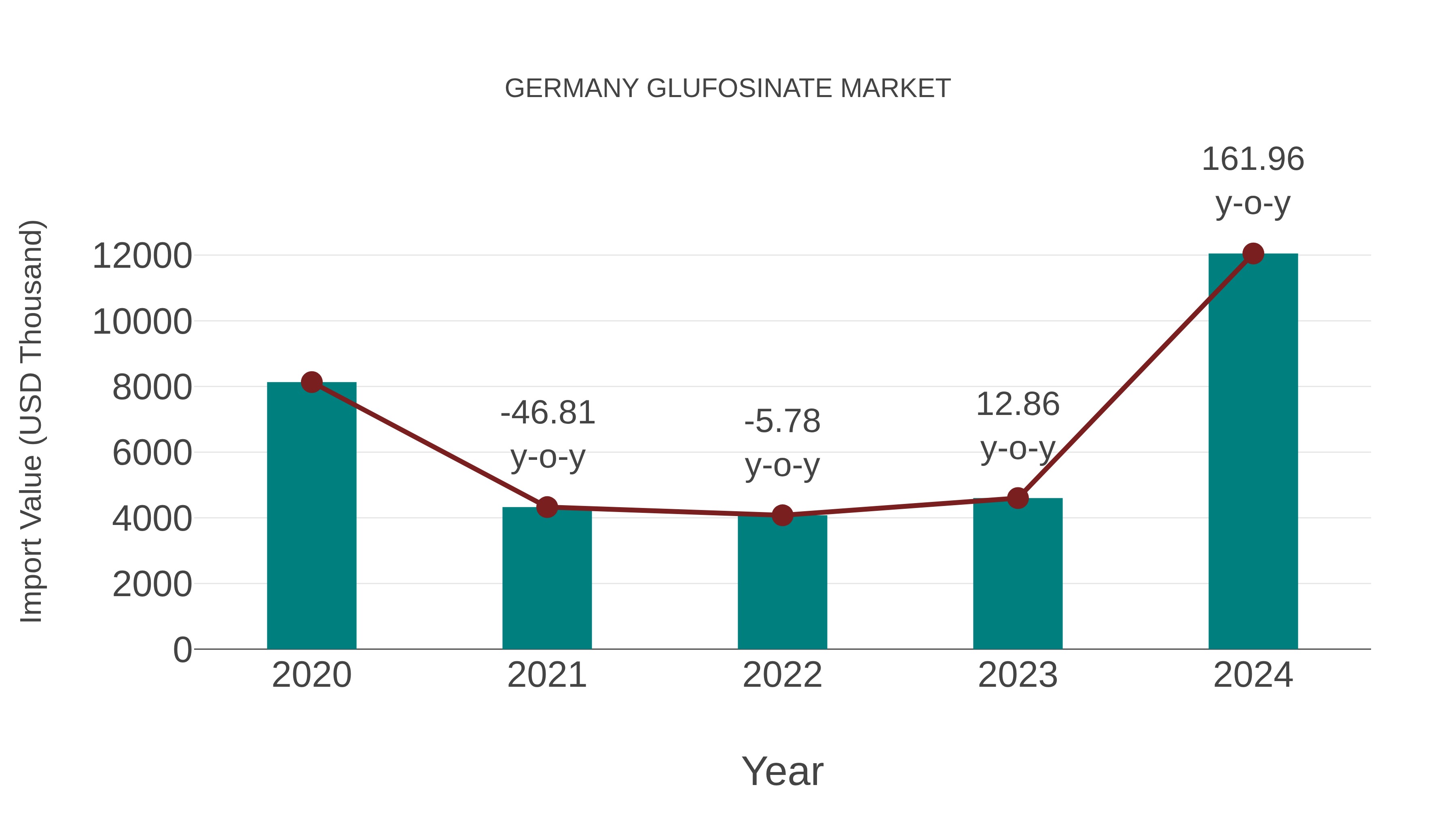
In 2024, Germany`s glufosinate market saw a consistent upward trend in imports. The demand for glufosinate-based products increased steadily, reflecting a growing reliance on imported goods to meet domestic market needs.
Germany Glufosinate Market Synopsis
The Germany Glufosinate market is experiencing steady growth driven by factors such as increasing adoption of genetically modified crops, rising demand for herbicides in agriculture, and the focus on improving crop yields. Glufosinate, a broad-spectrum herbicide, is widely used in Germany for controlling weeds in various crops such as maize, wheat, and rapeseed. The market is characterized by the presence of key players like Bayer CropScience, BASF SE, and Syngenta, who are investing in research and development activities to introduce innovative formulations and expand their product portfolios. Regulatory initiatives promoting sustainable agricultural practices and environmental concerns are also influencing market dynamics. Overall, the Germany Glufosinate market is poised for further growth with a focus on sustainable agriculture practices and increasing adoption of advanced herbicides.
Germany Glufosinate Market Trends
The Germany Glufosinate market is experiencing growth due to the increasing demand for herbicides to control weeds in various crops. Key trends in the market include a shift towards sustainable agriculture practices, leading to the adoption of bio-based and environmentally friendly herbicides. Additionally, the rising awareness among farmers about the benefits of using Glufosinate-based products for weed management is driving market growth. Opportunities in the market include the development of innovative formulations and technologies to enhance the efficacy of Glufosinate herbicides, as well as expanding distribution networks to reach a wider customer base. Overall, the Germany Glufosinate market presents promising prospects for manufacturers and suppliers looking to capitalize on the growing demand for effective weed control solutions in agriculture.
Germany Glufosinate Market Challenges
In the Germany Glufosinate market, one of the main challenges faced is the increasing regulatory scrutiny and restrictions on the use of pesticides and herbicides. With growing concerns over environmental impact and human health risks, there is a push for stricter regulations on the usage of agrochemicals like Glufosinate. This has led to uncertainty among farmers and agribusinesses in Germany, impacting their decision-making processes and overall market demand. Additionally, competition from alternative herbicides and biotechnology solutions further intensifies the challenges faced by Glufosinate in the market. Adapting to these regulatory changes, educating stakeholders about the benefits and safety of Glufosinate, and investing in sustainable agricultural practices are crucial for companies operating in the Germany Glufosinate market to navigate these challenges effectively.
Germany Glufosinate Market Investment Opportunities
The Germany Glufosinate market is primarily driven by the increasing demand for herbicides in agriculture to enhance crop yield and quality. Glufosinate is a widely used herbicide due to its effectiveness in controlling a broad spectrum of weeds, including those resistant to other herbicides. Additionally, the growing awareness among farmers about the benefits of using herbicides to improve crop productivity and reduce manual labor is driving the market growth. Furthermore, the government`s support for sustainable farming practices and the adoption of genetically modified crops that are tolerant to Glufosinate are also contributing to the market expansion in Germany. Overall, the rising need for efficient weed control solutions and the emphasis on sustainable agriculture practices are key drivers shaping the Germany Glufosinate market.
Germany Glufosinate Market Government Polices
The German government has strict regulations in place regarding the use of glufosinate, a widely-used herbicide. Glufosinate is classified as a substance of very high concern under the REACH regulation, and its use is restricted in certain areas to protect the environment and human health. The German Federal Institute for Risk Assessment (BfR) evaluates the safety of glufosinate-containing products and sets maximum residue levels in food products to ensure consumer safety. Additionally, the government promotes sustainable agriculture practices and encourages farmers to adopt alternative methods to reduce reliance on chemical herbicides like glufosinate. Overall, the government`s policies aim to balance the need for effective weed control with environmental protection and public health considerations in the Germany glufosinate market.
Germany Glufosinate Market Future Outlook
The future outlook for the Germany Glufosinate market appears positive, driven by factors such as the increasing demand for herbicides in agriculture to improve crop yield and quality. The growing awareness among farmers about the benefits of using Glufosinate as a sustainable weed control solution is expected to boost market growth. Additionally, the implementation of stringent regulations on pesticide use and the rising adoption of genetically modified crops that are tolerant to Glufosinate are likely to further propel market expansion. Technological advancements in the formulation of Glufosinate products for enhanced efficacy and safety, along with strategic collaborations and partnerships among key market players, are anticipated to drive innovation and market competitiveness. Overall, the Germany Glufosinate market is poised for growth in the coming years.
Key Highlights of the Report:
- Germany Glufosinate Market Outlook
- Market Size of Germany Glufosinate Market, 2025
- Forecast of Germany Glufosinate Market, 2032
- Historical Data and Forecast of Germany Glufosinate Revenues & Volume for the Period 2022 - 2032F
- Germany Glufosinate Market Trend Evolution
- Germany Glufosinate Market Drivers and Challenges
- Germany Glufosinate Price Trends
- Germany Glufosinate Porter's Five Forces
- Germany Glufosinate Industry Life Cycle
- Historical Data and Forecast of Germany Glufosinate Market Revenues & Volume By Crop Type for the Period 2022 - 2032F
- Historical Data and Forecast of Germany Glufosinate Market Revenues & Volume By Genetically Modified Crops for the Period 2022 - 2032F
- Historical Data and Forecast of Germany Glufosinate Market Revenues & Volume By Conventional Crops for the Period 2022 - 2032F
- Historical Data and Forecast of Germany Glufosinate Market Revenues & Volume By Form for the Period 2022 - 2032F
- Historical Data and Forecast of Germany Glufosinate Market Revenues & Volume By Liquid Formulation for the Period 2022 - 2032F
- Historical Data and Forecast of Germany Glufosinate Market Revenues & Volume By Dry Formulation for the Period 2022 - 2032F
- Historical Data and Forecast of Germany Glufosinate Market Revenues & Volume By Application for the Period 2022 - 2032F
- Historical Data and Forecast of Germany Glufosinate Market Revenues & Volume By Agricultural for the Period 2022 - 2032F
- Historical Data and Forecast of Germany Glufosinate Market Revenues & Volume By Non Agricultural for the Period 2022 - 2032F
- Germany Glufosinate Import Export Trade Statistics
- Market Opportunity Assessment By Crop Type
- Market Opportunity Assessment By Form
- Market Opportunity Assessment By Application
- Germany Glufosinate Top Companies Market Share
- Germany Glufosinate Competitive Benchmarking By Technical and Operational Parameters
- Germany Glufosinate Company Profiles
- Germany Glufosinate Key Strategic Recommendations






































