Germany Led Traffic Signs And Signals Market Size (2020-2030)
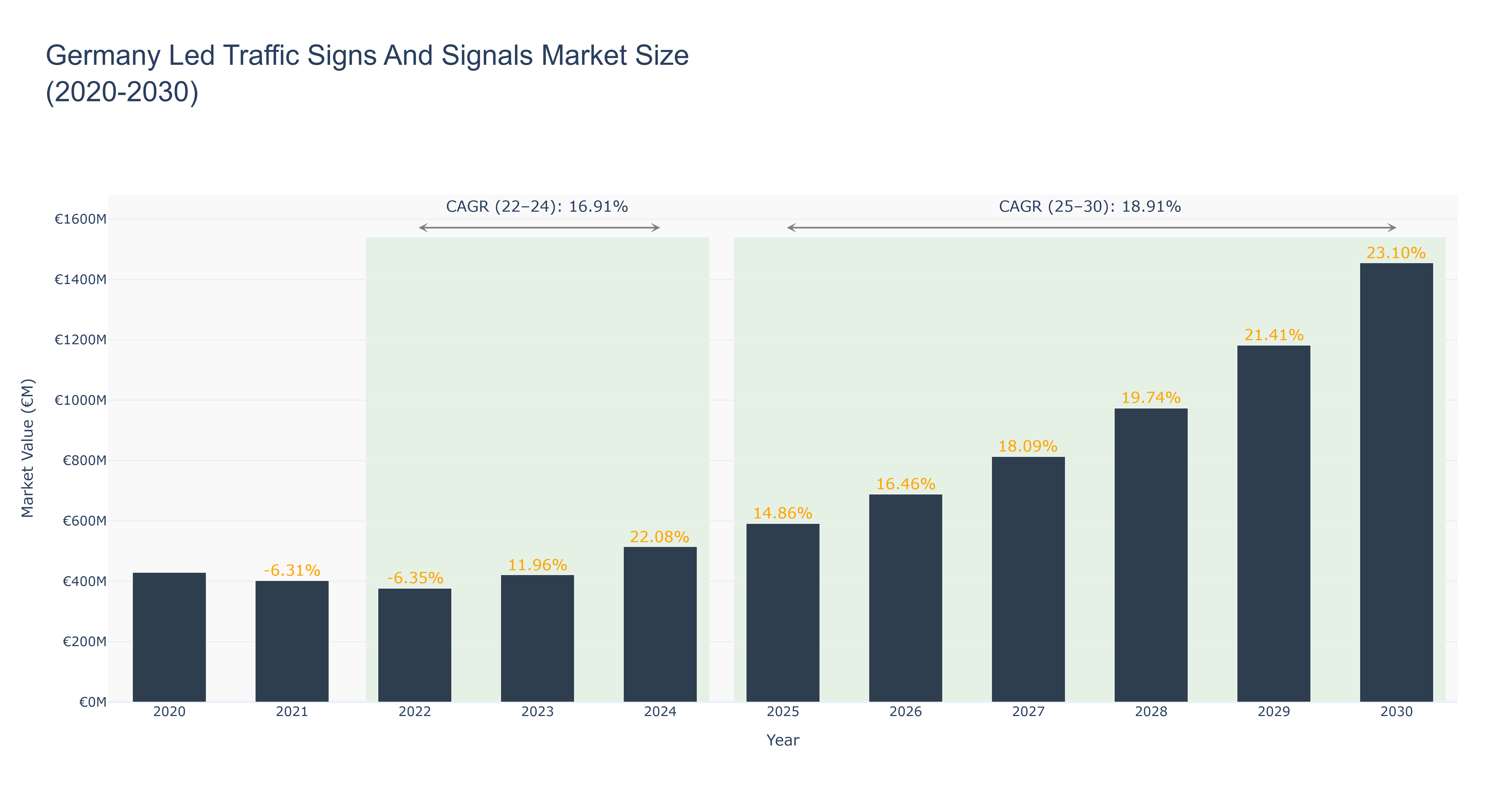
The Germany Led Traffic Signs and Signals Market experienced fluctuations in its actual market size from 2020 to 2024, peaking at €429.22 million in 2020, followed by a decline in 2021 (€402.14 million) and 2022 (€376.58 million), before rebounding to €421.62 million in 2023 and reaching €514.70 million in 2024. This period recorded a compound annual growth rate (CAGR) of 16.91%. The market's recovery can be attributed to increasing investments in smart city initiatives and a heightened focus on road safety. Looking ahead, the forecasted values from 2025 to 2030 indicate robust growth, with a projected market size reaching €1.45 billion by 2030 and a CAGR of 18.91%. Key drivers for this growth include advancements in LED technology, the adoption of intelligent transportation systems, and ongoing infrastructure projects aimed at enhancing urban mobility and sustainability.
Germany Led Traffic Signs And Signals Market: Production & Trade Performance (2019-2025)
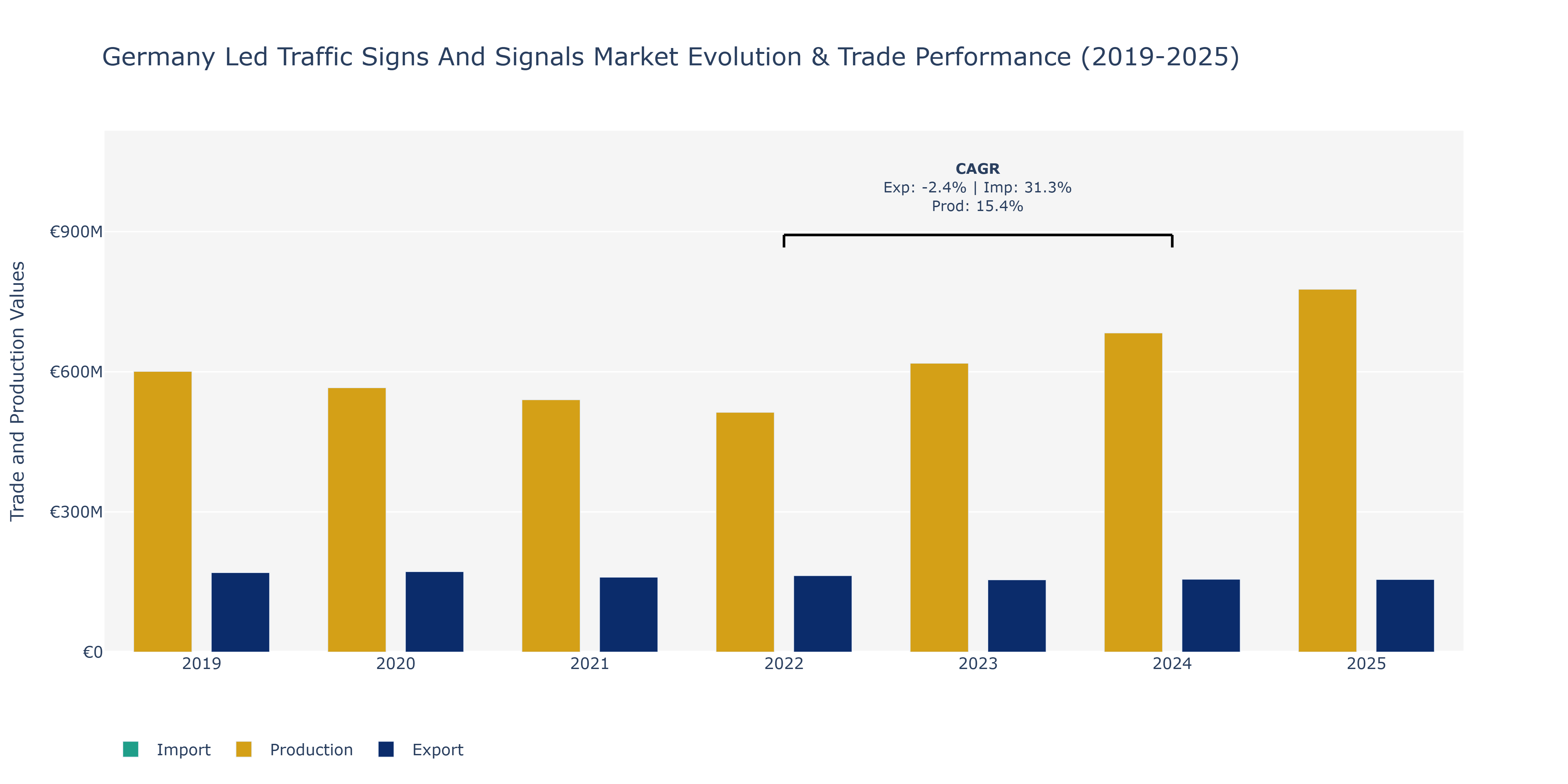
In the Germany Led Traffic Signs And Signals Market, from 2019 to 2025, trends in exports, imports, and production have shown varied movements. Exports gradually fluctuated around the range of approximately €169.88 million to €172.08 million, with a minor peak in 2020. Imports experienced fluctuations, reaching a peak in 2025 at around €20.68 million after a period of growth since 2021. Production displayed a consistent increase, from €540.1 million in 2021 to a peak of €776.7 million in 2025, reflecting a positive growth trend. These dynamics can be attributed to factors such as infrastructure development projects, government regulations on road safety, and advancements in LED technology enhancing product efficiency and durability. The upsurge in imports aligns with the market's strive for innovation, potentially indicating a shift towards newer technologies and international collaborations to meet evolving safety standards and market demands.
Germany LED Traffic Signs and Signals Market Overview
The Germany LED Traffic Signs and Signals Market is experiencing steady growth due to increasing urbanization, infrastructural development, and a focus on road safety. LED technology is preferred for its energy efficiency, long lifespan, and enhanced visibility, leading to reduced maintenance costs and improved traffic management. The market is driven by government initiatives to upgrade existing infrastructure with modern LED traffic signs and signals, as well as stringent regulations promoting road safety measures. Key players in the market include Siemens AG, Swarco AG, and Dialight PLC, who are focusing on product innovation and strategic partnerships to expand their market presence. With a growing emphasis on smart city projects and sustainable transportation solutions, the Germany LED Traffic Signs and Signals Market is poised for further growth in the coming years.
Germany LED Traffic Signs and Signals Market Trends
The Germany LED Traffic Signs and Signals Market is currently experiencing a trend towards increased adoption of smart traffic management systems. This includes the integration of LED technology into traffic signs and signals, enabling real-time data monitoring and communication between the infrastructure and vehicles. Additionally, there is a growing emphasis on energy efficiency and sustainability, leading to the preference for LED lights over traditional lighting solutions. Another key trend is the development of innovative designs and features in LED traffic signs and signals to enhance visibility and safety on the roads. Overall, the market is witnessing a shift towards advanced technologies and solutions that can improve traffic flow, reduce accidents, and contribute to a more efficient transportation system in Germany.
Germany LED Traffic Signs and Signals Market Challenges
In the Germany LED Traffic Signs and Signals Market, some key challenges include high initial installation costs, resistance to change from traditional traffic signaling systems, and the need for continuous maintenance and monitoring due to the technical nature of LED technology. Additionally, ensuring compatibility with existing infrastructure and regulatory frameworks poses a challenge for market players. The market also faces competition from other advanced technologies and alternative solutions, which can slow down the adoption of LED traffic signs and signals. Addressing these challenges will require innovation in product design, cost-effective solutions, and effective communication strategies to highlight the long-term benefits of LED technology in improving traffic management and safety on the roads of Germany.
Germany LED Traffic Signs and Signals Market Investment Opportunities
The Germany LED Traffic Signs and Signals Market presents promising investment opportunities due to the country`s focus on smart transportation infrastructure and sustainability. LED technology offers energy efficiency, long lifespan, and customizable features, making it an attractive option for upgrading traffic management systems. Investing in companies that manufacture or supply LED traffic signs and signals in Germany can be lucrative as the government continues to prioritize digitalization and modernization of transportation networks. Additionally, the increasing emphasis on road safety and traffic flow optimization further drives the demand for innovative LED solutions in the market. Potential investors can capitalize on this growing market by targeting partnerships, acquisitions, or strategic investments in established or emerging players in the Germany LED traffic signs and signals sector.
Germany LED Traffic Signs and Signals Market Government Policy
In Germany, the LED traffic signs and signals market is governed by various regulations and standards set by the Federal Ministry of Transport and Digital Infrastructure (BMVI) and the Federal Highway Research Institute (BASt). These regulations ensure the safety, efficiency, and standardization of traffic control devices, including LED signs and signals, on roads and highways. The German government emphasizes the use of energy-efficient LED technology to reduce environmental impact and operating costs. Additionally, there are specific guidelines for the design, placement, and visibility of LED traffic signs and signals to ensure optimal traffic management. Compliance with these policies is mandatory for manufacturers, suppliers, and authorities involved in the production, installation, and maintenance of LED traffic control devices in Germany.
Germany LED Traffic Signs and Signals Market Future Outlook
The future outlook for the Germany LED Traffic Signs and Signals Market is promising, with steady growth anticipated due to increasing government initiatives towards road safety and smart transportation systems. LED technology offers energy efficiency, improved visibility, and longer lifespan compared to traditional traffic signs and signals, driving adoption among municipalities and transportation authorities. The incorporation of smart features such as dynamic messaging and real-time traffic data integration is expected to further propel market growth. Additionally, the ongoing trend towards urbanization and infrastructure development in Germany will create opportunities for the expansion of LED traffic solutions. Overall, the market is projected to experience sustained growth in the coming years as the country continues to prioritize modernization and safety in its transportation infrastructure.
Key Highlights of the Report:
- Germany LED Traffic Signs and Signals Market Outlook
- Market Size of Germany LED Traffic Signs and Signals Market, 2025
- Forecast of Germany LED Traffic Signs and Signals Market, 2032
- Historical Data and Forecast of Germany LED Traffic Signs and Signals Revenues & Volume for the Period 2022 - 2032F
- Germany LED Traffic Signs and Signals Market Trend Evolution
- Germany LED Traffic Signs and Signals Market Drivers and Challenges
- Germany LED Traffic Signs and Signals Price Trends
- Germany LED Traffic Signs and Signals Porter's Five Forces
- Germany LED Traffic Signs and Signals Industry Life Cycle
- Historical Data and Forecast of Germany LED Traffic Signs and Signals Market Revenues & Volume By Product for the Period 2022 - 2032F
- Historical Data and Forecast of Germany LED Traffic Signs and Signals Market Revenues & Volume By LED Traffic Signals for the Period 2022 - 2032F
- Historical Data and Forecast of Germany LED Traffic Signs and Signals Market Revenues & Volume By LED Traffic Signs for the Period 2022 - 2032F
- Germany LED Traffic Signs and Signals Import Export Trade Statistics
- Market Opportunity Assessment By Product
- Germany LED Traffic Signs and Signals Top Companies Market Share
- Germany LED Traffic Signs and Signals Competitive Benchmarking By Technical and Operational Parameters
- Germany LED Traffic Signs and Signals Company Profiles
- Germany LED Traffic Signs and Signals Key Strategic Recommendations






































