Germany Lumber Market: Import Trend Analysis
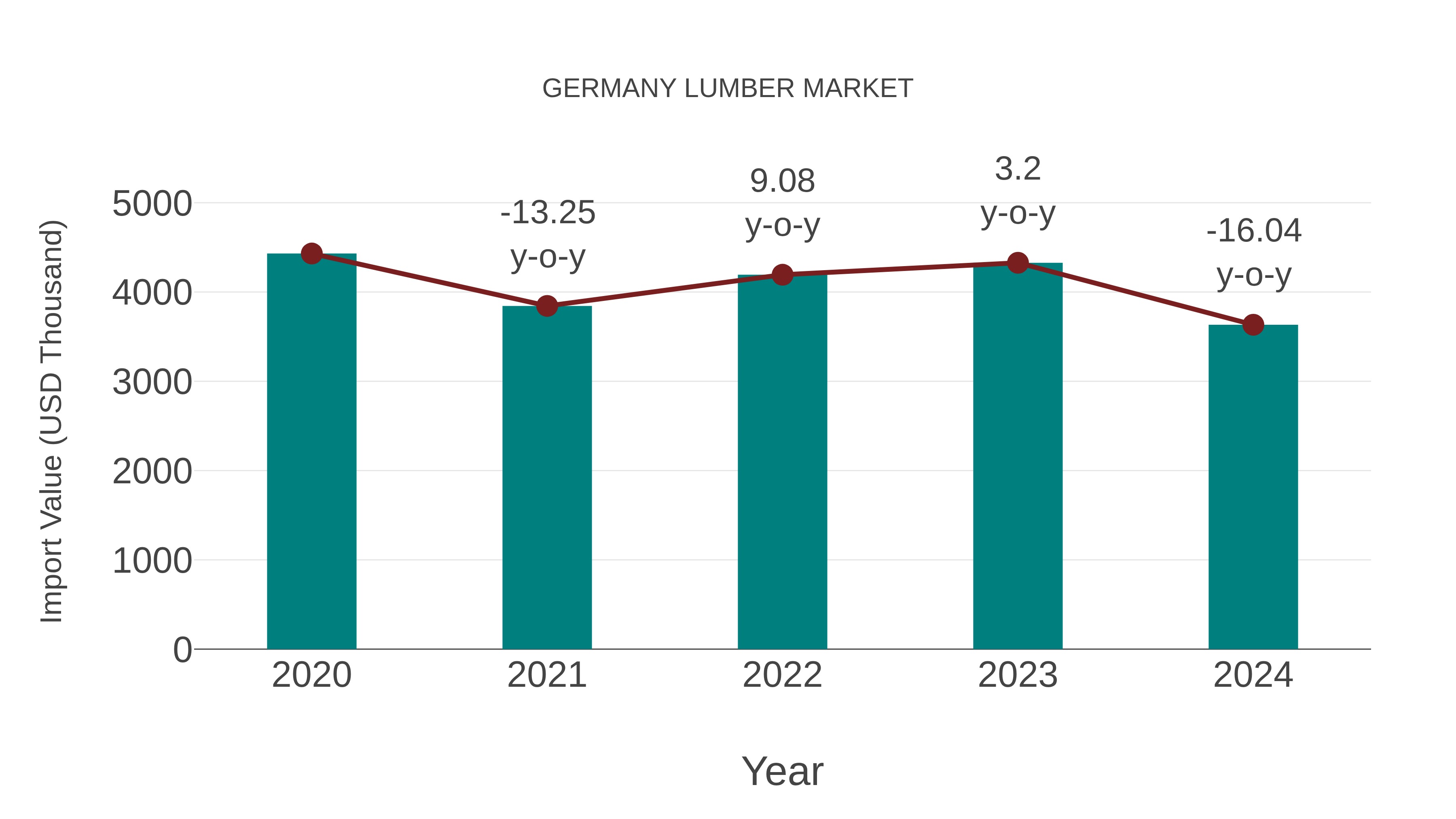
In 2024, Germany`s lumber market experienced a notable increase in imports. The rise in imports was driven by growing demand from various sectors, including construction and furniture manufacturing. This trend reflected the country`s reliance on imported lumber to meet domestic needs.
Germany Lumber Market Overview
The lumber market in Germany has experienced steady growth driven by the robust construction industry, infrastructure development projects, and the growing demand for wood products in various applications such as furniture, flooring, and packaging. Lumber, also known as timber or wood, is a primary building material widely used in construction activities for framing, structural support, and finishing applications. With the increasing focus on sustainable building practices and environmental conservation, there is a growing preference for certified sustainable lumber sourced from responsibly managed forests. In addition to domestic production, Germany also imports lumber from other European countries and overseas markets to meet its demand. The market is characterized by the presence of both large-scale lumber producers and small-scale sawmills catering to diverse customer requirements. Moreover, advancements in timber processing technologies and wood preservatives are driving further innovation and product development in the lumber market in Germany.
Drivers of the market
The Germany Lumber Market is experiencing robust growth driven by the thriving construction industry and increasing demand for sustainable building materials. With growing urbanization and infrastructure development projects, there is a rising need for lumber products in residential, commercial, and industrial construction activities. Moreover, the shift towards eco-friendly construction practices and green building certifications is amplifying the demand for certified sustainable lumber. Additionally, technological advancements in lumber processing techniques and equipment are enhancing productivity and quality standards in the market, further driving its growth trajectory.
Challenges of the market
The lumber market in Germany encounters challenges stemming from sustainability issues, as the demand for certified sustainable wood products grows amidst concerns about deforestation and habitat destruction. Additionally, fluctuations in timber prices, influenced by factors such as supply chain disruptions and global economic conditions, pose challenges for lumber producers and distributors. Furthermore, regulatory requirements regarding forest management practices add complexity to the industry`s operations.
Government Policy of the market
Government policies in Germany promote sustainable forest management and timber production. Regulations such as the Federal Forest Act and the Timber Trade Regulation ensure the legality and traceability of lumber products. Additionally, certification schemes like the Forest Stewardship Council (FSC) provide incentives for responsible forestry practices.
Key Highlights of the Report:
- Germany Lumber Market Outlook
- Market Size of Germany Lumber Market, 2025
- Forecast of Germany Lumber Market, 2032
- Historical Data and Forecast of Germany Lumber Revenues & Volume for the Period 2022-2032F
- Germany Lumber Market Trend Evolution
- Germany Lumber Market Drivers and Challenges
- Germany Lumber Price Trends
- Germany Lumber Porter's Five Forces
- Germany Lumber Industry Life Cycle
- Historical Data and Forecast of Germany Lumber Market Revenues & Volume By Types for the Period 2022-2032F
- Historical Data and Forecast of Germany Lumber Market Revenues & Volume By Hardwood Lumber for the Period 2022-2032F
- Historical Data and Forecast of Germany Lumber Market Revenues & Volume By Softwood Lumber for the Period 2022-2032F
- Historical Data and Forecast of Germany Lumber Market Revenues & Volume By Application for the Period 2022-2032F
- Historical Data and Forecast of Germany Lumber Market Revenues & Volume By Construction for the Period 2022-2032F
- Historical Data and Forecast of Germany Lumber Market Revenues & Volume By Furniture for the Period 2022-2032F
- Historical Data and Forecast of Germany Lumber Market Revenues & Volume By Flooring for the Period 2022-2032F
- Historical Data and Forecast of Germany Lumber Market Revenues & Volume By Moldings for the Period 2022-2032F
- Historical Data and Forecast of Germany Lumber Market Revenues & Volume By Others for the Period 2022-2032F
- Germany Lumber Import Export Trade Statistics
- Market Opportunity Assessment By Types
- Market Opportunity Assessment By Application
- Germany Lumber Top Companies Market Share
- Germany Lumber Competitive Benchmarking By Technical and Operational Parameters
- Germany Lumber Company Profiles
- Germany Lumber Key Strategic Recommendations






































