Kenya Lumber Market Size Growth Rate
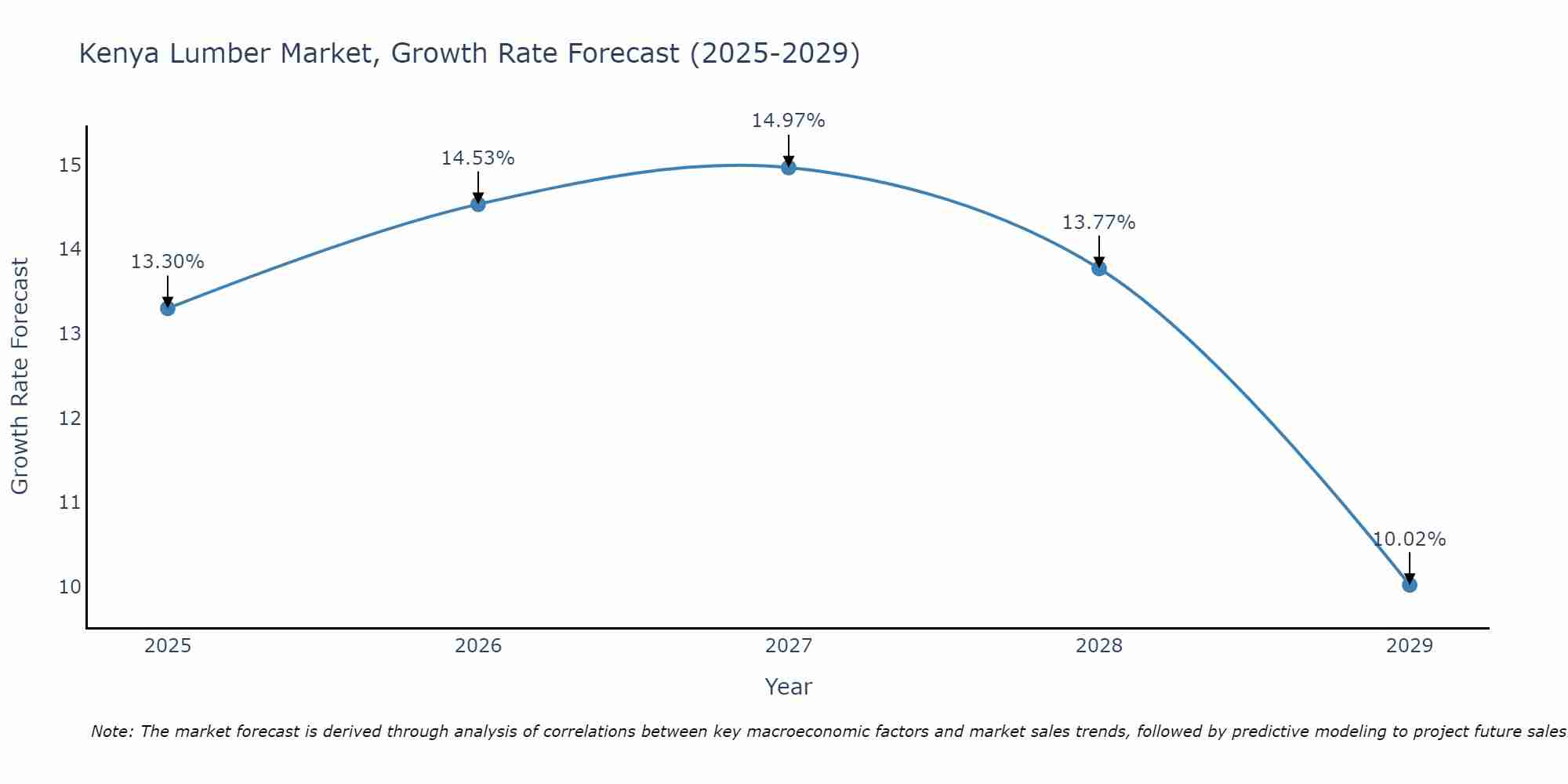
The Kenya Lumber Market is projected to witness mixed growth rate patterns during 2025 to 2029. The growth rate begins at 13.30% in 2025, climbs to a high of 14.97% in 2027, and moderates to 10.02% by 2029.
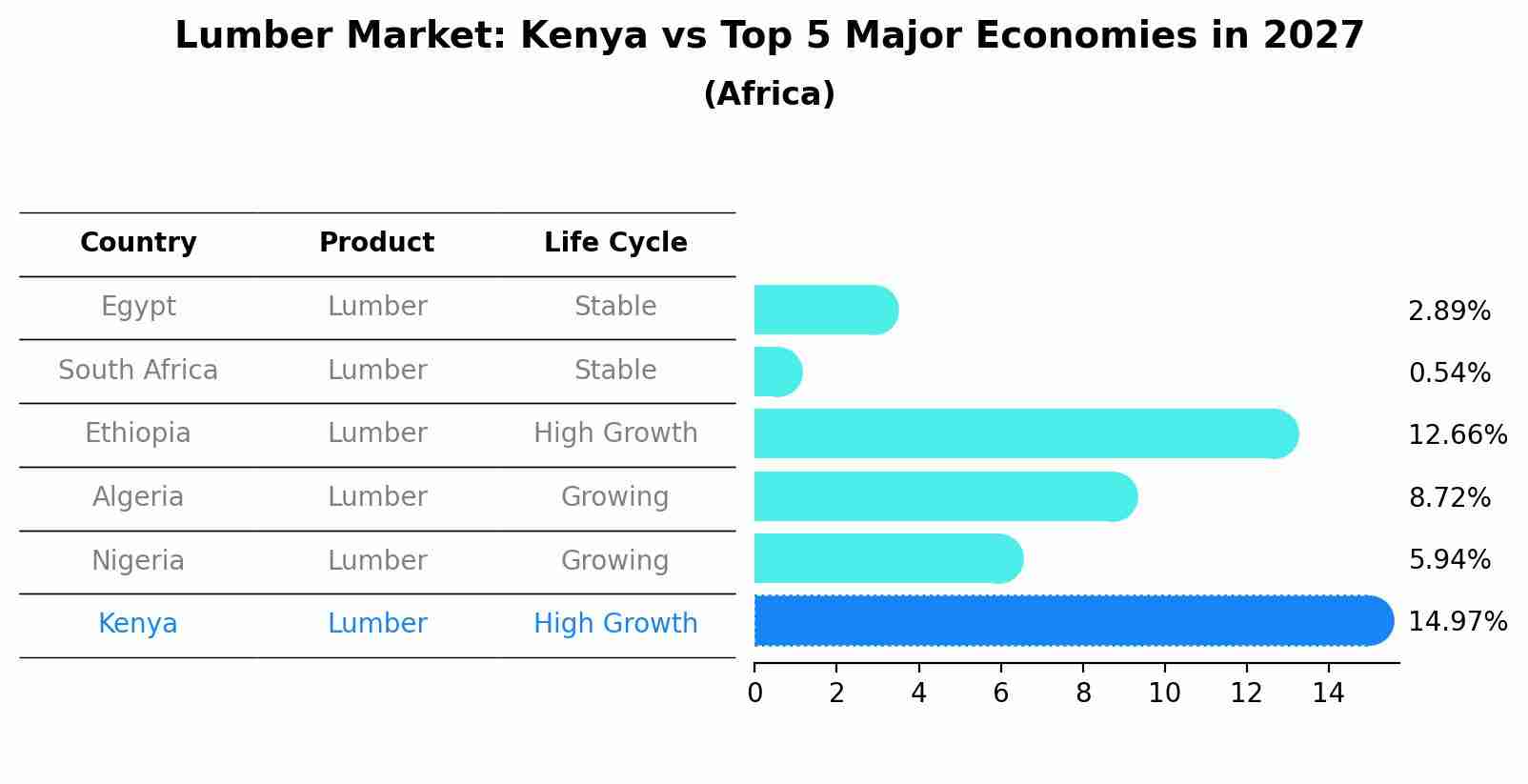
Lumber Market: Kenya vs Top 5 Major Economies in 2027 (Africa)
By 2027, Kenya's Lumber market is forecasted to achieve a high growth rate of 14.97%, with Egypt leading the Africa region, followed by South Africa, Ethiopia, Algeria and Nigeria.
Kenya Lumber Market Overview
The Lumber Market in Kenya deals with the production and distribution of timber and wood products. This market is essential for the construction and furniture industries. Factors driving the market include urbanization, infrastructure development, and the growing demand for wooden furniture and fixtures.
Drivers of the market
The lumber market in Kenya is influenced by various factors, including construction activity, infrastructure development, and demand from the furniture industry. As Kenya population grows and urbanization accelerates, there is a continuous need for timber products for residential, commercial, and infrastructure projects. Additionally, exports of timber and wood products contribute to the country`s economy, further driving demand in the lumber market. Sustainable forestry practices, government policies, and international trade dynamics also impact the supply and pricing of lumber in Kenya.
Challenges of the market
The Lumber Market in Kenya faces several challenges, including deforestation and the sustainable management of forest resources. Regulatory issues and compliance with environmental standards pose significant hurdles for market participants. The market also contends with high transportation costs due to inadequate infrastructure, which affects the distribution and overall cost of lumber. Additionally, competition from alternative building materials, such as steel and concrete, poses a threat to the demand for lumber. The market requires substantial investment in reforestation and sustainable forestry practices to ensure long-term viability.
Government Policy of the market
The Kenya lumber market faces challenges related to unsustainable forestry practices and illegal logging. Market players encounter difficulties in sourcing certified sustainable timber and meeting growing demand for wood products. Additionally, addressing deforestation concerns and promoting responsible forest management pose hurdles for market expansion.
Key Highlights of the Report:
- Kenya Lumber Market Outlook
- Market Size of Kenya Lumber Market, 2024
- Forecast of Kenya Lumber Market, 2031
- Historical Data and Forecast of Kenya Lumber Revenues & Volume for the Period 2021-2031
- Kenya Lumber Market Trend Evolution
- Kenya Lumber Market Drivers and Challenges
- Kenya Lumber Price Trends
- Kenya Lumber Porter's Five Forces
- Kenya Lumber Industry Life Cycle
- Historical Data and Forecast of Kenya Lumber Market Revenues & Volume By Types for the Period 2021-2031
- Historical Data and Forecast of Kenya Lumber Market Revenues & Volume By Hardwood Lumber for the Period 2021-2031
- Historical Data and Forecast of Kenya Lumber Market Revenues & Volume By Softwood Lumber for the Period 2021-2031
- Historical Data and Forecast of Kenya Lumber Market Revenues & Volume By Application for the Period 2021-2031
- Historical Data and Forecast of Kenya Lumber Market Revenues & Volume By Construction for the Period 2021-2031
- Historical Data and Forecast of Kenya Lumber Market Revenues & Volume By Furniture for the Period 2021-2031
- Historical Data and Forecast of Kenya Lumber Market Revenues & Volume By Flooring for the Period 2021-2031
- Historical Data and Forecast of Kenya Lumber Market Revenues & Volume By Moldings for the Period 2021-2031
- Historical Data and Forecast of Kenya Lumber Market Revenues & Volume By Others for the Period 2021-2031
- Kenya Lumber Import Export Trade Statistics
- Market Opportunity Assessment By Types
- Market Opportunity Assessment By Application
- Kenya Lumber Top Companies Market Share
- Kenya Lumber Competitive Benchmarking By Technical and Operational Parameters
- Kenya Lumber Company Profiles
- Kenya Lumber Key Strategic Recommendations






































