Germany Natural Fragrance Market: Import Trend Analysis
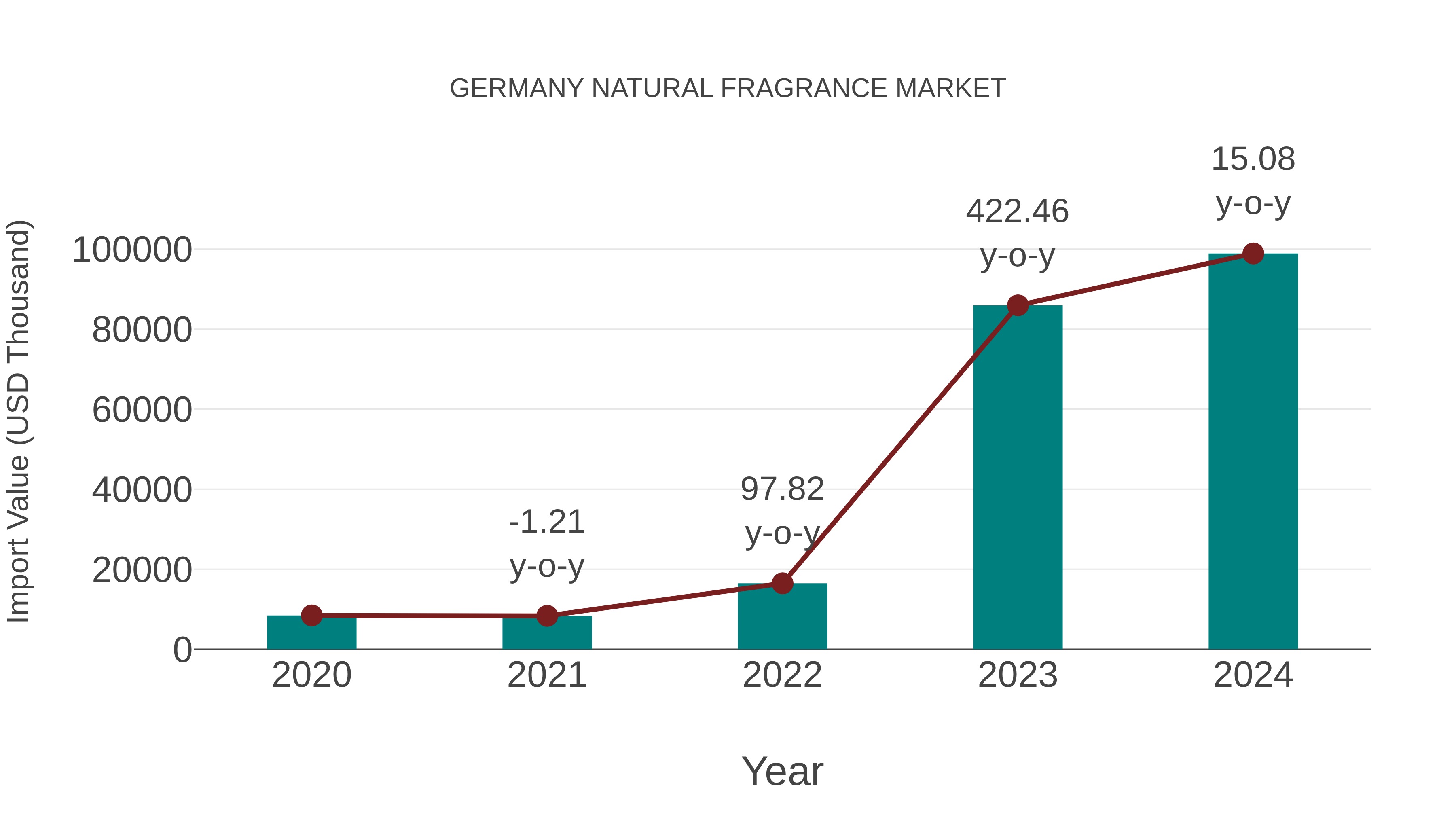
In the Germany natural fragrance market, the import trend showed a notable growth rate of 15.08% from 2023 to 2024, with a compound annual growth rate (CAGR) of 85.14% for the period of 2020-2024. This surge can be attributed to a heightened consumer demand for natural products, indicating a significant shift in market preference towards eco-friendly and sustainable goods.
Germany Natural Fragrance Market Overview
The Germany natural fragrance market is witnessing steady growth driven by the increasing demand for natural and organic personal care products, perfumes, and fragrances among environmentally conscious consumers. Natural fragrances, derived from plant-based essential oils, botanical extracts, and aromatic compounds, offer advantages such as sustainability, biodegradability, and skin compatibility, making them preferred alternatives to synthetic fragrances. With growing awareness regarding the potential health risks and environmental impact of synthetic fragrance ingredients, the market is experiencing heightened demand for natural fragrance formulations offering authenticity, purity, and traceability. Additionally, the integration of natural fragrances into clean beauty brands, green cosmetics, and eco-friendly packaging options is driving market expansion and enabling greater transparency and sustainability in the fragrance industry.
Drivers of the market
The growing preference for natural and sustainable fragrance ingredients drives market growth for natural fragrances in Germany. Emphasis on botanical extracts, essential oils, and eco-friendly formulations contributes to market expansion.
Challenges of the market
The Germany natural fragrance market faces challenges related to ingredient sourcing, formulation complexity, and consumer perception. Natural fragrances, which use plant-based ingredients and essential oils, confront challenges concerning ingredient sustainability, traceability, and authenticity. Ensuring responsible sourcing practices, fair trade principles, and biodiversity conservation introduces complexities in fragrance supply chains. Moreover, achieving fragrance stability, olfactory balance, and longevity poses challenges for perfumers and formulators. Additionally, addressing consumer preferences, including scent profiles, cultural influences, and wellness trends, introduces challenges in product development and marketing. Furthermore, market dynamics such as regulatory restrictions, ingredient availability, and market competition impact market demand and industry growth. To address these challenges, stakeholders in the natural fragrance market must invest in ingredient transparency, supply chain resilience, and consumer education to build trust, loyalty, and brand reputation effectively.
Government Policy of the market
Government policies in Germany related to cosmetics regulation, consumer safety, and sustainable sourcing influence the natural fragrance market. Regulations governing fragrance ingredients, product labeling, and environmental impact impact market demand and formulation practices. Additionally, initiatives promoting natural beauty and green cosmetics drive innovation in natural fragrance formulations.
Key Highlights of the Report:
- Germany Natural Fragrance Market Outlook
- Market Size of Germany Natural Fragrance Market, 2025
- Forecast of Germany Natural Fragrance Market, 2032
- Historical Data and Forecast of Germany Natural Fragrance Revenues & Volume for the Period 2022-2032F
- Germany Natural Fragrance Market Trend Evolution
- Germany Natural Fragrance Market Drivers and Challenges
- Germany Natural Fragrance Price Trends
- Germany Natural Fragrance Porter's Five Forces
- Germany Natural Fragrance Industry Life Cycle
- Historical Data and Forecast of Germany Natural Fragrance Market Revenues & Volume By Ingredient for the Period 2022-2032F
- Historical Data and Forecast of Germany Natural Fragrance Market Revenues & Volume By Essential Oils for the Period 2022-2032F
- Historical Data and Forecast of Germany Natural Fragrance Market Revenues & Volume By Natural Extracts for the Period 2022-2032F
- Historical Data and Forecast of Germany Natural Fragrance Market Revenues & Volume By Type for the Period 2022-2032F
- Historical Data and Forecast of Germany Natural Fragrance Market Revenues & Volume By Top note for the Period 2022-2032F
- Historical Data and Forecast of Germany Natural Fragrance Market Revenues & Volume By Middle Note for the Period 2022-2032F
- Historical Data and Forecast of Germany Natural Fragrance Market Revenues & Volume By Base Note for the Period 2022-2032F
- Historical Data and Forecast of Germany Natural Fragrance Market Revenues & Volume By Application for the Period 2022-2032F
- Historical Data and Forecast of Germany Natural Fragrance Market Revenues & Volume By Fine Fragrances for the Period 2022-2032F
- Historical Data and Forecast of Germany Natural Fragrance Market Revenues & Volume By Personal Care & Cosmetics for the Period 2022-2032F
- Historical Data and Forecast of Germany Natural Fragrance Market Revenues & Volume By Household Care for the Period 2022-2032F
- Germany Natural Fragrance Import Export Trade Statistics
- Market Opportunity Assessment By Ingredient
- Market Opportunity Assessment By Type
- Market Opportunity Assessment By Application
- Germany Natural Fragrance Top Companies Market Share
- Germany Natural Fragrance Competitive Benchmarking By Technical and Operational Parameters
- Germany Natural Fragrance Company Profiles
- Germany Natural Fragrance Key Strategic Recommendations






































