Germany Oil Country Tubular Goods Market: Import Trend Analysis
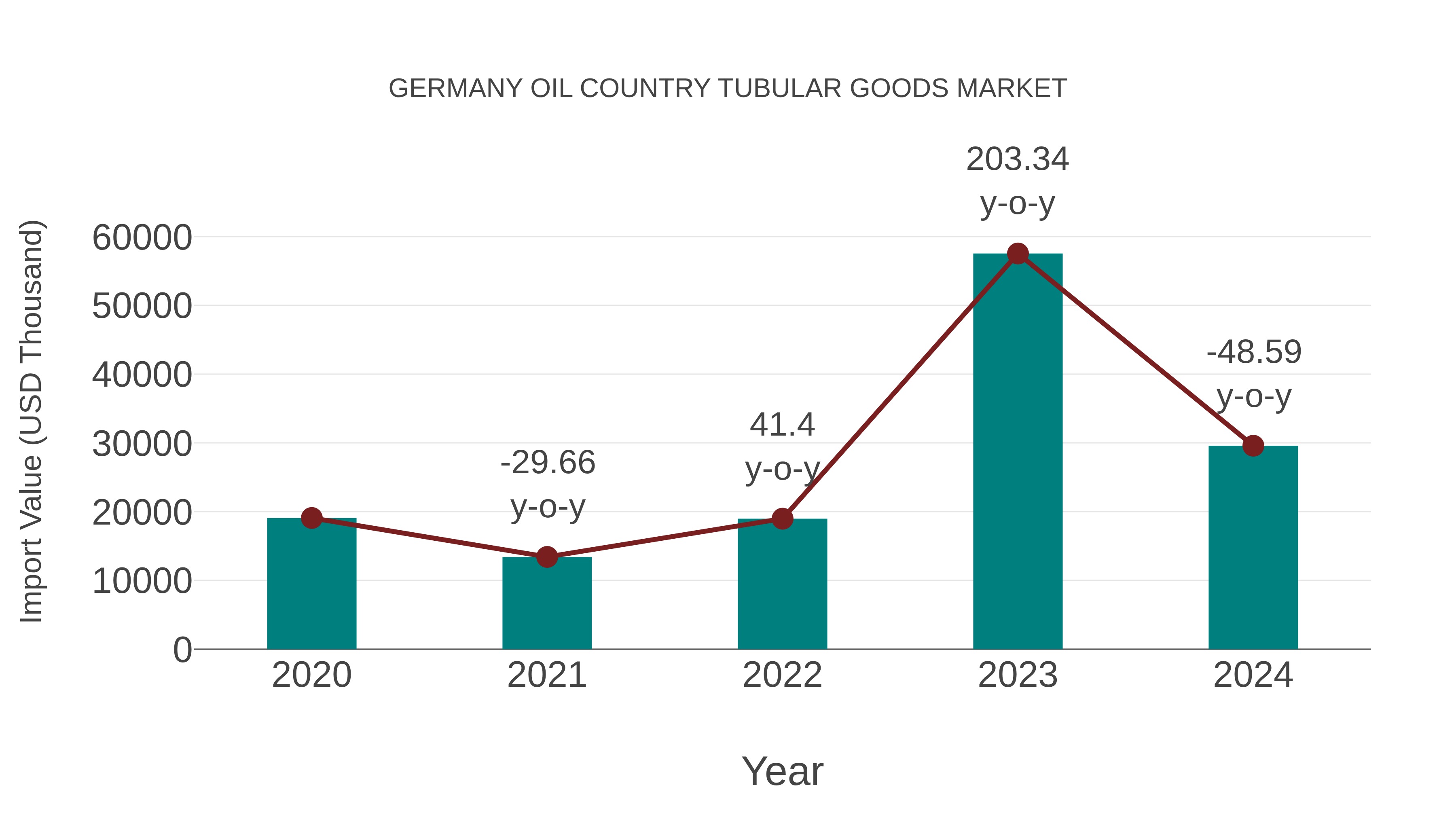
In the Germany oil country tubular goods market, the import trend experienced a notable decline from 2023 to 2024, with a growth rate of -48.59%. However, the compound annual growth rate (CAGR) for the period 2020-2024 stood at 11.59%. This significant drop in import momentum can be attributed to shifting market demands or changes in trade policies impacting the sector`s stability.
Germany Oil Country Tubular Goods Market Synopsis
The Germany Oil Country Tubular Goods (OCTG) market is a key segment within the country`s energy sector, comprising products such as pipes, casings, and tubing used in oil and gas exploration and production activities. The market is driven by factors such as increasing drilling activities in the region, technological advancements in OCTG products, and the presence of major oil and gas companies operating in Germany. Competition among key players like Tenaris, Vallourec, and TMK Group contributes to market dynamics. Moreover, stringent regulations regarding environmental protection and safety standards influence OCTG product developments. The market is expected to witness steady growth, supported by ongoing investments in the oil and gas industry and the country`s transition towards renewable energy sources.
Germany Oil Country Tubular Goods Market Trends
The Germany Oil Country Tubular Goods (OCTG) market is currently experiencing a steady growth trajectory, driven by increasing investments in oil and gas exploration activities. Technological advancements in drilling techniques and the rising demand for energy resources are fueling the demand for OCTG products in the country. Additionally, stringent regulations promoting sustainable energy practices are influencing the market dynamics, with a shift towards eco-friendly and efficient OCTG solutions. Market players are focusing on innovation and product development to cater to the evolving needs of the industry, such as high-performance materials and corrosion-resistant coatings. Collaboration between key industry stakeholders, including manufacturers, suppliers, and oil companies, is also shaping the competitive landscape of the Germany OCTG market.
Germany Oil Country Tubular Goods Market Challenges
In the Germany Oil Country Tubular Goods (OCTG) market, challenges include fluctuations in oil prices affecting drilling activity and demand for OCTG products, increasing competition from low-cost manufacturers in other regions, stringent environmental regulations impacting exploration and production activities, and the transition towards renewable energy sources leading to a potential decrease in demand for traditional oil and gas products. Additionally, the COVID-19 pandemic has disrupted supply chains and delayed projects, further impacting the OCTG market in Germany. To navigate these challenges, companies in the Germany OCTG market need to focus on innovation, cost efficiency, sustainability practices, and diversification of product offerings to remain competitive and adapt to the evolving energy landscape.
Germany Oil Country Tubular Goods Market Investment Opportunities
The Germany Oil Country Tubular Goods (OCTG) market presents promising investment opportunities for companies involved in the manufacturing, distribution, and supply of OCTG products. With Germany being a key player in the European oil and gas industry, there is a consistent demand for high-quality OCTG products for drilling and production activities. Investing in advanced technologies for manufacturing OCTG products, such as corrosion-resistant materials and digital monitoring systems, can help companies gain a competitive edge in the market. Additionally, strategic partnerships with oil and gas companies operating in Germany can provide opportunities for long-term contracts and steady revenue streams. Overall, the Germany OCTG market offers growth potential for investors looking to capitalize on the country`s oil and gas sector.
Jordan Agar Market Government Policies
In Germany, the Oil Country Tubular Goods (OCTG) market is influenced by various government policies aimed at promoting energy independence and environmental sustainability. The government has implemented regulations to encourage the use of domestic OCTG products in the oil and gas sector, thereby reducing reliance on imports and supporting local manufacturers. Additionally, there are stringent environmental standards in place to ensure that OCTG operations adhere to strict emission limits and waste disposal regulations, promoting sustainable practices within the industry. The government also supports research and development initiatives for innovative technologies in OCTG production to enhance efficiency and competitiveness. Overall, government policies in Germany emphasize the importance of domestic production, environmental responsibility, and technological advancement in the OCTG market.
Germany Oil Country Tubular Goods Market Future Outlook
The outlook for the Germany Oil Country Tubular Goods (OCTG) market appears to be positive in the coming years. With the increasing demand for energy and the ongoing exploration and production activities in the region, the need for OCTG products is expected to rise. Factors such as technological advancements in drilling techniques, growing investments in the oil and gas sector, and the presence of key industry players in Germany will likely drive market growth. Additionally, the shift towards renewable energy sources may lead to a temporary slowdown in the demand for traditional oil and gas products, but the long-term outlook remains optimistic due to the country`s strategic position in the European energy market and its strong industrial base. Overall, the Germany OCTG market is poised for steady growth in the foreseeable future.
Key Highlights of the Report:
- Germany Oil Country Tubular Goods Market Outlook
- Market Size of Germany Oil Country Tubular Goods Market, 2025
- Forecast of Germany Oil Country Tubular Goods Market, 2032
- Historical Data and Forecast of Germany Oil Country Tubular Goods Revenues & Volume for the Period 2022 - 2032F
- Germany Oil Country Tubular Goods Market Trend Evolution
- Germany Oil Country Tubular Goods Market Drivers and Challenges
- Germany Oil Country Tubular Goods Price Trends
- Germany Oil Country Tubular Goods Porter's Five Forces
- Germany Oil Country Tubular Goods Industry Life Cycle
- Historical Data and Forecast of Germany Oil Country Tubular Goods Market Revenues & Volume By Manufacturing Process for the Period 2022 - 2032F
- Historical Data and Forecast of Germany Oil Country Tubular Goods Market Revenues & Volume By Seamless for the Period 2022 - 2032F
- Historical Data and Forecast of Germany Oil Country Tubular Goods Market Revenues & Volume By Electric Resistance Welded for the Period 2022 - 2032F
- Historical Data and Forecast of Germany Oil Country Tubular Goods Market Revenues & Volume By Grade for the Period 2022 - 2032F
- Historical Data and Forecast of Germany Oil Country Tubular Goods Market Revenues & Volume By Premium Grade for the Period 2022 - 2032F
- Historical Data and Forecast of Germany Oil Country Tubular Goods Market Revenues & Volume By API Grade for the Period 2022 - 2032F
- Germany Oil Country Tubular Goods Import Export Trade Statistics
- Market Opportunity Assessment By Manufacturing Process
- Market Opportunity Assessment By Grade
- Germany Oil Country Tubular Goods Top Companies Market Share
- Germany Oil Country Tubular Goods Competitive Benchmarking By Technical and Operational Parameters
- Germany Oil Country Tubular Goods Company Profiles
- Germany Oil Country Tubular Goods Key Strategic Recommendations






































