Germany Patchouli Oil Market: Import Trend Analysis
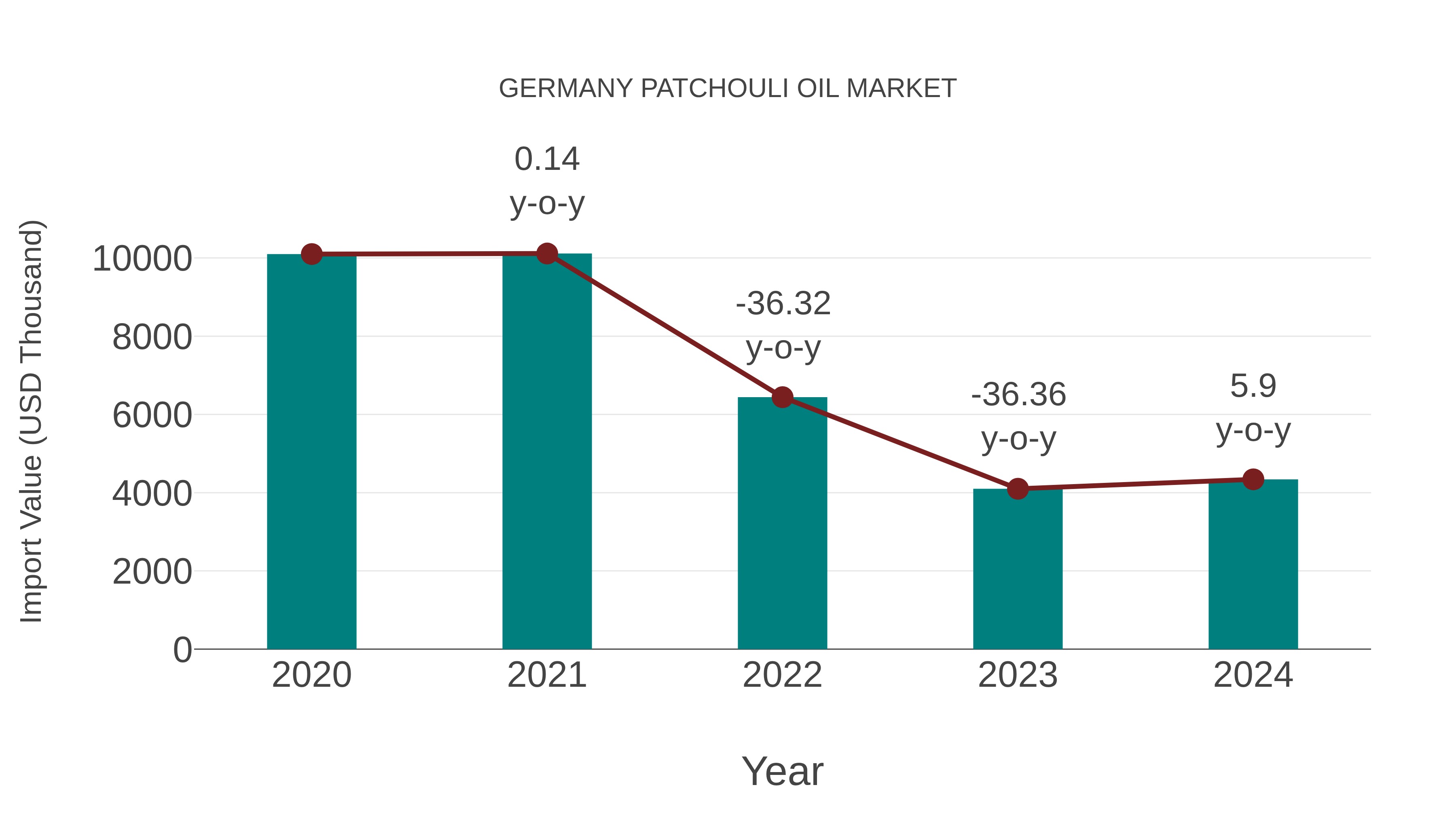
Germany`s import trend for patchouli oil in 2024 saw a growth rate of 5.9% compared to 2023, while the compound annual growth rate (CAGR) for the period 2020-2024 stood at -19.03%. The significant rebound in import momentum from 2023 to 2024 may indicate a potential shift in demand or improved market stability following a period of decline.
Germany Patchouli oil Market Overview
The Germany Patchouli oil market is experiencing robust growth driven by increasing consumer preference for natural and organic products in the personal care and fragrance industries. Patchouli oil is renowned for its earthy and musky aroma, making it a popular ingredient in perfumes, cosmetics, and aromatherapy products. The market is witnessing rising demand for Patchouli oil due to its various therapeutic properties such as anti-inflammatory, anti-depressant, and aphrodisiac effects. Additionally, the growing trend towards sustainable and eco-friendly products is further fueling the market growth in Germany. Key market players are focusing on product innovation and expanding their product portfolios to cater to the evolving consumer preferences, thereby contributing to the overall expansion of the Patchouli oil market in Germany.
Germany Patchouli oil Market Trends
In the Germany Patchouli oil market, there is a growing trend towards natural and sustainable products, leading to an increased demand for organic and ethically sourced Patchouli oil. Consumers are becoming more conscious of the environmental impact of their purchases, driving them to seek out products that are produced using eco-friendly practices. Additionally, there is a rising interest in aromatherapy and natural skincare products, where Patchouli oil is often used for its soothing and anti-inflammatory properties. The market is also witnessing a trend towards product diversification, with Patchouli oil being incorporated into a wide range of personal care and home fragrance products. Overall, the Germany Patchouli oil market is experiencing a shift towards sustainability, naturalness, and versatility in product offerings.
Germany Patchouli oil Market Challenges
In the Germany Patchouli oil market, some of the key challenges include increasing competition from other essential oils, fluctuating prices due to factors like weather conditions and geopolitical events impacting the supply chain, and the need for sustainable sourcing practices to meet consumer demands for ethically produced products. Additionally, regulatory hurdles related to quality standards and certifications can pose challenges for businesses operating in this market. Furthermore, educating consumers about the benefits and uses of Patchouli oil, which has a distinct earthy aroma and is sometimes associated with niche markets, presents a hurdle in expanding the customer base. Overall, navigating these challenges requires companies to innovate in terms of product development, marketing strategies, and supply chain management to remain competitive in the Germany Patchouli oil market.
Germany Patchouli oil Market Investment Opportunities
The Germany Patchouli oil market offers promising investment opportunities due to the increasing demand for natural and organic essential oils in the personal care, cosmetics, and aromatherapy industries. Patchouli oil is known for its unique earthy aroma and various therapeutic properties, making it a popular ingredient in perfumes, skincare products, and wellness applications. Investing in Patchouli oil production or distribution in Germany can be lucrative as consumers are increasingly seeking sustainable and environmentally friendly products. Additionally, the growing trend towards holistic health and wellness practices further drives the demand for Patchouli oil, presenting opportunities for investors to capitalize on the expanding market and establish a strong presence in the industry.
Germany Patchouli oil Market Government Policy
The German government has implemented strict regulations and standards for the patchouli oil market to ensure quality and safety. The market is subject to regulations set by the European Union`s REACH legislation, which governs the registration, evaluation, authorization, and restriction of chemicals. Additionally, the German government enforces regulations on labeling, packaging, and import/export procedures for patchouli oil products. Sustainability and ethical sourcing practices are also emphasized, with initiatives in place to promote fair trade and environmentally-friendly production methods. Overall, the government`s policies aim to protect consumers, promote sustainable practices, and maintain a high standard of quality in the Germany patchouli oil market.
Germany Patchouli oil Market Future Outlook
The Germany Patchouli oil market is expected to witness steady growth in the coming years due to increasing consumer awareness about the benefits of natural and organic products. The rising demand for Patchouli oil in industries such as personal care, aromatherapy, and perfumery is likely to drive market growth. Additionally, the growing trend towards sustainable and eco-friendly products is anticipated to further boost the demand for Patchouli oil in Germany. Factors such as the increasing disposable income, changing consumer preferences towards natural ingredients, and the expanding retail distribution channels are also expected to contribute to the market growth. Overall, the future outlook for the Germany Patchouli oil market looks promising with opportunities for market players to innovate and expand their product offerings to cater to the evolving consumer needs.
Key Highlights of the Report:
- Germany Patchouli oil Market Outlook
- Market Size of Germany Patchouli oil Market, 2021
- Forecast of Germany Patchouli oil Market, 2027
- Historical Data and Forecast of Germany Patchouli oil Revenues & Volume for the Period 2018 - 2027
- Germany Patchouli oil Market Trend Evolution
- Germany Patchouli oil Market Drivers and Challenges
- Germany Patchouli oil Price Trends
- Germany Patchouli oil Porter's Five Forces
- Germany Patchouli oil Industry Life Cycle
- Historical Data and Forecast of Germany Patchouli oil Market Revenues & Volume By Type for the Period 2018 - 2027
- Historical Data and Forecast of Germany Patchouli oil Market Revenues & Volume By Dark Patchouli Oil for the Period 2018 - 2027
- Historical Data and Forecast of Germany Patchouli oil Market Revenues & Volume By Light Patchouli Oil for the Period 2018 - 2027
- Historical Data and Forecast of Germany Patchouli oil Market Revenues & Volume By Application for the Period 2018 - 2027
- Historical Data and Forecast of Germany Patchouli oil Market Revenues & Volume By Perfumery for the Period 2018 - 2027
- Historical Data and Forecast of Germany Patchouli oil Market Revenues & Volume By Medicine for the Period 2018 - 2027
- Historical Data and Forecast of Germany Patchouli oil Market Revenues & Volume By Flavorings for the Period 2018 - 2027
- Historical Data and Forecast of Germany Patchouli oil Market Revenues & Volume By Others for the Period 2018 - 2027
- Germany Patchouli oil Import Export Trade Statistics
- Market Opportunity Assessment By Type
- Market Opportunity Assessment By Application
- Germany Patchouli oil Top Companies Market Share
- Germany Patchouli oil Competitive Benchmarking By Technical and Operational Parameters
- Germany Patchouli oil Company Profiles
- Germany Patchouli oil Key Strategic Recommendations






































