Germany Propylene Glycol Market: Import Trend Analysis
Germany`s propylene glycol market witnessed a notable import trend, with a growth rate of 16.38% from 2023 to 2024 and a compound annual growth rate (CAGR) of 10.31% from 2020 to 2024. This significant increase in imports can be attributed to shifting demand dynamics and a stable market environment during the period analyzed.
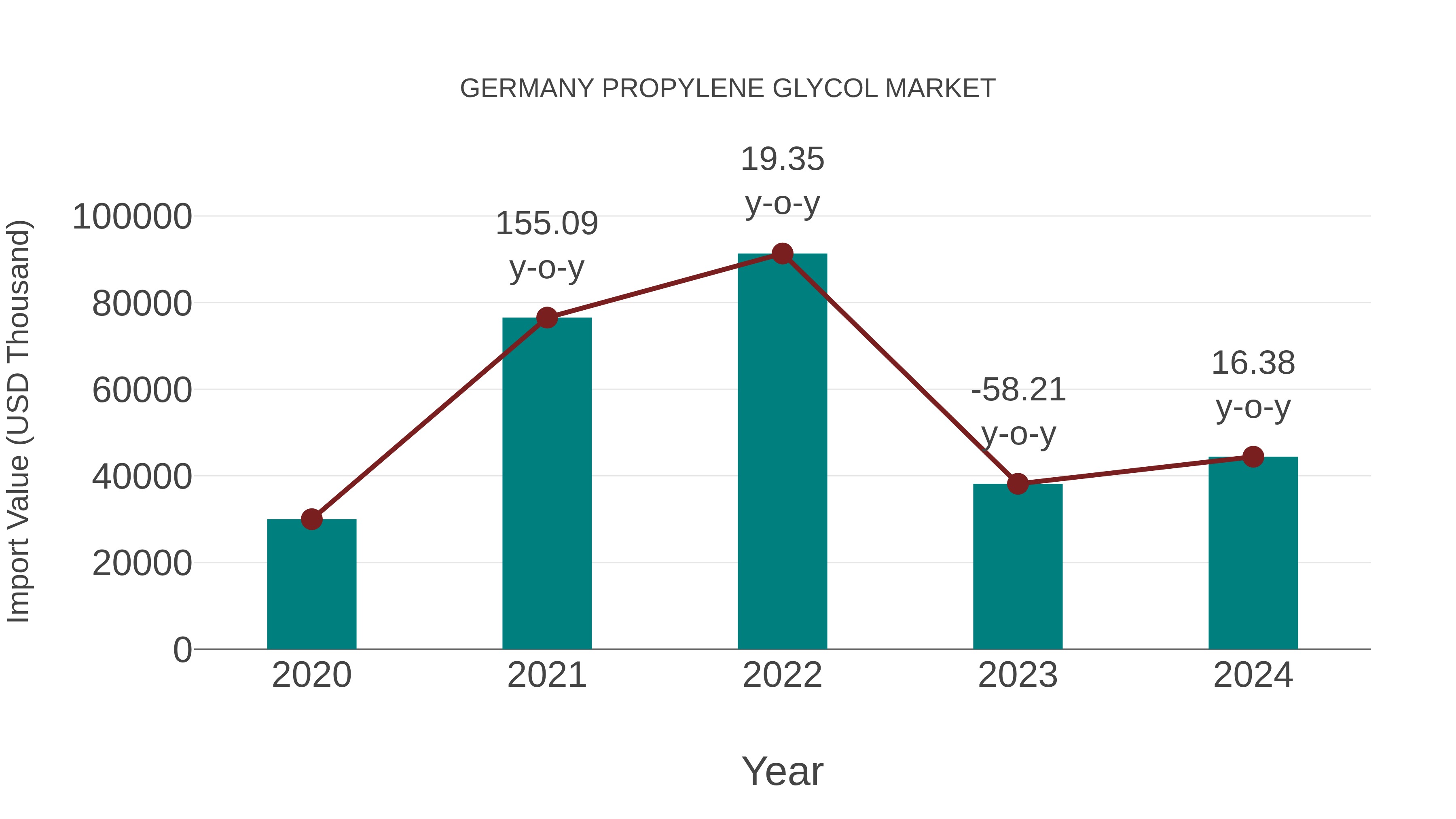
Germany Propylene Glycol Market Overview
The Germany propylene glycol market is experiencing robust growth, driven by the increasing demand from various end-use industries such as food and beverage, pharmaceuticals, cosmetics, and automotive. Propylene glycol is a versatile chemical compound used as a solvent, humectant, antifreeze, and food additive in various applications. With the growing emphasis on product safety, quality, and performance, there is a rising demand for high-purity propylene glycol grades in the country. Moreover, the expanding applications of propylene glycol in personal care products, pharmaceutical formulations, and industrial processes are further driving the growth of the market.
Drivers of the market
The diverse applications of propylene glycol in food & beverage, pharmaceuticals, and cosmetics drive market growth in Germany. Emphasis on product safety, moisture retention, and antifreeze properties contributes to market expansion. Additionally, the demand for propylene glycol in emerging industries such as e-cigarettes and personal care products influences market dynamics.
Challenges of the market
Challenges in the propylene glycol market include raw material availability, production costs, and market competition. Developing propylene glycol products that can meet quality standards and regulatory requirements is crucial. Moreover, addressing concerns related to chemical safety, toxicity, and environmental impact poses challenges for propylene glycol manufacturers and end-users. Additionally, ensuring that propylene glycol remains cost-effective and sustainable for various applications poses challenges for market adoption and expansion.
Government Policy of the market
Germany emphasizes product safety, quality assurance, and sustainability in its policies regarding propylene glycol used in pharmaceuticals, food and beverage, and personal care products. Government regulations address propylene glycol purity standards, labeling requirements, and usage restrictions for manufacturers, ensuring compliance with industry regulations and consumer safety standards. Policies also support research and development in biobased propylene glycol production, eco-friendly formulations, and waste minimization strategies to promote sustainable propylene glycol usage and reduce environmental impact in the propylene glycol market.
Key Highlights of the Report:
- Germany Propylene Glycol Market Outlook
- Market Size of Germany Propylene Glycol Market, 2024
- Forecast of Germany Propylene Glycol Market, 2031
- Historical Data and Forecast of Germany Propylene Glycol Revenues & Volume for the Period 2018 - 2031
- Germany Propylene Glycol Market Trend Evolution
- Germany Propylene Glycol Market Drivers and Challenges
- Germany Propylene Glycol Price Trends
- Germany Propylene Glycol Porter's Five Forces
- Germany Propylene Glycol Industry Life Cycle
- Historical Data and Forecast of Germany Propylene Glycol Market Revenues & Volume By Application for the Period 2018 - 2031
- Historical Data and Forecast of Germany Propylene Glycol Market Revenues & Volume By Unsaturated Polyester Resins,Functional Fluids,Food, Drug, and Cosmetics,Liquid Detergent,Paints and Coating,Others for the Period 2018 - 2031
- Germany Propylene Glycol Import Export Trade Statistics
- Market Opportunity Assessment By Application
- Germany Propylene Glycol Top Companies Market Share
- Germany Propylene Glycol Competitive Benchmarking By Technical and Operational Parameters
- Germany Propylene Glycol Company Profiles
- Germany Propylene Glycol Key Strategic Recommendations






































