Germany Workplace Safety Market Size & Growth Rate (2026-2032)
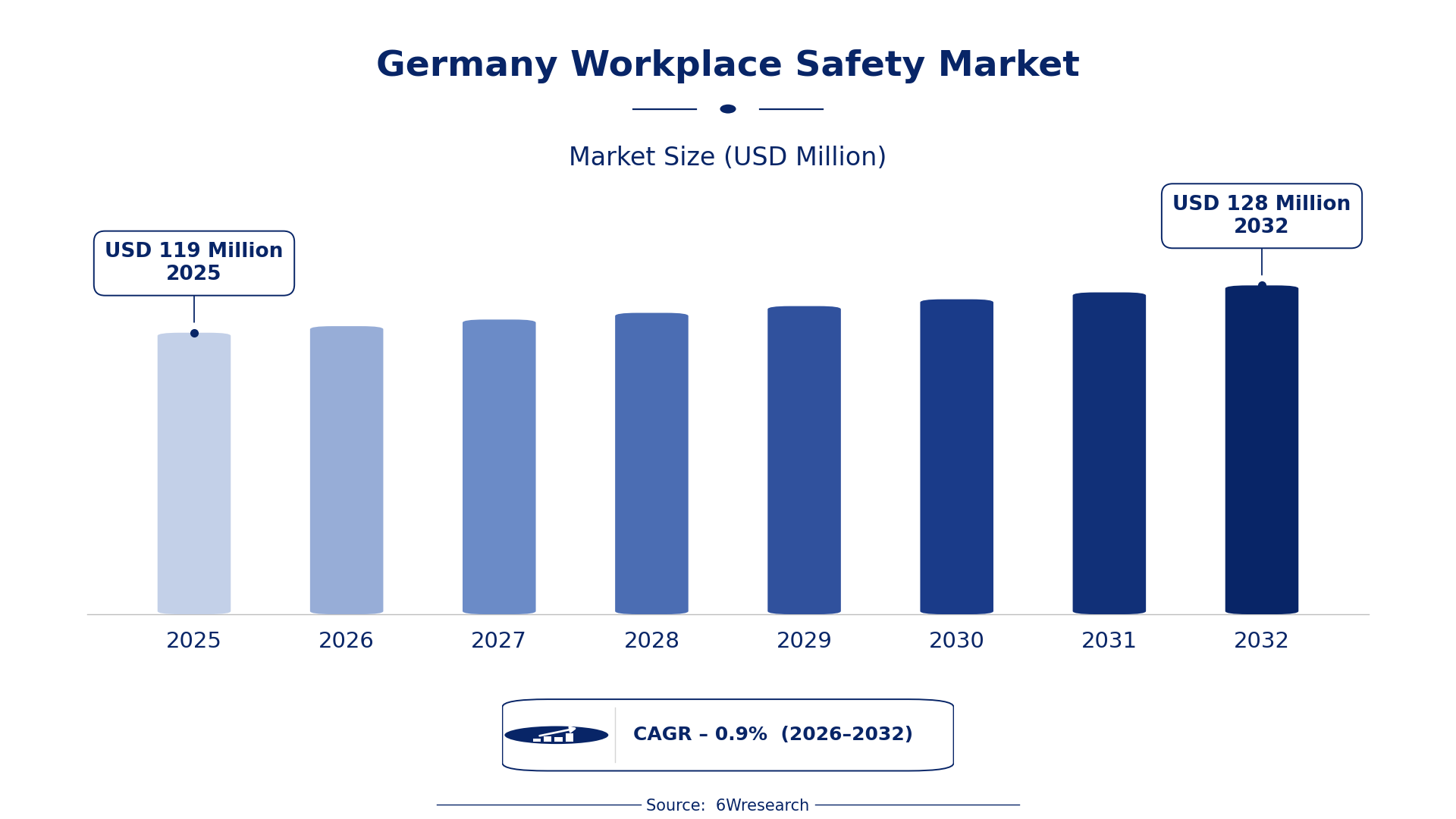
The Germany Workplace Safety Market was estimated at USD 119 Million in 2025 and is projected to reach USD 128 Million by 2032, growing at a CAGR of 0.9% from 2026 to 2032.
Germany Workplace Safety Market Synopsis
The Germany Workplace Safety Market has recently experienced robust momentum due to increasing regulatory demands and rising awareness of occupational health. However, as we look forward, the trajectory indicates a shift toward integrating advanced technology and comprehensive employee wellness programs.
While traditional safety measures remain foundational, there's a palpable shift towards proactive safety protocols. Businesses are now focusing on mental health, ergonomic solutions, and innovative training programs, reflecting a more holistic approach to workplace safety across various sectors.
Germany Workplace Safety Market Year-wise Growth Rate and Key Drivers
This graph illustrates the annual growth rates of the Germany Workplace Safety Market from 2021 to 2032, highlighting a steady upward trajectory and projected expansion over the forecast period.
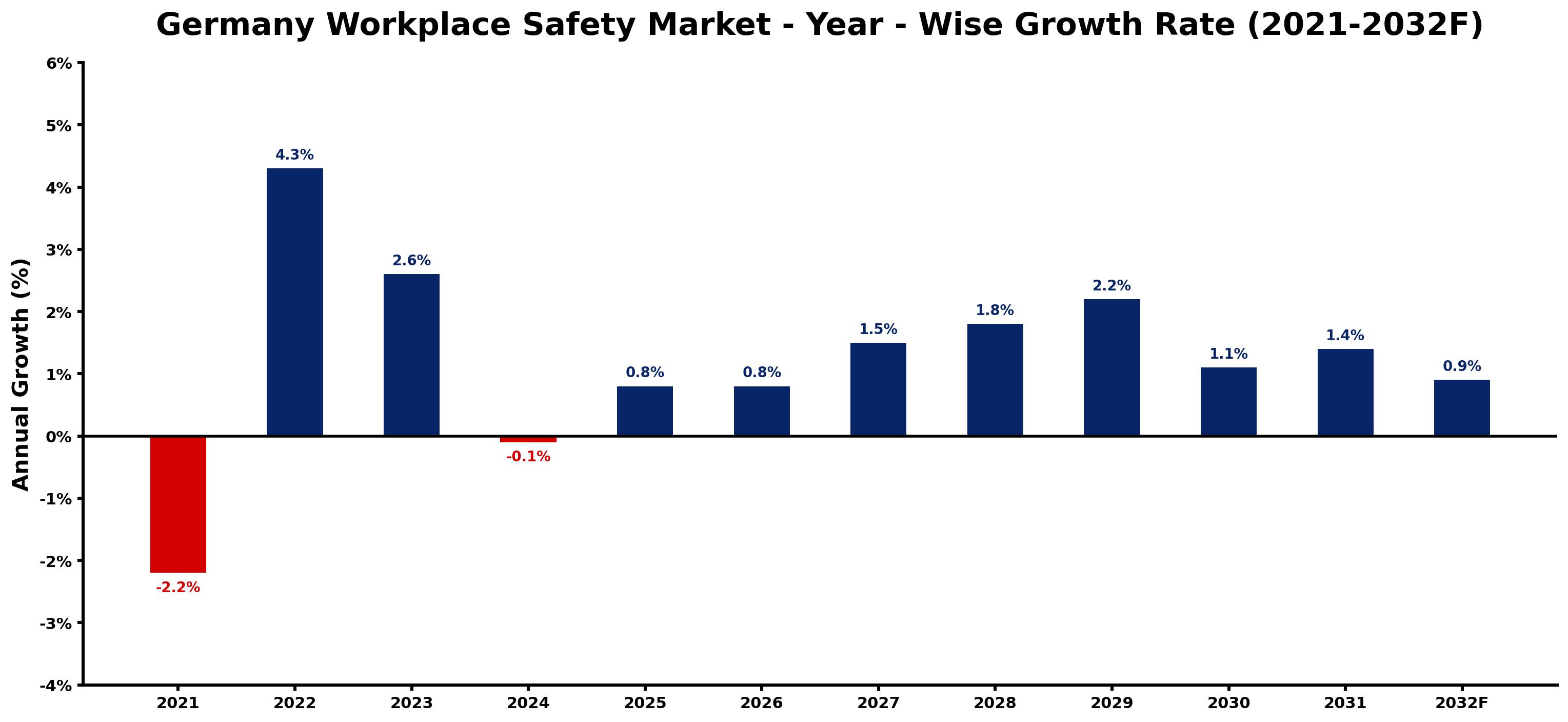
The table below presents the year‑wise growth rates along with the key drivers influencing the market
| Year | Growth Rate | Major Drivers |
| 2021 | -2.2% | Shift to remote work reduced safety equipment demand. |
| 2022 | 4.3% | EU workplace safety regulations driving compliance investments. |
| 2023 | 2.6% | Increased remote work necessitating enhanced digital safety protocols. |
| 2024 | -0.1% | Strict EU regulations increased compliance costs for businesses. |
| 2025 | 0.8% | Rise in manufacturing automation emphasizing safety equipment. |
| 2026 | 0.8% | Implementation of national mental health workplace initiatives. |
| 2027 | 1.5% | Focus on electric vehicle manufacturing enhancing safety standards. |
| 2028 | 1.8% | Government incentives for renewable energy sector safety upgrades. |
| 2029 | 2.2% | Growing aging workforce requiring adaptive safety solutions. |
| 2030 | 1.1% | New legislation mandating safety audits for corporate offices. |
| 2031 | 1.4% | Strong public awareness campaigns on occupational health safety. |
| 2032 | 0.9% | Increased investments in safety training programs for employees. |
Note: Market size estimations and growth projections presented in this report are based on 6Wresearch's proprietary forecasting methodology, utilizing the latest available industry data, government publications, and primary research inputs.
Germany Workplace Safety Market Key Takeaways
Below are some of the specific key takeaways from the market, including:
- Increased implementation of technology-driven safety solutions such as wearables and IoT devices.
- Stricter regulatory frameworks are compelling organizations to prioritize safety measures.
- Growing demand for mental health programs and resources in workplace environments.
- Heightened focus on employee engagement in safety training and compliance initiatives.
- Emerging market for eco-friendly safety products driven by sustainability concerns.
Evaluation of Restraints in Germany Workplace Safety Market
Despite its momentum, the Germany Workplace Safety Market faces notable constraints. Adapting to ever-changing regulatory standards can be burdensome, particularly for smaller firms lacking the resources to stay compliant. Training employees on evolving safety protocols is another hurdle, as many companies struggle to ensure consistent understanding and application of best practices.
Furthermore, the costs associated with integrating advanced safety technologies can deter investment. The aging workforce in Germany also necessitates tailored safety measures, adding another layer of complexity to maintaining an effective safety environment.
Germany Workplace Safety Market Trends
Several transformative trends are emerging within the Germany Workplace Safety Market. The adoption of smart wearables and digital platforms is increasing, allowing for real-time monitoring and enhanced hazard management. This technological shift is not merely a trend but a significant movement towards more efficient workplace safety protocols.
Additionally, mental health initiatives are gaining traction, as organizations acknowledge the correlation between mental well-being and overall safety. A comprehensive approach that combines physical safety measures with mental health support is quickly becoming a priority for progressive companies.
Germany Workplace Safety Market Opportunities
Opportunities for growth within the Germany Workplace Safety Market are ripe, particularly in advanced safety technologies. Investments in IoT-enabled devices and AI-driven solutions promise substantial returns as companies seek to enhance their safety protocols.
Furthermore, the rising demand for eco-friendly safety products presents a niche market for sustainable investments. Collaborating with stakeholders across industries to innovate and set new safety standards can significantly impact the market's future trajectory.
Government Initiatives in the Germany Workplace Safety Market
In Germany, public policy plays a critical role in shaping workplace safety regulations. With an emphasis on stringent safety standards, the government prioritizes the health and well-being of employees across all sectors. Current regulations require risk assessments and the establishment of safety committees, underpinning the importance of a proactive safety culture.
- A recently completed initiative mandates enhanced training programs for industries with high accident rates to ensure compliance with safety protocols.
- A current initiative focuses on integrating mental health resources into workplace safety programs, addressing the growing importance of employee well-being.
- A planned regulatory review in late 2026 aims to streamline safety protocols across sectors, making compliance more accessible for smaller firms.
- Upcoming funding opportunities for companies adopting innovative safety technologies will support investment in cutting-edge solutions.
Future Insights of the Germany Workplace Safety Market
Looking ahead to 2026-2032, the Germany Workplace Safety Market is likely to expand steadily. The intertwining of safety protocols with employee wellness initiatives reflects a broader cultural shift in workplace safety perception. As technology continues to evolve, companies that embrace these advancements will position themselves as leaders in the space.
With regulatory pressures mounting and a clear push towards holistic safety practices, organizations will need to enhance their strategies. Investments in training and advanced safety solutions will not just be beneficial—they will be essential for maintaining competitive edge and ensuring compliance.
Germany Workplace Safety Market Latest Developments
In the last 12-14 months, the Germany Workplace Safety Market has seen a surge in activities aimed at enhancing safety protocols and employee wellness programs. The focus has been on leveraging technology to better manage workplace hazards and ensuring compliance with evolving regulations.
- A major technology vendor launched an IoT-based safety monitoring system in early 2025, designed to facilitate real-time hazard detection.
- An ongoing initiative by several organizations aims to integrate mental health support into existing safety training programs, expected to show results by mid-2026.
- A leading regional operator is currently upgrading its safety training modules to include virtual reality simulations, enhancing employee engagement and understanding.
- A new public-private partnership is planned for late 2026, focusing on developing eco-friendly safety equipment to meet growing sustainability demands.
Germany Workplace Safety Market - Key Attractiveness of the Report
- 10 Years of Market Numbers
- Historical Data Starting from 2022 to 2025
- Base Year: 2025
- Forecast Data until 2032
- Key Performance Indicators Impacting the Market
- Major Upcoming Developments and Projects
Key Highlights of the Report:
- Germany Workplace Safety Market Outlook
- Market Size of Germany Workplace Safety Market, 2025
- Forecast of Germany Workplace Safety Market, 2032
- Historical Data and Forecast of Germany Workplace Safety Revenues & Volume for the Period 2022-2032F
- Germany Workplace Safety Market Trend Evolution
- Germany Workplace Safety Market Drivers and Challenges
- Germany Workplace Safety Price Trends
- Germany Workplace Safety Porter's Five Forces
- Germany Workplace Safety Industry Life Cycle
- Historical Data and Forecast of Germany Workplace Safety Market Revenues & Volume By Component for the Period 2022-2032F
- Historical Data and Forecast of Germany Workplace Safety Market Revenues & Volume By Hardware for the Period 2022-2032F
- Historical Data and Forecast of Germany Workplace Safety Market Revenues & Volume By Software for the Period 2022-2032F
- Historical Data and Forecast of Germany Workplace Safety Market Revenues & Volume By Services for the Period 2022-2032F
- Historical Data and Forecast of Germany Workplace Safety Market Revenues & Volume By Application for the Period 2022-2032F
- Historical Data and Forecast of Germany Workplace Safety Market Revenues & Volume By Incident for the Period 2022-2032F
- Historical Data and Forecast of Germany Workplace Safety Market Revenues & Volume By Emergency Management for the Period 2022-2032F
- Historical Data and Forecast of Germany Workplace Safety Market Revenues & Volume By Asset Tracking for the Period 2022-2032F
- Historical Data and Forecast of Germany Workplace Safety Market Revenues & Volume By PPE Detection for the Period 2022-2032F
- Historical Data and Forecast of Germany Workplace Safety Market Revenues & Volume By System for the Period 2022-2032F
- Historical Data and Forecast of Germany Workplace Safety Market Revenues & Volume By Environmental Health and Safety for the Period 2022-2032F
- Historical Data and Forecast of Germany Workplace Safety Market Revenues & Volume By Access Control and Surveillance System for the Period 2022-2032F
- Historical Data and Forecast of Germany Workplace Safety Market Revenues & Volume By Real Time Location Monitoring for the Period 2022-2032F
- Historical Data and Forecast of Germany Workplace Safety Market Revenues & Volume By Others for the Period 2022-2032F
- Historical Data and Forecast of Germany Workplace Safety Market Revenues & Volume By Deployment Mode for the Period 2022-2032F
- Historical Data and Forecast of Germany Workplace Safety Market Revenues & Volume By On-premise for the Period 2022-2032F
- Historical Data and Forecast of Germany Workplace Safety Market Revenues & Volume By Cloud for the Period 2022-2032F
- Historical Data and Forecast of Germany Workplace Safety Market Revenues & Volume By End User for the Period 2022-2032F
- Historical Data and Forecast of Germany Workplace Safety Market Revenues & Volume By Energy and Utilities for the Period 2022-2032F
- Historical Data and Forecast of Germany Workplace Safety Market Revenues & Volume By Construction and Engineering for the Period 2022-2032F
- Historical Data and Forecast of Germany Workplace Safety Market Revenues & Volume By Chemical and Materials for the Period 2022-2032F
- Historical Data and Forecast of Germany Workplace Safety Market Revenues & Volume By Government and Defense for the Period 2022-2032F
- Historical Data and Forecast of Germany Workplace Safety Market Revenues & Volume By Healthcare for the Period 2022-2032F
- Historical Data and Forecast of Germany Workplace Safety Market Revenues & Volume By Food and Beverages for the Period 2022-2032F
- Historical Data and Forecast of Germany Workplace Safety Market Revenues & Volume By Others for the Period 2022-2032F
- Germany Workplace Safety Import Export Trade Statistics
- Market Opportunity Assessment By Component
- Market Opportunity Assessment By Application
- Market Opportunity Assessment By System
- Market Opportunity Assessment By Deployment Mode
- Market Opportunity Assessment By End User
- Germany Workplace Safety Top Companies Market Share
- Germany Workplace Safety Competitive Benchmarking By Technical and Operational Parameters
- Germany Workplace Safety Company Profiles
- Germany Workplace Safety Key Strategic Recommendations






































