Ghana Cat Food Market Size, Share & Growth Rate
The Ghana Cat Food Market was estimated at USD 152 Million in 2025 and is projected to reach USD 204 Million by 2032, growing at a CAGR of 4.3% from 2026 to 2032. This steady growth trajectory is primarily fueled by the increasing pet ownership rates in urban areas of Ghana, coupled with a growing trend of pet humanization. As consumers increasingly perceive pets as family members, there is a notable shift towards high-quality and specialized cat food offerings that meet the specific dietary needs of cats.
Ghana Cat Food Market Year-wise Growth Rate and Key Drivers
This graph highlights how the Ghana Cat Food Market has steadily grown over the years, supported by major growth factors.
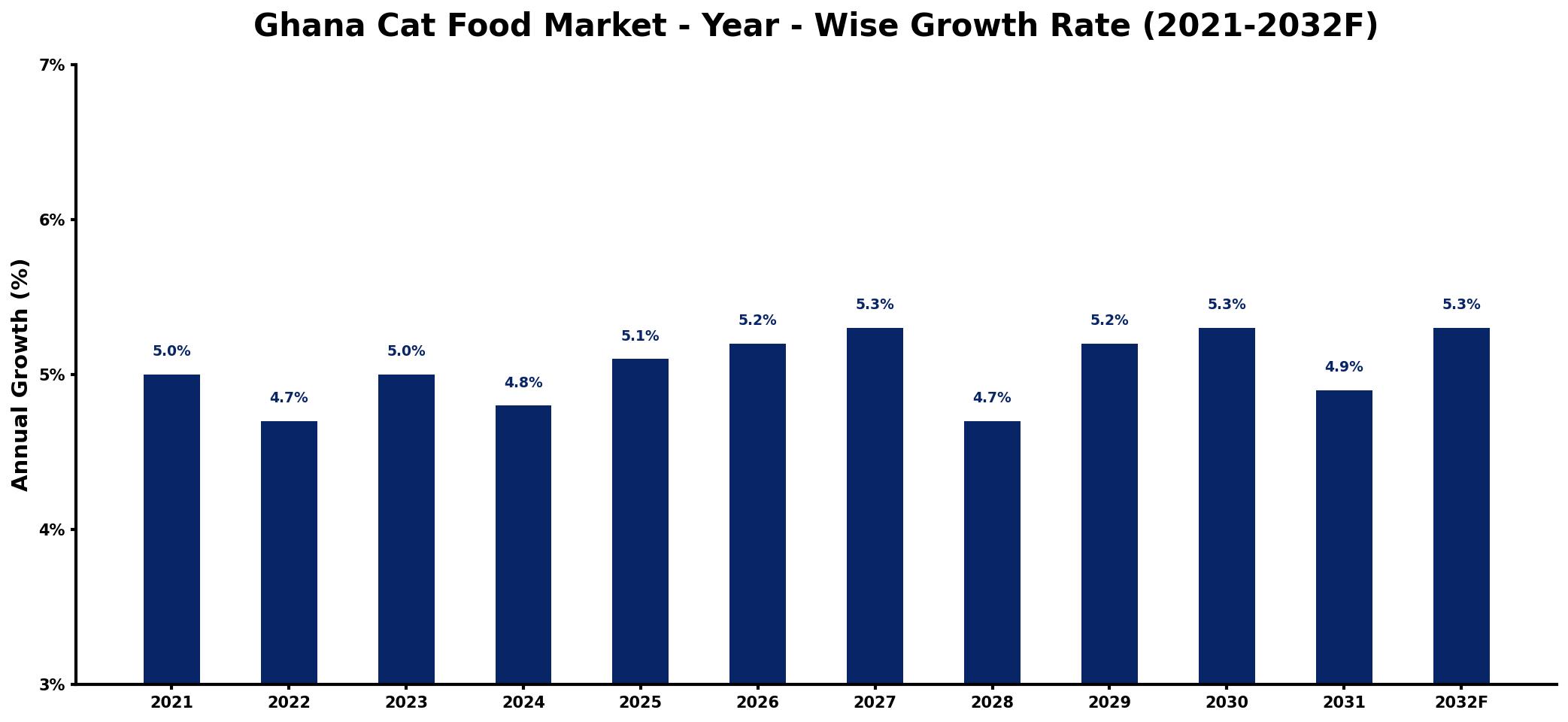
The table below presents the year‑wise growth rates along with the key drivers influencing the market
| Year | Growth Rate | Major Drivers |
| 2021 | 5.0% | Increased pet ownership trends |
| 2022 | 4.7% | Rising disposable income levels |
| 2023 | 5.0% | Growing urbanization and lifestyles |
| 2024 | 4.8% | Expanding retail distribution channels |
| 2025 | 5.1% | Increased focus on pet nutrition |
| 2026 | 5.2% | Surge in online shopping popularity |
| 2027 | 5.3% | Enhanced marketing and advertising strategies |
| 2028 | 4.7% | Growing awareness of animal welfare |
| 2029 | 5.2% | Development of premium product lines |
| 2030 | 5.3% | Investment in local manufacturing facilities |
| 2031 | 4.9% | Emergence of innovative packaging solutions |
| 2032 | 5.3% | Strengthened consumer loyalty programs |
Note: Market size estimations and growth projections presented in this report are based on 6Wresearch's proprietary forecasting methodology, utilizing the latest available industry data, government publications, and primary research inputs.
Ghana Cat Food Market Synopsis
In recent years, there has been a marked increase in the availability of both dry and wet cat food products in Ghana. Retailers are expanding their offerings to include premium brands that emphasize nutrition, flavor, and wellness, aligning with the evolving preferences of pet owners.
Additionally, the surge in online shopping and e-commerce platforms has transformed how consumers purchase cat food. This shift not only offers convenience but also allows pet owners to access a wider range of products, including specialized diets tailored for various health conditions.
Ghana Cat Food Market Key Takeaways
- Growing awareness of pet health is driving demand for premium cat food products.
- The rise of e-commerce is reshaping distribution channels in the cat food market.
- Humanization of pets is influencing purchasing decisions towards high-quality nutrition.
- Government initiatives are expected to enhance consumer awareness and product safety standards.
- Emerging trends in pet wellness are creating new product segments in the market.
Evaluation of Restraints in Ghana Cat Food Market
Despite the positive outlook, the Ghana Cat Food Market faces several notable restraints. A significant portion of pet owners still favor homemade diets over commercial cat food, which stems from cultural preferences and limited awareness of feline nutritional requirements. Furthermore, affordability remains a challenge, as many premium products may exceed the budget of average consumers. Supply chain inefficiencies can lead to inconsistent product availability, potentially discouraging consumers from making the switch to commercial options.
Ghana Cat Food Market Trends
Several trends are currently shaping the Ghana Cat Food Market. Notably, there is a surge in demand for organic and natural ingredients as consumers become more conscious of what they feed their pets. Furthermore, the trend of personalized nutrition is gaining traction, with products that cater to specific dietary needs, such as grain-free or high-protein formulations. Innovative packaging solutions are also emerging, enhancing convenience and maintaining product freshness, which appeals to the health-conscious consumer.
Ghana Cat Food Market Opportunities
The market presents various growth opportunities, particularly in the premium segment. Brands that focus on high-quality ingredients and cater to specific dietary needs can tap into the increasing consumer willingness to invest in pet health. Additionally, educational initiatives aimed at informing pet owners about the nutritional needs of cats can enhance market penetration. Collaborations with local veterinarians to promote specialized diets can further expand consumer access to tailored nutrition solutions.
Government Initiatives in the Ghana Cat Food Market
Government policies are becoming increasingly supportive of the pet food industry. Initiatives aimed at enhancing pet nutrition and animal welfare are being prioritized, with regulations on labeling, ingredient sourcing, and product safety being established. Public awareness campaigns focusing on responsible pet ownership and nutritional education are expected to foster a more informed consumer base. Additionally, capacity-building programs for manufacturers and professionals in animal nutrition will further improve product quality and safety standards.
Future Insights of the Ghana Cat Food Market
Looking ahead, the Ghana Cat Food Market is set to evolve significantly between 2026 and 2032. As pet ownership continues to rise and consumer preferences shift towards premium offerings, the market will likely see an influx of innovative products tailored to specific feline health needs. The integration of technology, such as smart feeding solutions and enhanced e-commerce experiences, will further streamline consumer engagement and drive sales growth. Overall, a strong emphasis on quality and nutrition will be pivotal in defining the market landscape.
Ghana Cat Food Market Latest Developments (2025 - 2026)
In the recent past, the Ghana Cat Food Market has experienced a notable shift with the emergence of local brands that cater specifically to Ghanaian tastes and preferences. This has increased competitive dynamics, encouraging established brands to innovate. Additionally, there has been a rise in partnerships between retailers and online platforms, facilitating better distribution and accessibility of pet food products across the country.
Ghana Cat Food Market - Key Attractiveness of the Report
- 10 Years of Market Numbers
- Historical Data Starting from 2022 to 2025
- Base Year: 2025
- Forecast Data until 2032
- Key Performance Indicators Impacting the Market
- Major Upcoming Developments and Projects
Key Highlights of the Report:
- Ghana Cat Food Market Outlook
- Market Size of Ghana Cat Food Market, 2025
- Forecast of Ghana Cat Food Market, 2032
- Historical Data and Forecast of Ghana Cat Food Revenues & Volume for the Period 2022-2032F
- Ghana Cat Food Market Trend Evolution
- Ghana Cat Food Market Drivers and Challenges
- Ghana Cat Food Price Trends
- Ghana Cat Food Porter's Five Forces
- Ghana Cat Food Industry Life Cycle
- Historical Data and Forecast of Ghana Cat Food Market Revenues & Volume By Nature for the Period 2022-2032F
- Historical Data and Forecast of Ghana Cat Food Market Revenues & Volume By Organic for the Period 2022-2032F
- Historical Data and Forecast of Ghana Cat Food Market Revenues & Volume By Monoprotein for the Period 2022-2032F
- Historical Data and Forecast of Ghana Cat Food Market Revenues & Volume By Conventional for the Period 2022-2032F
- Historical Data and Forecast of Ghana Cat Food Market Revenues & Volume By Source for the Period 2022-2032F
- Historical Data and Forecast of Ghana Cat Food Market Revenues & Volume By Animal Derived for the Period 2022-2032F
- Historical Data and Forecast of Ghana Cat Food Market Revenues & Volume By Plant-derived for the Period 2022-2032F
- Historical Data and Forecast of Ghana Cat Food Market Revenues & Volume By Insect- Derived for the Period 2022-2032F
- Historical Data and Forecast of Ghana Cat Food Market Revenues & Volume By Product Type for the Period 2022-2032F
- Historical Data and Forecast of Ghana Cat Food Market Revenues & Volume By Kibble/dry for the Period 2022-2032F
- Historical Data and Forecast of Ghana Cat Food Market Revenues & Volume By Treats And Chews for the Period 2022-2032F
- Historical Data and Forecast of Ghana Cat Food Market Revenues & Volume By Dehydrated Food for the Period 2022-2032F
- Historical Data and Forecast of Ghana Cat Food Market Revenues & Volume By Freeze Dried Food for the Period 2022-2032F
- Historical Data and Forecast of Ghana Cat Food Market Revenues & Volume By Freeze-dried Raw for the Period 2022-2032F
- Historical Data and Forecast of Ghana Cat Food Market Revenues & Volume By Wet Food for the Period 2022-2032F
- Historical Data and Forecast of Ghana Cat Food Market Revenues & Volume By Frozen for the Period 2022-2032F
- Historical Data and Forecast of Ghana Cat Food Market Revenues & Volume By Powder for the Period 2022-2032F
- Historical Data and Forecast of Ghana Cat Food Market Revenues & Volume By Pet Type for the Period 2022-2032F
- Historical Data and Forecast of Ghana Cat Food Market Revenues & Volume By Kitten for the Period 2022-2032F
- Historical Data and Forecast of Ghana Cat Food Market Revenues & Volume By Senior for the Period 2022-2032F
- Historical Data and Forecast of Ghana Cat Food Market Revenues & Volume By Packaging Type for the Period 2022-2032F
- Historical Data and Forecast of Ghana Cat Food Market Revenues & Volume By Pouches for the Period 2022-2032F
- Historical Data and Forecast of Ghana Cat Food Market Revenues & Volume By Bags for the Period 2022-2032F
- Historical Data and Forecast of Ghana Cat Food Market Revenues & Volume By Folding Cartons for the Period 2022-2032F
- Historical Data and Forecast of Ghana Cat Food Market Revenues & Volume By Tubs & Cups for the Period 2022-2032F
- Historical Data and Forecast of Ghana Cat Food Market Revenues & Volume By Can for the Period 2022-2032F
- Historical Data and Forecast of Ghana Cat Food Market Revenues & Volume By Bottles & Jars for the Period 2022-2032F
- Historical Data and Forecast of Ghana Cat Food Market Revenues & Volume By Distribution Channel for the Period 2022-2032F
- Historical Data and Forecast of Ghana Cat Food Market Revenues & Volume By Store-based Retailing for the Period 2022-2032F
- Historical Data and Forecast of Ghana Cat Food Market Revenues & Volume By Online Retailers for the Period 2022-2032F
- Ghana Cat Food Import Export Trade Statistics
- Market Opportunity Assessment By Nature
- Market Opportunity Assessment By Source
- Market Opportunity Assessment By Product Type
- Market Opportunity Assessment By Pet Type
- Market Opportunity Assessment By Packaging Type
- Market Opportunity Assessment By Distribution Channel
- Ghana Cat Food Top Companies Market Share
- Ghana Cat Food Competitive Benchmarking By Technical and Operational Parameters
- Ghana Cat Food Company Profiles
- Ghana Cat Food Key Strategic Recommendations






































