Ghana Flip Flops Market Size Growth Rate
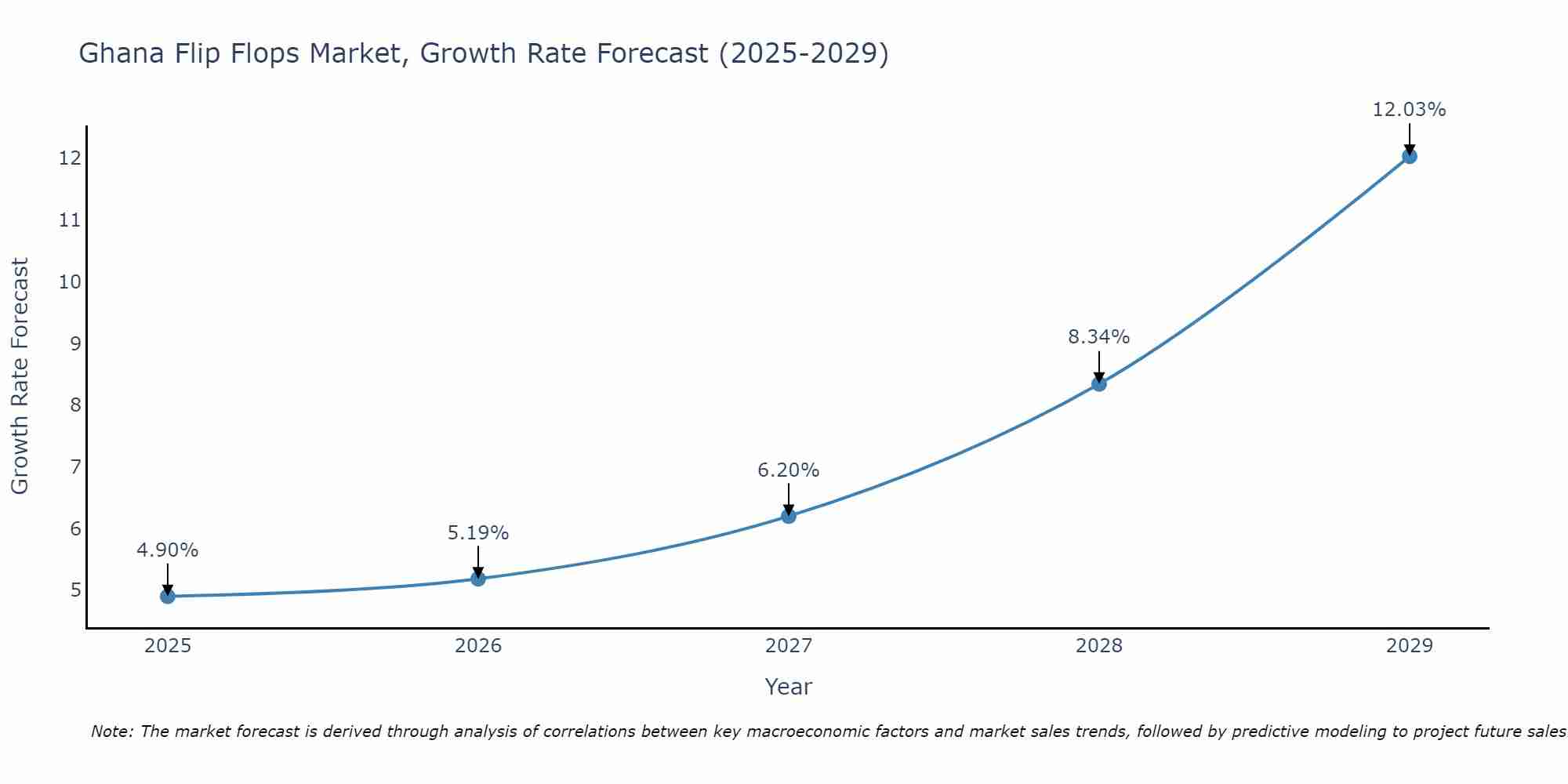
The Ghana Flip Flops Market is likely to experience consistent growth rate gains over the period 2025 to 2029. From 4.90% in 2025, the growth rate steadily ascends to 12.03% in 2029.
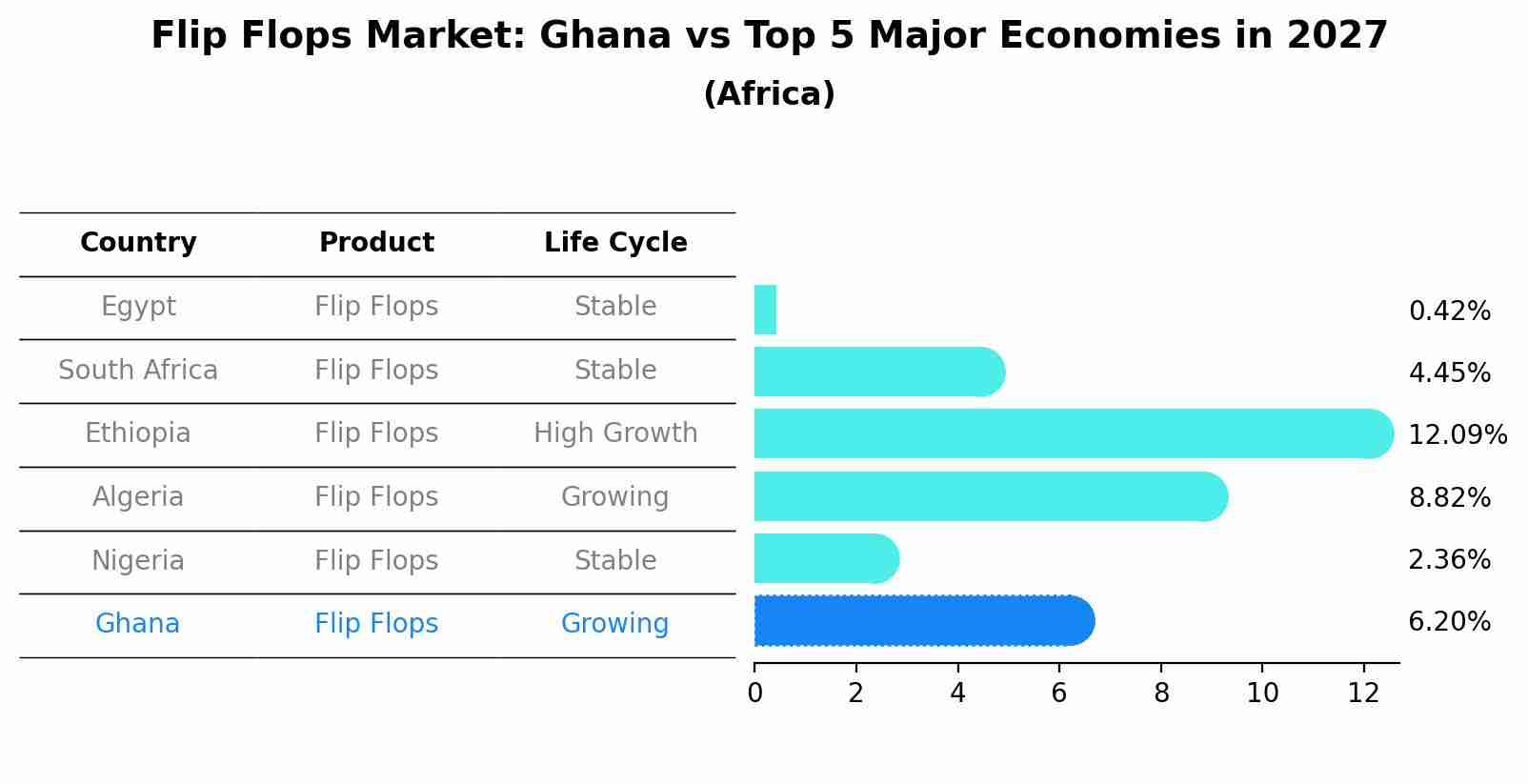
Flip Flops Market: Ghana vs Top 5 Major Economies in 2027 (Africa)
By 2027, Ghana's Flip Flops market is forecasted to achieve a growing growth rate of 6.20%, with Egypt leading the Africa region, followed by South Africa, Ethiopia, Algeria and Nigeria.
Ghana Flip Flops Market Overview
The Ghana flip flops market is experiencing steady growth driven by the increasing demand for comfortable and affordable footwear options. Local manufacturers and international brands are competing in the market, offering a wide range of designs and styles to cater to different consumer preferences. The market is influenced by factors such as changing fashion trends, rising disposable income, and the country`s growing tourism industry. Additionally, the emphasis on sustainable and ethically sourced materials is gaining traction among consumers, leading to the popularity of eco-friendly flip flops. Retail channels include traditional markets, online platforms, and specialty stores, with promotional activities and discounts playing a key role in attracting customers. Overall, the Ghana flip flops market presents opportunities for both domestic and international players to capitalize on the growing demand for stylish and functional footwear options.
Ghana Flip Flops Market Trends
The Ghana flip flops market is experiencing a surge in demand for sustainable and eco-friendly options, with consumers increasingly seeking products made from recycled materials or ethically sourced materials. Local artisans and small businesses are also gaining traction, as there is a growing preference for handmade and unique designs that showcase Ghanaian craftsmanship. Additionally, there is a shift towards customizable flip flops, allowing consumers to personalize their footwear to suit their individual style preferences. The market is becoming more competitive with the entry of new players offering innovative designs and technology, such as ergonomic footbeds and anti-slip soles, to enhance comfort and durability. Overall, the Ghana flip flops market is evolving to cater to the discerning consumer who values sustainability, quality, and style.
Ghana Flip Flops Market Challenges
In the Ghana flip flops market, some challenges include competition from imported brands offering lower-priced products, fluctuations in the cost of raw materials, such as rubber and synthetic materials, which can impact profit margins, and inadequate infrastructure for distribution and marketing. Additionally, lack of access to finance for small-scale local producers hinders their ability to expand and compete effectively. Furthermore, issues related to quality control and inconsistent product standards can also pose challenges in building consumer trust and loyalty. Overall, navigating these obstacles requires strategic planning, investment in marketing and distribution channels, as well as fostering partnerships with suppliers and retailers to enhance market presence and competitiveness.
Ghana Flip Flops Market Investment Opportunities
The Ghana Flip Flops Market presents promising investment opportunities due to the growing demand for comfortable and affordable footwear in the region. With a strong cultural emphasis on traditional craftsmanship and vibrant designs, investing in local flip flop manufacturers or retailers could yield significant returns. Additionally, the rise of sustainable and ethically sourced products globally opens up avenues for eco-friendly flip flop brands to enter the market and cater to environmentally conscious consumers. Collaborating with local artisans to create unique, handcrafted flip flops could also differentiate a brand and attract a niche market segment. Overall, the Ghana Flip Flops Market offers a diverse range of investment prospects driven by consumer preferences for quality, style, and sustainability in footwear.
Ghana Flip Flops Market Government Policy
The Ghanaian government does not have specific policies targeting the flip flops market; however, general trade policies and regulations impact the industry. The country follows the ECOWAS Trade Liberalization Scheme, which aims to reduce trade barriers among member states. Import duties and taxes may affect the cost of importing flip flops into Ghana, and regulations on product quality and labeling apply. Additionally, the government has initiatives to support local manufacturing and entrepreneurship, which could benefit flip flop producers in Ghana. Environmental regulations on waste disposal and recycling may also be relevant to the industry. Overall, while there are no specific policies targeting the flip flops market, various trade and regulatory frameworks influence the operating environment for businesses in Ghana`s footwear industry.
Ghana Flip Flops Market Future Outlook
The Ghana flip flops market is expected to experience steady growth in the coming years due to increasing consumer preference for comfortable and affordable footwear options. The market is likely to benefit from rising disposable incomes, changing fashion trends, and a growing awareness of sustainable and ethically produced products. Additionally, the demand for flip flops is expected to be driven by the country`s warm climate and the popularity of beach and leisure activities. Manufacturers are likely to focus on innovative designs, eco-friendly materials, and customization options to attract a wider consumer base. Overall, the Ghana flip flops market is poised for expansion, with opportunities for both local and international brands to capitalize on the growing demand for stylish and functional footwear.
Key Highlights of the Report:
- Ghana Flip Flops Market Outlook
- Market Size of Ghana Flip Flops Market, 2024
- Forecast of Ghana Flip Flops Market, 2031
- Historical Data and Forecast of Ghana Flip Flops Revenues & Volume for the Period 2021 - 2031
- Ghana Flip Flops Market Trend Evolution
- Ghana Flip Flops Market Drivers and Challenges
- Ghana Flip Flops Price Trends
- Ghana Flip Flops Porter's Five Forces
- Ghana Flip Flops Industry Life Cycle
- Historical Data and Forecast of Ghana Flip Flops Market Revenues & Volume By Sole Material for the Period 2021 - 2031
- Historical Data and Forecast of Ghana Flip Flops Market Revenues & Volume By EVA Flip Flops for the Period 2021 - 2031
- Historical Data and Forecast of Ghana Flip Flops Market Revenues & Volume By PVC Flip Flops for the Period 2021 - 2031
- Historical Data and Forecast of Ghana Flip Flops Market Revenues & Volume By Rubber Flip Flops for the Period 2021 - 2031
- Historical Data and Forecast of Ghana Flip Flops Market Revenues & Volume By EVA+Rubber Flip Flops for the Period 2021 - 2031
- Historical Data and Forecast of Ghana Flip Flops Market Revenues & Volume By Others for the Period 2021 - 2031
- Historical Data and Forecast of Ghana Flip Flops Market Revenues & Volume By End User for the Period 2021 - 2031
- Historical Data and Forecast of Ghana Flip Flops Market Revenues & Volume By Women Flip Flops for the Period 2021 - 2031
- Historical Data and Forecast of Ghana Flip Flops Market Revenues & Volume By Men Flip Flops for the Period 2021 - 2031
- Historical Data and Forecast of Ghana Flip Flops Market Revenues & Volume By Girls Flip Flops for the Period 2021 - 2031
- Historical Data and Forecast of Ghana Flip Flops Market Revenues & Volume By Boys Flip Flops for the Period 2021 - 2031
- Ghana Flip Flops Import Export Trade Statistics
- Market Opportunity Assessment By Sole Material
- Market Opportunity Assessment By End User
- Ghana Flip Flops Top Companies Market Share
- Ghana Flip Flops Competitive Benchmarking By Technical and Operational Parameters
- Ghana Flip Flops Company Profiles
- Ghana Flip Flops Key Strategic Recommendations






































