Ghana Gallium Market Size Growth Rate
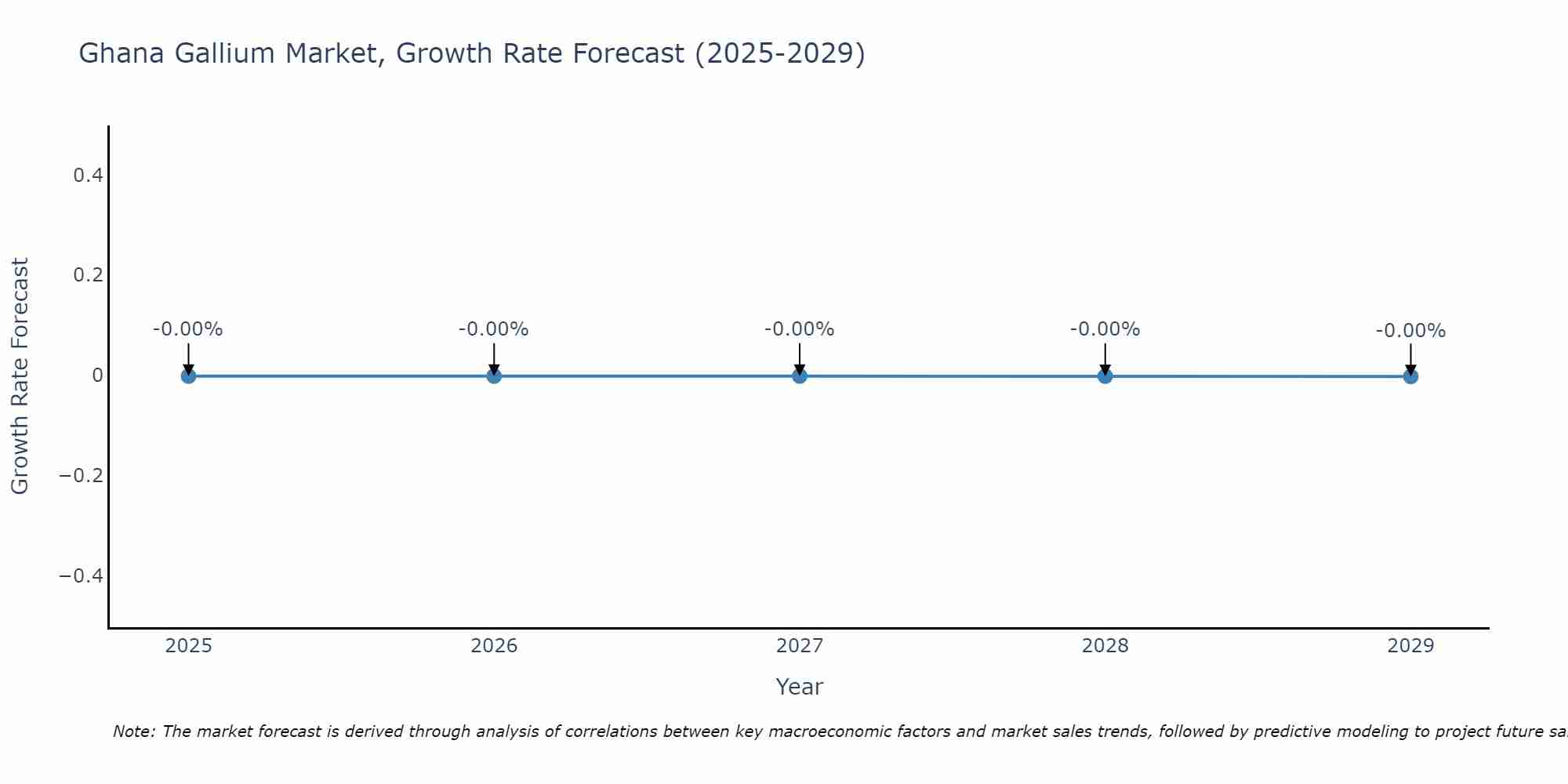
The Ghana Gallium Market is projected to witness mixed growth rate patterns during 2025 to 2029. Growth accelerates to -0.00% in 2027, following an initial rate of -0.00%, before easing to -0.00% at the end of the period.
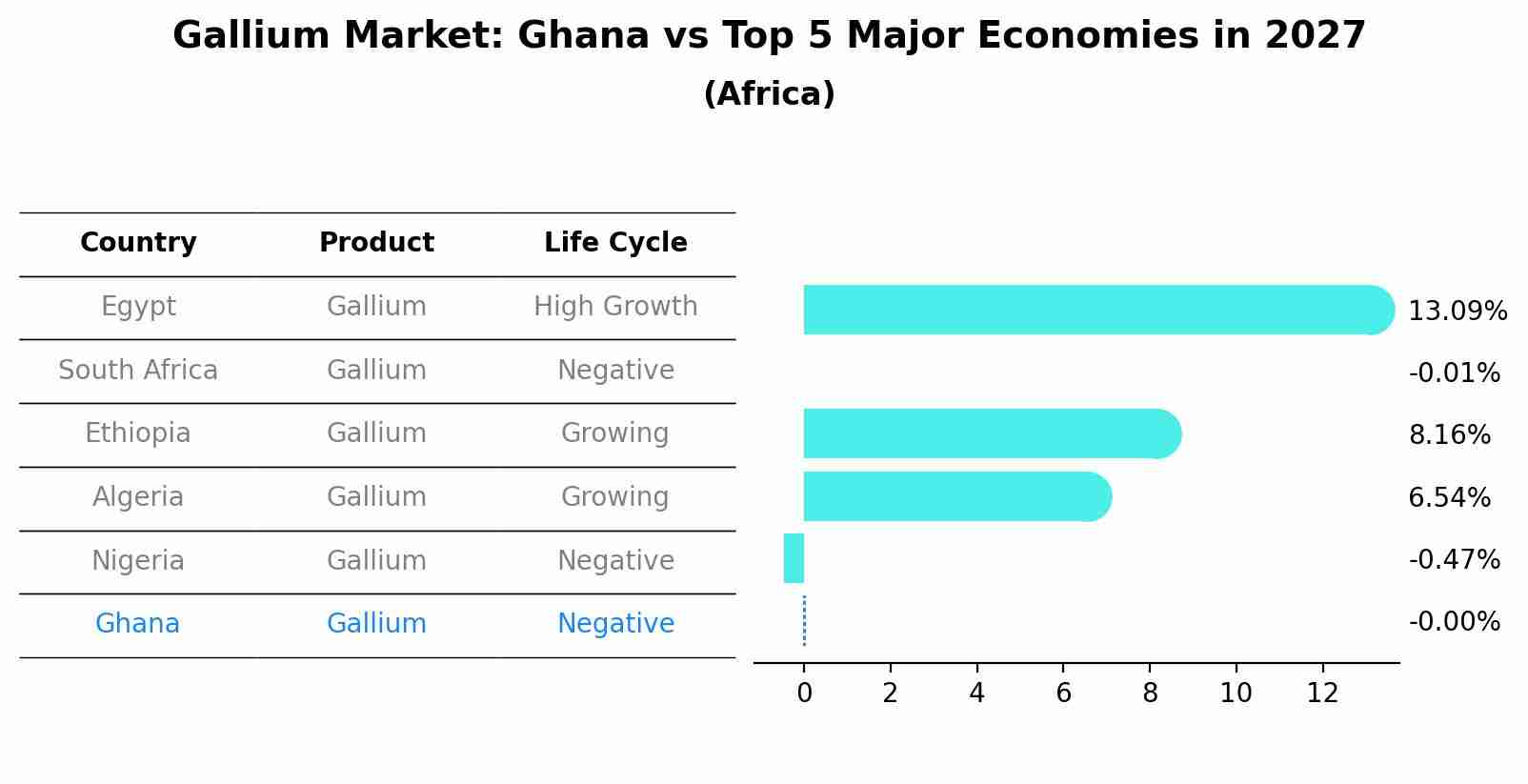
Gallium Market: Ghana vs Top 5 Major Economies in 2027 (Africa)
The Gallium market in Ghana is projected to grow at a negative growth rate of -0.00% by 2027, within the Africa region led by Egypt, along with other countries like South Africa, Ethiopia, Algeria and Nigeria, collectively shaping a dynamic and evolving market environment driven by innovation and increasing adoption of emerging technologies.
Ghana Gallium Market Overview
The Ghana Gallium market is relatively niche, with growing demand primarily driven by its importance in the electronics industry for applications such as semiconductors, LEDs, and solar panels. While Ghana does not produce Gallium domestically, there is potential for the country to enter the market as a supplier due to its significant bauxite reserves, which are a primary source of Gallium. The government`s efforts to attract foreign investment in the mining sector could further boost Ghana`s position in the global Gallium market. However, challenges such as limited infrastructure and expertise in Gallium extraction and processing may hinder the country`s ability to fully capitalize on this opportunity. Overall, the Ghana Gallium market presents potential for growth, provided strategic investments and partnerships are established to overcome existing barriers.
Ghana Gallium Market Trends
As of the latest data, the Ghana Gallium market is experiencing steady growth due to increasing demand from the electronics and semiconductor industries. Gallium is a key component in the production of various high-tech devices such as LED lights, solar panels, and smartphone screens. The market is also benefiting from the growing emphasis on renewable energy sources, as gallium is essential for the manufacturing of solar cells. Additionally, advancements in technology and the increasing use of gallium nitride in power electronics are driving further growth in the market. With Ghana being a significant supplier of gallium globally, the country is well-positioned to capitalize on these trends and strengthen its position in the global gallium market.
Ghana Gallium Market Challenges
In the Ghana Gallium market, some of the key challenges include limited domestic production capacity, which leads to a heavy reliance on imports, resulting in increased costs and potential supply chain disruptions. Additionally, the lack of awareness and understanding of Gallium`s applications among local industries hinders market growth and adoption. Infrastructure constraints, such as inadequate transportation networks and power supply issues, further impede the market`s development. Regulatory complexities and policy uncertainties also create obstacles for investors looking to enter the Ghana Gallium market. Overcoming these challenges will require strategic investments in production capabilities, increased industry education, improved infrastructure, and stable regulatory frameworks to foster a more conducive business environment for Gallium market players in Ghana.
Ghana Gallium Market Investment Opportunities
The Ghana Gallium market presents an opportunity for investors due to the increasing demand for gallium in the electronics and semiconductor industries. Gallium is used in the production of optoelectronic devices, LEDs, and solar panels, driving its market growth. With Ghana being one of the largest producers of bauxite, which is a key source of gallium, there is a strategic advantage in establishing gallium production facilities in the country. Investing in gallium production in Ghana could leverage the country`s natural resources and cater to the growing global demand for gallium. Additionally, the government`s focus on industrialization and technology development further supports the investment potential in the Ghana Gallium market.
Ghana Gallium Market Government Policy
The Ghanaian government does not have specific policies directly related to the Gallium market. However, the government`s overall industrial policy aims to promote local content and value addition in the mining sector, which could indirectly impact the Gallium market. Additionally, Ghana has implemented various initiatives to attract foreign direct investment in the mining industry, which could potentially lead to increased exploration and production of Gallium in the country. Overall, while there are no explicit policies targeting the Gallium market, the government`s broader focus on industrial development and mining sector growth could create opportunities for the Gallium industry in Ghana.
Ghana Gallium Market Future Outlook
The future outlook for the Ghana Gallium Market appears promising with increasing demand expected from the electronics and renewable energy sectors. Gallium, a key component in semiconductors and solar panels, is likely to see growing applications as technology advances. Ghana`s potential to expand its gallium production through mining and refining operations could position the country as a significant player in the global market. However, challenges such as infrastructure development and regulatory issues may need to be addressed to fully leverage this opportunity. Overall, the Ghana Gallium Market is poised for growth driven by rising demand for high-tech products and the country`s potential to tap into this lucrative market segment.
Key Highlights of the Report:
- Ghana Gallium Market Outlook
- Market Size of Ghana Gallium Market, 2024
- Forecast of Ghana Gallium Market, 2031
- Historical Data and Forecast of Ghana Gallium Revenues & Volume for the Period 2021 - 2031
- Ghana Gallium Market Trend Evolution
- Ghana Gallium Market Drivers and Challenges
- Ghana Gallium Price Trends
- Ghana Gallium Porter's Five Forces
- Ghana Gallium Industry Life Cycle
- Historical Data and Forecast of Ghana Gallium Market Revenues & Volume By Applications for the Period 2021 - 2031
- Historical Data and Forecast of Ghana Gallium Market Revenues & Volume By LED for the Period 2021 - 2031
- Historical Data and Forecast of Ghana Gallium Market Revenues & Volume By Laser Diodes for the Period 2021 - 2031
- Historical Data and Forecast of Ghana Gallium Market Revenues & Volume By Integrated Circuits for the Period 2021 - 2031
- Historical Data and Forecast of Ghana Gallium Market Revenues & Volume By Solar Cells for the Period 2021 - 2031
- Ghana Gallium Import Export Trade Statistics
- Market Opportunity Assessment By Applications
- Ghana Gallium Top Companies Market Share
- Ghana Gallium Competitive Benchmarking By Technical and Operational Parameters
- Ghana Gallium Company Profiles
- Ghana Gallium Key Strategic Recommendations






































