Ghana Herbal Cosmetics Market Size, Share & Growth Rate
The Ghana Herbal Cosmetics Market was estimated at USD 163 Million in 2025 and is projected to reach USD 226 Million by 2032, growing at a CAGR of 4.8% from 2026 to 2032. This growth trajectory is driven by a marked shift in consumer preferences toward natural and organic beauty solutions, amplified by an increasing awareness of the benefits of herbal ingredients. Furthermore, the government's endorsement of indigenous herbs in cosmetics fosters an environment ripe for expansion and innovation.
Ghana Herbal Cosmetics Market Year-wise Growth Rate and Key Drivers
This graph highlights how the Ghana Herbal Cosmetics Market has steadily grown over the years, supported by major growth factors.
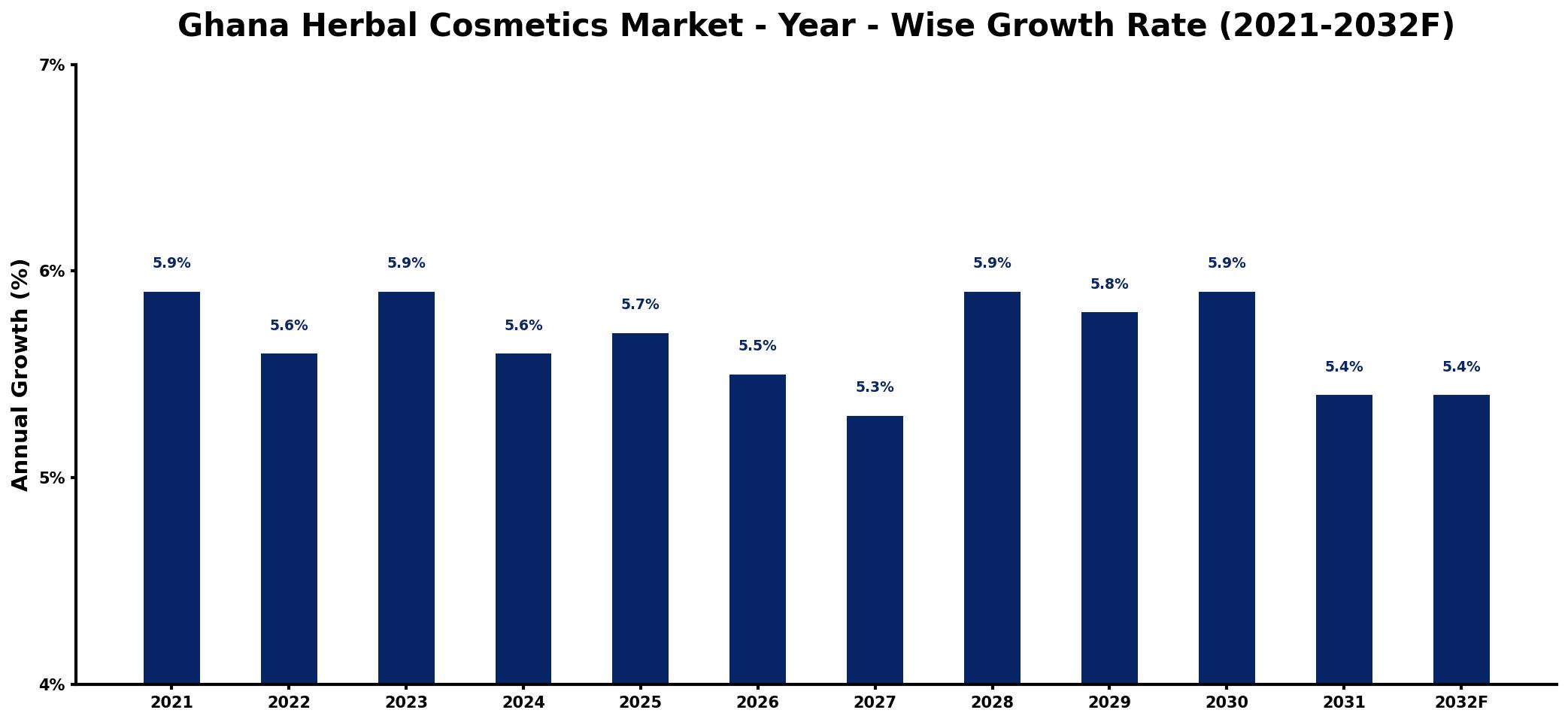
The table below presents the year‑wise growth rates along with the key drivers influencing the market
| Year | Growth Rate | Major Drivers |
| 2021 | 5.9% | Rise in natural ingredient demand |
| 2022 | 5.6% | Increased consumer health awareness |
| 2023 | 5.9% | Expansion of retail distribution channels |
| 2024 | 5.6% | Growth in online shopping platforms |
| 2025 | 5.7% | Surge in green beauty trends |
| 2026 | 5.5% | Investment in sustainable practices |
| 2027 | 5.3% | Emergence of new market entrants |
| 2028 | 5.9% | Higher disposable income levels |
| 2029 | 5.8% | Growing popularity of local brands |
| 2030 | 5.9% | Enhanced focus on product safety |
| 2031 | 5.4% | Increased collaboration with influencers |
| 2032 | 5.4% | improved raw material availability |
Note: Market size estimations and growth projections presented in this report are based on 6Wresearch's proprietary forecasting methodology, utilizing the latest available industry data, government publications, and primary research inputs.
Ghana Herbal Cosmetics Market Synopsis
The Ghana herbal cosmetics market has witnessed significant momentum in recent years, characterized by a growing inclination among consumers for safer, natural beauty options. This trend stands in stark contrast to the conventional cosmetics sector, with consumers increasingly seeking products that align with sustainable and ethical practices.
Looking ahead, the market is set to evolve further as local brands harness Ghana's rich heritage of herbal knowledge. By integrating traditional ingredients such as shea butter and moringa, companies are not only enhancing product efficacy but also establishing a unique identity in both local and international markets.
Ghana Herbal Cosmetics Market Key Takeaways
- Consumer demand for natural and organic beauty products is driving market growth.
- Local brands are leveraging traditional herbal knowledge to innovate product offerings.
- The market is witnessing an increasing trend toward sustainable and eco-friendly packaging.
- Regulatory frameworks are being established to ensure product safety and quality.
- Investment opportunities are emerging through partnerships with local herbalists and manufacturers.
Evaluation of Restraints in Ghana Herbal Cosmetics Market
Despite its growth potential, the Ghana Herbal Cosmetics Market faces notable constraints that could hinder its advancement. Limited research and development capabilities present a significant challenge, as local firms often struggle to innovate and improve product quality. Inconsistent quality control and the absence of standardized regulations can lead to consumer safety concerns, diminishing trust in herbal products. Furthermore, competition from well-established mainstream cosmetic brands complicates the landscape, particularly as consumer awareness and acceptance of herbal cosmetics are still developing. Addressing these challenges is crucial for market players to fully capitalize on the burgeoning interest in natural beauty solutions.
Ghana Herbal Cosmetics Market Trends
Current trends in the Ghana herbal cosmetics market reflect a dynamic shift toward eco-friendly and transparent beauty products. Consumers are increasingly seeking items with clear labeling and sustainably sourced ingredients. Additionally, there's a burgeoning interest in targeted solutions that tackle specific skin and hair issues through herbal formulations. These trends are encouraging local brands to experiment with diverse plant extracts while embracing the rich cultural narratives surrounding traditional remedies.
Ghana Herbal Cosmetics Market Opportunities
Opportunities within the Ghana Herbal Cosmetics Market are robust, particularly as the demand for local, herbal products continues to rise. Investors can capitalize by fostering partnerships with local producers and herbalists, thus creating high-quality, ethically sourced products. Additionally, enhancing distribution channels and employing digital marketing strategies are crucial for reaching a broader audience. With an increasing global focus on natural beauty, the potential for sustainable growth in this market is substantial.
Government Initiatives in the Ghana Herbal Cosmetics Market
The Ghanaian government is taking proactive steps to regulate the herbal cosmetics market through the Food and Drugs Authority (FDA). This includes overseeing the registration, licensing, and monitoring of herbal cosmetics to ensure they meet safety and quality standards. Additionally, the implementation of the Traditional Medicine Practice Act is significant in promoting the responsible use of indigenous knowledge in herbal product formulation. Such policies not only aim to protect consumers but also to encourage the growth of the industry.
Future Insights of the Ghana Herbal Cosmetics Market
Looking ahead to 2026-2032, the Ghana Herbal Cosmetics Market is on the cusp of considerable expansion. A growing consumer base is likely to place increasing value on the benefits of natural ingredients, further driving demand for chemical-free beauty products. Innovation in product formulations and a strengthened commitment to sustainability will be vital for companies aiming to thrive in this competitive landscape. The integration of traditional African beauty practices, combined with modern marketing strategies, is expected to position the market favorably in the global arena.
Ghana Herbal Cosmetics Market Latest Developments (2025 - 2026)
In recent months, the Ghana herbal cosmetics industry has shown a marked inclination towards innovation and collaboration. Many local brands are increasingly focusing on creating unique products that highlight indigenous herbs and traditional formulations. Moreover, educational campaigns aimed at raising awareness about the benefits of herbal cosmetics are gaining traction. This shift not only enhances consumer understanding but also builds trust in the safety and efficacy of herbal products.
Ghana Herbal Cosmetics Market - Key Attractiveness of the Report
- 10 Years of Market Numbers
- Historical Data Starting from 2022 to 2025
- Base Year: 2025
- Forecast Data until 2032
- Key Performance Indicators Impacting the Market
- Major Upcoming Developments and Projects
Key Highlights of the Report:
- Ghana Herbal Cosmetics Market Outlook
- Market Size of Ghana Herbal Cosmetics Market, 2025
- Forecast of Ghana Herbal Cosmetics Market, 2032
- Historical Data and Forecast of Ghana Herbal Cosmetics Revenues & Volume for the Period 2022-2032F
- Ghana Herbal Cosmetics Market Trend Evolution
- Ghana Herbal Cosmetics Market Drivers and Challenges
- Ghana Herbal Cosmetics Price Trends
- Ghana Herbal Cosmetics Porter's Five Forces
- Ghana Herbal Cosmetics Industry Life Cycle
- Historical Data and Forecast of Ghana Herbal Cosmetics Market Revenues & Volume By Physical State for the Period 2022-2032F
- Historical Data and Forecast of Ghana Herbal Cosmetics Market Revenues & Volume By Solid for the Period 2022-2032F
- Historical Data and Forecast of Ghana Herbal Cosmetics Market Revenues & Volume By Semi-solid for the Period 2022-2032F
- Historical Data and Forecast of Ghana Herbal Cosmetics Market Revenues & Volume By Liquid for the Period 2022-2032F
- Historical Data and Forecast of Ghana Herbal Cosmetics Market Revenues & Volume By Product for the Period 2022-2032F
- Historical Data and Forecast of Ghana Herbal Cosmetics Market Revenues & Volume By Skin Care Product for the Period 2022-2032F
- Historical Data and Forecast of Ghana Herbal Cosmetics Market Revenues & Volume By Hair Care Product for the Period 2022-2032F
- Historical Data and Forecast of Ghana Herbal Cosmetics Market Revenues & Volume By Baby Care Product for the Period 2022-2032F
- Historical Data and Forecast of Ghana Herbal Cosmetics Market Revenues & Volume By Oral Care Product for the Period 2022-2032F
- Historical Data and Forecast of Ghana Herbal Cosmetics Market Revenues & Volume By Make-up Product for the Period 2022-2032F
- Historical Data and Forecast of Ghana Herbal Cosmetics Market Revenues & Volume By Distribution Channel for the Period 2022-2032F
- Historical Data and Forecast of Ghana Herbal Cosmetics Market Revenues & Volume By Supermarket for the Period 2022-2032F
- Historical Data and Forecast of Ghana Herbal Cosmetics Market Revenues & Volume By Pharmacy for the Period 2022-2032F
- Historical Data and Forecast of Ghana Herbal Cosmetics Market Revenues & Volume By Departmental Store for the Period 2022-2032F
- Historical Data and Forecast of Ghana Herbal Cosmetics Market Revenues & Volume By Beauty Spa/Salon for the Period 2022-2032F
- Historical Data and Forecast of Ghana Herbal Cosmetics Market Revenues & Volume By Internet Retailing for the Period 2022-2032F
- Historical Data and Forecast of Ghana Herbal Cosmetics Market Revenues & Volume By Specialty Store for the Period 2022-2032F
- Ghana Herbal Cosmetics Import Export Trade Statistics
- Market Opportunity Assessment By Physical State
- Market Opportunity Assessment By Product
- Market Opportunity Assessment By Distribution Channel
- Ghana Herbal Cosmetics Top Companies Market Share
- Ghana Herbal Cosmetics Competitive Benchmarking By Technical and Operational Parameters
- Ghana Herbal Cosmetics Company Profiles
- Ghana Herbal Cosmetics Key Strategic Recommendations






































