Ghana Knife Market Size Growth Rate
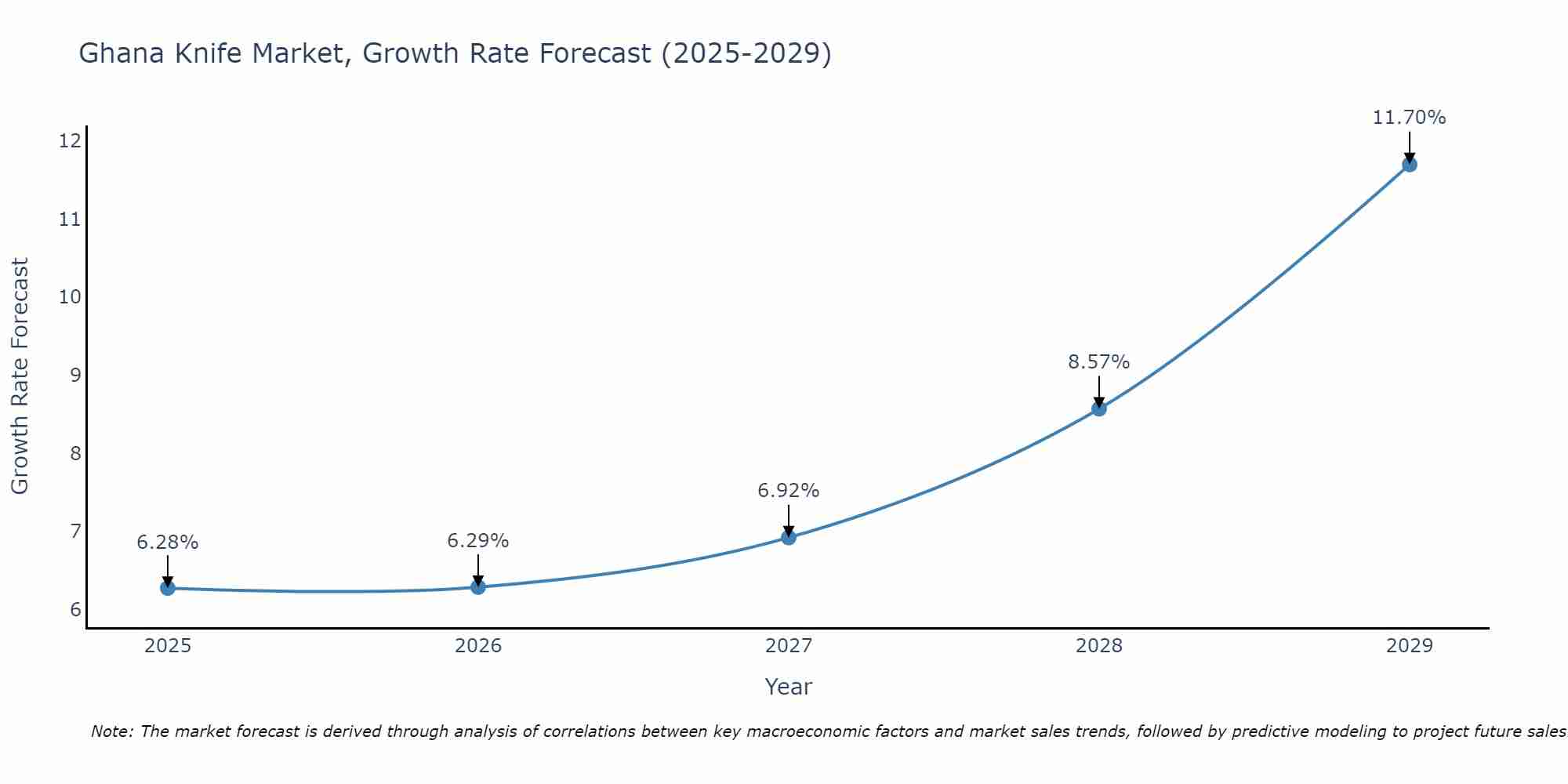
The Ghana Knife Market is poised for steady growth rate improvements from 2025 to 2029. The growth rate starts at 6.28% in 2025 and reaches 11.70% by 2029.
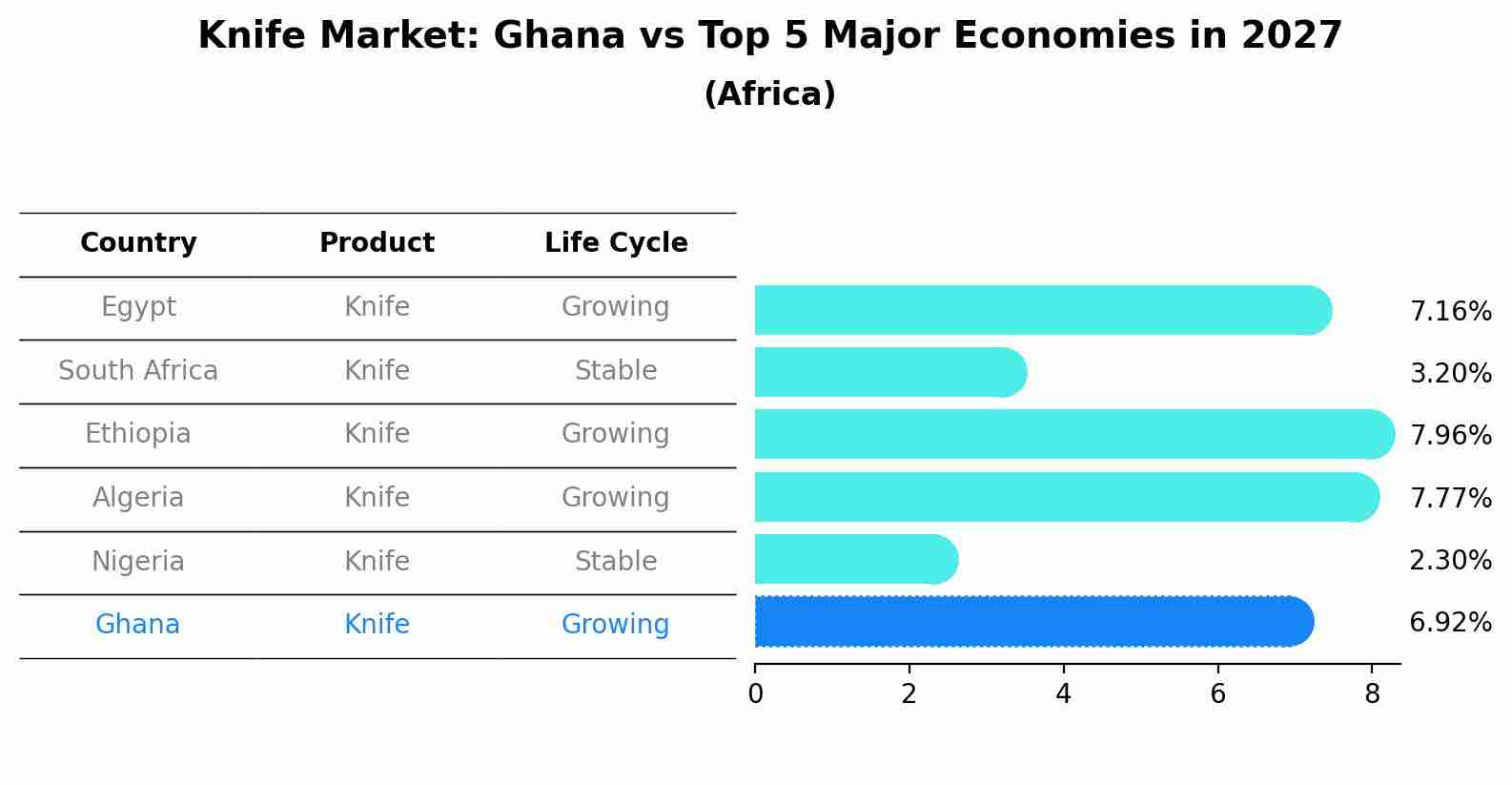
Knife Market: Ghana vs Top 5 Major Economies in 2027 (Africa)
The Knife market in Ghana is projected to grow at a growing growth rate of 6.92% by 2027, highlighting the country's increasing focus on advanced technologies within the Africa region, where Egypt holds the dominant position, followed closely by South Africa, Ethiopia, Algeria and Nigeria, shaping overall regional demand.
Ghana Knife Market Overview
The Ghana knife market is characterized by a diverse range of products catering to various consumer needs. Traditional knives made by local artisans using techniques passed down through generations are popular among those seeking authentic craftsmanship. In recent years, the market has seen a rise in demand for modern and innovative knife designs with ergonomic handles and high-quality materials. Imported brands from countries like Germany and Japan also have a presence in the market, appealing to consumers looking for high-performance knives. With a growing interest in cooking and culinary arts, the Ghana knife market is expected to continue expanding, driven by both traditional craft and modern design trends. Retail outlets, online platforms, and specialty stores are key distribution channels for consumers to access a wide selection of knives in Ghana.
Ghana Knife Market Trends
The Ghana knife market is experiencing a growing demand for high-quality, durable knives that offer both functionality and aesthetics. Consumers are increasingly looking for knives made from premium materials such as stainless steel or carbon steel, with ergonomic designs and versatile uses. There is also a rising interest in traditional Ghanaian knife designs, showcasing the country`s rich cultural heritage. In addition, there is a trend towards eco-friendly and sustainable knife options, driving the popularity of knives made from recycled materials or produced through ethical manufacturing processes. Overall, the Ghana knife market is witnessing a shift towards innovative, high-performing knives that cater to the diverse needs and preferences of consumers.
Ghana Knife Market Challenges
In the Ghana knife market, various challenges are encountered. One major challenge is the presence of counterfeit and low-quality knives that flood the market, leading to consumer distrust and safety concerns. Additionally, the lack of strict regulations and enforcement mechanisms in the market makes it difficult for consumers to differentiate between genuine products and imitations. This not only affects the overall reputation of the industry but also poses potential risks to consumers. Another challenge is the competition from imported knives, which often offer lower prices due to economies of scale and international trade agreements. Local knife manufacturers struggle to compete with these imported products, impacting their market share and profitability. Overall, addressing these challenges requires a combination of stringent regulations, quality control measures, and marketing strategies to promote locally made knives in Ghana.
Ghana Knife Market Investment Opportunities
The Ghana Knife Market presents promising investment opportunities due to the country`s growing population, rising urbanization, and increasing demand for high-quality kitchen utensils. With a strong culinary culture and a growing food industry, there is a growing demand for premium knives, both for household and commercial use. Investing in the Ghana Knife Market could involve opportunities in importing high-quality knives from international manufacturers, establishing partnerships with local retailers and distributors, or even setting up a manufacturing facility to cater to the local market`s needs. Additionally, leveraging digital marketing strategies to reach a wider audience and offering innovative designs could help attract customers looking for unique and durable kitchen tools. Overall, the Ghana Knife Market offers potential for growth and profitability for investors willing to tap into this niche market segment.
Ghana Knife Market Government Policy
Government policies related to the Ghana knife market primarily focus on regulating the importation, manufacturing, and sale of knives to ensure public safety and prevent misuse. The Customs Division of the Ghana Revenue Authority requires importers to obtain permits for importing knives, with strict regulations on the types of knives allowed to be imported. Additionally, the Food and Drugs Authority of Ghana sets guidelines for the manufacturing and sale of knives to ensure they meet quality and safety standards. These regulations aim to prevent the proliferation of illegal weapons and ensure that knives sold in the Ghanaian market are safe for consumer use. Compliance with these policies is essential for businesses operating in the knife market in Ghana to avoid penalties and maintain a positive reputation with consumers and regulatory authorities.
Ghana Knife Market Future Outlook
The Ghana knife market is expected to experience steady growth in the coming years, driven by factors such as increasing population, rising disposable incomes, and a growing preference for high-quality kitchen tools. The market is likely to see a shift towards more innovative and sustainable knife designs, as consumers become more conscious of environmental issues. Additionally, the expanding food service industry in Ghana is anticipated to create demand for specialized knives catering to different culinary needs. With a focus on durability, safety, and ergonomic designs, manufacturers are expected to introduce new product lines to cater to evolving consumer preferences. Overall, the Ghana knife market presents opportunities for both domestic and international players to capitalize on the growing demand for quality kitchen knives in the region.
Key Highlights of the Report:
- Ghana Knife Market Outlook
- Market Size of Ghana Knife Market, 2021
- Forecast of Ghana Knife Market, 2031
- Historical Data and Forecast of Ghana Knife Revenues & Volume for the Period 2021 - 2031
- Ghana Knife Market Trend Evolution
- Ghana Knife Market Drivers and Challenges
- Ghana Knife Price Trends
- Ghana Knife Porter's Five Forces
- Ghana Knife Industry Life Cycle
- Historical Data and Forecast of Ghana Knife Market Revenues & Volume By Product Type for the Period 2021 - 2031
- Historical Data and Forecast of Ghana Knife Market Revenues & Volume By Stainless Steel for the Period 2021 - 2031
- Historical Data and Forecast of Ghana Knife Market Revenues & Volume By Carbon Steel for the Period 2021 - 2031
- Historical Data and Forecast of Ghana Knife Market Revenues & Volume By Alloy Steel for the Period 2021 - 2031
- Historical Data and Forecast of Ghana Knife Market Revenues & Volume By Other Materials for the Period 2021 - 2031
- Historical Data and Forecast of Ghana Knife Market Revenues & Volume By End-Users for the Period 2021 - 2031
- Historical Data and Forecast of Ghana Knife Market Revenues & Volume By Utensils& Kitchen Tools for the Period 2021 - 2031
- Historical Data and Forecast of Ghana Knife Market Revenues & Volume By Weapons& Defence for the Period 2021 - 2031
- Historical Data and Forecast of Ghana Knife Market Revenues & Volume By Others for the Period 2021 - 2031
- Ghana Knife Import Export Trade Statistics
- Market Opportunity Assessment By Product Type
- Market Opportunity Assessment By End-Users
- Ghana Knife Top Companies Market Share
- Ghana Knife Competitive Benchmarking By Technical and Operational Parameters
- Ghana Knife Company Profiles
- Ghana Knife Key Strategic Recommendations






































