Ghana Plastic Film Market Summary
The ghana plastic film market was estimated at USD 472 Million in 2025 and is projected to reach USD 621 Million by 2032, growing at a CAGR of 4.7% from 2026 to 2032.
Ghana Plastic Film Market Year-wise Growth Rate and Key Drivers
This graph highlights how the Ghana Plastic Film Market has steadily grown over the past five years, supported by major growth factors.
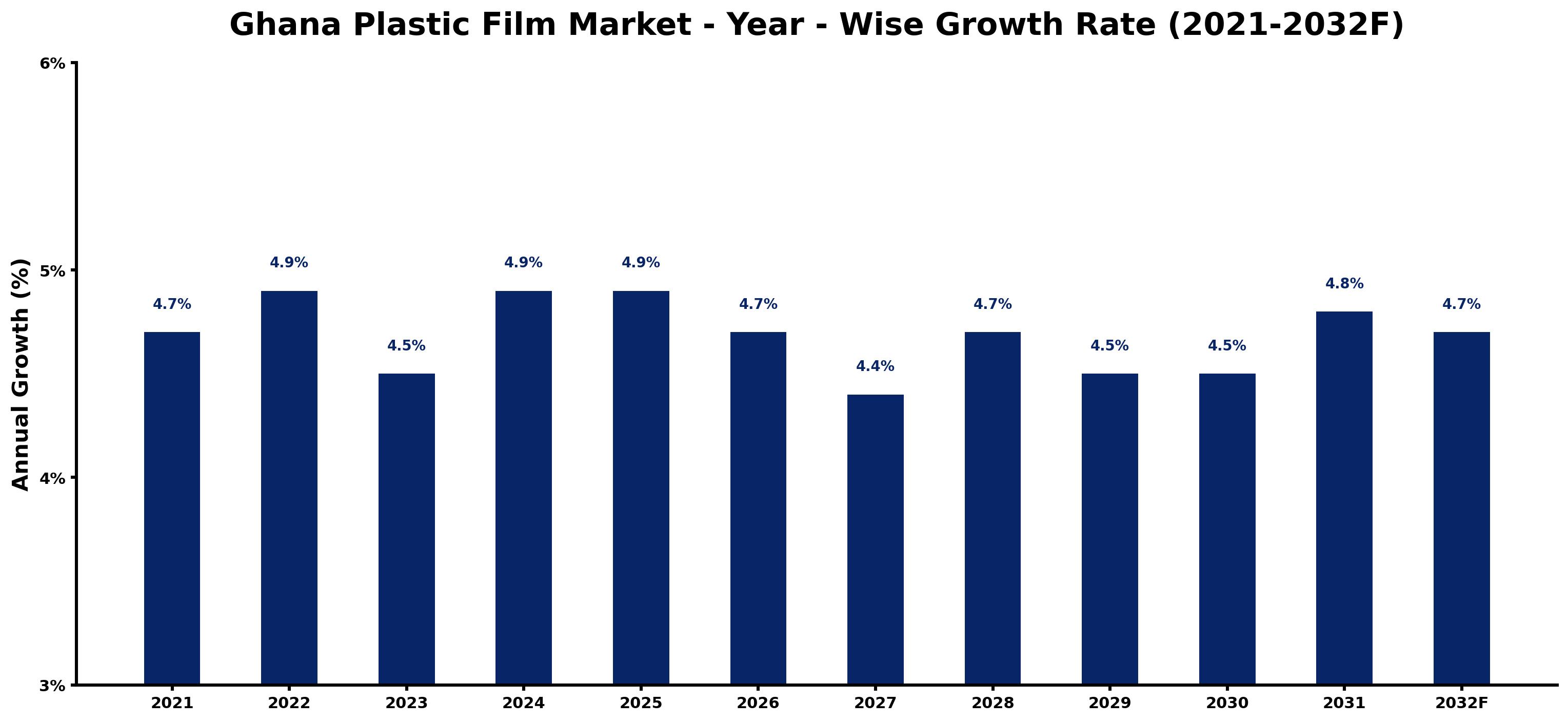
The table below presents the year wise growth rates along with the key drivers influencing the market
| Year | Growth Rate | Major Drivers |
| 2021 | 4.7% | Local industries increasingly favor flexible packaging solutions for product safety and shelf life. |
| 2022 | 4.9% | Investment in modern production technology enhances output efficiency and product quality significantly. |
| 2023 | 4.5% | The demand for eco-friendly alternatives pushes innovation in biodegradable plastic film solutions. |
| 2024 | 4.9% | Consumer preferences shift towards convenience, boosting the use of plastic films in retail. |
| 2025 | 4.9% | E-commerce expansion triggers heightened demand for secure packaging, directly impacting the market. |
| 2026 | 4.7% | Emerging middle-class consumers drive trends towards personalized and branded flexible packaging solutions. |
| 2027 | 4.4% | Urbanization trends create increased demand for durable packaging in food and beverage sectors. |
| 2028 | 4.7% | Collaborations between local manufacturers and international brands solidify market position and technology transfer. |
| 2029 | 4.5% | Rising disposable income fosters consumer spending on packaged products, enhancing market growth prospects. |
| 2030 | 4.5% | Sustainability concerns prompt innovations in recycling processes for plastic film materials. |
| 2031 | 4.8% | Technological advancements in film production lead to thinner, more resilient packaging options. |
| 2032 | 4.7% | Integration of digital printing technologies enhances customization capabilities for local manufacturers. |
Note - Market size estimations and growth projections presented in this report are based on 6Wresearch's advanced forecasting approach, validated with industry datasets as of June 2026.
Ghana Plastic Film Market Synopsis
The Ghana Plastic Film Market is projected to reach 4.7% and witness significant growth during the forecast period (2026-2032). This growth is driven by several factors including increasing industrialization, urbanization, and a rise in consumer disposable income. The demand for plastic films is largely propelled by the packaging industry, encompassing food and beverage packaging, consumer goods, and agricultural products. Furthermore, the construction sector is a crucial contributor to this market, utilizing plastic films in various applications such as roofing, insulation, and damp proofing.
Ghana Plastic Film Market Growth Drivers
The growth of the Ghana Plastic Film Market can be attributed to several key drivers:
- Industrial Expansion: Ghana's industrial sector is expanding rapidly, which has led to increased demand for packaging solutions across various industries.
- Urbanization Trends: The urban population is rising, leading to higher consumer spending on packaged goods that often require plastic film packaging.
- Increasing Disposable Income: Rising income levels among consumers in Ghana enhance their purchasing power, enabling them to opt for higher quality and convenience in packaging.
- Construction Demand: The ongoing construction projects in the country require plastic films for different applications, including protective barriers and insulation.
- Technological Advancements: Innovations in manufacturing processes are enabling the production of high-quality films that offer better performance and sustainability.
Ghana Plastic Film Market Trends and Opportunities
The Ghana Plastic Film Market is currently witnessing notable trends that present various opportunities:
- Sustainability Initiatives: A growing preference for eco-friendly packaging is pushing manufacturers to develop biodegradable and recyclable plastic films.
- Innovative Products: There is a rising demand for high-quality packaging films that extend the shelf life of products, particularly in the food and beverage sectors.
- Market Diversification: Manufacturers are exploring diverse applications for plastic films, including agriculture, which enhances the market's growth prospects.
- Partnership Opportunities: Collaborations with local firms can lead to enhanced distribution channels and market penetration.
- Consumer Awareness: Increasing awareness around the importance of sustainable packaging is driving demand for innovative products.
Ghana Plastic Film Market Challenges and Restraints
Despite its growth, the Ghana Plastic Film Market faces several challenges that could impact its trajectory:
- Recycling Infrastructure: Inadequate recycling facilities contribute to environmental pollution, creating a need for improved waste management practices.
- Raw Material Volatility: Fluctuating prices of raw materials can disrupt production costs, affecting profitability.
- Regulatory Changes: New regulations aimed at reducing plastic usage may lead to decreased demand for plastic films.
- Market Competition: The rise of alternative packaging materials poses a significant threat to the plastic film market, requiring innovation and adaptability.
- Consumer Education: A lack of awareness among consumers regarding the benefits of recyclable plastic films can hinder market development.
Ghana Plastic Film Market Government Investment and Initiatives
The Ghanaian government is actively implementing policies aimed at regulating and promoting sustainable practices within the plastic film market. The Plastic Waste Management Policy, established in 2011, serves to regulate the production and disposal of plastic products, including films. The government also enforced a ban in 2015 on the production and importation of non-biodegradable plastic products, pushing the market towards the adoption of biodegradable alternatives. Additionally, the National Plastic Action Partnership, initiated in collaboration with various stakeholders, seeks to promote recycling and sustainable plastic use. These policies reflect an ongoing commitment to reducing plastic pollution and enhancing the environmental sustainability of the plastic film industry in Ghana.
Ghana Plastic Film Market Latest Developments (May 2025 - June 2026)
Recent developments in the Ghana Plastic Film Market reflect a dynamic shift towards sustainability and innovation. During this period, there has been a marked increase in the introduction of eco-friendly plastic film products, driven largely by consumer demand for sustainable packaging solutions. Manufacturers are focusing on enhancing the quality of plastic films to meet stringent regulatory standards and consumer expectations. Moreover, partnerships between government bodies and private sector players have been established to bolster recycling initiatives and improve waste management systems. These movements indicate a robust response to the environmental challenges facing the industry and highlight an evolving market landscape.
Ghana Plastic Film Market - Key Attractiveness of the Report
- 10 Years of Market Numbers
- Historical Data Starting from 2022 to 2025
- Base Year: 2025
- Forecast Data until 2032
- Key Performance Indicators Impacting the Market
- Major Upcoming Developments and Projects
Key Highlights of the Report:
- Ghana Plastic Film Market Outlook
- Market Size of Ghana Plastic Film Market, 2025
- Forecast of Ghana Plastic Film Market, 2032F
- Historical Data and Forecast of Ghana Plastic Film Revenues & Volume for the Period 2022-2032F
- Ghana Plastic Film Market Trend Evolution
- Ghana Plastic Film Market Drivers and Challenges
- Ghana Plastic Film Price Trends
- Ghana Plastic Film Porter's Five Forces
- Ghana Plastic Film Industry Life Cycle
- Historical Data and Forecast of Ghana Plastic Film Market Revenues & Volume By Product Types for the Period 2022-2032F
- Historical Data and Forecast of Ghana Plastic Film Market Revenues & Volume By Polyethylene (PE) for the Period 2022-2032F
- Historical Data and Forecast of Ghana Plastic Film Market Revenues & Volume By Polypropylene (PP) for the Period 2022-2032F
- Historical Data and Forecast of Ghana Plastic Film Market Revenues & Volume By Polyvinyl chloride (PVC) for the Period 2022-2032F
- Historical Data and Forecast of Ghana Plastic Film Market Revenues & Volume By Polyethylene terephthalate (PET) for the Period 2022-2032F
- Historical Data and Forecast of Ghana Plastic Film Market Revenues & Volume By Others for the Period 2022-2032F
- Historical Data and Forecast of Ghana Plastic Film Market Revenues & Volume By Applications for the Period 2022-2032F
- Historical Data and Forecast of Ghana Plastic Film Market Revenues & Volume By Packaging for the Period 2022-2032F
- Historical Data and Forecast of Ghana Plastic Film Market Revenues & Volume By Construction for the Period 2022-2032F
- Historical Data and Forecast of Ghana Plastic Film Market Revenues & Volume By Electricals & Electronics for the Period 2022-2032F
- Historical Data and Forecast of Ghana Plastic Film Market Revenues & Volume By Automotive for the Period 2022-2032F
- Historical Data and Forecast of Ghana Plastic Film Market Revenues & Volume By Pharmaceutical for the Period 2022-2032F
- Historical Data and Forecast of Ghana Plastic Film Market Revenues & Volume By Agriculture for the Period 2022-2032F
- Historical Data and Forecast of Ghana Plastic Film Market Revenues & Volume By Consumer Goods for the Period 2022-2032F
- Historical Data and Forecast of Ghana Plastic Film Market Revenues & Volume By Utility for the Period 2022-2032F
- Ghana Plastic Film Import Export Trade Statistics
- Market Opportunity Assessment By Product Types
- Market Opportunity Assessment By Applications
- Ghana Plastic Film Top Companies Market Share
- Ghana Plastic Film Competitive Benchmarking By Technical and Operational Parameters
- Ghana Plastic Film Company Profiles
- Ghana Plastic Film Key Strategic Recommendations






































